Reach Out Today
Please provide your email address so that we can stay in touch and answer any questions you have! We will be reaching back out shortly.


Hear from Our Customers
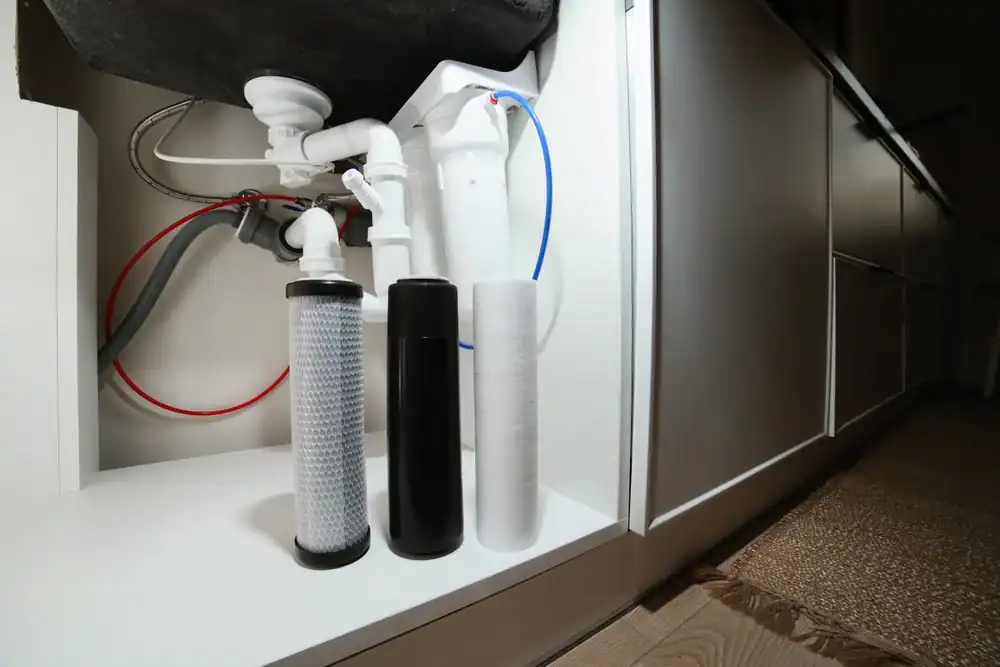
If you’ve been in your Glenbrook home for more than a few years, you already know the signs. Orange staining on the driveway. That faint sulfur smell when you run the tap. Fixtures that look older than they are. These aren’t cosmetic annoyances — they’re the result of well water drawn directly from the Floridan Aquifer, untreated, with no municipal plant standing between the ground and your glass.
The groundwater chemistry in Sumter County is well-documented. USGS research specifically identified elevated iron, manganese, sulfide, and dissolved organic carbon in the lower-lying anaerobic groundwaters of this county — the same geology that sits beneath Glenbrook. That’s not a generic Florida water problem. It’s a local one, and it requires a system built for it.
When the right filtration system goes in, the changes are immediate and lasting. The staining stops. The smell disappears. Your water heater and appliances stop taking the hit they’ve been absorbing for years. If you’re running an irrigation well for your lawn and landscaping — which many homes in Glenbrook do — that orange runoff staining your painted driveway and walkways stops too. For residents here where curb appeal matters, that alone is worth the call.
We’ve been working with Florida’s water chemistry for over 50 years. Not a national franchise. Not a call center. A Florida-specific water treatment company that knows what the Floridan Aquifer does to well water in Sumter County and Glenbrook specifically, and how to fix it the right way.
The credentials matter here. An A+ BBB rating, a 5-star score, and zero complaints on record — in an industry where the Florida Attorney General has taken action against predatory water treatment companies, that track record isn’t a footnote, it’s the whole story. We’re also a member of the National Water Quality Association, a voluntary professional body that requires passing a comprehensive exam and committing to a formal code of ethics. Most providers active in The Villages area don’t hold that credential.
We serve military veterans and first responders with a $500 discount — and are actively involved with the Tunnels to Towers Foundation. In a community like Glenbrook, where a significant number of residents have served, that’s not a marketing line. It’s a reflection of shared values.

It starts with a free water analysis. Before anything is recommended or quoted, your water gets tested. That test tells the real story — how much iron is present, whether hydrogen sulfide is a factor, what the manganese levels look like, and whether bacterial contamination is in the picture. In Glenbrook, where homes were built around 2000 and have been drawing from the same Sumter County aquifer ever since, that test often reveals a combination of issues that a single off-the-shelf filter was never going to address.
Once the analysis is done, we design a system around your specific results and your household’s usage. This isn’t a one-size-fits-all catalog pick. The sequence of filtration stages — sediment removal, iron and manganese filtration, hydrogen sulfide treatment, UV disinfection if bacteria are present — is configured based on what your water actually contains. If your home also has a private irrigation well separate from your potable water supply, we can evaluate and address that as part of the same conversation.
Installation happens in a single day. The system goes in at the point of entry, typically in the garage or utility area, so there’s no major disruption to your home. By the time you’re back from a morning round at Glenview or running errands along Route 466, the system is running and your water is already different. No multi-day projects. No contractors stretched across your week.

Ready to get started?
Well water in this part of Florida rarely has just one problem. The Sumter County groundwater profile — iron, manganese, hydrogen sulfide, and sometimes bacteria — tends to show up together, not individually. That’s why we build whole-house filtration systems as multi-stage solutions, not single-point fixes. Each stage targets a specific contaminant in the right order, so nothing slips through because it was addressed out of sequence.
For Glenbrook homeowners on private well water, the full system typically covers iron and manganese removal to stop the staining at the source, hydrogen sulfide treatment to eliminate the sulfur odor that gets worse in Florida’s warmer months, sediment filtration to protect your fixtures and appliances, and UV disinfection when bacterial contamination is confirmed in the test results. If you want cleaner drinking water at the tap beyond what the whole-house system provides, a reverse osmosis unit at the kitchen sink is an option worth discussing.
If your home uses a separate irrigation well — common throughout The Villages for lawn and landscape watering — we can evaluate that system independently. The iron staining on your driveway and exterior is often coming from that line, not your drinking water, and treating it at the source is the only way to actually stop it. We handle both, and the conversation starts with a free water test — no pressure, no commitment, just real answers about what’s in your water.

That sulfur smell — the one that hits when you turn on the tap or run the shower — comes from hydrogen sulfide gas dissolved in your well water. It’s produced naturally when sulfur-reducing bacteria break down organic material in low-oxygen groundwater environments. The Floridan Aquifer in Sumter County, particularly in the lower-lying areas where Glenbrook sits, is exactly the type of anaerobic groundwater environment where this happens. USGS research has specifically documented elevated sulfide concentrations in this county’s groundwater.
The smell tends to get worse in Florida’s warmer months because higher water temperatures accelerate bacterial activity. If you’ve noticed it’s stronger in summer than winter, that’s why. A whole-house hydrogen sulfide treatment system eliminates the odor at the point of entry, so it doesn’t reach any tap, shower, or appliance in your home. A free water test will confirm the concentration and determine the right treatment approach for your specific well.
Orange or rust-colored staining is almost always iron — either from your potable well water, your irrigation well, or both. Iron is extremely common in Sumter County groundwater, and it oxidizes on contact with air and surfaces, leaving that characteristic rust stain on toilets, sinks, driveways, walkways, and home exteriors. In Glenbrook, where many homes run private irrigation wells for lawn and landscape watering, the staining on exterior surfaces is often coming from the irrigation system, not the drinking water line.
The fix requires treating the water at the source before it reaches your fixtures or your driveway. An iron removal filtration system installed at the point of entry handles the potable water side. If the irrigation well is the culprit for exterior staining, that system needs to be evaluated and treated separately. Scrubbing or pressure washing the stains off without treating the water is a temporary fix — the staining will return within a season. A water test identifies exactly how much iron is present and which treatment approach will eliminate it for good.
It depends on your specific setup, and it’s worth understanding the distinction. Some homes in The Villages are connected to the community’s utility water system for their potable supply, while others draw directly from a private well. Even homes on utility water often have a separate private irrigation well for lawn and landscape watering — and that irrigation well pulls directly from the Floridan Aquifer with no treatment at all.
If your drinking water comes from The Villages utility system, your potable supply has gone through some level of treatment before it reaches your home. But if you’re seeing iron staining on your driveway or exterior, your irrigation well is likely the source, and that water is completely untreated. A whole-house filtration system for your potable well — or a dedicated treatment system for your irrigation well — addresses different problems. A free water analysis will tell you exactly what you’re dealing with and which system, if any, makes sense for your situation. We won’t recommend a system before we know what’s in your water.
A properly sized and maintained whole-house filtration system typically lasts 10 to 20 years, depending on the system type, the quality of the components, and how consistently it’s serviced. Florida’s climate does create some specific considerations. The warm temperatures year-round accelerate bacterial activity in groundwater, which means UV disinfection components need to be checked and lamp replacements kept current. Filter media that handles iron and manganese will exhaust faster in wells with higher concentrations — which is why the initial water test matters so much for sizing the system correctly.
In Glenbrook specifically, homes are roughly 22 to 25 years old, meaning any original filtration equipment — if it was installed at all — is likely past its service life. If you’ve had a system for years and are noticing the staining or odor returning, that’s often a sign the media needs to be replaced or the system needs to be reassessed against your current water conditions. We provide ongoing service and support after installation, so you’re not left figuring out maintenance on your own after the job is done.
Yes — but only if it’s designed as a multi-stage system and configured in the right order. Each contaminant requires a different treatment method, and the sequence matters. Iron and manganese removal typically happens first, followed by hydrogen sulfide treatment, then sediment filtration, and UV disinfection last if bacterial contamination is confirmed. Trying to run UV disinfection on water that still contains iron, for example, reduces the UV system’s effectiveness because the iron particles block the light.
This is where a lot of off-the-shelf or single-stage systems fall short — they address one problem and leave the rest. The Sumter County groundwater profile means Glenbrook well owners are often dealing with iron, sulfide, and manganese at the same time, not one at a time. A system built around your specific water test results will sequence the treatment stages correctly and size each one for your actual contaminant levels and household water usage. That’s the difference between a system that solves the problem and one that reduces it slightly.
Please provide your email address so that we can stay in touch and answer any questions you have! We will be reaching back out shortly.
"*" indicates required fields