Reach Out Today
Please provide your email address so that we can stay in touch and answer any questions you have! We will be reaching back out shortly.


Hear from Our Customers
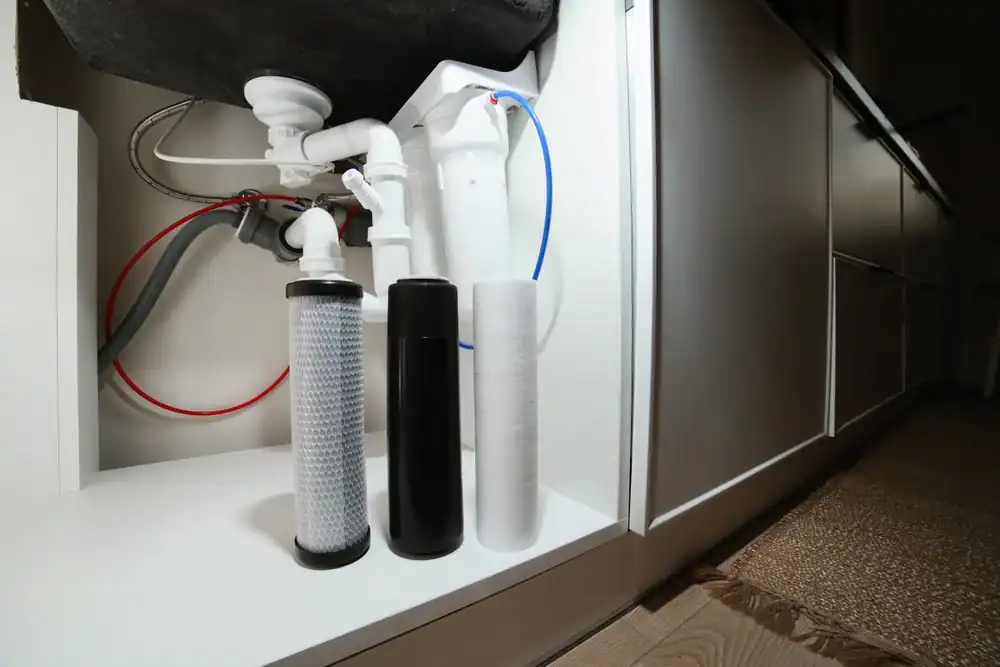
The orange ring in your toilet bowl isn’t a cleaning problem. The rotten egg smell in your shower isn’t a plumbing problem. Both are coming straight from the Floridan Aquifer — the same limestone karst system that makes Gilchrist County’s springs so striking and your well water so difficult to live with untreated. Once that’s addressed at the point of entry, those symptoms stop. Every tap in your home runs clean.
Gilchrist County is one of the most agricultural counties in North Florida, with an average farm size of 146 acres. That’s a lot of fertilizer and livestock waste sitting above a shallow, unconfined aquifer. The Florida Springs Institute formally called for comprehensive nitrate testing specifically in Gilchrist and Alachua counties because of exactly this. Nitrates are invisible and odorless — you won’t taste them, and you won’t smell them — but they’re a documented concern for private well owners in this county, especially families with young children.
When your water is properly filtered, you stop buying cases of bottled water. Your water heater, dishwasher, and washing machine stop accumulating mineral buildup that shortens their lifespan. Your laundry comes out the color it’s supposed to be. These aren’t small things — they’re daily. And in a county where the median home value has climbed over $191,000, protecting the plumbing and appliances inside that home is a real financial decision, not just a comfort one.
We’ve been designing whole-house well water systems for Florida homeowners for over 50 years. Not general plumbing. Not water heaters. Water treatment — specifically, and exclusively. That focus matters because Florida’s aquifer chemistry is unlike anything in most other states, and Gilchrist County’s unconfined karst geology adds a layer of complexity that a generalist simply won’t catch.
We hold an A+ BBB rating with zero complaints on record and a 5-star review history across platforms. We’re also members of the National Water Quality Association — a voluntary professional credential that requires passing a comprehensive exam and committing to a formal code of ethics. In an industry where the Florida Attorney General has taken action against predatory operators, that record isn’t background noise. It’s the whole point.
For Gilchrist County homeowners — whether you’re on a stretch of county road outside Trenton, near the Suwannee River in Fanning Springs, or on a few acres outside Bell — our commitment is the same: a free water analysis, a system designed around what’s actually in your well, and service that doesn’t disappear after installation.
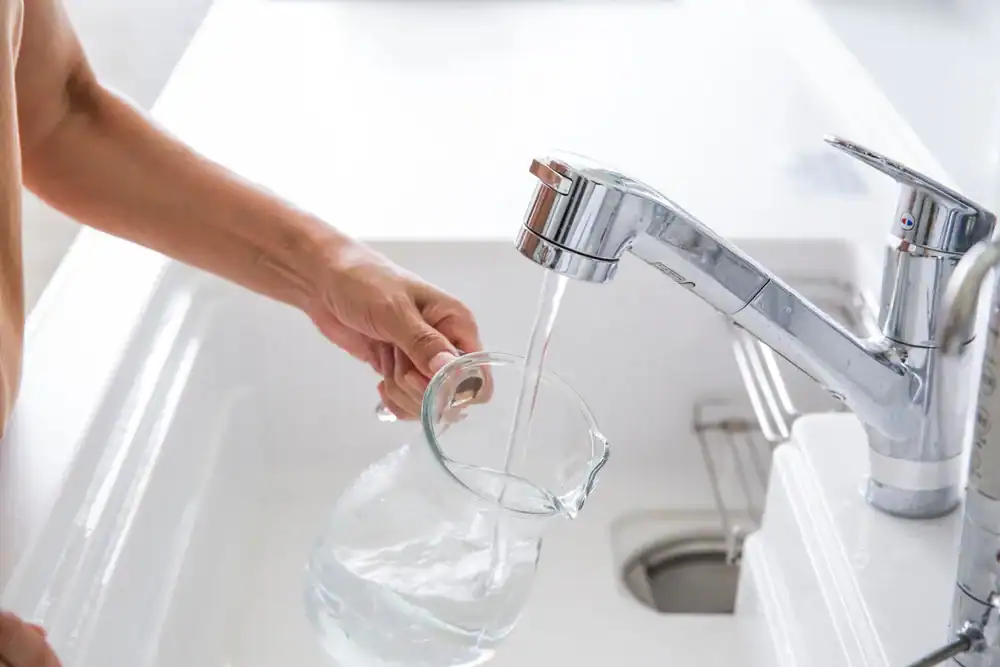
It starts with a free water analysis. Before anything is recommended, sold, or installed, your water gets tested. That test tells us exactly what you’re dealing with — iron levels, sulfur concentration, bacterial presence, manganese, hardness, nitrates. In Gilchrist County, where agricultural runoff and karst geology create a specific and well-documented combination of contaminants, that first step isn’t optional. It’s the only way to design a system that actually works for your well.
Once the results are in, we design a system around your actual water and your household’s usage. Not a package pulled off a shelf. If your iron levels are high, that drives the filtration approach. If hydrogen sulfide is the primary issue, that shapes the equipment. If bacteria is a concern — which it can be after any of the 36 natural disasters Gilchrist County has experienced since 1953, including 17 hurricanes — UV disinfection gets incorporated. Every system we build is built around what your water test shows, not what’s easiest to sell.
Installation happens in a single day. The system goes in at your point of entry, which means every tap, every appliance, and every shower in your home is covered from that point forward. You don’t need to run new plumbing through the house. You don’t lose water access for days. By the time our technician leaves, you have clean water — and you know exactly what’s in the system protecting it.

Ready to get started?
Iron removal is one of the most common needs for private well owners in Gilchrist County, and it’s also one of the most mishandled. A water softener alone won’t solve an iron problem — and plenty of homeowners have spent money finding that out the hard way. The right approach depends on the form of iron in your water: ferrous iron, ferric iron, and iron bacteria each require a different treatment method. Air injection oxidation systems are typically the most effective solution for North Florida wells, but that determination comes from your water test, not a guess.
Hydrogen sulfide — the source of that rotten egg smell — is also extremely common in wells drawing from the Floridan Aquifer. For most Gilchrist County wells, air injection oxidation handles both iron and sulfur in a single system. For higher concentrations, a hydrogen peroxide injection followed by catalytic carbon filtration eliminates it completely. Not reduces it. Eliminates it.
Bacterial filtration and manganese reduction are also addressed where the water test indicates a need. The Suwannee River Water Management District, which governs well construction and water use throughout Gilchrist County, implemented mandatory water restrictions in 2026 — a regulatory shift that puts more responsibility on individual homeowners to maintain the quality of their own water supply. A properly installed whole-house system is how you meet that responsibility without thinking about it every day. We also offer a $500 discount for military members, veterans, and first responders — no fine print.

That smell is hydrogen sulfide gas, and it’s extremely common in wells drawing from the Floridan Aquifer in Gilchrist County. The aquifer runs through limestone karst geology, and naturally occurring sulfate-reducing bacteria interact with organic material in that limestone to produce hydrogen sulfide. It’s not a sign that your well is broken or contaminated in a dangerous way — it’s a sign that your water is coming from the same geological source that feeds Gilchrist Blue Springs and Hart Springs, and that source carries sulfur compounds.
The good news is that hydrogen sulfide is one of the most treatable well water problems there is. At typical concentrations found in North Florida wells, air injection oxidation removes it effectively. For higher concentrations, a hydrogen peroxide injection system followed by catalytic carbon filtration eliminates it entirely. A water test tells us which approach fits your well. Once it’s addressed, the smell is gone — not masked, not reduced. Gone.
This is worth taking seriously if you live in Gilchrist County. The Florida Springs Institute formally called for comprehensive nitrate testing specifically in Gilchrist and Alachua counties, citing documented concerns about agricultural runoff leaching through the county’s sandy, unconfined soils into the Floridan Aquifer. With an average farm size of 146 acres in Gilchrist County — one of the largest in North Florida — there’s significant fertilizer and livestock waste application happening above a very vulnerable aquifer.
The Alachua County Department of Health has already initiated nitrate testing of private wells in the Watson Dairy area of eastern Gilchrist County. Nitrates are invisible, odorless, and tasteless, so there’s no way to know without testing. At elevated concentrations, they’re a health risk — particularly for infants under six months. Florida does not require private well testing at the point of sale, which means many Gilchrist County homeowners have never had their water checked for nitrates. A professional water analysis is the only way to know what you’re actually dealing with.
Yes — and for most Gilchrist County wells, that’s exactly how a properly designed whole-house system works. The goal isn’t to stack five separate pieces of equipment. It’s to design a system that addresses your specific combination of contaminants in the most efficient way possible. In North Florida, where iron, hydrogen sulfide, and bacterial presence often show up together in the same well, an air injection oxidation system handles the iron and sulfur simultaneously, and a UV disinfection stage addresses bacteria without using chemicals.
The key word there is “designed.” A system that works for a well in Trenton with moderate iron and low sulfur looks different from one in Fanning Springs with high sulfur and bacterial risk after flood exposure. That’s why the free water analysis comes first — it tells us exactly what’s in your water so the system is built around your well, not around what’s easiest to install. One day of installation, every tap covered.
Gilchrist County has experienced 36 natural disasters since 1953 — nearly double the national average — including 17 hurricanes and 10 tropical storms. After significant flooding, surface water can enter a private well through the wellhead or surrounding soil, introducing bacteria, sediment, and other contaminants that wouldn’t normally be present. The Suwannee River, which forms Gilchrist County’s western border, is known to flood during major storm events, and low-lying properties near the river and its tributaries are especially vulnerable.
After any significant flood event, the Florida Department of Health recommends testing your private well before resuming normal use. If bacterial contamination is confirmed, shock chlorination is typically the first response, followed by retesting. For ongoing protection, a UV disinfection system installed as part of your whole-house filtration setup provides continuous bacterial treatment so that post-storm contamination doesn’t catch you off guard. If your current system doesn’t include UV protection and you’re in a flood-prone area of the county, that’s worth addressing before the next storm season.
A water softener addresses hardness — specifically calcium and magnesium — by exchanging those minerals for sodium through a resin bed. It’s useful for reducing scale buildup and improving soap lather. But it does not remove iron effectively, it does not address hydrogen sulfide, it does not treat bacteria, and it does nothing for nitrates or manganese. For Gilchrist County well water, which typically carries a combination of several of these issues, a softener alone is an incomplete solution.
A whole-house well water filtration system is designed to handle the full picture. Depending on what your water test shows, it might include air injection oxidation for iron and sulfur, a sediment pre-filter, a UV disinfection stage for bacteria, and a carbon stage for taste and odor. Some systems incorporate a softening component as well, but it’s one piece of a larger system — not the whole answer. The distinction matters because homeowners who install only a softener and still have iron or sulfur problems often assume water treatment doesn’t work. It works when the system is built around what your water actually contains.
Please provide your email address so that we can stay in touch and answer any questions you have! We will be reaching back out shortly.
"*" indicates required fields