Reach Out Today
Please provide your email address so that we can stay in touch and answer any questions you have! We will be reaching back out shortly.


Hear from Our Customers
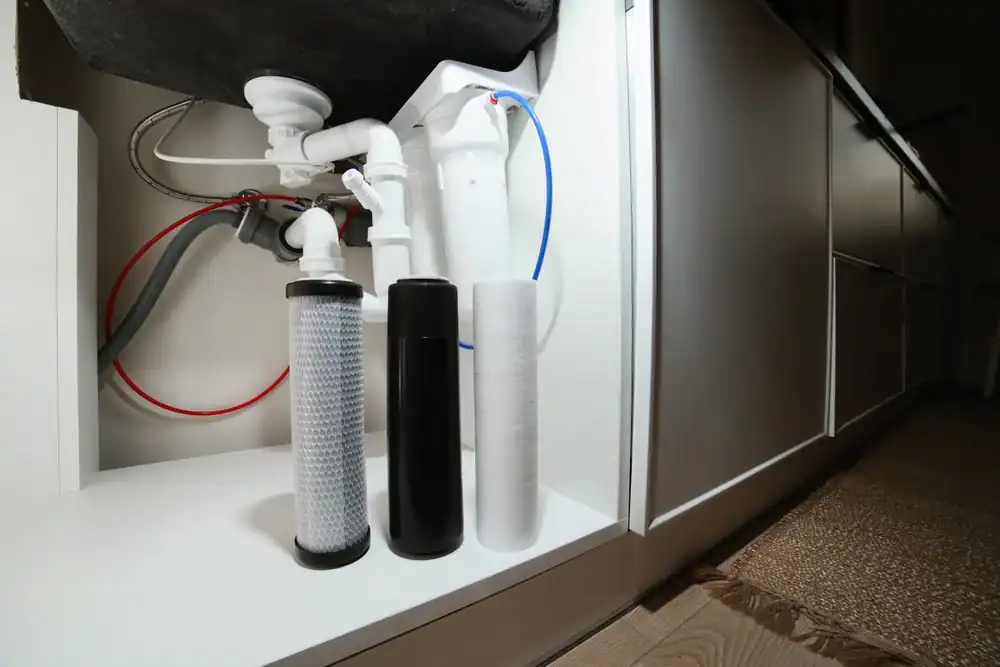
The orange ring around your toilet bowl isn’t a cleaning problem — it’s an iron problem. The rotten egg smell in your shower isn’t a fluke — it’s hydrogen sulfide coming straight out of the limestone aquifer beneath Sumter County. These aren’t things you get used to. They’re signs that your water is working against your home instead of for it.
When your water is properly filtered, the staining stops. The smell goes away. Your water heater, dishwasher, and washing machine stop fighting mineral buildup every single cycle. For anyone who moved to Fenney and invested $400,000-plus in a home they plan to enjoy, that matters more than most people realize until they’ve already watched their fixtures corrode and their appliances wear down ahead of schedule.
There’s also something worth saying about the Floridan Aquifer specifically: even homes connected to The Villages’ CDD municipal water draw from the same underground limestone formation. The source is the same. The mineral load is real regardless of whether your water comes from a private well or a utility line. A whole-house filtration system addresses that at the point of entry — before the water ever touches your pipes, your appliances, or your glass.
We’ve been solving water problems across central Florida for more than 50 years. That’s not a corporate tagline — it means our team walking into your Fenney home has seen the Floridan Aquifer’s chemistry up close, in hundreds of homes across Sumter County and the surrounding region, and knows exactly what it does to well systems, fixtures, and appliances over time.
We hold an A+ rating with the Better Business Bureau, a 5-star record across review platforms, and zero complaints on file — in an industry where Florida’s own Attorney General has stepped in to shut down predatory operators. Our membership in the National Water Quality Association (WQA) means there’s a professional and ethical standard behind every recommendation we make in your home.
Every system starts with a free water analysis. No pressure, no assumptions, no upselling you on something your water doesn’t need. Our goal is to show you what’s actually in your water and design a solution around that — not around what’s most profitable to install.
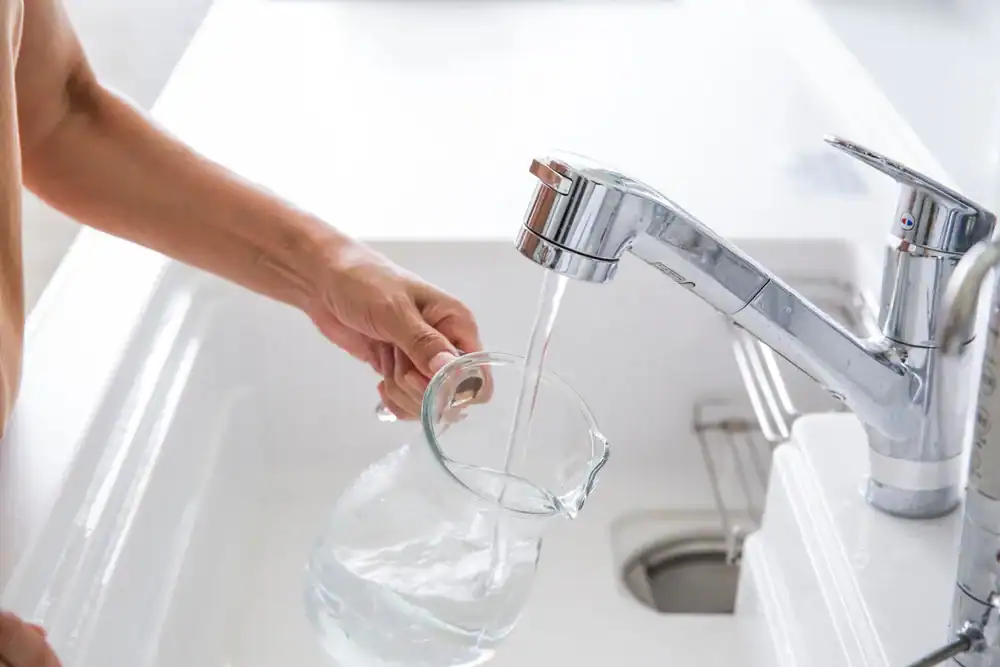
It starts with a free water analysis at your Fenney home. One of our technicians comes to you, tests your water on-site, and gives you a clear picture of what’s in it — iron levels, sulfur content, hardness, bacterial presence, manganese, whatever the Floridan Aquifer is delivering to your tap. You’ll know exactly what you’re dealing with before anyone talks about a system or a price.
From there, we design a whole-house filtration system specifically around your test results and your home’s water usage. Fenney homes — whether they’re patio villas near the Gray Fox course, designer homes in Hammock at Fenney, or cottages closer to Warm Springs Avenue — vary in size and water demand. We size the system to match your actual situation, not a one-size template. Installation happens in a single day, typically in your garage or utility room at the point of entry, so every tap in the house gets filtered water without disrupting your home or your schedule.
After installation, the water is clean. The smell is gone. The staining stops. And because we’re a Florida-based company with real local presence — not a national brand that disappears after the sale — you have someone to call for filter maintenance, service questions, or anything that comes up down the road.

Ready to get started?
Floridan Aquifer well water in the Fenney area doesn’t usually have just one problem. Iron staining, hydrogen sulfide odor, manganese discoloration, hardness, sediment, and bacterial contamination often show up together — because they all come from the same limestone geology beneath Sumter County. A water softener alone won’t fix the smell. A sediment filter alone won’t stop the staining. What actually works is a multi-stage whole-house system designed around your specific water test results, addressing each contaminant in the right sequence.
We design those systems from scratch for each home. Iron removal, sulfur smell treatment, manganese reduction, bacterial filtration, sediment control — each stage is included based on what your water test shows, not based on a standard package pulled off a shelf. If your well water in Fenney has elevated iron and hydrogen sulfide but no bacterial concern, the system reflects that. If bacterial filtration is needed — which is a real consideration for private wells in areas with warm groundwater and seasonal rainfall like central Florida’s summer rainy season — that gets addressed too.
Military veterans and first responders receive $500 off a whole-house system. Given how many Fenney and Villages residents have served, that discount is one we’re glad to offer — and glad to honor every time.

That smell is hydrogen sulfide gas, and it’s one of the most common complaints from well owners throughout Sumter County and the broader Floridan Aquifer region. It’s produced naturally by sulfate-reducing bacteria that live in the anaerobic zones of the limestone aquifer — the same formation that supplies groundwater across central Florida. It’s not a sign that something went wrong with your well. It’s a sign that your water needs treatment before it reaches your tap.
The smell tends to get worse in summer. Warmer groundwater temperatures accelerate bacterial activity, so a faint odor you barely noticed in January can become genuinely unpleasant by July. A properly designed whole-house filtration system with an oxidation and filtration stage eliminates hydrogen sulfide at the point of entry — so it’s gone before the water ever reaches your shower, your kitchen sink, or your drinking glass. A free water analysis will confirm the concentration in your specific Fenney well and determine exactly what treatment stage is needed.
That’s iron, and it’s extremely common in private well water throughout Sumter County. The Floridan Aquifer naturally dissolves iron from the surrounding limestone as groundwater moves through it. When that iron-rich water hits oxygen — inside your toilet tank, on your fixtures, on your driveway if you run irrigation — it oxidizes and leaves behind that rust-colored stain. Scrubbing it off is a temporary fix at best. The iron keeps coming with every gallon of water.
The right solution is iron removal at the point of entry — before the water gets into your plumbing. A whole-house iron filtration system intercepts the iron before it ever reaches your fixtures, your appliances, or your laundry. Iron is also hard on water heaters and washing machines over time, accelerating wear in ways that aren’t always obvious until something fails early. For a home in the Village of Fenney where you’ve invested significantly in new appliances and finishes, stopping iron damage at the source is one of the most practical things you can do to protect that investment.
It’s a fair question, and the honest answer is: it depends on what’s in your water and what level of quality you want. The Villages’ CDD utilities — including South Sumter Utility, which services homes in the southern expansion districts where Fenney sits — draw their supply from Floridan Aquifer wells and treat the water before distribution. So the source is treated, but it’s still the same limestone aquifer that loads water with minerals.
The EPA’s Environmental Working Group database lists detected contaminants in the Villages of Lake-Sumter municipal water supply that include chromium, trihalomethanes, arsenic, and nitrate — all within legal limits, but some above the health-based guidelines that the EWG uses as benchmarks. If you’re satisfied with water that meets the legal standard, you may not feel urgency. If you want water that meets a higher standard for drinking, cooking, and protecting your appliances from mineral buildup, a whole-house or point-of-entry filtration system is worth a conversation. A free water analysis will tell you exactly what’s in your specific water — and from there, you can make an informed decision.
Installation is completed in a single day. We install the system at the point of entry into your home — typically in the garage or a utility area — which means there’s no running new lines through finished rooms, no tearing into walls, and no multi-day project that takes over your living space. For most Fenney homes, the installation footprint is compact and the disruption is minimal.
You’ll have clean, filtered water from every tap in the house by the time our technician leaves. The process is straightforward: the system connects to your main water line before it branches out to the rest of the house, so everything downstream — every faucet, shower, appliance, and ice maker — gets treated water automatically. There’s no complicated operation on your end and no daily maintenance required beyond periodic filter changes, which we handle as part of ongoing service. If you’re in a newer home in Hammock at Fenney or one of the recently built cottages in the southern expansion area, the garage utility setup typically makes installation particularly clean and efficient.
Private well water in Florida is not regulated the way municipal water is. There’s no utility running tests on your well every month. What’s in it is entirely a function of what the Floridan Aquifer is delivering to your specific location — and that varies. Florida’s Well Surveillance Program has tested nearly 48,000 wells across the state since 2005, and roughly 9% of those wells exceeded state or federal drinking water standards. That’s not a majority, but it’s not a small number either.
In Sumter County, the most common concerns in Floridan Aquifer well water are iron, hydrogen sulfide, hardness, and manganese — none of which are immediately dangerous at typical concentrations, but all of which affect water quality, taste, and the long-term condition of your plumbing and appliances. Bacterial contamination is a separate concern, particularly after heavy rainfall events during central Florida’s summer rainy season, when surface water can infiltrate shallow well systems. The only way to know for certain what’s in your Fenney well water is to test it. That’s exactly what the free water analysis is for — it gives you actual data, not guesswork, so you can make a real decision.
Please provide your email address so that we can stay in touch and answer any questions you have! We will be reaching back out shortly.
"*" indicates required fields