Reach Out Today
Please provide your email address so that we can stay in touch and answer any questions you have! We will be reaching back out shortly.

Hear from Our Customers
If your well water leaves rust stains on everything it touches, smells like rotten eggs, or makes you second-guess filling a glass from the tap, you already know something’s off. The question isn’t whether your water has issues. It’s whether you’re going to keep living with them.
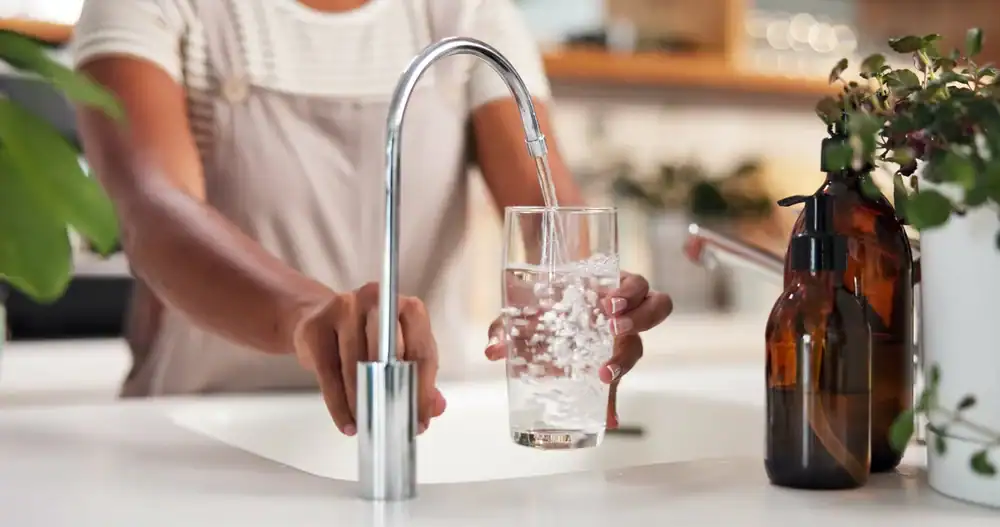
Clean well water doesn’t stain your sinks, ruin your laundry, or make your morning coffee taste metallic. It doesn’t smell when you turn on the shower. And it doesn’t leave you wondering if it’s safe for your kids to drink.
That’s what a properly designed whole house water filtration system does. It removes the iron that causes rust stains. It eliminates the hydrogen sulfide that creates that sulfur smell. And it kills bacteria like E.coli that shouldn’t be anywhere near your family’s drinking water.
Once your system is installed, your water just works. No more buying bottled water. No more scrubbing orange stains off the toilet. No more holding your breath when someone turns on the hot water.
We have over 50 years of combined experience treating well water across North and Central Florida. We’re A-rated with the Better Business Bureau and members of the National Water Quality Association, which means we follow actual industry standards, not just our own rules.
Eureka sits in an area where iron, sulfur, and bacterial contamination are common well water problems. The geology here means your water picks up minerals and compounds as it moves through the aquifer. We’ve seen it hundreds of times, and we know exactly how to fix it.
We don’t sell you a system and disappear. We design it based on your actual water test results, install it correctly, and service it when you need us. That’s how we’ve built a reputation that separates us from national companies that don’t return calls after the sale.
First, we test your water. Not a basic hardness test, but a full analysis that tells us exactly what’s in your well water and at what levels. Iron, sulfur, bacteria, pH, hardness, everything that affects how your water behaves and whether it’s safe.
Once we know what we’re dealing with, we design a system specifically for your water and your household. If you have iron bacteria, we’re using an iron removal system with oxidation technology. If hydrogen sulfide is the issue, we’re treating it with the right filtration method. If bacteria is present, UV disinfection goes into the plan. Every system is custom because every well is different.
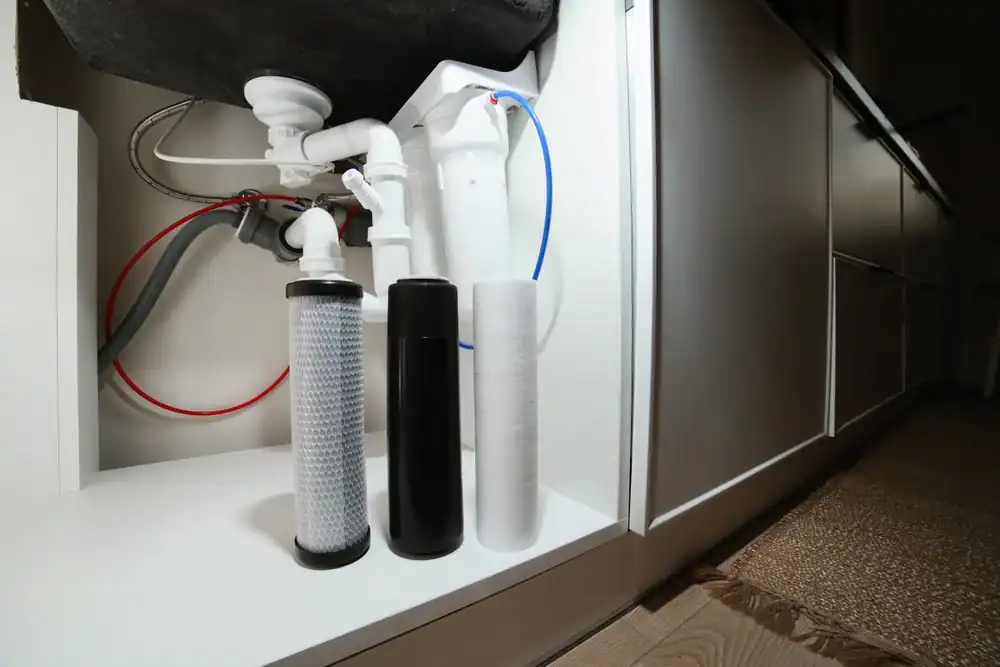
Then we install it. The equipment goes in where it treats all the water entering your home, which means every faucet, every shower, every appliance gets filtered water. We handle the plumbing connections, set the controls, and test everything before we leave.
After installation, your system runs automatically. Depending on what equipment you have, there’s minimal maintenance. We’re available when you need service, and we actually show up because we’re local and we service what we sell.
Ready to get started?
Your system might include iron removal using air injection oxidation, which forces oxygen into the water to convert dissolved iron into particles that get filtered out. Or it might use hydrogen peroxide injection if you have iron bacteria, which is harder to treat and needs a stronger oxidizer.
For sulfur smell, we use filtration systems designed specifically for hydrogen sulfide treatment. The rotten egg odor doesn’t just get covered up, it gets eliminated at the source by removing the compound causing it.
If your water test shows bacteria, a UV disinfection system kills E.coli and other harmful organisms as water passes through ultraviolet light. It’s chemical-free, and it works continuously without you having to do anything.
In Eureka and the surrounding area, we see a lot of homes dealing with multiple issues at once, iron and sulfur together, or hard water combined with bacterial contamination. That’s why whole house systems often combine several treatment methods. The water gets filtered, disinfected, and conditioned in stages so what comes out of your tap is actually clean.
We also offer salt-free water conditioning for scale prevention if you want to protect your appliances and plumbing without adding sodium to your water. It’s an option that works well for families watching their salt intake but still dealing with hard water damage.

If you’re seeing rust-colored stains in your sinks, toilets, or on your laundry, that’s iron. If your water smells like rotten eggs, especially when it’s hot, that’s hydrogen sulfide. If you’re noticing a metallic taste or your water leaves a film on dishes, you’ve got mineral issues that need treatment.
The only way to know for sure what’s in your water is to test it. We offer free water analysis that measures iron levels, sulfur content, bacteria presence, pH, hardness, and other contaminants. The test results tell us exactly what treatment methods you need.
Some problems are obvious, like the smell or the stains. Others aren’t visible but still matter, like bacteria. A proper water test catches both, and it’s the starting point for designing a system that actually fixes your specific issues instead of guessing.
A water softener removes hardness minerals like calcium and magnesium. It helps with scale buildup and soap performance, but it doesn’t remove iron effectively, especially at higher concentrations. If you try to run water with significant iron through a standard softener, you’ll foul the resin and damage the system.
Iron removal systems use oxidation to convert dissolved iron into solid particles that can be filtered out. Air injection oxidation pulls oxygen into the water, which reacts with the iron. Hydrogen peroxide injection does the same thing but more aggressively, which is necessary when you have iron bacteria.
Many homes in Eureka need both, iron removal first to get the iron out, then softening to handle hardness. The iron filter protects the softener and makes sure it can do its job without getting clogged. They work together, but they’re treating different problems.
Hydrogen sulfide is a gas dissolved in your water, and it’s what causes that rotten egg smell. Treatment works by either removing the gas or converting it into something that can be filtered out.
One method uses oxidation, similar to iron treatment. We inject air or hydrogen peroxide to convert the hydrogen sulfide into sulfur particles, then filter them out. Another approach uses activated carbon filtration, which adsorbs the gas as water passes through.
The right method depends on your sulfur levels and what else is in your water. If you have both iron and sulfur, which is common here, we typically use an oxidation system that handles both at once. The smell goes away completely because we’re removing the source, not masking it with chemicals.
If your water test shows any presence of coliform bacteria, E.coli, or other harmful organisms, yes, you need disinfection. Bacteria in well water is a health risk, especially for kids, elderly family members, or anyone with a compromised immune system.
UV disinfection uses ultraviolet light to kill bacteria and viruses as water flows through the system. It’s extremely effective, it doesn’t add chemicals to your water, and it works continuously without changing the taste or smell of your water.
The UV system installs after your filtration equipment so the water is already clear when it reaches the UV chamber. Clear water is important because particles can shield bacteria from the light. Once it’s set up correctly, the UV lamp runs 24/7 and kills organisms on contact. You replace the lamp annually, and that’s the only maintenance it needs.
The main components of a quality system, the tanks, the control valves, the plumbing connections, typically last 15 to 20 years or more if they’re maintained properly. Some parts need periodic replacement, like UV lamps annually, filter media every few years depending on your water quality and usage, and injectors or sensors as needed.
How long your system lasts also depends on whether it was sized correctly for your household and designed for your specific water chemistry. An undersized system or one that’s treating contaminants it wasn’t built for will wear out faster.
We design systems to handle your water volume and your contamination levels with some buffer built in. That means the equipment isn’t constantly maxed out, which extends its life. And because we service what we sell, we’re available for maintenance and repairs when you need them, which keeps your system running longer than if you’re stuck trying to fix it yourself or hunting for a company that will actually show up.
Please provide your email address so that we can stay in touch and answer any questions you have! We will be reaching back out shortly.
"*" indicates required fields