Reach Out Today
Please provide your email address so that we can stay in touch and answer any questions you have! We will be reaching back out shortly.

Hear from Our Customers
The orange stain around your toilet bowl isn’t a cleaning problem — it’s an iron problem. The rotten egg smell that hits you in the shower isn’t a fluke — it’s hydrogen sulfide, and it’s coming straight from the Floridan Aquifer that feeds Central Sumter Utility’s wells for the Brownwood district. These aren’t quirks you adjust to. They’re signs that your water is working against your home instead of for it.
Your Antrim Dells villa was built around 2015 — the plumbing, the appliances, the tile work — it’s all relatively new and worth protecting. Hard water from Florida’s limestone aquifer doesn’t care about that. It quietly deposits mineral scale inside your water heater, builds film on your fixtures, and leaves rust-colored streaks on the block-and-stucco exterior when your irrigation runs. A properly designed whole-house system stops that damage before it compounds.
Beyond the home itself, there’s the daily quality-of-life piece. Cleaner-tasting water at the kitchen tap. No sulfur odor when you turn on the shower. Softer water that’s gentler on your skin and your laundry. You worked hard to get to Collier at Antrim Dells. The water coming out of your walls should reflect that — not undermine it.
We’ve been solving Florida water problems for over 50 years. Not water problems in general — Florida water problems. The kind that come from the Floridan Aquifer, from limestone geology, from the specific mineral load that Central Sumter Utility draws from its wells to serve neighborhoods like Collier at Antrim Dells. That’s not something you figure out reading a manual. It takes decades of actual field work in this state.
We hold an A+ BBB rating with five stars and zero complaints. In a category where the Florida Attorney General has prosecuted predatory water filter operators for selling overpriced systems using false health claims, zero complaints isn’t a small thing. It’s the whole thing. We’re also a member of the National Water Quality Association — a voluntary certification that requires passing a real exam and committing to an industry code of ethics that most local competitors never bother with.
When your neighbors at the Eisenhower Recreation Center ask who you used, you’ll have a name you can stand behind.
It starts with a free water analysis. Not a sales pitch dressed up as a test — an actual analysis of your specific water, pulled from your taps, measured against what the Floridan Aquifer typically delivers in the Sumter County area. Iron levels, hardness, hydrogen sulfide, manganese, bacterial presence, pH — the full picture. That data is what drives every decision that comes next.
Once the analysis is done, you get a system recommendation built around your actual results and your household’s water usage. If your Antrim Dells home has high iron and moderate hardness but no sulfur issue, you’re not getting a system designed to treat sulfur. You get what your water actually needs — nothing more, nothing less. For homes with private irrigation wells on the property, we test those separately from the utility supply line if needed.
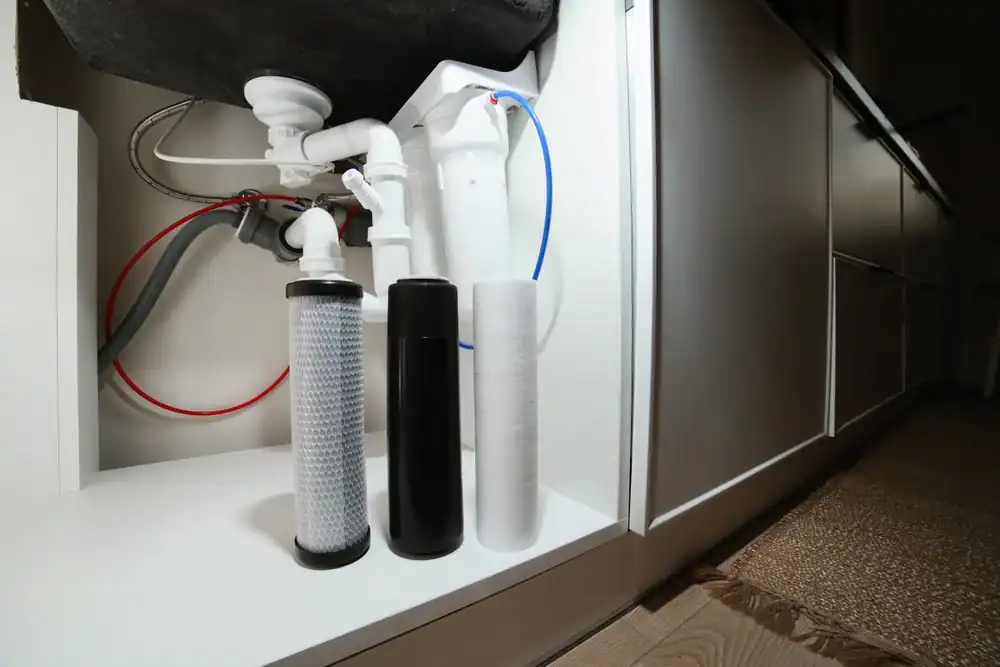
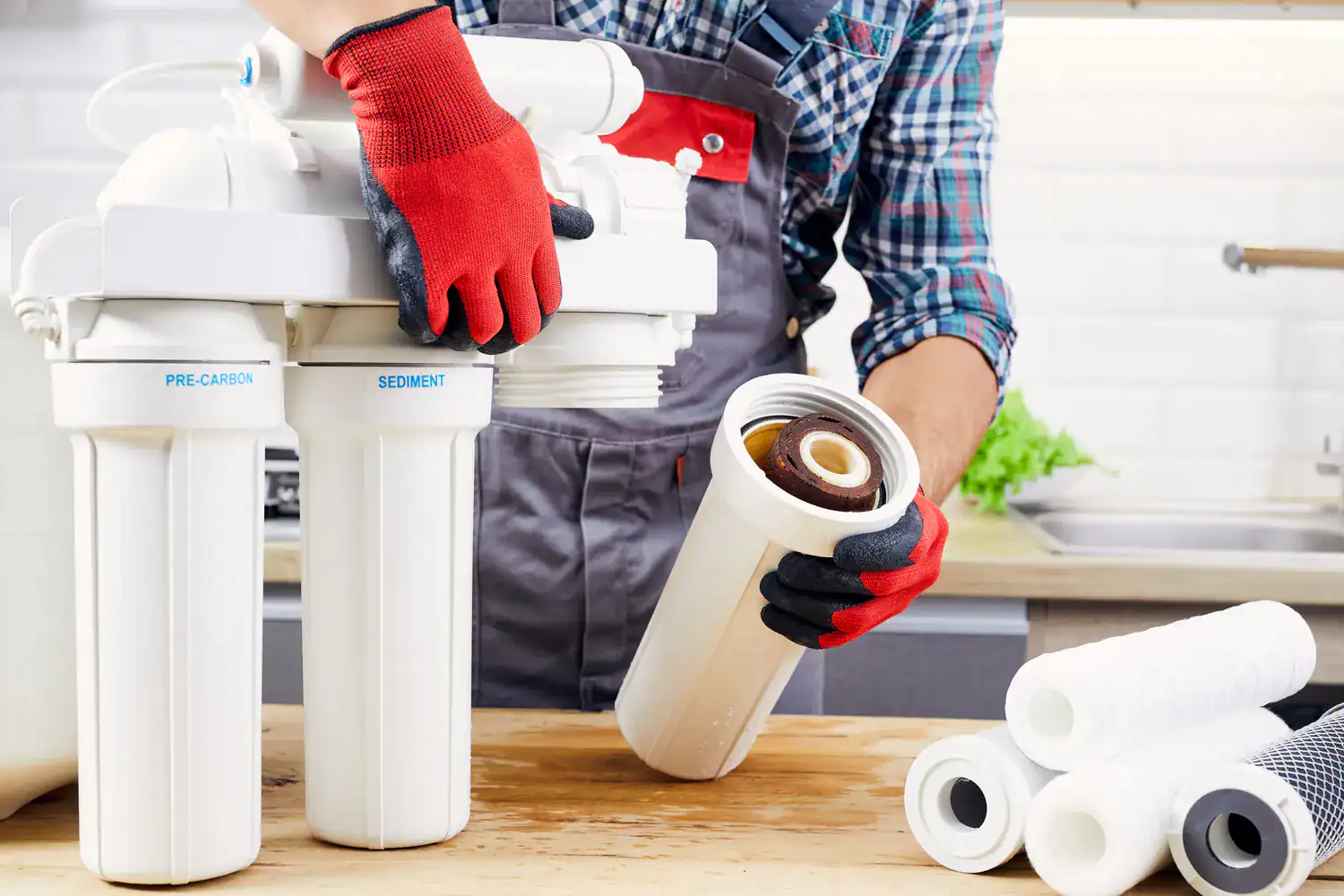
Installation is a single day. The system connects at your point of entry, which means every tap in your home — kitchen, bathrooms, laundry — runs through it from that point forward. Sumter County permit requirements are handled as part of the process, so you don’t have to navigate that yourself. By the time our team leaves, your water is already different. No multi-day project, no disruption to your routine. If you have a tee time at Evans Prairie the next morning, you’ll make it.
Ready to get started?
Every whole-house system we install is custom-configured based on what’s actually in your water. That said, the most common issues in the Antrim Dells area — and across the Brownwood district served by Central Sumter Utility — tend to cluster around a few specific problems: iron, hardness, hydrogen sulfide, and in some cases manganese or bacterial contamination from irrigation wells.
For iron and manganese, air injection oxidation systems are the standard approach — they oxidize dissolved metals so they can be filtered out before reaching your fixtures and appliances. For hydrogen sulfide, catalytic carbon filtration handles the odor at the source. Hard water gets addressed through water softening, which also extends the life of your plumbing and appliances significantly. When bacterial contamination is present — particularly relevant for homeowners with private irrigation wells or for seasonal residents returning to a home that’s been sitting empty through the summer — UV disinfection is added as a final stage.
If you spend part of the year away from your Antrim Dells villa and come back in the fall, that reoccupancy scenario gets specific attention. Water sitting stagnant in pipes and water heaters for months creates real conditions for bacterial growth and sediment buildup. The free water analysis accounts for that — it tests what’s actually in your water right now, not what it looked like before you left.

Yes — and here’s why that question matters more than most people realize. Central Sumter Utility draws its water from wells that tap the Floridan Aquifer, the same limestone formation that produces the iron, hardness, and hydrogen sulfide issues that affect private well users throughout Central Florida. The utility treats the water to meet regulatory compliance thresholds before it reaches your home, but regulatory compliance and genuinely clean, great-tasting water are two different standards.
What you’re getting at your tap in Collier at Antrim Dells has already been treated for bacterial safety and basic contaminants — but it can still carry dissolved iron that stains your fixtures, mineral hardness that scales your water heater and dishwasher, chlorine and its byproducts from the disinfection process, and in some cases trace hydrogen sulfide that creates that sulfur odor. A whole-house filtration system installed on your side of the utility meter addresses all of that. You don’t need utility company approval to install one — it’s your plumbing, your home, your call.
That smell is hydrogen sulfide gas, and it’s one of the most common complaints from homeowners across The Villages and the broader Sumter County area, including residents here in Antrim Dells. It comes from the Floridan Aquifer itself — warm groundwater temperatures and the low-oxygen conditions deep in the limestone formation create the perfect environment for sulfur-reducing bacteria that produce hydrogen sulfide as a byproduct. It’s not a sign that your plumbing is failing or that something is wrong with your specific home. It’s a geology issue, and it affects utility water and private well water alike.
The fix is catalytic carbon filtration, which neutralizes the hydrogen sulfide before it ever reaches your fixtures. In some cases, an air injection oxidation system is the better approach, depending on the concentration levels found in your water test. That’s exactly why the analysis comes first — the solution depends on what the numbers actually show, not a guess. Once the right system is in place, the smell is gone. Not reduced. Gone.
Iron is the most abundant mineral in Florida’s soil, and it shows up consistently in water drawn from the Floridan Aquifer throughout Sumter County. At low concentrations, it causes the orange or rust-colored staining you see around toilet bowls, in sinks, and on shower floors. At higher concentrations, it leaves visible streaks on exterior surfaces — and for Antrim Dells homes with block-and-stucco construction and irrigation systems, that means rust staining on the exterior walls when the sprinklers run.
Inside the home, dissolved iron accumulates as scale inside water heaters, dishwashers, and washing machines — shortening their lifespan and reducing efficiency over time. Iron bacteria can also grow inside plumbing and water treatment equipment if the iron isn’t addressed, creating a secondary contamination issue. An air injection oxidation system oxidizes the dissolved iron so it can be filtered out before it reaches any of your fixtures or appliances. For a home built in 2015 with relatively new systems still under the original lifespan, stopping that damage now is far less expensive than replacing appliances later.
This is one of the most underasked questions in The Villages market, and it’s a real issue. When a home sits unoccupied for three to six months — which is common for seasonal residents and snowbirds in Antrim Dells — water sitting stagnant in the pipes and water heater creates conditions that are genuinely different from what you left behind. Bacterial growth, including some strains that don’t affect taste or smell, can establish in standing water. Sediment settles. And if you have an irrigation well on the property, the summer rainy season in Sumter County can introduce surface contaminants into shallow groundwater.
The right move when you return is a fresh water analysis before you assume everything is fine. What your water looked like in March when you left is not necessarily what it looks like in October when you get back. Our free water analysis is the correct starting point — it tells you what’s actually in your water right now, so any treatment decisions are based on current data, not assumptions. If bacterial contamination is found, UV disinfection can be added to your system as a final stage to address it continuously going forward.
You need a water test — that’s the honest answer. Iron and hardness are related but distinct problems, and the treatment approach for each is different. A water softener addresses hardness by removing dissolved calcium and magnesium through an ion exchange process. It does not effectively remove iron, especially at the concentrations common in Floridan Aquifer water. Trying to run high-iron water through a softener without an iron pre-filter first will foul the softener resin and reduce its effectiveness over time.
Most homes in the Brownwood district of The Villages that get a full water analysis end up needing both — an iron removal stage upstream and a softener downstream — because the Floridan Aquifer delivers both dissolved iron and significant mineral hardness. But the exact configuration depends on your specific numbers. Some homes have iron levels low enough that a softener with an iron-capable resin handles both. Others need a dedicated air injection oxidation system first. The free water analysis removes the guesswork and tells you exactly what your home in Antrim Dells actually needs before any money changes hands.
Please provide your email address so that we can stay in touch and answer any questions you have! We will be reaching back out shortly.
"*" indicates required fields