Reach Out Today
Please provide your email address so that we can stay in touch and answer any questions you have! We will be reaching back out shortly.

Hear from Our Customers
You turn on the tap and there it is—that rotten egg smell. Or you pull laundry out and see orange stains that weren’t there before. Maybe your fixtures are coated in rust-colored buildup no cleaner can touch.
These aren’t cosmetic problems. Iron and hydrogen sulfide in your well water damage appliances, ruin clothes, and make you second-guess every glass of water you pour. Bacterial contamination adds another layer of concern, especially if you’ve got kids or anyone with a compromised immune system.
The right well water filtration system eliminates all of it. No smell. No stains. No scale eating away at your water heater or dishwasher. Just clean water from every faucet, every shower, every load of laundry. And when the system is designed for your specific water chemistry—not some one-size-fits-all setup—it actually works long-term.
We’ve been treating well water across North and Central Florida for over five decades. We’re A-rated with the Better Business Bureau, hold a 5-star rating with zero complaints, and we’re members of the National Water Quality Association.
College Park sits in an area where iron, sulfur, and bacterial contamination are common well water issues. We’ve treated hundreds of homes in this area, so we know what you’re dealing with before we even test your water. That local experience matters when you’re designing a system that has to perform year after year.
We service all brands of water treatment equipment. If your current system isn’t working, we’ll fix it if we can—we’ve saved customers thousands by repairing and upgrading existing setups instead of pushing unnecessary replacements.
We start with a free water analysis at your home. This isn’t a basic hardness test—we’re measuring iron levels, checking for bacterial contamination, testing pH, and identifying hydrogen sulfide and other contaminants specific to College Park well water.
Once we know what’s in your water, we design a system around your household’s usage and the specific problems we found. That might mean an Iron Clear system with air injection oxidation for heavy iron and bacterial iron. Or a Sulfur Clear filter if hydrogen sulfide is the main issue. For bacterial concerns, we’ll add UV disinfection with our Purelight System. Hard water gets addressed with salt-free conditioning if you want to avoid sodium and ongoing maintenance.
Installation typically takes a day. We walk you through how the system works, what maintenance looks like, and what to expect in the first few weeks as your plumbing clears out. Then we follow up to make sure everything’s performing the way it should.
Ready to get started?
Your well water filtration system is built around what your water test reveals. In College Park, that usually means addressing iron, sulfur, or bacteria—sometimes all three.
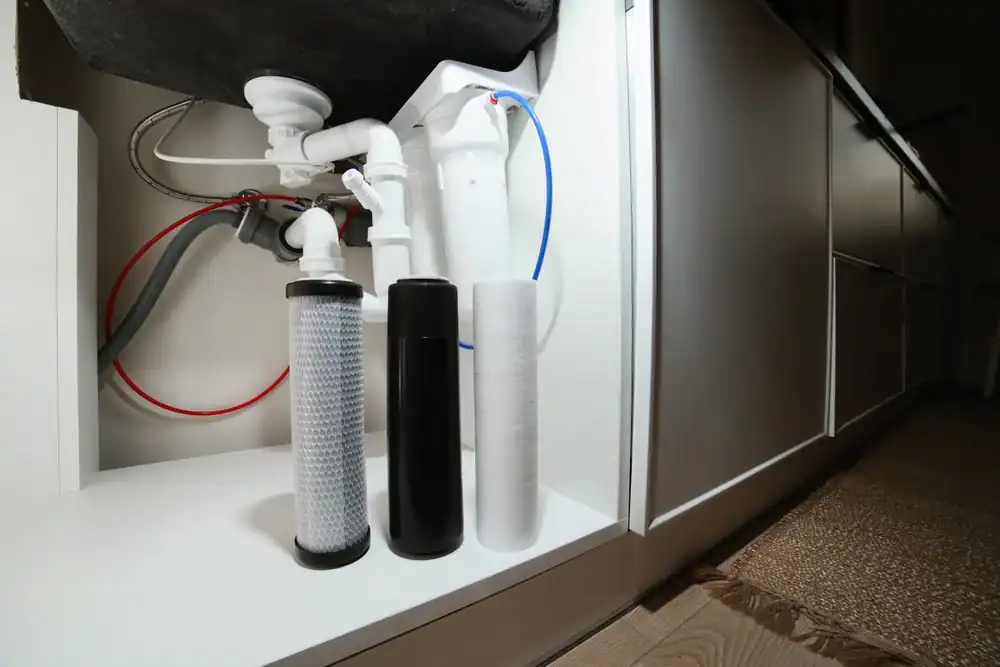
Iron removal systems use air injection oxidation or hydrogen peroxide injection to convert dissolved iron into particles that get filtered out. This handles both ferrous iron and bacterial iron, which is harder to treat. If you’ve got sulfur creating that rotten egg smell, a Sulfur Clear system uses a different filtration media designed specifically for hydrogen sulfide treatment.
Bacterial contamination requires UV disinfection. Our Purelight System uses ultraviolet light to kill E. coli and other waterborne organisms without adding chemicals to your water. It’s installed after filtration so the UV light can work effectively on clear water.
Hard water gets treated with salt-free conditioning systems that prevent scale buildup without using electricity, draining water, or requiring salt refills. These systems protect your appliances and plumbing while keeping maintenance simple.
Every system is whole-house, meaning every tap, shower, and appliance gets treated water. And if you’re military or a first responder, we offer a $500 discount on installation.

Softening addresses hardness—calcium and magnesium that cause scale buildup. Filtration removes contaminants like iron, sulfur, and bacteria. Most College Park homes need both, but the water test tells us for sure.
If you’ve got rotten egg smell, rust stains, or cloudy water, you’re dealing with contamination that softening won’t fix. A softener might even make iron problems worse by converting it to a form that stains more easily. That’s why we test first—so we’re treating the actual problems in your water, not guessing.
The good news is that modern systems can handle multiple issues in one setup. We’re not stacking five different units in your garage. A well-designed system treats hardness, removes iron and sulfur, and disinfects bacteria in a streamlined configuration that doesn’t take over your space.
Both methods oxidize iron so it can be filtered out, but they work differently. Air injection systems pull oxygen into the water to convert dissolved iron into rust particles. They’re reliable, low-maintenance, and handle most iron levels we see in College Park wells.
Hydrogen peroxide injection is stronger. If your iron levels are high or you’ve got bacterial iron, peroxide does a better job killing the bacteria and oxidizing stubborn iron. It requires refilling a peroxide tank periodically, but it’s more effective for tough cases.
We choose the method based on your water test results and iron levels. Some homes do fine with air injection. Others need the extra punch of peroxide. Either way, the goal is the same—clear water with no staining and a system that keeps working without constant attention.
Yes, but it requires the right type of filtration media. Hydrogen sulfide is a gas dissolved in water, and standard filters won’t touch it. You need a system designed specifically for sulfur removal.
Our Sulfur Clear systems use catalytic carbon or other specialized media that chemically reacts with hydrogen sulfide and removes it before water enters your home. For severe sulfur problems, we might combine this with air injection or peroxide to oxidize the sulfur first, then filter it out.
The smell should be completely gone—not just reduced. If you’re still catching whiffs of rotten eggs after a system is installed, something’s wrong with the setup or the media needs service. A properly designed sulfur removal system eliminates the odor entirely from every tap and shower.
It depends on the type of system and your water quality. Most whole-house filtration systems need a service visit once a year. That includes checking media levels, inspecting valves, replacing UV bulbs if you have disinfection, and making sure everything’s regenerating properly.
If you’ve got a hydrogen peroxide injection system, you’ll need to refill the peroxide tank every few months depending on your water usage. Salt-free systems require almost no maintenance—maybe a quick inspection annually. Carbon filters need media replacement every few years based on how much water you’re running through them.
We service all brands, not just systems we install. If your current setup isn’t working right or you’re not sure when it was last serviced, we can evaluate it and get it back to performing the way it should. Regular maintenance is what keeps these systems effective long-term instead of turning into expensive garage decorations.
You need someone who knows what they’re doing. These aren’t countertop filters—you’re tying into your home’s main water line, installing backwash drains, setting up regeneration cycles, and potentially adding UV disinfection or chemical injection. Miss a step and you’ve either got a system that doesn’t work or a mess that causes more problems than it solves.
Sizing matters too. If the system isn’t matched to your household’s flow rate and daily water usage, it’ll either under-perform or cycle too often and wear out early. And if you’re treating multiple issues—iron plus bacteria plus hardness—the sequence of treatment stages matters. UV disinfection has to come after filtration or it won’t work. Iron removal has to happen before softening or you’ll foul the resin.
Professional installation means the system is designed for your specific water chemistry, installed correctly, and set up to regenerate at the right intervals. It also means you’ve got someone to call if something goes wrong, instead of troubleshooting a complicated system you installed yourself with YouTube videos.
Please provide your email address so that we can stay in touch and answer any questions you have! We will be reaching back out shortly.
"*" indicates required fields