Reach Out Today
Please provide your email address so that we can stay in touch and answer any questions you have! We will be reaching back out shortly.


Hear from Our Customers
The orange ring in your toilet bowl isn’t a cleaning problem — it’s an iron problem. The smell in your shower isn’t the drain — it’s hydrogen sulfide coming straight out of your well. Once those are treated at the source, you stop fighting symptoms and start using your water without thinking twice about it.
For homeowners in Charlotte County, that shift matters more than most people realize. The Floridan Aquifer that supplies most private wells here passes through limestone for miles before it reaches your tap, picking up iron, manganese, calcium, and sulfur along the way. That’s not a fluke — it’s geology. And it means your water isn’t going to improve on its own, no matter how many filters you stack under the sink.
If you’ve been in your home since before Hurricane Ian, there’s another layer worth knowing. The flooding along the Peace and Myakka Rivers in 2022 compromised septic systems across the county, and researchers confirmed water quality degradation in Port Charlotte waterways within days of landfall. Private wells have no government monitoring protecting them. What’s in your water right now is something only a real test can tell you — and a whole-house system can actually fix.
We’ve been solving Florida well water problems for over 50 years, with deep roots in Charlotte County specifically. Not water problems in general — the Floridan Aquifer, the artesian well conditions documented in Charlotte County’s own planning records, the way warm subtropical summers intensify sulfur bacteria activity in wells near the Myakka River corridor. This is the kind of local knowledge that takes decades to build and can’t be faked.
Our A+ Better Business Bureau rating with zero complaints on record isn’t a stat to gloss over. In an industry the Florida Attorney General has flagged for predatory sales tactics, it’s the clearest signal available that we operate differently. We’re WQA members — which requires passing a professional exam and agreeing to a binding ethics code — credentials that most water treatment companies in Southwest Florida simply don’t hold.
We also offer a $500 discount for military personnel and first responders, and we have a genuine connection to the Tunnels to Towers Foundation. For Charlotte County’s veteran community, that’s not a footnote — it’s a values match.
It starts with a free water analysis — no charge, no obligation, no sales pitch before the facts are on the table. Our technician tests your well water and shows you exactly what’s in it: iron levels, sulfur content, manganese, hardness, bacterial presence. For Charlotte County wells, that test almost always tells a story shaped by local geology and, in many cases, by what happened to the groundwater during and after major storms.
From there, we design a system around your specific results — not a package pulled off a shelf. If your well is pulling high iron and hydrogen sulfide, you might need an air injection oxidation system combined with catalytic carbon media. If bacteria is a concern — which it should be for any well owner in a flood-prone area near Charlotte Harbor — UV sterilization gets added to the design. The system addresses what your water actually contains, nothing more.
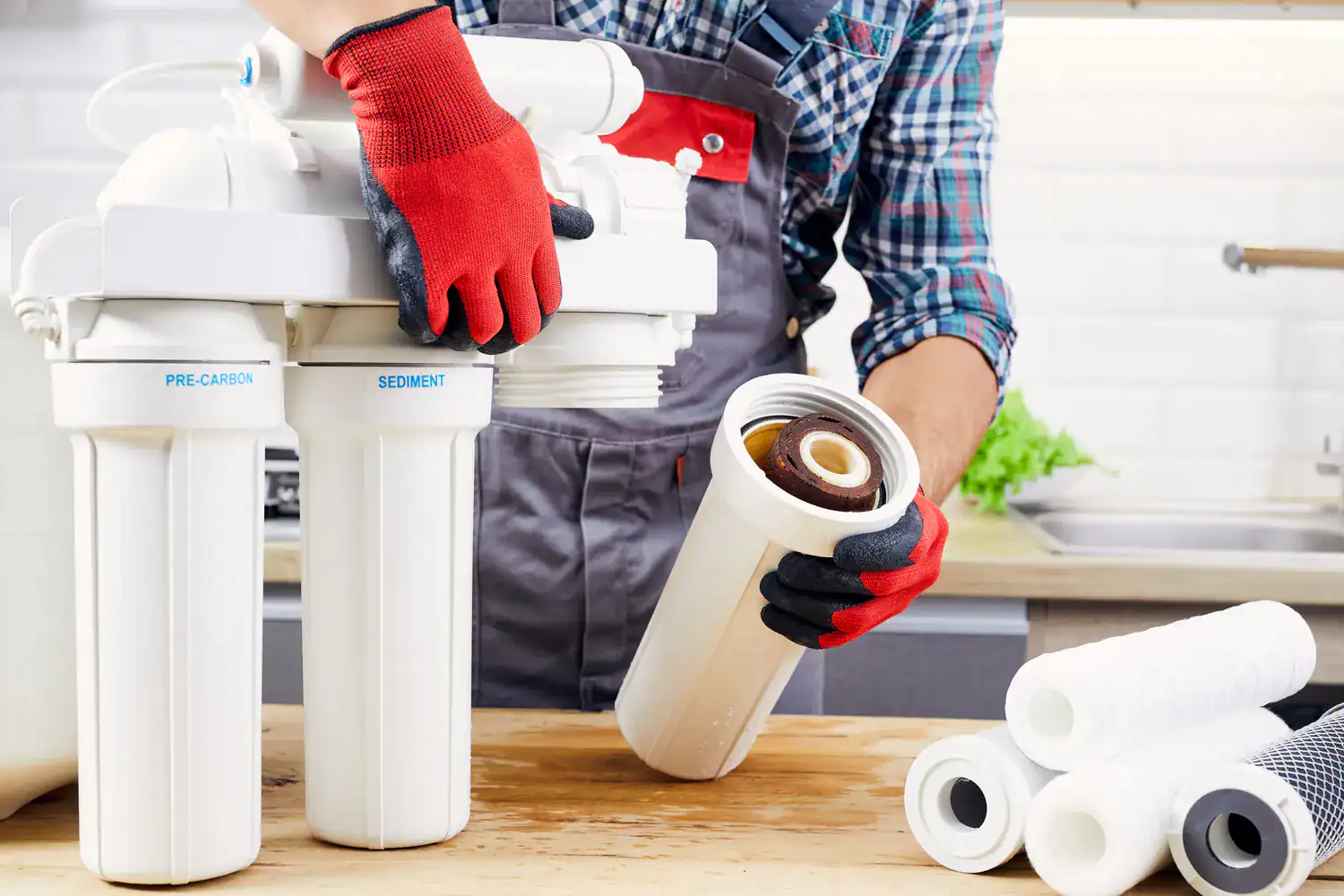
Installation is completed in one day. Every tap in your home — kitchen, bathrooms, laundry, outdoor spigots — delivers treated water by the time our technician leaves. And because we’re a Florida-based operation with statewide service capability, you’re not handing your system over to a national brand that becomes unreachable the moment the invoice is paid. Service, filter replacements, and follow-up are part of the relationship, not an afterthought.
Ready to get started?
Charlotte County wells are not average Florida wells. The county sits at the convergence of the Peace River, the Myakka River, and Charlotte Harbor — a hydrological environment that creates groundwater conditions distinct from inland counties. Artesian wells in parts of the county free-flow at the surface due to hydrostatic pressure, which accelerates the intrusion of highly mineralized water. Communities like South Gulf Cove — with over 120 canals connecting to Charlotte Harbor — have a closer interaction between surface water and groundwater than most inland neighborhoods, which raises the bacterial risk profile for shallow wells.
The systems we use are matched to those realities. Air injection oxidation (AIO) handles dissolved iron and hydrogen sulfide without chemicals. Hydrogen peroxide injection is available for heavier sulfur loads. Catalytic carbon media removes the compounds that cause taste and odor problems. UV sterilization eliminates bacteria and pathogens — a critical layer for any well in a county that has experienced repeated storm flooding. Water softening addresses the hardness that destroys water heaters, dishwashers, and fixtures over time. The EWG has specifically flagged manganese as a contaminant of concern in Charlotte County water, and manganese reduction is part of our treatment design when test results warrant it.
Every system is whole-house, installed at the point of entry, and designed for the specific chemistry of your well. No guessing. No overselling. Just what your water test shows and what your home actually needs.

That smell is hydrogen sulfide — a gas that forms naturally in groundwater when sulfur compounds interact with certain bacteria in the well or aquifer. In Charlotte County, it’s one of the most common well water complaints, and it’s directly tied to the region’s limestone geology and the warm, humid conditions that keep sulfur bacteria active year-round. The warmer the water and the more organic material present in the well environment, the stronger the smell tends to be.
The fix depends on how much hydrogen sulfide your water actually contains. Lower concentrations are typically handled with an air injection oxidation system, which forces the gas out of solution before it reaches your pipes. Heavier sulfur loads may require hydrogen peroxide injection followed by catalytic carbon filtration. Our free water analysis will tell you exactly which approach fits your well — and you won’t be sold a system designed for a different problem.
The most consistently documented issues in Charlotte County private wells are dissolved iron, hydrogen sulfide, manganese, hardness from calcium and magnesium, and bacterial contamination. The iron and sulfur come from the limestone formations the Floridan Aquifer passes through before reaching your well. The hardness is a byproduct of the same geology. Manganese has been specifically flagged by the Environmental Working Group as a contaminant of concern in Charlotte County water, with research linking excessive manganese exposure to cognitive impacts in children.
Bacterial contamination is a separate category — and one that’s particularly relevant in Charlotte County given the flooding history along the Peace and Myakka Rivers. Septic system failures during Hurricane Ian released untreated waste into streets and waterways across the county, and those events can affect shallow wells in ways that aren’t visible or detectable without a proper test. If you haven’t tested your well since 2022, that’s the first thing worth doing.
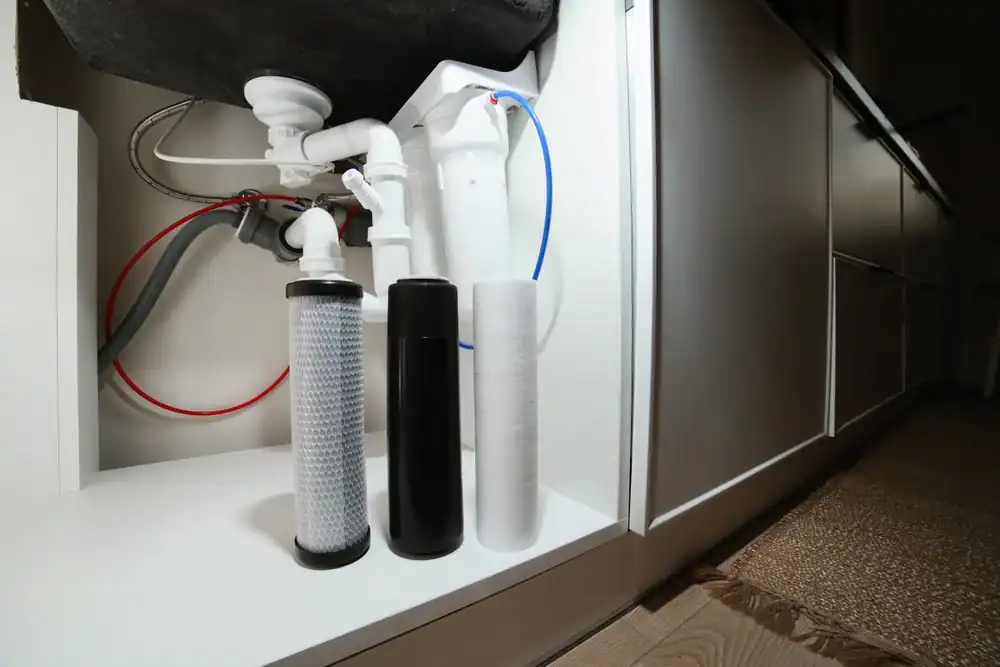
A point-of-use filter under the sink only treats the water coming out of that one faucet. Everything else in your home — your showers, your laundry, your dishwasher, your water heater — still runs on untreated well water. If your well has iron, that iron is still staining your toilets, building up in your water heater, and running through your washing machine every cycle. A point-of-use filter doesn’t stop any of that.
A whole-house system installs at the point of entry, which means every tap and appliance in the home receives treated water from the same source. For Charlotte County homeowners dealing with iron staining, sulfur odor, hard water scaling, or bacterial concerns, a point-of-use filter is a band-aid on a plumbing problem. The whole-house approach is the only one that actually protects your appliances, your fixtures, and your water heater — and in a county where replacing a water heater destroyed by mineral buildup runs $1,000 to $1,500, the system pays for itself faster than most people expect.
Yes — and the Florida Department of Health in Charlotte County (DOH-Charlotte) specifically recommends testing private wells after any flooding event before resuming normal use. When storm surge, river flooding, or heavy rainfall inundates the ground around a well, surface contaminants — including bacteria, nitrates, and chemical runoff — can infiltrate the well casing and contaminate the water supply. Charlotte County experienced exactly this scenario during Hurricane Ian in 2022, and again during Helene and Milton in 2024.
The contamination isn’t always visible or detectable by smell. Bacterial contamination in particular is colorless and odorless, which means well water can look and smell completely normal while still being unsafe to drink. If your property was flooded, if you noticed a change in your water’s taste or odor after a storm, or if you simply haven’t tested your well since the last major weather event, a professional water analysis is the right starting point. Our free water analysis covers the full contaminant profile — not just bacteria — so you get a complete picture of what your well is producing right now.
The honest answer is that it depends on what your water test shows. A system designed for a well with moderate iron and some hardness is going to look different — and cost differently — than a system designed for a well with heavy sulfur, elevated manganese, bacterial contamination, and high iron all at once. Charlotte County wells frequently present with multiple issues simultaneously, which is why the free water analysis matters before any number gets discussed.
That said, a complete whole-house well water filtration system for a typical Charlotte County home generally runs in the range of $5,000 to $10,000 installed, depending on the treatment technologies required. That range covers the system design, the equipment, and the one-day installation. When you factor in what you’re currently spending — bottled water, appliance repairs, stain remediation, the shortened lifespan of your water heater and washing machine — the math shifts considerably. Most homeowners in Port Charlotte and the surrounding communities find the investment pays back faster than they expected once they stop absorbing those recurring costs.
Please provide your email address so that we can stay in touch and answer any questions you have! We will be reaching back out shortly.
"*" indicates required fields