Reach Out Today
Please provide your email address so that we can stay in touch and answer any questions you have! We will be reaching back out shortly.

Hear from Our Customers
You stop buying bottled water by the case. Your toilets and sinks stay white instead of orange. Guests don’t wrinkle their nose when they turn on the tap.
That rotten egg smell disappears because hydrogen sulfide gets filtered out before it reaches your faucets. The iron that’s been staining everything and slowly damaging your water heater gets removed at the source. Bacteria that you can’t see, taste, or smell—but that puts your family at risk—gets eliminated through proper disinfection.
Your appliances last longer. Your plumbing stays cleaner. Your water pressure stays consistent. And you’re not wondering anymore whether what’s coming out of your well is actually safe to drink, cook with, or bathe in.
This is what happens when well water filtration is designed specifically for what’s in your water, not just what works everywhere else.
Quality Safe Water of Florida LLC focuses exclusively on water purification, softening, and filtration. No plumbing. No water heaters. Just clean water systems designed for Florida wells.
We’re members of the National Water Quality Association and maintain an A-rating with the Better Business Bureau—five stars, zero complaints. That matters in an industry where some of the biggest names have horrible reputations for selling systems and then disappearing when you need service.
Burbank sits in an area where Florida’s limestone geology creates the perfect conditions for smelly, stained well water. We’ve worked with enough homes here to know exactly what you’re dealing with and which systems actually solve it long-term. Military and first responders get $500 off, and we’re proud supporters of the Tunnels to Towers Foundation.
We start with water testing. Not a guess, not a generic system—actual analysis of what’s in your well. Iron levels, sulfur content, bacteria presence, hardness, pH. This tells us what you’re dealing with and what needs to be removed.
Then we design a system based on your results and your household’s water usage. If you’ve got iron bacteria, we’re looking at hydrogen peroxide injection or air injection oxidation to handle the oxidation process. If sulfur is the main issue, we’re filtering that out at the source. If bacteria is present, we’re adding disinfection that doesn’t rely on harsh chemicals.
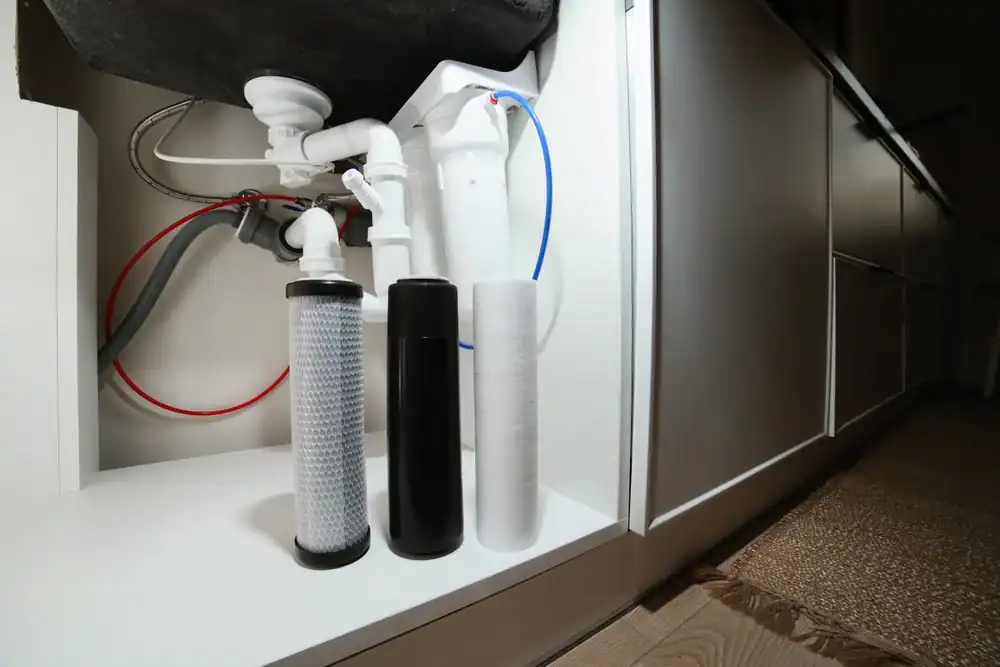
Installation is whole-house. Everything gets treated before it reaches any faucet, shower, toilet, or appliance. You’re not filtering at one tap and ignoring the rest.
After installation, the system runs automatically. Depending on what we installed, you might have a retention tank giving the oxidation process 20 to 30 minutes of contact time, or a carbon filter pulling out any remaining taste and odor. The result is water that’s clean throughout your entire home, every time you turn on a tap.
Ready to get started?
Iron removal systems handle both the rust you can see and the bacterial iron you can’t. Air injection oxidation works well for wells with up to 3 ppm of iron—it draws in ambient air to oxidize contaminants before filtering them out. For higher levels or more stubborn iron bacteria, hydrogen peroxide injection gives you a non-toxic oxidizer that breaks down into just water and oxygen.
Hydrogen sulfide treatment eliminates that rotten egg smell at the source. Sulfur is common in Burbank because of the limestone aquifers underneath us, and it takes specific filtration to remove it completely—not just mask it.
Bacteria disinfection protects against E. coli and other microbes without leaving chemical residue in your water. The Florida Department of Health recommends annual testing for bacteria and nitrates in private wells, and if your test comes back positive, you need a system that sterilizes effectively.
We also handle hardness and sediment when needed. Every system is custom-designed based on your water analysis, so you’re not paying for equipment that doesn’t match your actual problem. And because it’s whole-house, every fixture and appliance gets protected—not just the kitchen sink.

If you’re seeing orange or red stains in your sinks, toilets, or tubs, that’s iron. If your water smells like rotten eggs, that’s hydrogen sulfide. If you’re noticing sediment, cloudiness, or any off taste, something’s in your water that shouldn’t be.
But some of the most dangerous contaminants—bacteria, nitrates, certain metals—don’t have a smell, taste, or color. That’s why testing matters. The Florida Department of Health recommends testing private wells annually for bacteria and nitrates at minimum, and testing for metals and other contaminants periodically.
We can run a full analysis that tells you exactly what’s present and at what levels. From there, you’ll know whether you need a simple filter, a full iron removal system, bacteria disinfection, or a combination. Most Burbank wells deal with at least some iron and sulfur because of the local geology, so filtration isn’t optional if you want to protect your plumbing and your health.
Both methods oxidize contaminants like iron and sulfur so they can be filtered out, but they work differently. Air injection oxidation pulls in regular air from outside and uses the oxygen to oxidize iron and other metals. It’s effective for wells with up to about 3 ppm of iron and doesn’t require any chemicals or ongoing costs for oxidizers.
Hydrogen peroxide injection uses a small, precise dose of peroxide that gets automatically injected into your water line. The peroxide breaks down into oxygen and water, giving you a stronger oxidation process that handles higher iron levels, tougher bacteria, and more stubborn sulfur. It’s non-toxic and safe—nothing harmful gets left behind.
Which one you need depends on your water test results. If your iron levels are low to moderate and you don’t have bacterial iron, air injection might be enough. If you’re dealing with higher contamination, bacterial iron, or persistent sulfur, hydrogen peroxide gives you more oxidizing power. We’ll recommend the right system based on what’s actually in your well, not what’s easiest to install.
Yes, if it’s designed correctly for your specific sulfur levels. That rotten egg smell is hydrogen sulfide gas, and it’s common in Burbank wells because of the limestone aquifers we sit on top of. Sulfur compounds naturally occur in that geology, and they make their way into well water easily.
A proper sulfur treatment system oxidizes the hydrogen sulfide and then filters it out before it reaches your taps. Depending on concentration, that might involve hydrogen peroxide injection, air injection oxidation, or a combination with a whole-house carbon filter to catch any remaining odor.
The key is getting your water tested first so we know how much sulfur we’re dealing with. Low levels might only need carbon filtration. Higher levels need oxidation first, then filtration. If you’ve tried other solutions and the smell keeps coming back, it’s usually because the system wasn’t strong enough for your actual sulfur content or wasn’t maintained properly. When it’s done right, the smell is gone—completely.
It depends entirely on what’s in your water and what size system your household needs. A basic sediment and carbon filter might run around $1,000. A full iron removal system with oxidation, retention tank, and whole-house filtration can run several thousand. If you need bacteria disinfection, sulfur treatment, and softening all in one system, you’re looking at a more comprehensive setup.
Here’s what affects cost: your water test results, your household’s daily water usage, the complexity of the contamination, and whether you need one treatment method or multiple stages. A home using 300 gallons a day needs different equipment than one using 100.
We don’t sell you a system before we test your water, because we’re not guessing. Once we know what you’re dealing with, we’ll design a system that actually solves your specific problems and give you a clear price. Military and first responders get $500 off. And when you compare the cost of a proper system to replacing a rusted-out water heater, a stained toilet, or a washing machine damaged by iron buildup, the filtration pays for itself.
Most systems need a basic check once a year, but it depends on what type of filtration you have and how heavily contaminated your water is. Carbon filters need replacing periodically—usually every 6 to 12 months depending on usage and what they’re filtering out. If you have an iron filter, the media inside might need replacement every few years.
Hydrogen peroxide injection systems need the peroxide tank refilled, but that’s typically only a few times a year for an average household. Air injection systems need less maintenance since they’re not using consumable chemicals, but the air intake and oxidation components should still get checked annually.
The biggest maintenance issue we see is when people buy a system from a company that doesn’t service what they sell. That’s why we only install systems we can maintain long-term. We’ll walk you through what your specific system needs, set up a maintenance schedule if you want one, and make sure you know when filters need changing or tanks need refilling. Proper maintenance keeps the system running efficiently and your water staying clean year after year.
Please provide your email address so that we can stay in touch and answer any questions you have! We will be reaching back out shortly.
"*" indicates required fields