Reach Out Today
Please provide your email address so that we can stay in touch and answer any questions you have! We will be reaching back out shortly.

Hear from Our Customers
The orange ring around your toilet bowl isn’t a cleaning problem. The rotten egg smell coming from your shower isn’t a pipe problem. Both are signs that your well water is carrying iron, hydrogen sulfide, or manganese — and they won’t go away until the water itself is treated at the source.
When your whole-house system is in place, the staining stops. The smell is gone. Your laundry comes out the way it should. Your water heater and appliances aren’t quietly being destroyed by mineral buildup. For many Bonita Springs homeowners who’ve invested significantly in their properties — whether that’s a home in Hunter’s Ridge, a place near the Imperial River, or a newer build east of I-75 — that kind of protection matters beyond just drinking water.
One thing that catches people off guard is how much seasonal variation affects well water here. During the rainy season, rising groundwater pushes more surface contaminants through the porous limestone into private wells. During the dry months, mineral concentrations climb as aquifer levels drop. There’s no “good season” for untreated well water in this area — which is exactly why a permanent, whole-house solution beats any seasonal or point-of-use workaround.
We’ve been solving well water problems across Florida for over 50 years. Not water softeners bolted onto a plumbing route — actual whole-house purification systems designed around what Florida’s aquifers produce. That includes the Tamiami and Hawthorn Formation geology that runs under Lee County and loads well water with the iron, sulfur, and hardness that Bonita Springs homeowners deal with every day.
Our credentials aren’t just marketing. An A+ BBB rating with zero complaints on record and active membership in the National Water Quality Association (WQA) are things you can verify independently — and in an industry that has a real history of high-pressure sales and oversized promises, that track record means something. The WQA requires passing a professional exam and committing to a formal code of ethics. Most water treatment companies in this area don’t hold it.
We serve Bonita Springs because we understand what’s in the ground here — not because it’s the next city on a national franchise map. When your system needs attention down the road, you’re dealing with the same company that installed it, not a contractor dispatched from a call center who’s never seen your property before.
It starts with a free water analysis. Not a theatrical demo with dye drops meant to alarm you — an actual test of your well water that identifies what’s present at your specific property. Iron levels, sulfur content, manganese, bacterial indicators, hardness — whatever your well is producing, the test surfaces it. That result is what drives the system design, not a one-size-fits-all product recommendation.
Once the analysis is done, you get a clear picture of what your water contains and what it takes to fix it. If your well water only has one issue, you’ll hear that. If it has four — which is common for properties east of I-75 where Bonita Springs’ private well concentration is highest — the system addresses all of them in a single integrated installation. There’s no upsell pressure and no guesswork.
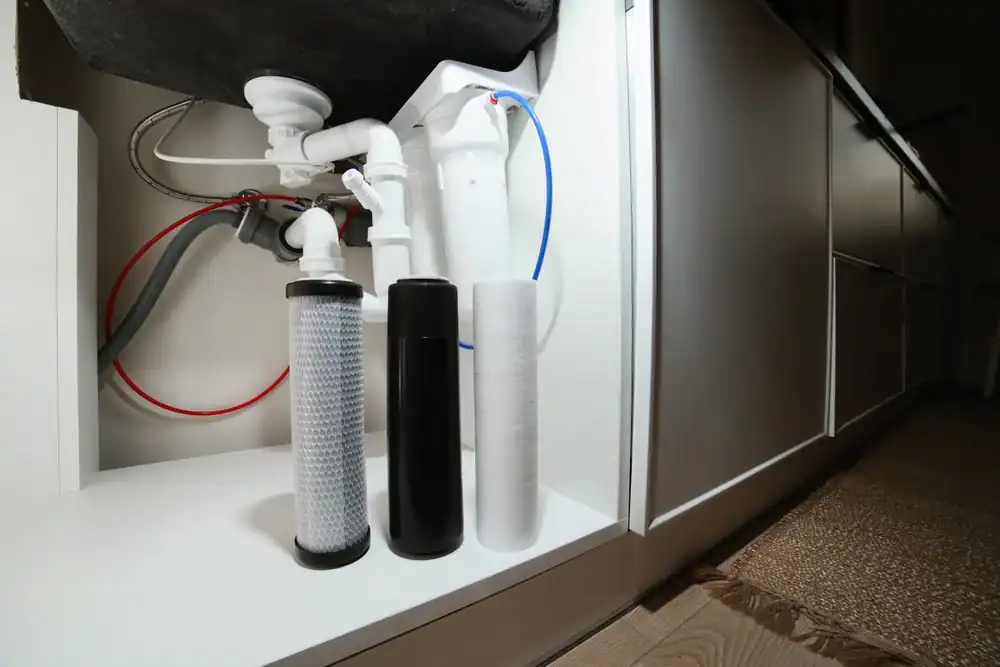
Installation is completed in one day. The system goes in at your home’s point of entry, so every tap in the house — kitchen, bathrooms, laundry, outdoor — is covered from that point forward. For seasonal residents returning to a property that’s been sitting vacant, or for anyone who went through Hurricane Ian and hasn’t had their well professionally tested since, that same-day turnaround matters. You don’t have to live with the problem while waiting on a multi-day project.
Ready to get started?
A water softener treats hardness. That’s it. If you bought one and you’re still seeing orange stains and smelling sulfur, that’s not a malfunction — that’s what a softener is designed to do. Iron, hydrogen sulfide, manganese, and bacteria require different treatment stages, and most Bonita Springs well water has more than one of those going on simultaneously.
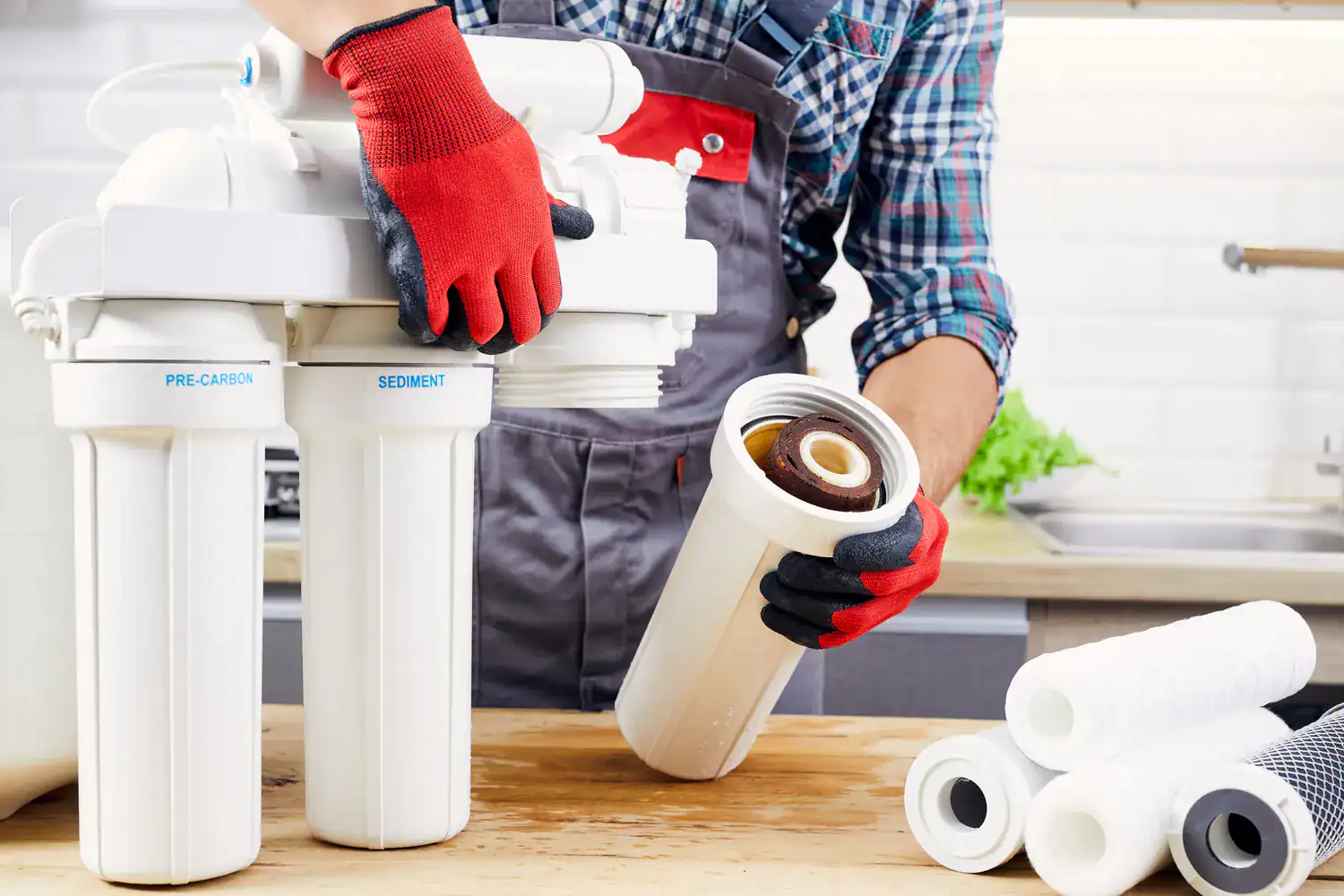
We design whole-house well water systems that address the full contaminant profile of your specific well. That typically means combining an air injection or hydrogen peroxide injection stage for iron and sulfur removal, catalytic carbon media for hydrogen sulfide, a softening stage for hardness and scale, and UV disinfection for biological protection. The Lee County Department of Health’s own lab notes that water samples from this area routinely show high iron compounds, organic material, and calcium carbonate — so the system your neighbor in Naples might need and the system right for a well in east Bonita Springs aren’t necessarily the same thing. Your system is sized and configured based on your water test results and your home’s actual usage.
For military veterans, active-duty service members, and first responders — a demographic well represented across Lee County and Southwest Florida — we offer a $500 discount on whole-house systems. The Florida Department of Health recommends annual testing for all private wells, and for any well that experienced flooding during Hurricane Ian, testing before continued use isn’t optional — it’s the responsible baseline.

That smell is hydrogen sulfide — a naturally occurring gas that forms when sulfur compounds in the groundwater break down. In Lee County, the limestone-heavy geology of the Tamiami and Hawthorn aquifer formations creates conditions where hydrogen sulfide is a routine finding in private wells, not an unusual one. The warm temperatures in Southwest Florida make it worse, because heat accelerates the off-gassing and intensifies the odor compared to what you’d experience with the same water chemistry in a cooler climate.
The fix isn’t a filter on your faucet. Hydrogen sulfide needs to be addressed at the point of entry, before the water reaches any fixture in your home. Depending on the concentration in your well, that’s typically handled through an air injection oxidation system or hydrogen peroxide injection, followed by catalytic carbon filtration to capture what remains. Our free water analysis will tell you exactly which approach fits your situation — and the concentration level in your specific well determines the right system size, not a general estimate.
That’s iron. When iron-laden water is exposed to oxygen — which happens the moment it hits air in a toilet tank or on fabric in a washing machine — it oxidizes and leaves behind rust-colored deposits. The Florida Department of Health’s Lee County lab regularly receives well water samples from this area described as having high iron compounds, and it’s one of the most common complaints from Bonita Springs homeowners on private wells.
Iron staining is stubborn, but it’s also completely preventable. Once a properly sized iron removal system is installed at your home’s point of entry, the iron is captured before it reaches any fixture. The staining stops forming. What’s already there may require some cleaning to remove, but nothing new will accumulate. The key detail is sizing — iron removal systems need to be matched to your well’s actual iron concentration and your household’s water flow rate, which is why the water test comes first before any system is recommended.
This is one of the most important questions any Bonita Springs well owner can ask, and the honest answer is: not without testing first. Hurricane Ian made direct landfall in Lee County in September 2022, and storm surge traveled up the Imperial River through the center of Bonita Springs, flooding homes and the surrounding ground. When floodwater contacts a private well — either directly or through the surrounding soil — it can introduce bacteria, surface contaminants, and debris into the water supply.
The Florida Department of Health’s guidance is clear: any private well that has been submerged or flood-affected should be tested and treated before resuming use. If your property was impacted and you haven’t had a professional well water test since then, you’re operating on an assumption rather than data. Our free water analysis will tell you whether your well is currently carrying bacterial contamination, elevated nitrates, or other post-flooding indicators — and if it is, UV disinfection and the appropriate filtration stages can address it directly. Don’t skip this step because the water looks clear. Bacterial contamination has no visible signs.
A whole-house well water filtration system in Bonita Springs typically runs between $5,000 and $10,000 installed, depending on what your water test reveals and how many treatment stages your well requires. A property with only moderate hardness needs a simpler system than one with high iron, active hydrogen sulfide, manganese, and bacterial risk — all of which are common combinations in Lee County private wells. The system is configured around your actual water, not a standard package.
That range might sound significant, but consider what untreated well water costs over time. Iron and hard water accelerate the breakdown of water heaters, washing machines, dishwashers, and plumbing fixtures. Buying bottled water for drinking while still bathing and doing laundry in mineral-heavy well water is a recurring expense that never ends. For Bonita Springs homeowners who’ve invested in their properties — many of which carry significant value in communities like Hunter’s Ridge or along the Bonita Beach Road corridor — protecting that investment with a permanent water treatment system is a straightforward financial decision, not a luxury. Military veterans, active-duty members, and first responders also qualify for a $500 discount.
A water softener addresses one specific problem: hardness caused by calcium and magnesium. It does that job well, but it does nothing for iron, sulfur smell, manganese, sediment, or bacterial contamination — all of which are common in Bonita Springs well water. If you’ve had a softener installed and you’re still dealing with orange stains, rotten egg odor, or murky water, the softener isn’t failing. It’s just not designed to handle those issues.
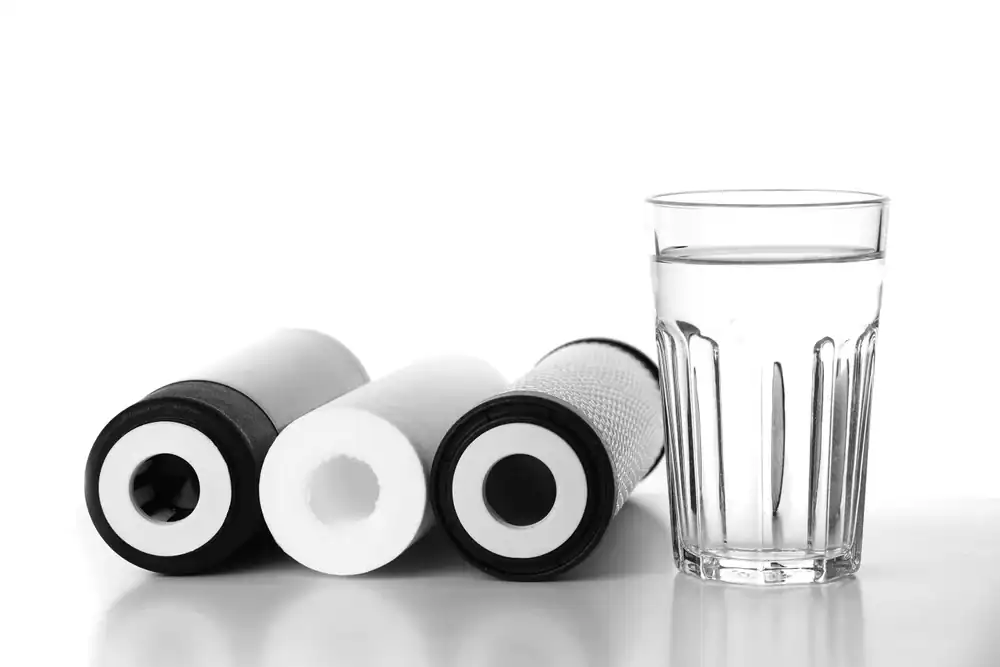
A whole-house well water filtration system is a multi-stage solution that addresses the full contaminant profile of your well. Depending on what your water test shows, that might include iron and manganese removal, hydrogen sulfide treatment, sediment filtration, softening, and UV disinfection for biological protection — all working together in a single system installed at your home’s point of entry. Every tap in the house gets treated water. The right combination of stages is determined by your water test results, not by what’s easiest to sell. That’s the core difference between a specialist who starts with your water and a dealer who starts with their product line.
Please provide your email address so that we can stay in touch and answer any questions you have! We will be reaching back out shortly.
"*" indicates required fields