Reach Out Today
Please provide your email address so that we can stay in touch and answer any questions you have! We will be reaching back out shortly.

Hear from Our Customers
The sulfur smell disappears. No more explaining to guests why your water smells that way. No more running the tap for two minutes hoping it clears up before someone notices.
The orange stains stop showing up on your toilets, sinks, and laundry. You’re not scrubbing rust marks off everything anymore or replacing towels that turned brown after a few washes.
Your appliances last longer. Water heaters, washing machines, and dishwashers don’t corrode from the inside out when hydrogen sulfide and iron aren’t eating away at the metal. That alone saves you thousands over time.
And the biggest shift: you stop second-guessing whether the water is safe. No more buying cases of bottled water or avoiding the tap. You know what’s in your water because it’s been treated at the source, and you can actually use what comes out of your faucet.
We’ve been handling well water problems across Central Florida for over 40 years. We’re not plumbers who also sell filters. We’re water treatment specialists, and that focus matters when you’re dealing with Florida’s unique geology.
Boardman sits in an area where groundwater pulls sulfur compounds from limestone, iron from soil layers, and bacteria from organic matter. It’s not your water’s fault—it’s the aquifer. But it does mean you need someone who understands what’s actually happening below ground and how to treat it above ground.
We’re A-rated with the Better Business Bureau, hold a 5-star rating with zero complaints, and we’re members of the National Water Quality Association. We also offer a $500 discount to military members and first responders, because some things matter more than margin.
First, we test your water. Not a generic test—a full analysis that tells us exactly what’s in there and at what levels. Iron, sulfur, hardness, bacteria, pH, manganese. Everything that affects how your water behaves and what system will actually solve it.
Then we recommend a system based on what your water needs, not what we want to sell. If you’ve got 3 ppm of iron and hydrogen sulfide at 5 ppm, that’s a different setup than someone dealing with bacteria and hardness. Air injection oxidation handles iron and sulfur without chemicals. UV disinfection kills bacteria, viruses, and parasites at 99.99%. Hydrogen peroxide injection works when you need more aggressive oxidation. The system gets built around your water, not the other way around.
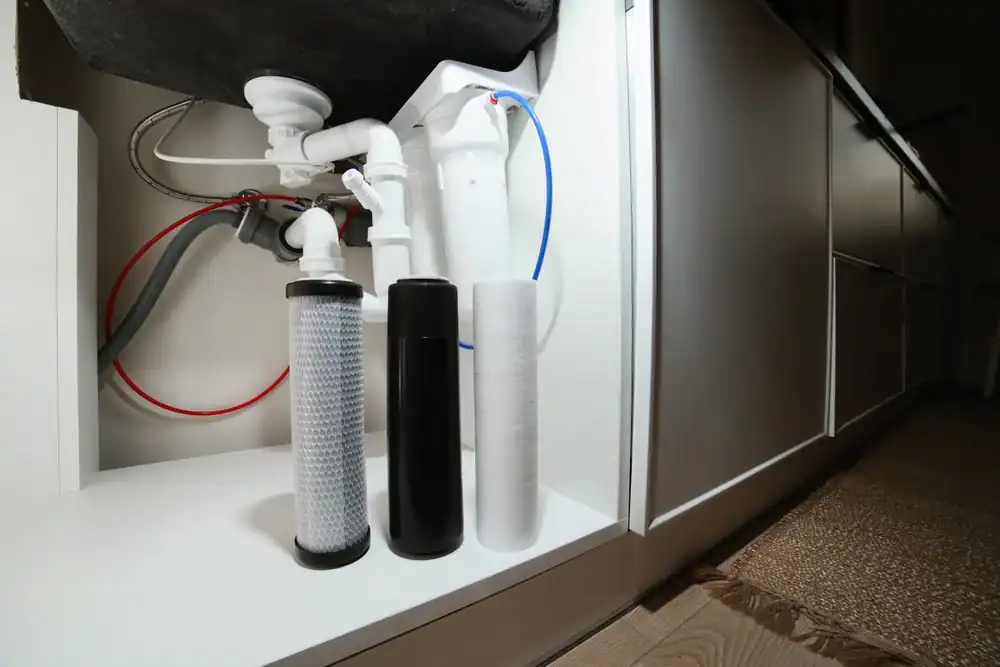
Installation happens at your point of entry, so every faucet, shower, and appliance gets treated water. We’re talking whole-house coverage. Once it’s in, the system runs on its own. Most setups are low-maintenance by design—especially air injection systems, which don’t need chemicals or constant filter swaps.
After install, you’ll see the difference immediately. Water that doesn’t smell. Fixtures that stay clean. Laundry that comes out actually white.
Ready to get started?
Iron removal systems handle both ferric iron (the kind you can see) and ferrous iron (the kind that’s invisible until it oxidizes and stains everything). Air injection oxidation is one of the most effective methods—it uses oxygen to convert dissolved iron into a solid that gets filtered out. No chemicals. Minimal maintenance.
Hydrogen sulfide treatment removes that rotten egg smell. Sulfur bacteria thrive in Florida’s limestone-heavy aquifers, and Boardman is no exception. Systems can remove up to 8 ppm of hydrogen sulfide, which covers even the worst cases. Some situations call for hydrogen peroxide injection when sulfur levels are high or when you’re also dealing with iron.
Well water bacteria disinfection uses UV technology to kill E. coli, Giardia, Cryptosporidium, and other pathogens that can make you sick. UV systems don’t add anything to your water—they just expose it to ultraviolet light that destroys microorganisms at the DNA level. It’s fast, effective, and chemical-free.
Every system we install is designed for Florida well water. That means accounting for high sulfate levels, elevated iron, low pH, and the bacteria that show up when your water table sits close to the surface. Generic systems don’t cut it here. You need equipment that’s built for the geology you’re sitting on.

If your water smells like sulfur, leaves orange or red stains, tastes metallic, or makes your laundry look dingy, you’ve got a problem that filtration can fix. Those are the obvious signs.
The less obvious ones: your water heater fails early, your faucets corrode faster than they should, or you just don’t trust what’s coming out of the tap. A lot of Boardman homeowners don’t realize their water has issues until they test it. Florida well water almost always has elevated iron, sulfur, or hardness because of the limestone aquifer and high water table.
The only way to know for sure is to test it. We run a full analysis that shows you exactly what’s in your water and at what levels. From there, you’ll know whether you need iron removal, sulfur treatment, bacteria disinfection, or all three.
Both methods remove iron and sulfur, but they work differently and fit different situations. Air injection oxidation uses compressed air to add oxygen to your water, which oxidizes dissolved iron and sulfur so they can be filtered out. It’s chemical-free, low-maintenance, and works great for moderate iron and sulfur levels.
Hydrogen peroxide injection is more aggressive. It injects a small amount of hydrogen peroxide into the water, which oxidizes contaminants faster and handles higher concentrations of iron and sulfur. It’s the better choice when air injection isn’t strong enough or when you’re dealing with stubborn bacteria alongside iron and sulfur.
We recommend the system based on your water test results. If your iron is under 10 ppm and sulfur is under 5 ppm, air injection usually does the job. Higher levels or more complex contamination call for hydrogen peroxide. There’s no one-size-fits-all answer, which is why testing your water first matters.
A standard iron or sulfur filter won’t kill bacteria. You need a UV disinfection system for that. UV light destroys bacteria, viruses, and parasites by damaging their DNA so they can’t reproduce or make you sick.
UV systems are installed after your filtration equipment, right before water enters your home’s plumbing. Water flows through a chamber where it’s exposed to ultraviolet light for a few seconds. That’s enough to eliminate 99.99% of harmful microorganisms, including E. coli, Giardia, and Cryptosporidium.
UV disinfection doesn’t add chemicals, doesn’t change the taste of your water, and doesn’t require much maintenance. You replace the UV bulb once a year, and that’s about it. If your well water tested positive for coliform bacteria or if you’re in an area where contamination is common, UV disinfection is non-negotiable. Boardman’s high water table and proximity to agricultural areas make bacteria contamination more likely, so a lot of homeowners here add UV as a precaution even if their water hasn’t tested positive yet.
It depends on what your water needs. A basic iron removal system starts around $2,000 to $3,000. Add sulfur treatment, and you’re looking at $3,500 to $5,000. If you need UV disinfection on top of that, the total can run $5,000 to $7,000 or more.
That’s not cheap, but compare it to what you’re already spending. Bottled water for a family of four costs $50 to $100 a month. A water heater replacement runs $1,200 to $2,500. Appliances that fail early because of corrosive water add up fast. Most homeowners break even within a few years just from avoiding those costs.
We don’t finance through third-party lenders, but we do offer a $500 discount for military members and first responders. And we only recommend what your water actually needs—no upselling to hit a number. If air injection handles your iron and sulfur, we’re not going to push you toward a more expensive system just because it exists.
Air injection systems need almost no maintenance. They backwash themselves automatically to flush out trapped iron and sulfur, and there are no chemicals to refill. You might need to clean the air injector once a year, but that’s a five-minute job.
Hydrogen peroxide systems require refilling the peroxide tank every few months, depending on your water usage. It’s a simple process—you pour in a gallon or two of hydrogen peroxide, and you’re done.
UV systems need a bulb replacement once a year. The bulb loses effectiveness over time, so even though it still lights up, it won’t kill bacteria as efficiently after 12 months. Replacing it takes about 10 minutes.
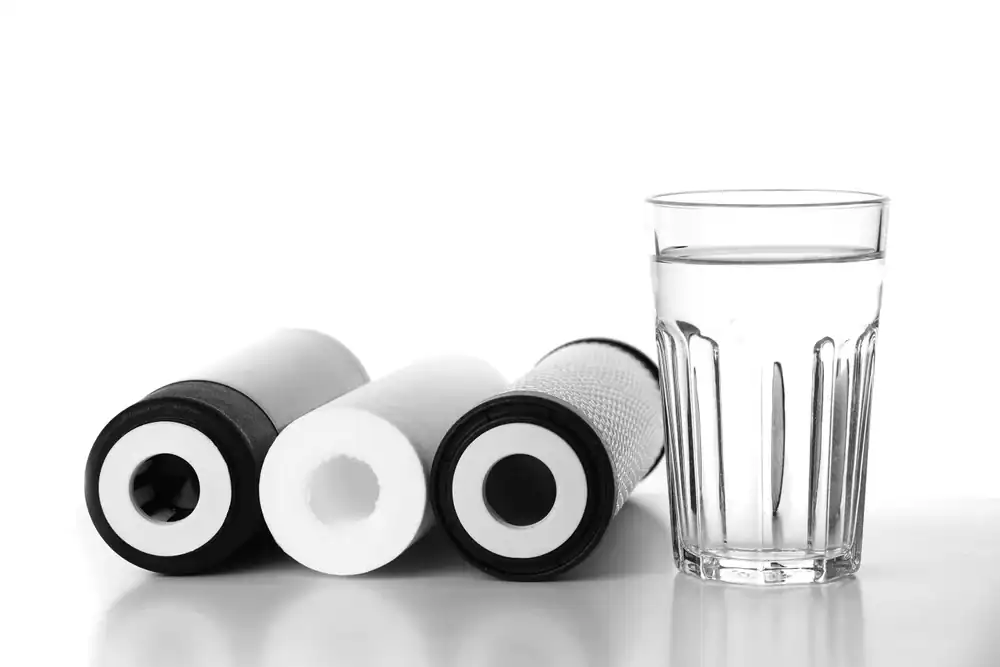
If your system includes a sediment or carbon filter, those need changing every 6 to 12 months depending on your water quality and usage. We’ll walk you through the maintenance schedule when we install your system, and most of it is simple enough that you can handle it yourself. If you’d rather not deal with it, we offer service plans that cover annual maintenance.
Please provide your email address so that we can stay in touch and answer any questions you have! We will be reaching back out shortly.
"*" indicates required fields