Reach Out Today
Please provide your email address so that we can stay in touch and answer any questions you have! We will be reaching back out shortly.

Hear from Our Customers
No more orange rings around the toilet that reappear two days after cleaning. No more reddish streaks in the shower or that sticky residue around your drains. Your water stops staining everything it touches.
The rotten egg smell disappears completely. You can run the tap without worrying about guests noticing an odor. Your dishes come out of the dishwasher without spots, and your laundry actually feels soft instead of stiff and scratchy.
Your appliances last longer because they’re not fighting mineral buildup and corrosion every day. Water heaters, washing machines, and dishwashers run more efficiently when they’re not clogged with iron deposits and sulfur bacteria. That means fewer repairs and later replacement costs.
You stop buying bottled water because what comes out of your tap actually tastes clean. Your coffee tastes better. Your ice cubes are clear. Your skin doesn’t feel dry and itchy after every shower.
We specialize in whole-house water purification systems throughout Central Florida. We hold an A rating with the Better Business Bureau with zero complaints and maintain membership in the National Water Quality Association.
Our focus is simple: fix the specific problems that Audubon Park homeowners deal with every day. Florida’s limestone geology creates unique challenges with sulfur, iron, and bacteria that most generic systems can’t handle properly. We size and configure systems based on your actual water test results, not a one-size-fits-all approach.
We’ve installed systems in hospitals and health clinics across the region. If our filtration meets medical facility standards, it’ll handle whatever’s coming out of your well. We also service all major water treatment brands, so if you’ve got an existing system that’s not performing, we can diagnose and fix it.
We start with a comprehensive water test at your home. This isn’t a basic hardness test. We’re checking for iron levels, sulfur compounds, bacteria presence, pH, and total dissolved solids. The test results tell us exactly what treatment approach will work for your specific water chemistry.
Based on those results, we recommend a system configuration. For iron removal, that might mean an air injection oxidation system that converts dissolved iron into particles that get filtered out. For hydrogen sulfide treatment, we might use hydrogen peroxide injection or a specialized media tank. For bacteria, we design a disinfection system that kills organisms without adding harsh chemicals to your water.
Installation typically takes a day. We tie into your main water line right where it enters your home, so every tap gets treated water. We set up the control valve, connect the treatment tanks, and program the system based on your household water usage. You’ll see the difference immediately, but some issues like stubborn staining take a few weeks to fully clear as residual deposits wash away.
We walk you through basic maintenance before we leave. Most systems need minimal attention, maybe adding salt to a softener or checking a filter cartridge every few months. We’re available for service calls if anything comes up, and we can handle repairs on any brand of equipment.
Ready to get started?
Your whole-house filtration system treats water right at the point of entry. That means every faucet, shower, toilet, and appliance gets filtered water. You’re not just fixing the kitchen sink. You’re protecting your entire plumbing system and everything connected to it.
For Audubon Park homes, we typically install a combination system. Iron removal comes first, usually through air injection oxidation that doesn’t require chemicals. Then sulfur treatment if your water has that rotten egg smell. If bacteria showed up in testing, we add a disinfection stage using hydrogen peroxide injection or UV light. Finally, a softener handles the hardness that’s common in Central Florida groundwater.
Each component is sized for your home’s water usage and the severity of your contamination. A household of two doesn’t need the same capacity as a family of five. We calculate flow rates and regeneration cycles so your system keeps up with demand without wasting water or media.
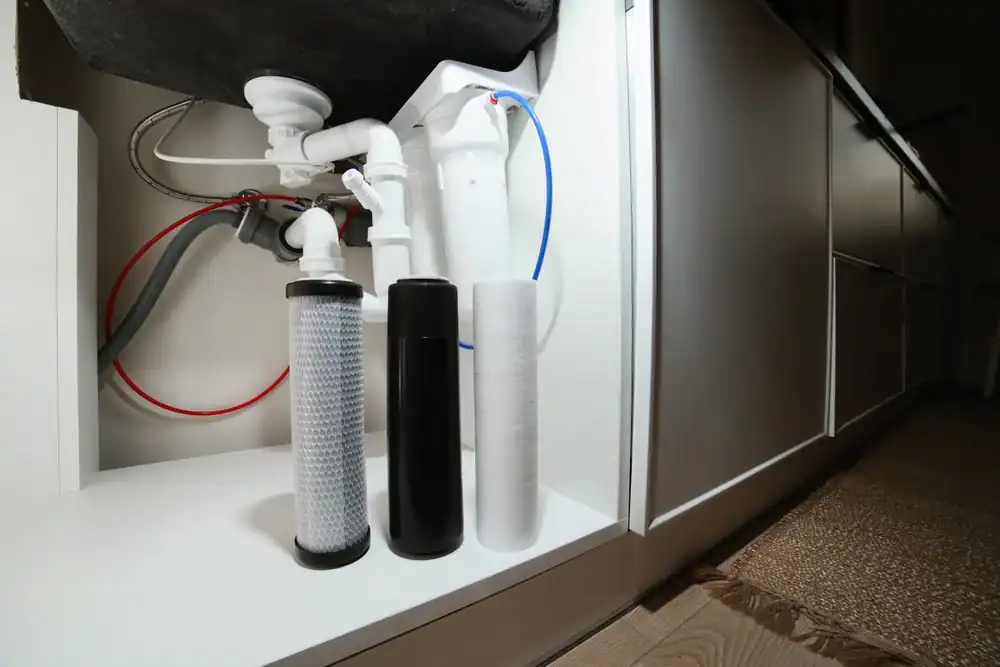
You also get a sediment filter to catch any particles before they reach your treatment tanks. This protects the more expensive components and extends their lifespan. The control valves are programmable, so the system regenerates during off-peak hours when you’re not using water. Most of our installations include a bypass valve, which lets you isolate the system for maintenance without shutting off water to your whole house.

Orange or reddish stains around plumbing fixtures mean you’ve got iron in your water. It might look clear coming out of the tap, but it oxidizes on contact with air and leaves rust-colored deposits. If you’re constantly scrubbing toilets and sinks, that’s iron.
The rotten egg smell is hydrogen sulfide gas, which forms when sulfur-reducing bacteria break down sulfur compounds in Florida’s limestone geology. It’s especially noticeable in hot water because heat releases the gas. This isn’t usually a health hazard, but it makes your water unpleasant to use and can corrode plumbing over time.
Slippery or slimy residue in toilet tanks often indicates iron bacteria. These organisms feed on iron in your water and create a sticky biofilm that clogs pipes and damages equipment. If you see reddish or orange slime, you need disinfection treatment along with iron removal. A professional water test identifies exactly what’s in your water and at what concentrations, which determines the right treatment approach.
Air injection oxidation systems inject oxygen into your water, which converts dissolved iron into solid particles that get trapped in a filter tank. This method works well for moderate iron levels and doesn’t require you to add any chemicals. The system uses your home’s water pressure to draw in air, mix it with the water, and then filter out the oxidized iron.
Hydrogen peroxide injection is more aggressive and handles higher iron concentrations or situations where you’ve also got sulfur and bacteria. The peroxide oxidizes iron, kills bacteria, and neutralizes hydrogen sulfide all in one step. You do need to refill a peroxide tank periodically, but it’s a more comprehensive solution for severe contamination.
Your water test results determine which approach makes sense. If you’ve got iron below 5 parts per million and no bacteria, air injection is usually sufficient and more economical. Above that level, or if bacteria is present, hydrogen peroxide gives you better results. Some situations call for a combination of both methods, especially if you’re dealing with stubborn iron bacteria that keeps coming back.
No. Water softeners remove hardness minerals like calcium and magnesium, but they don’t eliminate hydrogen sulfide gas. You might notice the smell is slightly less intense after softening, but that’s because the softener reduces some of the minerals that bacteria feed on. The sulfur odor itself requires a different treatment method.
Hydrogen sulfide treatment typically involves oxidation. You can use hydrogen peroxide injection, chlorine injection, or an air injection system with special catalytic media designed for sulfur removal. These methods convert the hydrogen sulfide gas into solid sulfur particles that get filtered out, or they oxidize it into sulfate, which doesn’t smell.
If you’ve got both hard water and a sulfur smell, you need two separate systems or a combination unit. The sulfur treatment comes first in the sequence because hydrogen sulfide can damage softener resin if it’s not removed beforehand. We design the system so each component handles its specific job in the right order, giving you water that’s both soft and odor-free.
Most whole-house systems need attention every three to six months, depending on your water quality and usage. If you’ve got a softener as part of your setup, you’ll need to add salt when the brine tank runs low. That might be monthly for a large household or every few months for smaller homes.
Filter cartridges need replacement based on how much sediment your water carries. A sediment pre-filter might last three months if your well water is relatively clean, or just one month if you’ve got a lot of particulates. You’ll notice when it’s time because water pressure drops as the filter clogs.
Iron removal and sulfur treatment systems regenerate automatically, usually at night. You don’t need to do anything for these cycles, but you should check the system periodically to make sure it’s regenerating properly. If you’re using hydrogen peroxide injection, you’ll need to refill the peroxide solution tank every few months.
We recommend an annual professional inspection to check valve operation, test your treated water quality, and make sure all components are functioning correctly. This catches small issues before they become expensive problems and keeps your system running efficiently.
Iron bacteria and sulfur bacteria aren’t typically harmful to healthy people. They’re nuisance organisms that create odors, slime, and staining, but they’re not pathogens. The bigger concern is that their presence indicates conditions where harmful bacteria could also grow.
Coliform bacteria and E. coli are the dangerous ones. These indicate fecal contamination and can cause serious digestive illness. If your well tests positive for coliform bacteria, you need immediate disinfection treatment and should use bottled water until the system is installed and retested.
Florida’s warm climate and limestone geology create ideal conditions for bacterial growth in wells. Even if your water tested clean when the well was drilled, contamination can occur over time through surface water intrusion, failing well seals, or cross-contamination from plumbing. If you haven’t tested your well water in the past year, that should be your first step. A standard bacteria test costs around fifty dollars and tells you whether you need disinfection treatment.
Please provide your email address so that we can stay in touch and answer any questions you have! We will be reaching back out shortly.
"*" indicates required fields