Reach Out Today
Please provide your email address so that we can stay in touch and answer any questions you have! We will be reaching back out shortly.

Hear from Our Customers
The rotten egg smell disappears completely. Not masked, not reduced—gone. Your morning shower stops smelling like sulfur, and guests won’t notice anything off about your water.
Orange and red stains stop showing up on your toilets, sinks, and laundry. Your whites stay white. Your fixtures stay clean longer. You’re not scrubbing rust marks every week.
Your appliances last longer because they’re not fighting iron buildup and bacterial slime. Water heaters don’t fail early. Washing machines don’t break down from sediment. You’re protecting equipment that costs thousands to replace, and that protection starts the day your system goes in.
We focus exclusively on whole-house water filtration, softening, and purification. We don’t do plumbing. We don’t install water heaters. We solve water problems, and that’s where our expertise sits.
We’re A-rated by the Better Business Bureau with a 5-star rating and zero complaints. We’re members of the National Water Quality Association, which means we follow industry standards and stay current on treatment methods. Arlington Hills homeowners deal with the same limestone geology and sulfur bacteria issues found across Jacksonville, and we’ve designed systems specifically for these conditions.
Every installation starts with free water testing at your home. We don’t guess what’s in your water—we test it, then build a system around what we find.
We start with a free in-home water analysis. This isn’t a sales pitch—it’s actual testing to see what’s in your water. We’re looking for iron levels, hydrogen sulfide concentration, bacteria presence, hardness, and pH. Those results tell us what treatment methods will work.
Based on your test results, we design a system. If you’ve got high iron and sulfur bacteria, that usually means a hydrogen peroxide injection system paired with catalytic carbon filtration. The peroxide oxidizes the iron and kills bacteria, then the carbon filter removes both. If it’s primarily hydrogen sulfide without heavy iron, an air injection oxidation system might be the better fit. It aerates the water, converts the gas to sulfur particles, then filters them out.
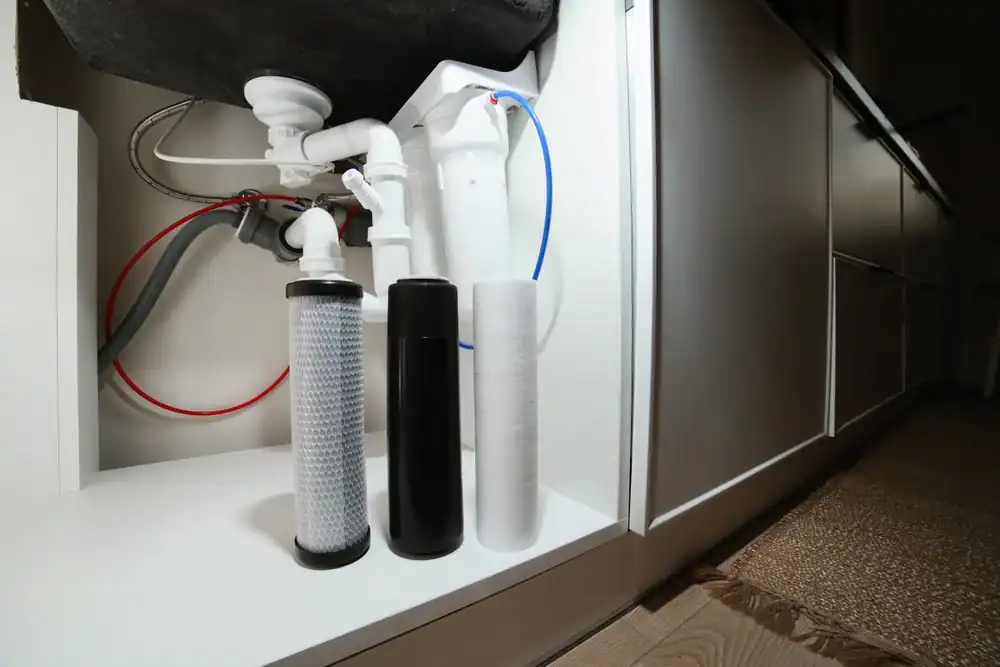
Installation happens at your main water line, so every tap in your house gets treated water. The systems backwash automatically—you’re not maintaining filters every month. Once it’s running, you’ll notice the difference immediately. No smell, no staining, no slime building up in your tanks.
Ready to get started?
A whole-house well water filtration system treats everything before it reaches your fixtures and appliances. That means your kitchen tap, your showers, your washing machine, and your water heater all get clean water.
For iron removal, we typically use oxidation methods—either hydrogen peroxide injection or air injection oxidation, depending on your iron levels and whether bacteria is present. These systems convert dissolved iron into particles, then filter them out before they can stain anything or build up in your pipes.
Hydrogen sulfide treatment often works best with peroxide systems because they handle both the sulfur smell and any bacteria feeding on it. In Arlington Hills, sulfur bacteria thrive in the warm groundwater thanks to Florida’s limestone deposits. You’re not just fighting a smell—you’re dealing with organisms that create slime and corrosion if left untreated.
If your water also has hardness issues, we can integrate softening into the same system. Hard water causes its own set of problems—soap scum, scale buildup, dry skin—and it’s common in this area. Treating everything at once makes more sense than adding equipment later.

That smell is hydrogen sulfide gas, and it’s extremely common in Arlington Hills because of the geology underneath us. Florida sits on limestone, which contains sulfur deposits. Sulfur bacteria in your well convert those sulfates into hydrogen sulfide, and that’s what you’re smelling.
The smell gets worse when water sits unused for a few hours, which is why mornings are usually the worst. The bacteria are more active in warm water, so summer months tend to make the problem more noticeable.
This isn’t just an odor issue. The same bacteria that produce hydrogen sulfide often create slime and corrosion inside your well casing and pipes. Fixing it requires treatment that kills the bacteria and removes the gas—not just something that masks the smell.
Those orange and red stains come from iron in your well water. The iron is dissolved when it’s in your pipes, so you don’t see it. But when it hits air—like when water sits in your toilet bowl—it oxidizes into rust, and that’s what stains everything.
Iron is naturally present in Florida groundwater, especially in areas with sandy soil like Arlington Hills. It’s not harmful to drink, but it wrecks your fixtures, stains your laundry, and builds up inside appliances.
If you’re also seeing slimy buildup or noticing a metallic taste, you likely have iron bacteria on top of the iron itself. These bacteria feed on iron and create a sticky residue that coats surfaces and clogs pipes. An iron removal system handles both the staining and the bacterial growth.
Not effectively. Water softeners are designed to remove hardness minerals like calcium and magnesium. They can handle very small amounts of clear water iron—usually under 1-2 ppm—but they’re not built for the iron levels most Arlington Hills wells have, and they don’t address sulfur or bacteria at all.
If you run water with significant iron or hydrogen sulfide through a softener, you’ll foul the resin bed. The system stops working properly, and you’re left with the same problems plus a softener that needs expensive repairs.
The right approach is treating iron, sulfur, and bacteria first with an oxidation and filtration system, then softening the water after if hardness is also an issue. That way each system does what it’s actually designed to do, and you’re not forcing equipment to handle contaminants it can’t manage.
It depends entirely on what’s in your water and what treatment methods are needed. A basic air injection system for hydrogen sulfide might run differently than a hydrogen peroxide injection system that also handles high iron and bacteria. Systems that integrate softening or additional filtration stages cost more because there’s more equipment involved.
What matters more than the upfront cost is what you’re preventing. Water heaters damaged by iron sediment fail 2-3 years early—that’s a $1,200+ replacement you’re avoiding. Washing machines, dishwashers, and plumbing fixtures all last longer when they’re not fighting contaminated water. The system pays for itself by protecting equipment you’ve already invested in.
We do free water testing and give you a quote based on your specific situation. No guessing, no upselling equipment you don’t need. We also offer a $500 discount for military members and first responders.
Not if they’re set up correctly. Most whole-house systems we install backwash automatically, which means they clean themselves on a schedule without you doing anything. You’re not changing filters every month or adding chemicals weekly.
Hydrogen peroxide systems need the peroxide tank refilled periodically—usually every few months depending on your water usage. That’s a simple process, and we can handle it during regular service visits if you prefer. Air injection systems need even less attention since they’re just using air to oxidize contaminants.
The key is getting a system designed for your specific water conditions. Undersized equipment or the wrong treatment method means more maintenance and shorter lifespan. We test first, then size and design the system to match your household’s water usage and contamination levels. That’s how you end up with something that runs reliably without constant attention.
Please provide your email address so that we can stay in touch and answer any questions you have! We will be reaching back out shortly.
"*" indicates required fields