Reach Out Today
Please provide your email address so that we can stay in touch and answer any questions you have! We will be reaching back out shortly.

Hear from Our Customers
The water coming into your Orange Blossom Gardens home right now is pulling from the Floridan Aquifer — the same limestone-heavy groundwater system that gives Central Florida some of the highest mineral concentrations in the country. At 10 to 15 grains per gallon, the water here qualifies as very hard. Your faucets, showerheads, and water heater have been proving it for years.
For a home built in the 1980s or 1990s — which describes a lot of Orange Blossom Gardens — that means decades of calcium and magnesium working their way into your pipes, your appliances, and your water heater. Scale buildup reduces water heater efficiency by up to 24% and cuts appliance lifespan by 30 to 40%. A heater that should last 12 years might give you 7 in these conditions. That gap costs real money, and it’s entirely preventable.
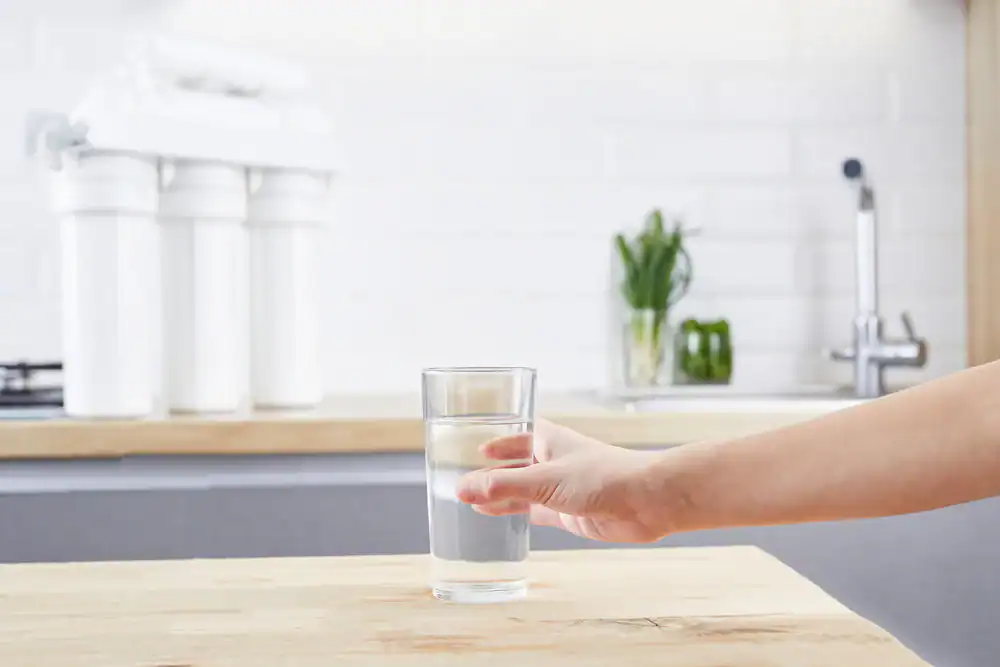
Once a properly sized ion exchange softener is in place, the difference shows up fast. Your skin stops feeling dry after a shower. Glasses come out of the dishwasher clear. Towels feel softer. The white crust on your faucets stops coming back. And behind the walls, your pipes and appliances stop taking the daily hit they’ve been absorbing since the day you moved in.
Quality Safe Water of Florida is a Central Florida water treatment company with an A+ BBB rating, a 5-star review average, and zero complaints on record. We serve Orange Blossom, Lady Lake, and the surrounding North and Central Florida region with the same straightforward approach: test your water accurately, size your system correctly, install it properly, and service it afterward. No high-pressure sales tactics. No disappearing after the job is done.
We’re members of the National Water Quality Association, which sets the technical and ethical standards most companies in this industry quietly ignore. We know the Floridan Aquifer water chemistry that affects every home in Orange Blossom Gardens and the broader Lady Lake area. We’re not applying a national template here — we know what’s in your water, and we know how to fix it.
When you call us, you’re talking to the same team that installs your system and services it afterward. That’s not a given in this industry. With us, it is. And if you or your spouse served — The Villages has one of the largest veteran populations in Florida — ask about our $500 military and first responder discount before you book anything.
It starts with a free professional water analysis. Not a test strip from a hardware store — a real laboratory-grade evaluation that measures your water’s hardness, iron content, sulfur levels, chlorine, and anything else worth knowing. For an Orange Blossom Gardens home, that test almost always confirms elevated hardness from the Floridan Aquifer, but the specific numbers matter because they determine exactly what size system your home needs.
Once we have your water data and understand your household — how many people, how much water you use, what your plumbing looks like — we size a system specifically for your home. An undersized softener won’t fully treat your water. An oversized one wastes salt and runs unnecessary regeneration cycles. Getting this right upfront is the difference between a system that actually works and one that just sits there looking like it does.
Installation is handled by our team, start to finish. Orange Blossom Gardens falls under Lake County jurisdiction, which has its own permitting requirements for plumbing modifications — we’re familiar with the process and handle it correctly. After installation, we walk you through everything: how the ion exchange resin works, how the brine tank operates, when to add salt, and what to watch for. You’ll know exactly what you have and how to keep it running.
Ready to get started?
A water softener from Quality Safe Water of Florida isn’t a box-store unit dropped on your doorstep. It’s a professionally sized, professionally installed ion exchange system calibrated to your home’s actual water usage and the specific hardness levels we measure at your tap. The resin bed inside the softener attracts calcium and magnesium ions and holds them, releasing sodium in exchange — that’s the ion exchange process, and it’s the most proven method for removing hard water minerals that exist. The brine tank handles the automatic regeneration cycle, flushing the resin and recharging it on a schedule we set based on your household’s needs.
For homes in Orange Blossom Gardens — many of which are compact to midsize, built before 2000, and running older plumbing — proper system sizing is especially important. A home that’s been on hard water for 30 years without softening may also benefit from a whole-house filtration system or a reverse osmosis unit at the kitchen tap, depending on what your water analysis shows. We’ll tell you honestly what your water needs, not what generates the largest invoice.
We also offer our Purelight whole-house UV purification system for homeowners who want an added layer of protection beyond softening. If your water test reveals anything beyond hardness — iron, sulfur, or biological concerns — we have options that address those specifically. Everything we install, we service.
The water in Orange Blossom Gardens and the surrounding Lady Lake area consistently tests between 10 and 15 grains per gallon — which puts it in the “very hard” category. The threshold for “hard” is 7 GPG. Anything above 10.5 GPG is classified as very hard. Most of The Villages, including Orange Blossom Gardens, sits at the upper end of that range because the water comes from the Floridan Aquifer, a limestone formation that dissolves calcium and magnesium into the water as it moves underground.
Whether it matters depends on how long you’ve been living with it. If your home was built in the 1980s or 1990s and has never had a softener, the scale buildup in your water heater and pipes is already there. Hard water at these levels reduces water heater efficiency measurably, shortens appliance life, leaves mineral deposits on every surface water touches, and affects how your skin and hair feel after a shower. It matters.
No. The Village Center Service Area, which serves Orange Blossom Gardens and District 1 of The Villages in Lady Lake, treats your water to meet state and federal safety standards — biological safety, disinfection, regulated contaminant levels. What it doesn’t do is remove calcium and magnesium, because there’s no regulatory requirement to do so. Hard water isn’t a safety violation. It’s a quality-of-life and home-protection issue, and that puts it outside the scope of what any municipal utility is responsible for.
The minerals that make your water hard travel from the aquifer through the VCSA’s distribution system and arrive at your tap at the same concentration they had underground. Municipal treatment doesn’t change that. A water softener installed at your home’s point of entry is the only way to address hardness before it reaches your pipes, appliances, and fixtures. That’s just how the system works, and it’s why softening is your responsibility, not theirs.
A properly installed and maintained ion exchange water softener typically lasts 15 to 20 years. Florida’s climate doesn’t shorten that lifespan significantly for the softener itself — but it does affect what the softener is protecting. Central Florida’s year-round heat accelerates scale formation inside water heaters and pipes, which means the softener is doing more work here than it would in a cooler climate. That’s actually an argument for getting one sooner rather than later.
What affects softener lifespan more than climate is sizing and maintenance. A system that’s undersized for your home’s water usage will regenerate too frequently and wear out faster. One that’s properly sized and loaded with the right salt on schedule will run quietly and effectively for well over a decade. We size every system based on your actual household data — not a generic estimate — which is one of the reasons our installed systems hold up. The only routine task on your end is keeping the brine tank supplied with salt, which most homeowners in Orange Blossom Gardens find takes about five minutes every few weeks.
A water softener using ion exchange actually removes calcium and magnesium from your water. Those minerals are physically pulled out of the water supply and held in the resin bed until the regeneration cycle flushes them away. What comes out of your tap is genuinely soft water — lower in hardness minerals, better for your skin, your appliances, and your pipes.
A water conditioner — often marketed as a “salt-free softener” — doesn’t remove anything. It changes the structure of the minerals so they’re less likely to stick to surfaces, but the calcium and magnesium are still in your water. For some households, that’s an acceptable tradeoff. For Orange Blossom Gardens homes dealing with 10 to 15 GPG hardness and older plumbing that’s already been accumulating scale for decades, a true ion exchange softener is almost always the better choice. The hardness levels here are high enough that a conditioning approach typically isn’t sufficient to protect your appliances and infrastructure the way a softener does. We’ll tell you which one makes sense for your specific water after we test it.
Softened water is safe to drink for most people. The ion exchange process replaces calcium and magnesium with a small amount of sodium — the amount added is proportional to how hard your water was to begin with. At the hardness levels typical of Orange Blossom Gardens, the sodium added is modest and well within safe limits for the general population. If you’re on a medically restricted low-sodium diet, your doctor may advise using a separate drinking water source, but for most households it’s a non-issue.
That said, a lot of homeowners in The Villages choose to pair a whole-house softener with a reverse osmosis system at the kitchen tap for drinking and cooking water. RO removes virtually everything — sodium, any remaining minerals, chlorine, and other dissolved solids — producing water that’s as clean as it gets. It’s not required, but if you want the best possible quality at the tap you actually drink from, it’s worth considering. We offer residential RO systems and can walk you through whether your water analysis suggests one would benefit your household specifically.
Please provide your email address so that we can stay in touch and answer any questions you have! We will be reaching back out shortly.
"*" indicates required fields