Reach Out Today
Please provide your email address so that we can stay in touch and answer any questions you have! We will be reaching back out shortly.

Hear from Our Customers

The most immediate thing you notice is the water itself. Your first shower after a softener installation feels different — soap lathers the way it should, your skin doesn’t feel tight when you step out, and the film that’s been building on your shower door stops forming. That’s not a small thing when you’re in a home you’ve chosen to retire in.
La Zamora’s housing stock is older by Villages standards — most of these cottage homes were built around 1999, which means your water heater, dishwasher, and plumbing fixtures have had roughly 25 years of extremely hard water running through them. Scale buildup reduces water heater efficiency by up to 24% and shortens appliance lifespans by 30 to 40%. A tank water heater on untreated Florida hard water typically fails four to six years early, which translates to $1,200 to $2,800 in replacement costs that a softener would have prevented.
Beyond the appliances, soft water means less soap, less detergent, less scrubbing, and fewer cleaning products to fight mineral deposits that keep coming back. The white film on your glasses, the crusty buildup around faucets, the showerhead that’s half-calcified — those are hard water problems, not cleaning product problems. When the water changes, all of that changes with it.
We’re based in Leesburg — Lake County, the same county where La Zamora sits. That matters because we’re not dispatching a contractor from two counties over who’s never tested water in the Spanish Springs area. We know what the Floridan Aquifer delivers to homes north of CR 466, and we know how to treat it correctly.
We hold an A+ rating with the Better Business Bureau with zero complaints on record, and we’re a member of the National Water Quality Association — two credentials that are independently verifiable and genuinely rare in this industry. In a community as socially connected as The Villages, reputation travels fast. Ours has held up because we do the work right, we size systems correctly, and we’re available after the installation if anything needs attention.
We also offer a $500 discount for military families and first responders, and we’re proud supporters of the Tunnels to Towers Foundation. If you or someone in your household has served, that discount is yours — ask about it when you call.
It starts with a free professional water analysis — not a test strip, not a quick visual check. We test your La Zamora water for hardness, iron, chlorine, and other contaminants specific to Lake County’s groundwater supply. The results tell us exactly what we’re dealing with before we recommend anything. That’s the way it should work.
From there, we size your system based on your home’s actual water usage and the specific hardness level we measured. A cottage home with two residents uses water differently than a larger household, and an oversized softener wastes salt and water on unnecessary regeneration cycles. Precision sizing is what makes the difference between a system that performs and one that just runs.
Installation is handled by our own team — the same people you spoke with, not a subcontractor. We handle the plumbing connections, walk you through how your system operates, and make sure you know exactly what to expect for ongoing maintenance. In Lake County, professional installation also means the permitting process is covered correctly, so there are no compliance issues with your CDD or county requirements down the road. Once the system is running, the only thing you’ll manage is adding salt to the brine tank periodically. Everything else is automatic.

Ready to get started?
The Villages of Lake-Sumter water utility sources from groundwater running through Central Florida’s limestone geology. Third-party water quality databases specifically flag this utility for high hardness scores, and the numbers back it up — Florida’s average is around 216 PPM, which is classified as extremely hard. That’s the water coming into your home every day, and municipal treatment doesn’t touch the hardness because it’s not a regulated health violation. Removing it is your responsibility, and ion exchange is the only method that actually does it.
Our Platinum Plus Water Softener uses ion exchange resin — negatively charged resin beads that attract and capture calcium and magnesium ions as water passes through the tank, replacing them with sodium ions. The brine tank periodically flushes the resin with a salt solution, regenerating the beads and flushing the captured minerals out. The result is genuinely soft water throughout your entire La Zamora home, not conditioned water that still leaves scale behind.
The Platinum Plus also removes iron, which is a separate problem that shows up in Lake County groundwater and causes its own damage — rust staining on fixtures, discoloration in laundry, and a metallic taste. One system handles both. We size it specifically for your cottage home’s usage profile, and we back it with ongoing service from the same Lake County team that installed it.

La Zamora’s water comes from the Floridan Aquifer, which runs through the limestone geology of Lake County before it reaches your tap. As groundwater travels through those limestone formations, it dissolves calcium and magnesium directly into the supply. The Villages of Lake-Sumter utility has been specifically flagged by third-party water quality databases for extremely high hardness scores.
Whether it matters depends on how long you’ve been living with it. At these hardness levels, you’re looking at scale accumulation inside your water heater, on the heating elements of your dishwasher, inside your washing machine drum, and across every faucet and showerhead in the house. For a La Zamora cottage home that’s been on this water since 1999, the damage isn’t hypothetical — it’s already happened. A free professional water test will tell you exactly what your specific supply looks like and what it’s been doing to your home.
Ion exchange is the process that actually removes hardness minerals from your water — not just changes how they behave. Inside the softener tank, resin beads carry a negative electrical charge that attracts positively charged calcium and magnesium ions as water flows through. Those minerals bind to the resin and get pulled out of the water, replaced by sodium ions that don’t cause scale or buildup. The brine tank — filled with salt — periodically flushes and recharges the resin so the process keeps working indefinitely.
The reason this matters specifically for La Zamora is that salt-free conditioners and descalers, which are sometimes marketed as a softer alternative, don’t actually remove calcium and magnesium. They alter the mineral structure so scale is less likely to stick to surfaces, but the water is still technically hard. At the hardness levels coming from Lake County’s groundwater, that’s not enough. Your skin and hair still feel the effects, and your appliances are still running on hard water. Ion exchange is the only method that genuinely solves the problem at the source.
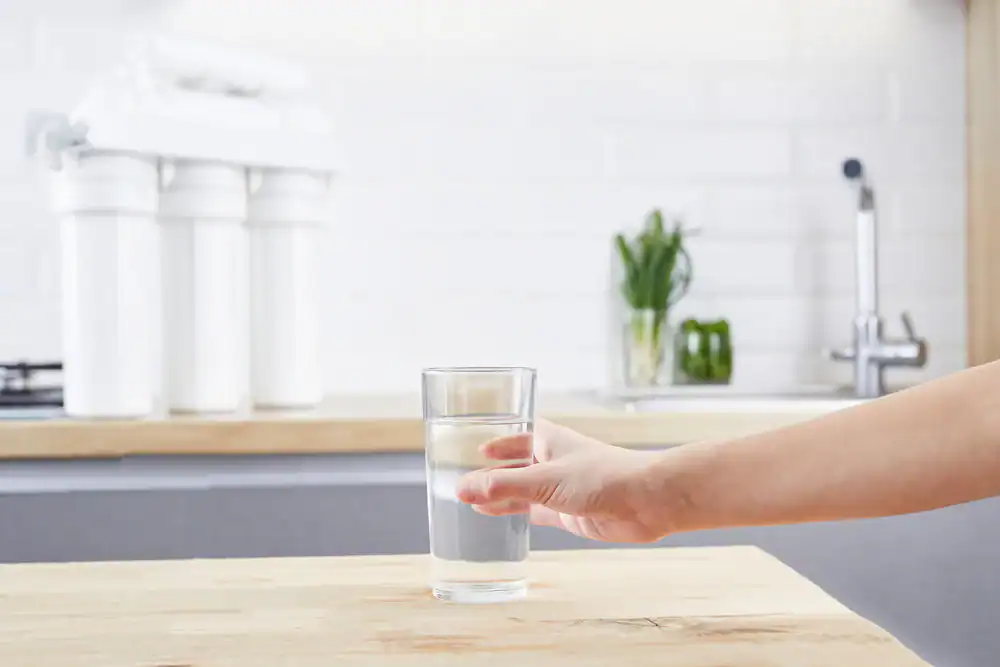
Softened water does taste slightly different because the calcium and magnesium that were previously in the water have been replaced with a small amount of sodium. For most people, the difference is subtle and not unpleasant. However, if you’re on a low-sodium diet or simply prefer drinking water with no added sodium at all, the straightforward solution is a dedicated reverse osmosis system at your kitchen sink — which removes essentially everything, including the sodium from the softening process.
Many La Zamora homeowners pair a whole-house softener with a point-of-use RO system for drinking and cooking water. The softener handles the protection of your appliances, plumbing, and fixtures throughout the house, while the RO system delivers clean, neutral-tasting water at the tap where you actually drink it. That combination gives you the full benefit of soft water without any compromise on drinking water quality. We can walk you through both options during your free water analysis so you know exactly what makes sense for your household.
Sizing a water softener correctly comes down to two things: how hard your water is and how much water your household uses daily. A system sized for a large family home with four bathrooms and daily laundry is going to be significantly oversized for a two-person cottage home in La Zamora — and that’s not just a minor inefficiency. An oversized system regenerates more frequently than it needs to, which wastes salt and water on cycles that accomplish nothing useful.
La Zamora’s cottage homes tend to run smaller footprints and house two residents in most cases, which means your daily water demand is different from what a generic “Florida home” sizing chart would suggest. We calculate your system size based on your actual measured hardness level and your household’s real usage — not a regional average. That precision is what separates a softener that performs the way it should from one that’s technically running but not doing the job efficiently. The free water test we provide gives us the data we need to get that calculation right before any equipment is recommended.
The day-to-day maintenance of a properly installed water softener is minimal. The main task is adding salt to the brine tank on a regular basis — typically every four to eight weeks depending on your household’s water usage and the hardness of your supply. The system handles regeneration automatically on a set schedule, so there’s nothing to manually trigger or monitor. You add salt, the system does the rest.
In Florida’s climate, there are a couple of things worth watching for. Salt bridges — a hardened crust that forms across the top of the brine tank and prevents salt from dissolving properly — can occasionally develop, especially in humid conditions. They’re easy to break up when you check the tank during your regular salt refill. Mushing, where salt clumps at the bottom of the tank, is less common but also manageable. Beyond those occasional checks, a well-installed system with quality components should run reliably for 15 to 20 years. We walk every La Zamora customer through exactly what to watch for during the installation, so you’re not guessing later.
Please provide your email address so that we can stay in touch and answer any questions you have! We will be reaching back out shortly.
"*" indicates required fields