Reach Out Today
Please provide your email address so that we can stay in touch and answer any questions you have! We will be reaching back out shortly.


Hear from Our Customers
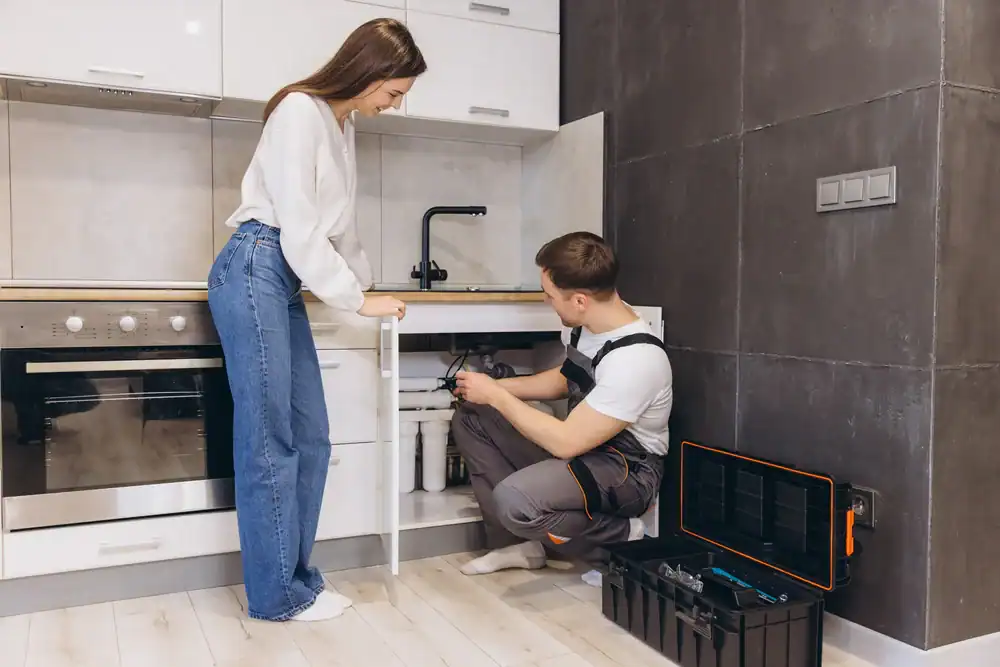
Your fixtures stop building up that white crusty residue. Your water heater runs longer without breaking down from mineral scale. Your skin doesn’t feel tight and dry after every shower.
The sulfur smell disappears. Your coffee tastes better. You stop buying bottled water because what comes out of your tap is cleaner than what you’ve been paying for at the store.
Your appliances last longer. Your dishes come out of the dishwasher without spots. You’re not scrubbing hard water stains off your glass shower doors every week. And you have actual peace of mind about what your family is drinking and bathing in every single day.
That’s what a properly designed water filtration system does. Not just filter some of your water. All of it.
We’ve been doing this in Florida since before most water treatment companies existed. Over 50 years of dealing with the same hard water, sulfur, iron, and limestone issues that Washington Shores homeowners face every day.
We’re A-rated by the Better Business Bureau with a 5-star rating and zero complaints. We’re members of the National Water Quality Association. And we don’t sell systems that we won’t service, which is more than you can say for some of the national companies operating around here.
Washington Shores sits in Central Florida where groundwater runs through limestone before it reaches your home. That means calcium, magnesium, and whatever else is in the ground ends up in your water. We test it first, then design a system based on what’s actually in your water and how much your household uses. One size doesn’t fit all, and we don’t pretend it does.
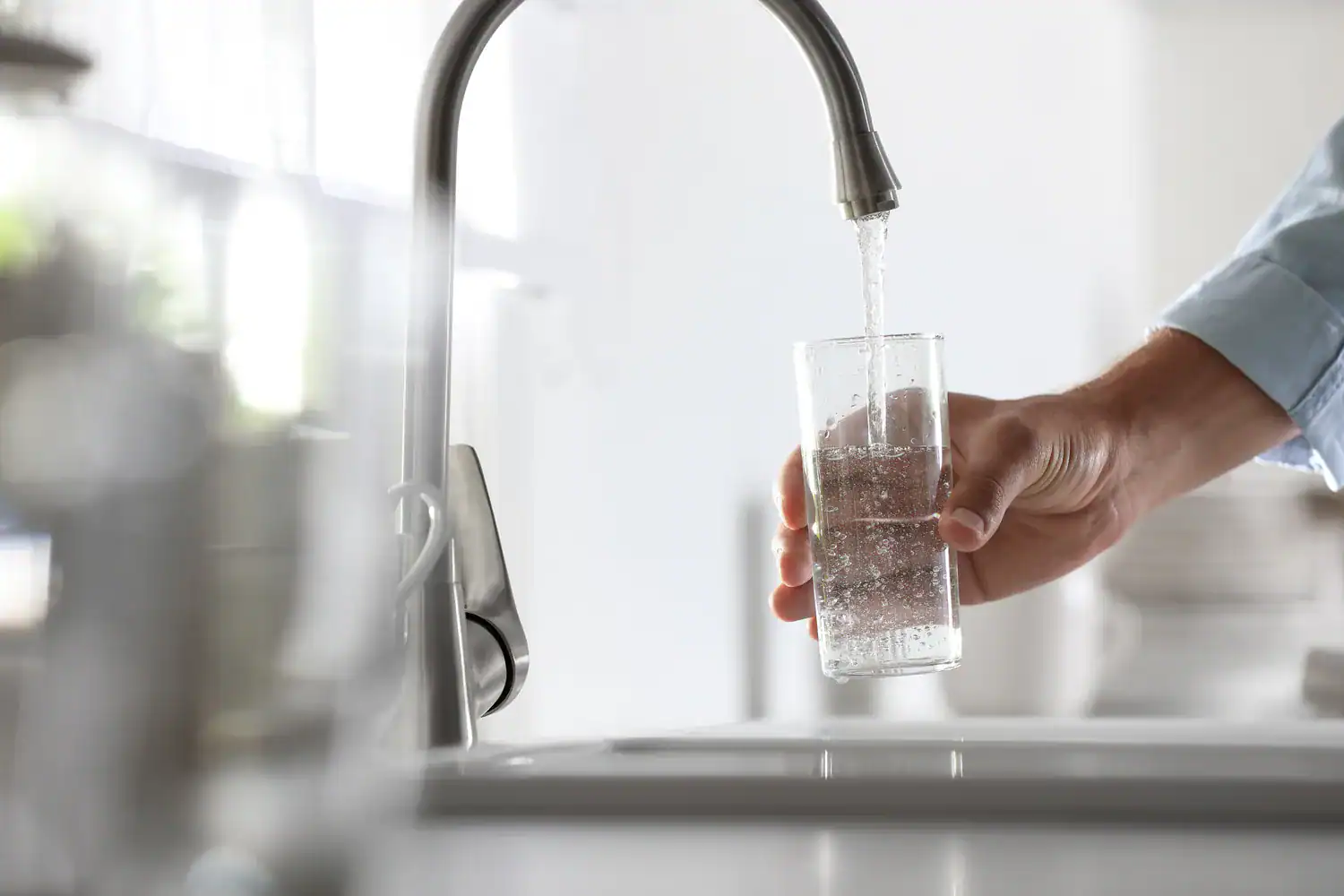
First, we test your water. Not a guess, not a generic recommendation. Actual lab analysis of what’s coming into your home right now.
Then we sit down and talk about what you’re dealing with. Hard water destroying your appliances? Sulfur smell in the hot water? Concerned about contaminants you can’t see? Your usage matters too—a family of five needs a different setup than a couple.
From there, we design a system. Could be reverse osmosis for drinking water. Whole-house filtration with activated carbon. UV purification if bacteria is a concern. Salt-free treatment if you want to avoid the maintenance and environmental impact of traditional softeners. Sometimes it’s a combination.
We install it professionally. We don’t subcontract this out. And we service what we sell, which means if something needs attention down the road, we’re the ones who show up. You’re not calling an 800 number hoping someone eventually gets back to you.
Ready to get started?
You get a water analysis that tells you exactly what’s in your water. Then a system designed around those results and your household’s specific needs.
If you need whole-house filtration, we’re talking about treating every drop before it reaches any faucet, shower, or appliance. That means activated carbon filtration for chlorine and chemical removal, scale prevention without salt, and options for iron or sulfur if that’s what your water test shows.
For drinking water, reverse osmosis systems remove contaminants down to the microscopic level. We’re talking about lead, fluoride, nitrates, and those PFAS “forever chemicals” that are showing up in Florida’s groundwater more and more. Under-sink installation keeps it out of the way but gives you clean water right where you need it.
If your water comes from a well, UV purification kills bacteria and waterborne organisms without chemicals. It’s a light system that treats water as it flows through, and it’s especially important in Washington Shores where private wells are still common in some areas.
We also offer salt-free water treatment, which prevents scale buildup without the ongoing cost and environmental impact of salt-based softeners. These systems last longer, need less maintenance, and don’t waste water during regeneration cycles.
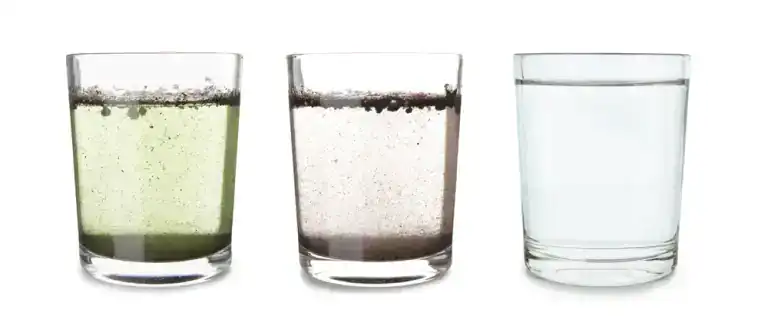
A water softener removes hardness—specifically calcium and magnesium—that causes scale buildup on fixtures and inside appliances. It uses salt to replace those minerals with sodium through an ion exchange process. That’s it. It doesn’t filter out chlorine, chemicals, bacteria, or other contaminants.
A whole-house water filtration system treats everything. Chlorine, sediment, chemicals, and depending on the setup, things like iron, sulfur, and bacteria. Some systems also prevent scale without using salt at all, which means no ongoing salt purchases, no wastewater from regeneration, and no sodium added to your water.
Most Washington Shores homes deal with hard water because of Florida’s limestone geology. But hardness isn’t the only issue. If your water smells like sulfur, tastes like chlorine, or stains your fixtures, a softener alone won’t fix that. You need a filtration system designed to handle multiple problems at once. That’s why we test first and recommend based on what’s actually in your water, not just what’s easiest to sell.
If you’re concerned about what you’re drinking specifically—not just how your water tastes—reverse osmosis is the most thorough option. It removes contaminants that carbon filters can’t touch: lead, arsenic, fluoride, nitrates, and PFAS chemicals that are increasingly found in Florida’s water supply.
A basic under-sink carbon filter improves taste and removes chlorine, which is fine if your water quality is already decent and you just want better-tasting coffee and drinking water. But it won’t remove dissolved solids or heavy metals.
Reverse osmosis systems push water through a semi-permeable membrane that filters out particles down to 0.0001 microns. That’s small enough to remove virtually everything except water molecules. The trade-off is that RO systems waste some water during the filtration process and need periodic membrane replacement. But if you’re buying bottled water because you don’t trust what’s coming out of your tap, an RO system pays for itself pretty quickly and gives you cleaner water than most bottled brands.
In Washington Shores, we’re seeing more homeowners go with RO because of concerns about aging infrastructure and agricultural runoff affecting groundwater. It’s not about fear—it’s about control. You know exactly what you’re drinking.
Not if it’s sized correctly. Pressure drop happens when the system isn’t designed to handle your household’s flow rate. If you have four bathrooms and a family that showers at the same time every morning, your system needs to be built for that kind of demand.
Cheap or undersized filters create bottlenecks. The water has to squeeze through, and you feel it as weak pressure at the tap. Whole-house systems we install are designed with your home’s plumbing and usage in mind. We measure your current flow rate and make sure the filtration system matches or exceeds it.
Carbon filters and salt-free systems typically have minimal impact on pressure if they’re properly sized. Reverse osmosis systems for drinking water are installed at a single point—usually under the kitchen sink—so they don’t affect pressure anywhere else in the house. And UV purification systems don’t restrict flow at all since they’re just light chambers the water passes through.
If you’re already dealing with low pressure, that’s usually a separate plumbing issue or a sign that your pipes are clogged with scale buildup from years of hard water. In that case, installing a filtration system that prevents future buildup is even more important. But the system itself won’t make your pressure worse if it’s installed right.
Depends on the type of system, but most need attention once or twice a year. Carbon filters need replacement every 6 to 12 months depending on your water quality and usage. If your water has a lot of sediment or chlorine, you’ll go through filters faster.
Salt-free systems need even less. Most run for years with minimal maintenance because they’re not using media that gets exhausted. You might need to clean or replace a cartridge every few years, but there’s no salt to refill and no regeneration cycles to manage.
Reverse osmosis systems need membrane replacement every 2 to 3 years and filter changes every 6 to 12 months. UV systems need a bulb replacement about once a year, which takes five minutes and doesn’t require a service call if you’re comfortable doing it yourself.
We service everything we install, and we also work on systems from other brands if you bought something years ago and the original company disappeared. A lot of national companies sell systems in Washington Shores and then vanish when you need help. We’ve been here for over 50 years, and we’re not going anywhere. You call us, we show up. That’s the difference.
Yes, but the right system depends on how much sulfur you’re dealing with. That rotten egg smell is hydrogen sulfide gas, and it’s common in Florida well water and even some city water in Washington Shores because of decaying organic material in the ground.
If it’s a mild smell, an activated carbon filter can handle it. Carbon adsorbs the gas as water passes through, and the smell disappears. If the smell is stronger or only shows up in hot water, you might have sulfur bacteria growing in your water heater. In that case, you need a system that treats water before it reaches the heater, and possibly a water heater flush.
For heavy sulfur contamination, you need oxidation filtration or a specialized sulfur filter that converts the gas into particles, then filters them out. Some systems use aeration to release the gas before filtration. It’s more involved, but it works even when carbon filters can’t keep up.
We test your water first to measure sulfur levels and figure out where it’s coming from. Then we recommend a system that actually solves the problem instead of just masking it temporarily. If you’ve tried other solutions and the smell keeps coming back, it’s probably because the system wasn’t designed for the level of contamination in your water. We size it right the first time.
Please provide your email address so that we can stay in touch and answer any questions you have! We will be reaching back out shortly.
"*" indicates required fields