Reach Out Today
Please provide your email address so that we can stay in touch and answer any questions you have! We will be reaching back out shortly.


Hear from Our Customers
The water running through Valle Verde homes comes straight from the Floridan Aquifer — pulled up through deep wells and treated with chlorine before it hits your tap. That process kills bacteria, but it also creates disinfection byproducts like trihalomethanes and haloacetic acids that exceed health-based guidelines even when they technically pass federal testing. If you’ve been drinking that water and wondering why it tastes off, now you know.
Hard water is the other half of the problem. Floridan Aquifer water in this area typically carries hardness levels between 100 and 300 PPM. That’s enough mineral load to scale up your water heater, shorten the life of your dishwasher, and leave white buildup on every fixture in the house. In Valle Verde, where many homes were built in the 1990s and running on years of unfiltered hard water, that mineral accumulation becomes visible fast — white stains on shower glass, pool equipment, and outdoor fixtures.
When you have a properly designed whole-house filtration system, the difference shows up immediately. Water tastes clean. Appliances run more efficiently. The scale stops building. If you’ve been spending $40 or $50 a month on bottled water, that stops too. For a homeowner in an established Valle Verde residence running on years of unfiltered hard water, the impact is both immediate and lasting.
We’re based in Leesburg — Lake County, the same county as Valle Verde. That’s not a coincidence. We’ve been treating Floridan Aquifer water across Central Florida for more than five decades, which means we were solving hard water problems in Lady Lake before most of Valle Verde’s current neighborhoods were even on a map.
We hold a BBB A-rating with a 5-star score and zero complaints — in an industry the Florida Attorney General has had to actively police for fraud. We’re members of the National Water Quality Association, use NSF-certified components, and every system we build is designed around your actual water analysis, not a generic package pulled off a shelf.
We also service what we install. And if you already have a system from another company that’s been left to fend for itself, we’ll service that too. In a community like Valle Verde where word travels fast between neighborhoods, that kind of accountability isn’t just a selling point — it’s how we’ve stayed in business for 50 years.
It starts with a free water analysis at your Valle Verde home. Not a theatrical demonstration with chemical drops — an actual assessment of what’s in your water. Hardness levels, chlorine, total dissolved solids, iron content, pH, bacteria. You’ll know what you’re dealing with before we recommend anything.
From there, we design a system around your specific results and your household’s water usage. Because water chemistry in Valle Verde can differ from homes in surrounding Sumter County districts — and a lakefront lot may carry different mineral profiles than a home two miles away on a golf course — the design process matters. We don’t sell one-size systems, and we won’t try to sell you one.
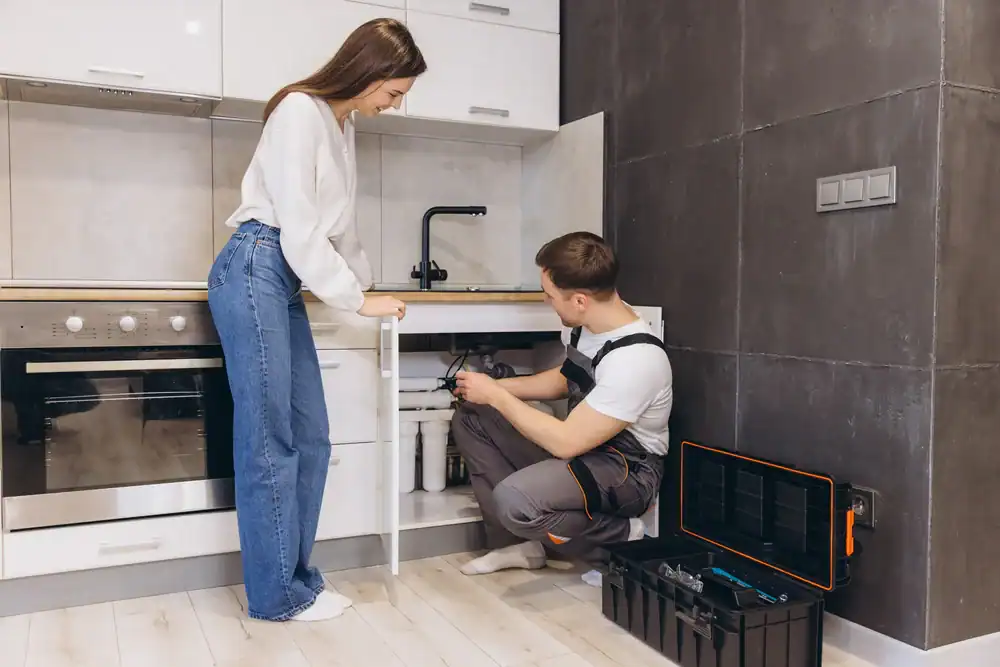
Installation is handled by our licensed professionals. For Valle Verde homeowners, that also means the work respects community standards — no exterior equipment left exposed or out of compliance with deed restrictions. Once the system is in, we walk you through how it works, what to expect, and what maintenance looks like going forward.
Ready to get started?
Whole-house water filtration is the core of what we do — and it’s where we focus most of our expertise. A whole-house system treats every water source in your Valle Verde home at the point of entry, so the water reaching your kitchen, bathrooms, laundry, and outdoor fixtures is already filtered before it gets there. That’s different from an under-sink filter or a pitcher, which only treat a fraction of your household water.
For Valle Verde homeowners dealing with the full picture — hard water from the Floridan Aquifer, chlorine taste and odor from VCCDD treatment, disinfection byproducts that exceed EWG health guidelines, and the kind of scale buildup that comes with years in an older home — a whole-house system is the only approach that actually addresses all of it. Depending on your water analysis, that may include a combination of sediment removal, activated carbon filtration for chlorine and organic compounds, salt-free conditioning using WQA-certified TAC media, and UV purification for biological concerns.
If you want the cleanest possible drinking water at a dedicated tap, a reverse osmosis system can be added at the kitchen sink to take filtration a step further — removing nitrates, radium, and other dissolved contaminants that whole-house systems aren’t designed to target. We’ll tell you honestly whether you need one, both, or something different entirely based on what your water analysis actually shows.
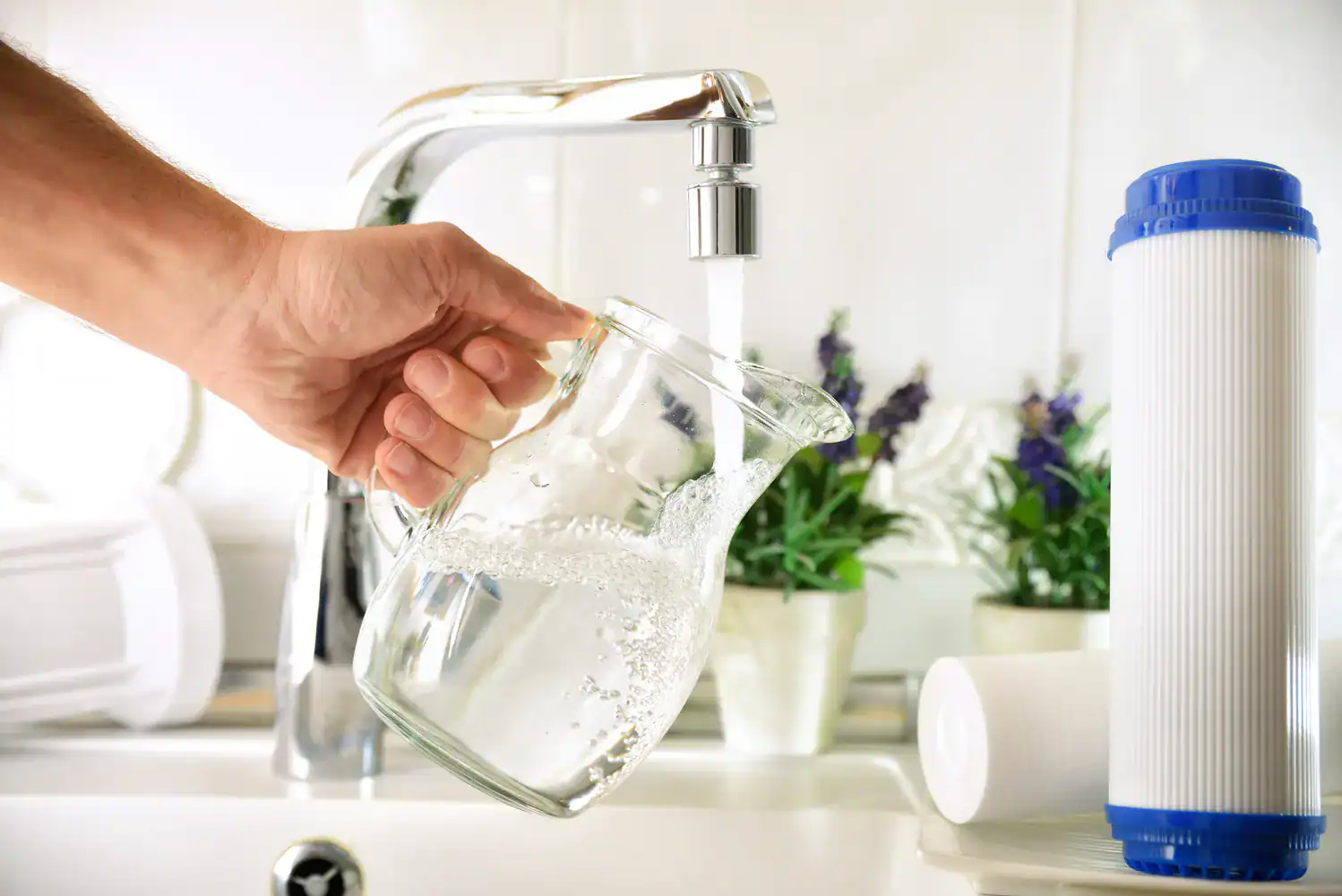
Legally, yes — the VCCDD Utilities system serving Valle Verde meets federal Safe Drinking Water Act standards. But “meets legal minimums” and “safe for your household” aren’t always the same thing. EWG tap water data for the Lady Lake Central water system identifies trihalomethanes and haloacetic acids as contaminants of concern — both are disinfection byproducts that form when chlorine reacts with organic matter in the Floridan Aquifer. These compounds exceed EWG’s health-based guidelines even when they fall within federal legal limits.
For most healthy adults, short-term exposure at these levels isn’t an emergency. But for retirees managing chronic conditions, people with compromised immune systems, or anyone drinking several glasses a day for years, the cumulative picture looks different. A free water analysis will show you exactly what’s in your specific Valle Verde home’s water — not the utility’s system-wide average — so you can make an informed decision rather than guessing.
Water hardness in Central Florida’s Floridan Aquifer typically runs between 100 and 300 PPM depending on well depth and location. The Lady Lake system that serves Valle Verde draws from deep wells, and water at that hardness level carries a significant mineral load — primarily calcium and magnesium — that accumulates on everything it touches over time.
In practical terms, that means scale buildup inside your water heater that reduces efficiency and shortens its lifespan. It means white mineral deposits on your showerheads, faucets, dishwasher interior, and glass shower doors. It means your coffee maker and refrigerator water line clogging up faster than they should. For Valle Verde homeowners in homes built in the 1990s — many of which have been running on years of hard water damage — that’s potentially decades of mineral accumulation already working against your appliances and plumbing. A whole-house filtration system with salt-free conditioning stops the accumulation without adding sodium to your water or requiring ongoing salt purchases.
A traditional water softener uses an ion exchange process to replace calcium and magnesium with sodium — it addresses hardness but doesn’t filter out chlorine, disinfection byproducts, sediment, or other contaminants. It also requires ongoing salt purchases and produces a brine discharge that some communities regulate.
A whole-house water filtration system is broader. Depending on how it’s configured, it can address hardness, chlorine taste and odor, sediment, organic compounds, and biological concerns — all in one system. We use WQA-certified salt-free TAC media for hardness conditioning, which neutralizes the minerals that cause scale without removing them from the water and without the sodium addition. For Valle Verde residents who are health-conscious about sodium intake — a common concern among retirees managing blood pressure — that distinction matters. The right answer for your home depends on your water analysis, not a default recommendation.
Not necessarily, but it depends on what your water analysis shows. A whole-house filtration system handles the bulk of what Floridan Aquifer water carries — hardness, chlorine, sediment, and organic compounds. But certain contaminants, including nitrates, radium, and PFAS, require a different filtration mechanism to remove effectively. Reverse osmosis is the most reliable method for those.
EWG data for the Lady Lake area documents radium detection and nitrate contamination from agricultural and urban runoff in the surrounding region. If your water analysis shows elevated levels of those contaminants, adding an under-sink reverse osmosis system at your kitchen tap gives you an additional layer of protection specifically for drinking and cooking water. It’s not a replacement for whole-house filtration — it’s a complement to it. We’ll tell you based on your actual results whether an RO system adds meaningful value for your home or whether your whole-house setup already covers what you need.
For a professionally installed whole-house water filtration system in a Valle Verde home, you’re typically looking at a range of $1,800 to $3,200 depending on the size of the system, the specific contaminants being addressed, and the complexity of the installation. Homes with older plumbing may require additional prep work, which can affect the final number.
The more useful way to look at the cost is against what you’re already spending. If you’re buying bottled water regularly, that’s $40 to $100 a month — $500 to $1,200 a year — on a problem a filtration system solves once. Add in the appliance protection value: a water heater running on hard, unfiltered water loses efficiency and fails years earlier than it should. Protecting your home’s plumbing and appliances from mineral buildup has real dollar value. We also offer a $500 discount for military veterans and first responders — in a community with The Villages’ veteran population, that’s a meaningful reduction for a significant number of Valle Verde homeowners.
Please provide your email address so that we can stay in touch and answer any questions you have! We will be reaching back out shortly.
"*" indicates required fields
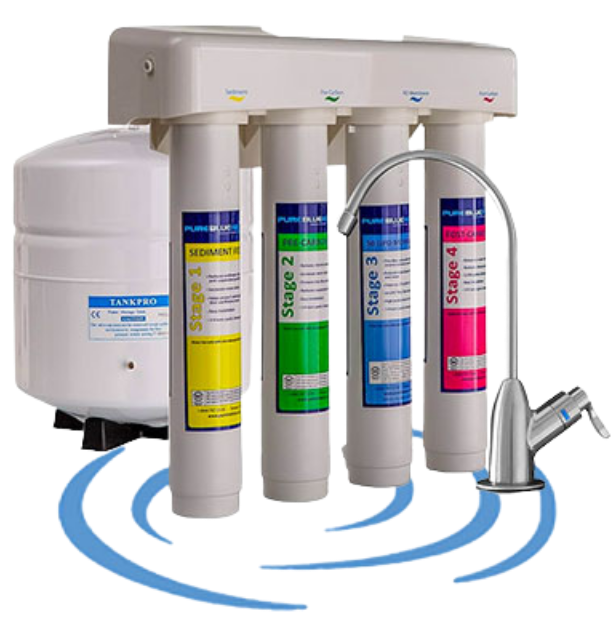
Get a free reverse osmosis drinking water system with the purchase of any whole-home water purification system.
*Cannot be combined with other offers. Mention this special when you call.