Reach Out Today
Please provide your email address so that we can stay in touch and answer any questions you have! We will be reaching back out shortly.


Hear from Our Customers
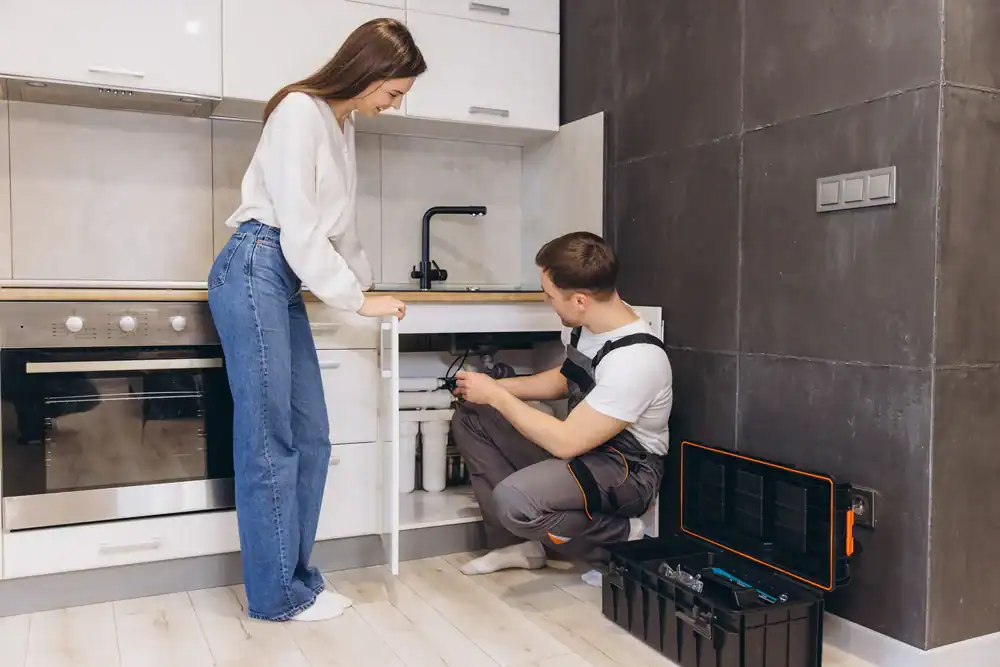
Most people start with a pitcher filter or a small under-sink unit. It helps a little, but it doesn’t touch the water running through your shower, your washing machine, your dishwasher, or the pipes behind your walls. A whole-house system handles all of it — and in a Santo Domingo home that’s been on Floridan Aquifer water since the late 1990s, that matters more than most people realize.
The water coming out of your taps in Santo Domingo meets federal legal standards. But the Environmental Working Group has flagged haloacetic acids and nitrates in The Villages’ Sumter County water supply at levels that exceed their health guidelines — even when the utility is technically in compliance. Those compounds form when chlorine reacts with organic matter naturally present in groundwater. That’s a chemistry problem, not a treatment failure, and it’s not something the utility can fully solve on their end.
What a properly designed filtration system does is pick up where municipal treatment leaves off. You get water that doesn’t smell like chlorine, doesn’t leave white residue on everything it touches, and doesn’t slowly work against the appliances and plumbing you’ve invested in. For a home that’s been absorbing hard, mineral-heavy water for 25 years, that’s not a small upgrade — it’s a real, lasting difference you’ll notice every single day.
We’ve been installing and servicing water treatment systems across North and Central Florida for more than 50 years. Based out of Leesburg — about 20 miles from Santo Domingo — we’re not a national chain dispatching crews from out of state. We know Sumter County water. We know what the Floridan Aquifer produces, what the local utility reports show, and what actually works in Santo Domingo homes built in this region.
Our BBB A-rating with a 5-star score and zero complaints is the kind of record that’s hard to fake and easy to verify — which is exactly what the Florida Attorney General’s office tells consumers to check before hiring anyone in this industry. We’re also members of the National Water Quality Association, which requires passing a comprehensive exam and committing to a professional code of ethics most competitors in this market don’t bother with.
We service what we install. We also service systems installed by other companies. If you’re a Santo Domingo homeowner stuck with a poorly maintained system from a national brand, we’ll come out, assess it honestly, and take it from there.
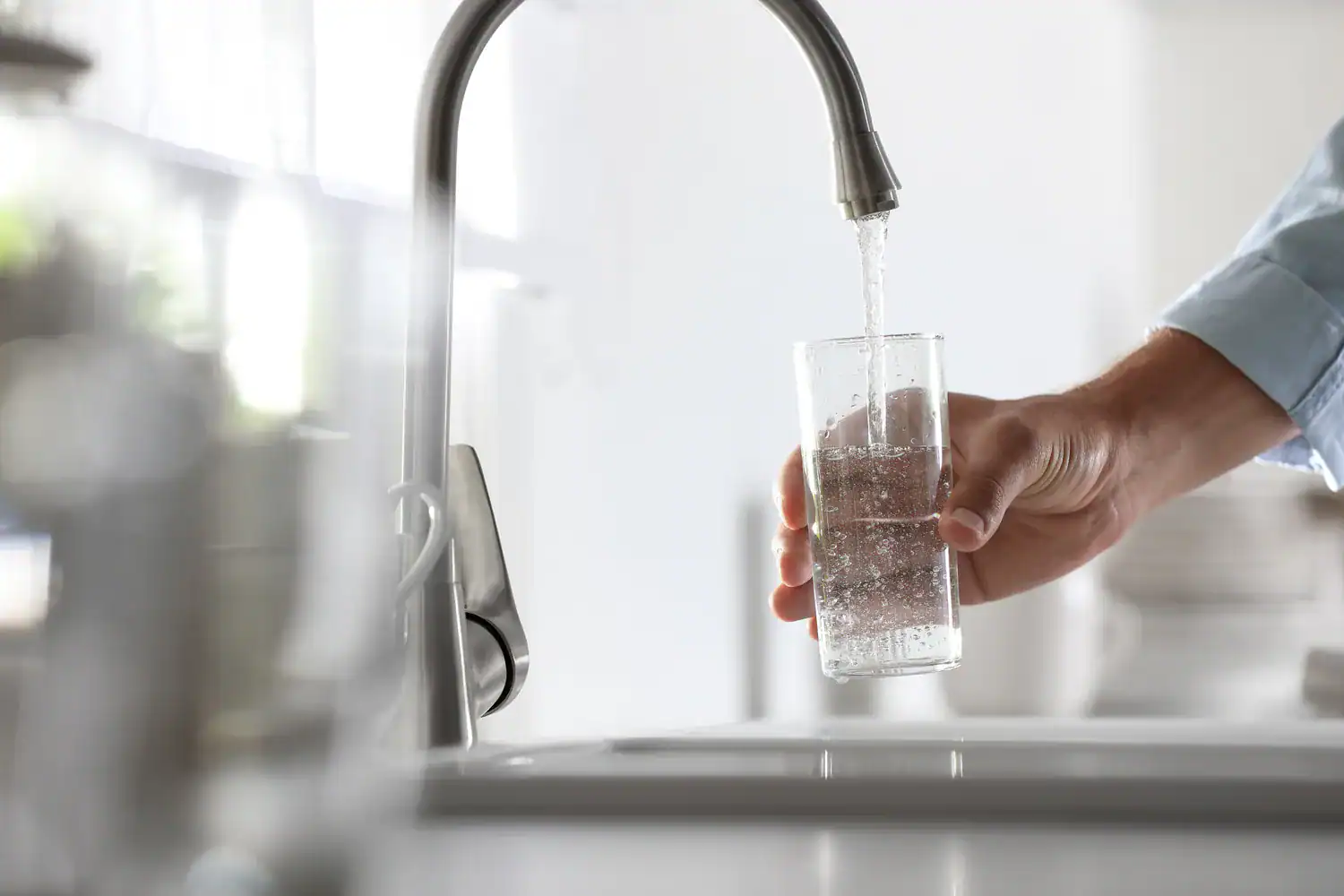
The first step is a free water analysis — and it’s a real one. Not a theatrical chemical-drop demonstration designed to make any water look contaminated, but a genuine diagnostic that tests your Santo Domingo home’s water for hardness, iron, sulfur, pH, total dissolved solids, bacteria, and other contaminants specific to Sumter County’s groundwater supply. You’ll know exactly what you’re dealing with before anyone mentions a product.
From there, we design a system around your actual results, your home’s size, and how you use your water. Santo Domingo homes range from compact courtyard villas to larger designer homes over 2,900 square feet, and a household of two retirees has different water demands than a home with frequent guests or a large landscaping footprint. The system recommendation reflects that — not a one-size-fits-all package pulled off a shelf.
Installation is handled by our licensed professionals. In Florida, water treatment work must meet FDEP and DBPR requirements, and every install we complete is done in full compliance. Once the system is in, we walk you through how it works, what maintenance looks like, and when to expect a follow-up. The relationship doesn’t end at installation — and that’s not a promise, it’s just how we’ve operated for five decades.
Ready to get started?
Depending on what your water analysis shows, we’ll recommend the right combination of treatment for your Santo Domingo home. For most homes in The Villages drawing from the Floridan Aquifer, that conversation typically involves a whole-house system to address hardness and sediment, paired with a drinking water solution — usually a reverse osmosis system — for the kitchen tap.
Reverse osmosis is the most effective technology available for removing dissolved solids, including the haloacetic acids and trihalomethanes that form during municipal chlorine treatment of Floridan Aquifer water. It also removes nitrates, PFAS compounds, and heavy metals at a removal rate of 95 to 99 percent. For Santo Domingo homeowners who want to stop buying bottled water — and stop wondering what’s actually in their tap — an RO system under the kitchen sink is the most direct answer. Annual maintenance typically runs between $80 and $150, which is a fraction of what most households spend on bottled water in a year.
For whole-house treatment, activated carbon filtration handles chlorine taste and odor, while sediment filters protect your plumbing and appliances from the particulate matter that comes through Sumter County’s distribution lines. If iron or sulfur is present in your water analysis — both common in Floridan Aquifer groundwater — we address that at the point of entry before it ever reaches a fixture. Every system is NSF-certified and uses WQA-certified components. Military veterans and first responders receive a $500 discount — a meaningful number in a community where that population is large and active.
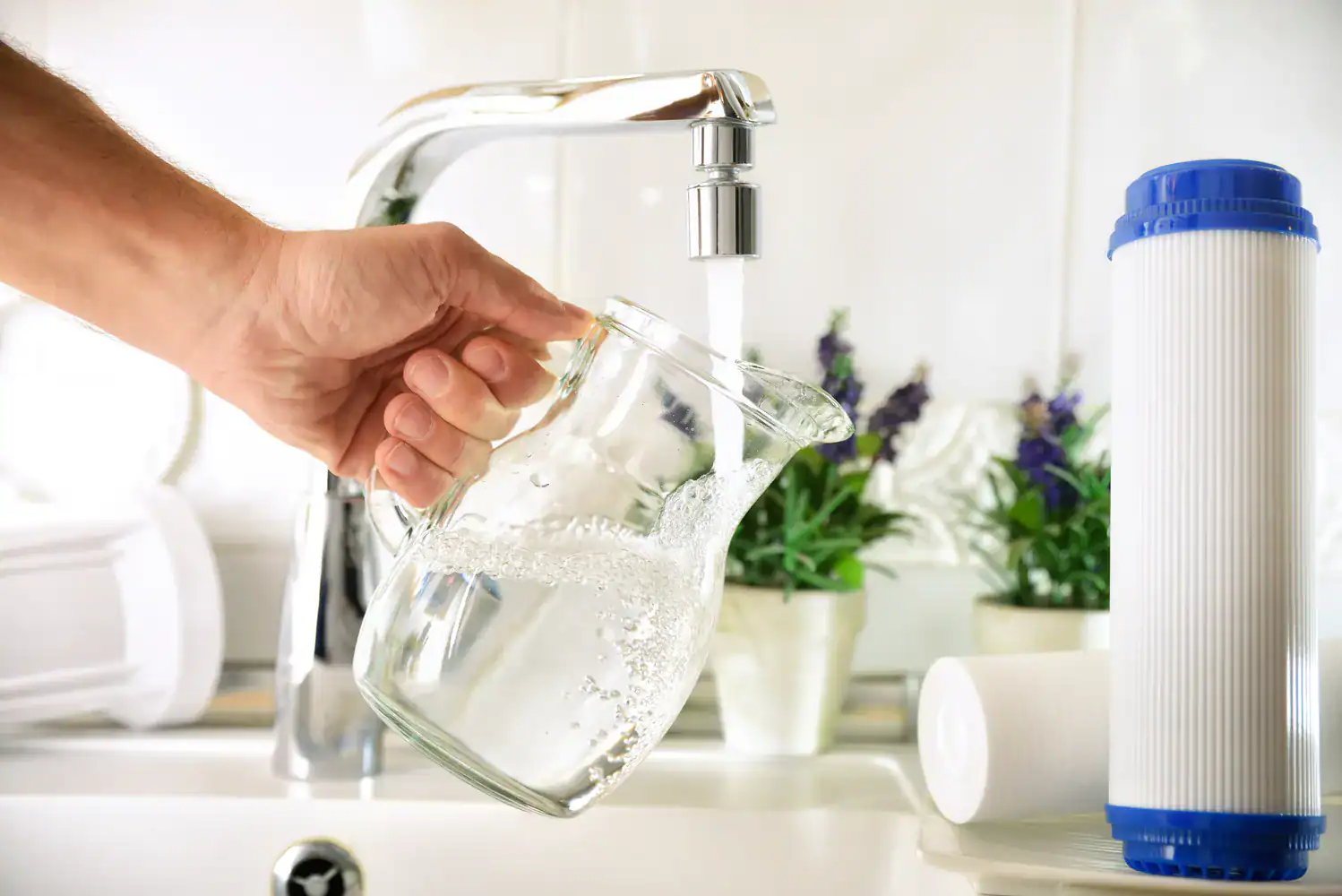
Technically, yes — The Villages’ utility providers meet Safe Drinking Water Act legal standards. But meeting legal standards and having genuinely clean water aren’t always the same thing. The Environmental Working Group’s tap water database identifies haloacetic acids (HAA5 and HAA9) and nitrates in Sumter County’s water supply at levels that exceed EWG health guidelines, even when the utility is in full legal compliance. These disinfection byproducts form when chlorine — which utilities are required to use — reacts with organic matter naturally present in Floridan Aquifer groundwater. It’s a chemistry issue that’s built into the source, not a sign that your utility is doing something wrong.
For most Santo Domingo residents, the practical concern isn’t an emergency — it’s a long-term one. Consistent exposure to low levels of these compounds is associated with increased health risks over time, which is a real consideration for a community where the median age is over 73 and residents are making deliberate choices about their health every day. A reverse osmosis drinking water system removes these compounds at a rate of 95 to 99 percent. That’s the most direct answer to the question of whether your tap water is as clean as it could be.
That white residue is calcium and magnesium — the minerals that make Floridan Aquifer groundwater hard. Central Florida groundwater commonly runs between 100 and 300-plus parts per million in hardness, and Santo Domingo’s municipal supply is no exception. When hard water evaporates off a surface — a faucet, a showerhead, a glass dish, the inside of your dishwasher — it leaves those minerals behind as a chalky deposit. Over time, that same buildup accumulates inside your water heater, your washing machine, and your pipes, reducing efficiency and shortening the life of equipment that isn’t cheap to replace.
For a Santo Domingo home built between 1996 and 2001, this has been happening for nearly 25 years. The scale you can see on your fixtures is a visible sign of what’s been happening inside your appliances the entire time. A whole-house water conditioning system — either a traditional salt-based softener or a salt-free TAC system depending on your preferences and water analysis results — addresses the hardness at the point of entry, before it reaches any fixture or appliance in your home. The difference in how your water feels, how your dishes look, and how long your equipment lasts is noticeable quickly.
A pitcher filter improves the taste of the water you pour from it. That’s about it. It doesn’t treat the water in your shower, your washing machine, your dishwasher, your ice maker, or the water your pets drink. It doesn’t protect your pipes or your water heater from mineral buildup. And it doesn’t address the contaminants that enter your home through every faucet and fixture, not just the one in your kitchen.
A whole-house system is installed at the point where water enters your home — before it reaches anything. Every tap, every appliance, every fixture gets treated water from that point forward. For a Santo Domingo home on Floridan Aquifer municipal water, that means sediment gets caught before it reaches your plumbing, chlorine and its byproducts get reduced before they reach your shower, and hard minerals get conditioned before they start depositing inside your water heater. It’s a fundamentally different scope of protection. The free water analysis is the right starting point — it tells you exactly which combination of filtration, conditioning, and purification your home actually needs, so you’re not paying for something you don’t.
The honest answer is that it depends on what your water analysis shows and what your home needs. A straightforward whole-house carbon and sediment filtration system starts at a lower price point, while a full system that combines whole-house conditioning with a reverse osmosis drinking water unit will run higher. We don’t quote a price before testing your water, because recommending a system without knowing what’s in your water is exactly the kind of approach that leads to people buying equipment they don’t need.
What’s worth keeping in mind is the cost comparison. If your household currently spends $50 to $100 a month on bottled water — which is common for Santo Domingo retirees who don’t trust their tap — that’s $600 to $1,200 a year going out the door indefinitely. A reverse osmosis system with annual maintenance running $80 to $150 pays for itself relatively quickly. On the whole-house side, the appliance protection argument is real: water heaters, dishwashers, and washing machines in homes with hard water fail earlier and require more maintenance. A system that extends the life of those appliances is an investment with a measurable return, not just a comfort upgrade.
Less than most people expect, but it does require some. Florida’s year-round heat accelerates bacterial growth in standing water, which is one reason UV purification is worth discussing for homes where water sits in pipes for extended periods — a real consideration for Santo Domingo residents who travel seasonally or spend part of the year elsewhere. Homes that sit unoccupied during summer months and reopen in the fall can develop water quality issues that a UV system addresses directly.
For standard filtration systems, maintenance typically involves replacing filter cartridges on a schedule that depends on your water usage and what your system is treating. Sediment pre-filters may need replacement every three to six months in a high-use household drawing from Floridan Aquifer water. Reverse osmosis membrane replacement generally happens every two to three years. Salt-based softeners need periodic salt refills. We walk every customer through their specific maintenance schedule at installation and offer ongoing service for everything we install — which matters in a market where some national companies install a system and become unreachable the moment something needs attention.
Please provide your email address so that we can stay in touch and answer any questions you have! We will be reaching back out shortly.
"*" indicates required fields