Reach Out Today
Please provide your email address so that we can stay in touch and answer any questions you have! We will be reaching back out shortly.


Hear from Our Customers

Pinellas County water is hard. Not “a little mineral-y” hard — officially 10 to 15 grains per gallon, with total hardness averaging 216 ppm. That level of hardness leaves scale inside your water heater, clogs up your dishwasher over time, dulls your hair, dries your skin, and puts a white film on every shower door and fixture in the house. When that stops happening, you notice fast.
Your appliances last longer. Your water heater runs more efficiently. The fixtures in your Clearwater or St. Petersburg home stop looking like they need constant scrubbing. For a home worth close to $400,000 in today’s Pinellas market, that’s not a small thing — it’s real, measurable protection for the investment you’ve already made.
There’s also what you can’t see. Pinellas County uses chloramine as its primary disinfectant — not straight chlorine like most Florida water systems. Chloramine is harder to remove, and standard carbon pitcher filters barely touch it. We design whole-house systems that handle it at the point of entry, so every tap, every shower, and every appliance in your home gets treated water — not just the one faucet under your sink.
We’ve been working with Pinellas County homeowners for more than 50 years. That means decades of hands-on experience with Tampa Bay Water’s regional supply — the multi-source system drawing from the Alafia River, the Hillsborough River, the C.W. Bill Young Reservoir, and the Floridan Aquifer that feeds homes across Pinellas County. We didn’t learn about Pinellas water from a manual.
What actually separates us is the record. BBB A-rated, 5-star reviewed, and zero complaints — in an industry the Florida Attorney General has had to prosecute for fraud and deceptive sales practices. That record isn’t a marketing line. It’s the result of 50 years of doing the job right, standing behind every system, and not disappearing after the sale.
We’re also members of the National Water Quality Association, and every system we install uses NSF-certified components. If you’re a veteran, active-duty military, or first responder — including those connected to Coast Guard Sector St. Petersburg — there’s a $500 discount waiting for you.
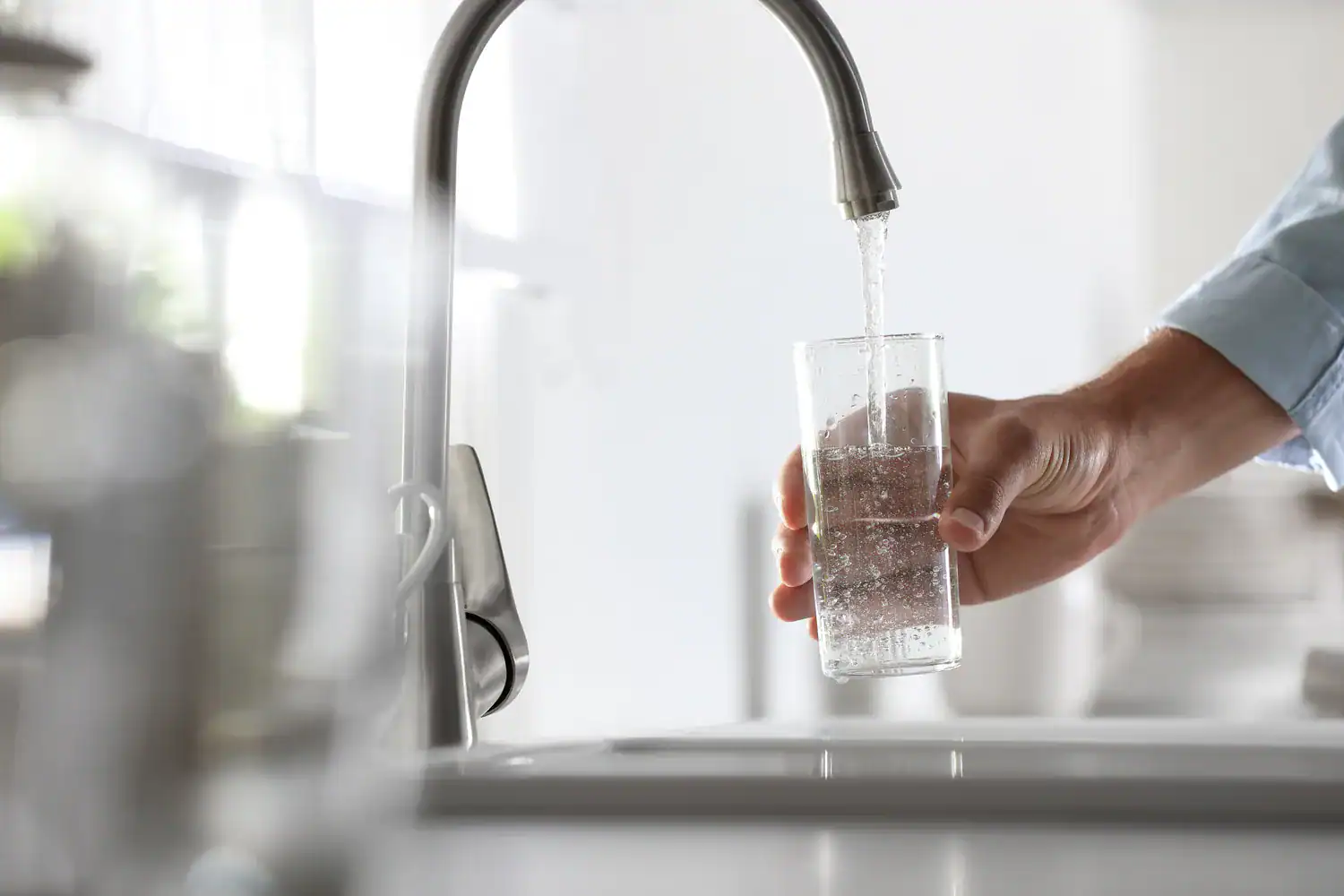
It starts with a real water analysis. Not a theatrical “free test” designed to scare you into a sale — an actual assessment of what’s in your specific water. In Pinellas County, that means testing for hardness, chloramines, disinfection byproducts like TTHMs and HAA5s, arsenic, chromium-6, and other contaminants that have been detected in the local supply. What’s in your water in Largo may read a little differently than what’s coming out of a tap in Dunedin or Safety Harbor, because Pinellas draws from multiple sources and the chemistry can shift.
Once the analysis is done, we design a system around what was actually found — not a one-size-fits-all package pulled off a shelf. Whole-house filtration, reverse osmosis for drinking water, water softening, UV purification, or a combination — the recommendation is based on your water, your home, and what you’re trying to solve.
Installation is handled by our licensed professionals who manage all the relevant code compliance for your municipality, whether that’s St. Petersburg, Clearwater, Largo, or unincorporated Pinellas County. After installation, we explain the system to you in plain language, and we service what we install — including systems originally installed by other companies if you’ve been left without support.
Ready to get started?
Pinellas County’s water system is more complex than most. It pulls from surface water, desalination, and groundwater — then treats it with chloramine, a disinfectant that requires a specifically designed filtration approach. The whole-house systems we install use NSF-certified components and WQA-certified TAC media, chosen for what actually shows up in this county’s water — not what shows up in a generic Florida sales pitch.
For drinking water, reverse osmosis is the most effective option available for residential use. It removes 95–99% of dissolved solids, including chloramines, TTHMs, arsenic, chromium-6, nitrates, and PFAS compounds. Tampa Bay Water — the regional supplier serving Pinellas — detected PFOS above the EPA’s 4 ppt limit at one of its treatment plants. An RO system under your sink or integrated into a whole-house setup is the most direct answer to that.
For homeowners in older Pinellas neighborhoods — homes built in the 1950s through 1980s in areas like Gulfport, South Pasadena, or parts of St. Petersburg — there’s also the pipe question. Lead and galvanized steel were standard construction materials in that era, and what leaches from aging plumbing is something the utility can’t control once water leaves the treatment plant. A point-of-entry whole-house system addresses what happens between the street and your tap, which is exactly where the problem often lives.
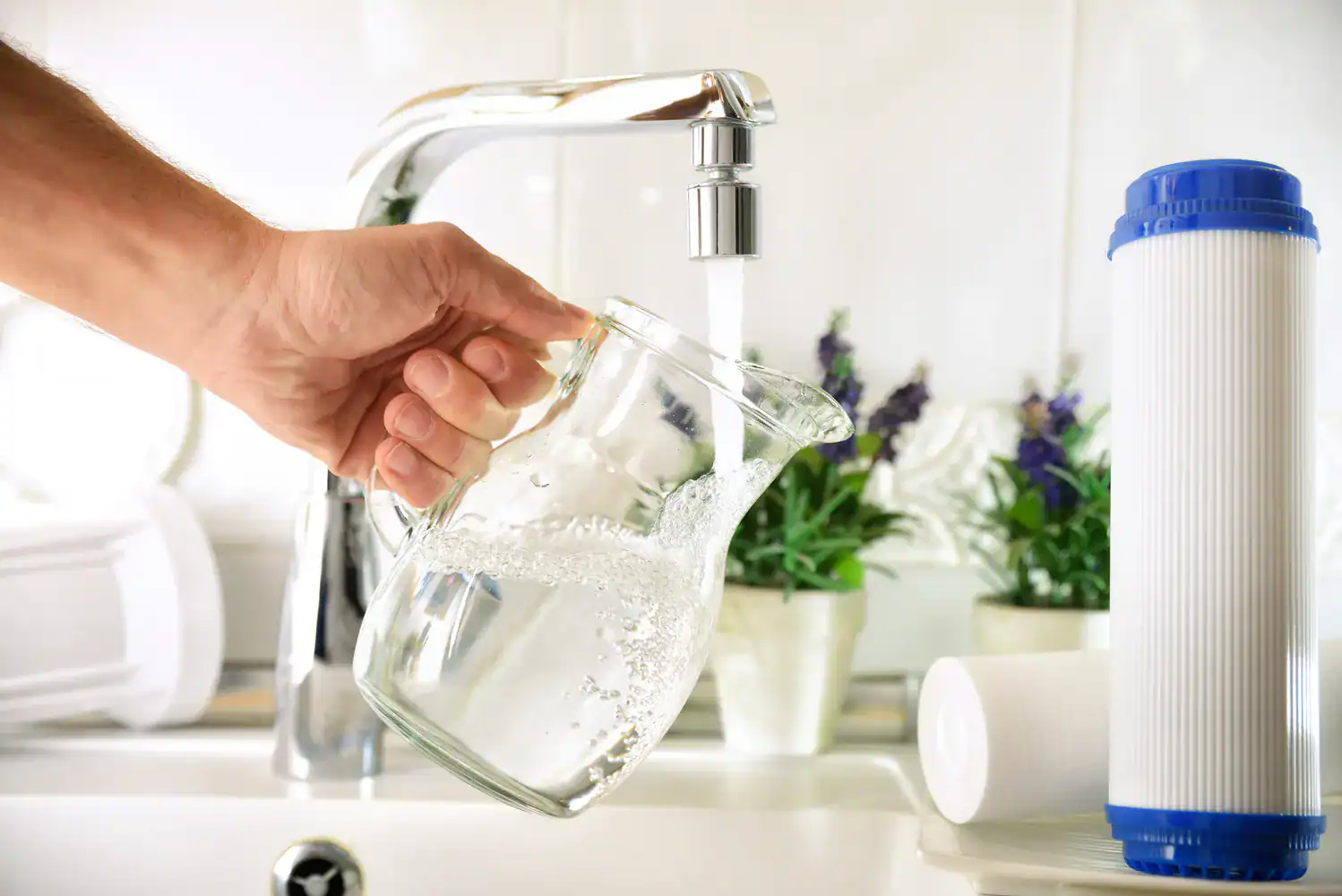
Technically, Pinellas County Utilities water meets federal Safe Drinking Water Act standards. But “meets federal standards” and “is as clean as it could be” aren’t the same thing. The EPA’s legal limits for many contaminants haven’t been updated in nearly 20 years. Testing in the Pinellas County area has detected arsenic, chlorate, hexavalent chromium, TTHMs, and bromochloromethane — and four of those contaminants exceed current health guidelines set by independent health organizations, even while staying within legal limits.
On top of that, Pinellas County water averages 10–15 grains per gallon of hardness. That’s classified as very hard, and it causes real, ongoing damage to appliances, plumbing, and fixtures over time. Whether you need a full whole-house system or a targeted reverse osmosis setup for drinking water depends on your specific home and what a water test actually finds — but for most Pinellas homeowners, the answer to “do I need something?” is yes.
Most water systems in Florida use chlorine as their primary disinfectant. Pinellas County uses chloramine — a compound of chlorine and ammonia — which is more stable in the distribution system but significantly harder to remove at the tap. Standard activated carbon filters, including most pitcher filters and basic under-sink units, are rated for chlorine removal. They’re far less effective against chloramines, which means if you’ve bought a filter thinking it’s handling your water and you’re still getting a chemical taste or odor, this is likely why.
Removing chloramine effectively requires a system specifically designed for it — typically a high-capacity catalytic carbon filter or a whole-house system with the right media and contact time. Pinellas County also runs a Water System Maintenance Program one to two times per year, temporarily switching from chloramine to free chlorine. During those periods, levels of TTHMs and HAA5s — disinfection byproducts with long-term health concerns — can rise in the distribution system. A properly designed whole-house filtration system handles both scenarios year-round.
Hard water leaves calcium and magnesium deposits — called scale — inside anything water flows through. Your water heater is the biggest casualty. Scale builds up on the heating element, forces it to work harder, drives up your energy bill, and shortens the unit’s life. The same thing happens inside your dishwasher, washing machine, and coffee maker. You also see it on the outside — the white crust on showerheads, the film on glass shower doors, the spots on dishes that won’t come clean.
In Pinellas County, where water hardness averages 216 ppm and median home values are approaching $400,000, this isn’t a minor inconvenience. It’s a real cost — in appliance replacements, in energy efficiency, and in the time you spend trying to clean surfaces that keep coming back cloudy. A whole-house system treats water at the point it enters your home, so every faucet, fixture, and appliance gets softened, filtered water. The scale stops building. The appliances last longer. The surfaces stay cleaner with less effort.
For most Pinellas County homeowners, yes — reverse osmosis is the most effective residential option for drinking water. It removes 95–99% of dissolved solids, which covers the contaminants that show up most in this area: chloramines, TTHMs, arsenic, chromium-6, nitrates, and PFAS compounds. Tampa Bay Water, the regional supplier that serves Pinellas, detected PFOS at 4.4 parts per trillion at its Lithia Water Treatment Plant — slightly above the EPA’s 4 ppt maximum contaminant level. Reverse osmosis is currently the most reliable residential technology for removing PFAS from drinking water.
An under-sink RO system is the most common setup — it handles the water you actually drink and cook with, without requiring treatment of every gallon that flows through the house. For homeowners who want comprehensive coverage, whole-house RO configurations are also available. The right choice depends on your water test results and what you’re prioritizing. That’s exactly what the initial water analysis is designed to figure out before anything gets recommended or installed.
It depends on the system and what it’s handling. In Pinellas County, where water hardness averages 10–15 grains per gallon and the supply includes chloramines and various dissolved contaminants, filtration media and components work harder than they would in a softer, simpler water environment. As a general rule, sediment pre-filters need attention every three to six months, carbon media typically lasts one to two years depending on usage and water quality, and reverse osmosis membranes generally run three to five years before replacement.
What matters most is that someone actually shows up to do it. One of the most common complaints about water treatment companies — including some well-known names in the Tampa Bay area — is that service disappears after the sale. We service what we install, and we also service systems installed by other companies. If you have an existing system that hasn’t been touched in years, or you’ve been trying to get a callback from the company that sold it to you, that’s something we can step in and handle regardless of the brand.
Please provide your email address so that we can stay in touch and answer any questions you have! We will be reaching back out shortly.
"*" indicates required fields
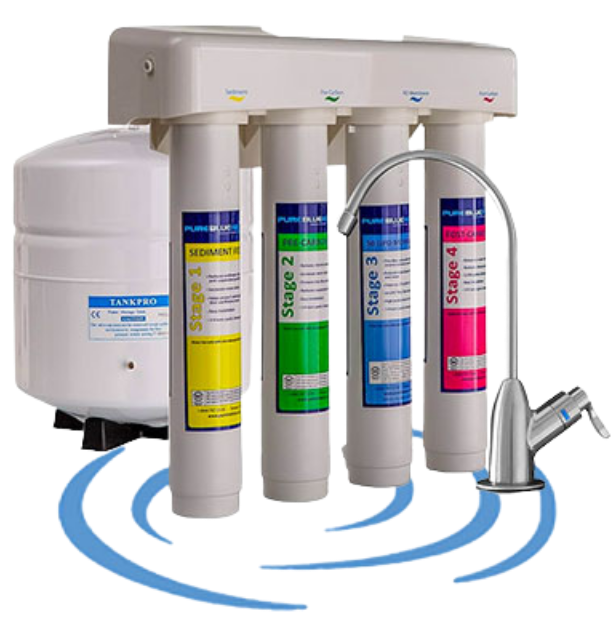
Get a free reverse osmosis drinking water system with the purchase of any whole-home water purification system.
*Cannot be combined with other offers. Mention this special when you call.