Reach Out Today
Please provide your email address so that we can stay in touch and answer any questions you have! We will be reaching back out shortly.


Hear from Our Customers
You stop buying bottled water by the case. Your coffee and tea taste better because the water going into them isn’t fighting against the flavor. Your skin doesn’t feel tight and dry after every shower.
The white film on your dishes disappears. Your water heater stops working overtime trying to heat through layers of mineral buildup. Your appliances last longer because they’re not constantly battling hard water deposits.
You’re not dealing with rust stains in your sinks and toilets. The rotten egg smell is gone. You can actually drink water straight from the tap without holding your breath or wondering what’s in it.
That’s what happens when you install a water filtration system designed for Florida’s specific water problems. Not a one-size-fits-all box from a big-box store, but a system built around what’s actually in your water.
We’ve been handling water quality issues across North and Central Florida for decades. We’re members of the National Water Quality Association and hold an A+ Better Business Bureau rating with zero complaints.
That matters in Kerr City because you’re dealing with groundwater that picks up everything on its way to your tap. Thin soil layers, high water tables, agricultural runoff—your water faces challenges that need someone who actually understands Florida geology, not just someone who installs filters.
We don’t do plumbing. We don’t install water heaters. We focus entirely on water treatment, which means when you call us, you’re getting specialists who live and breathe water quality every single day.
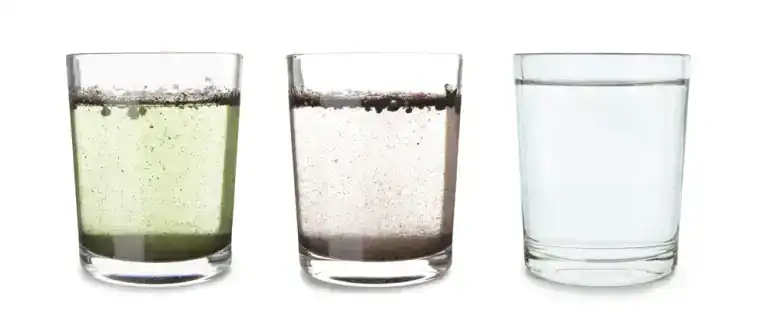
First, we test your water. Not a guess based on your neighborhood—an actual analysis of what’s coming out of your specific tap. We’re looking for hardness levels, iron, sulfur, bacteria, contaminants, pH levels, everything that affects how your water performs.
Then we design a system around those results. If you’ve got high iron content, you need iron removal before anything else. If sulfur is your main issue, that gets addressed with specific filtration stages. If you’re dealing with bacteria or organisms, UV water purification becomes part of the conversation.
We walk you through what we found, what it means for your home, and what type of system makes sense. That might be a whole-house filtration system, reverse osmosis systems for drinking water, activated carbon filtration for taste and odor, or a combination.
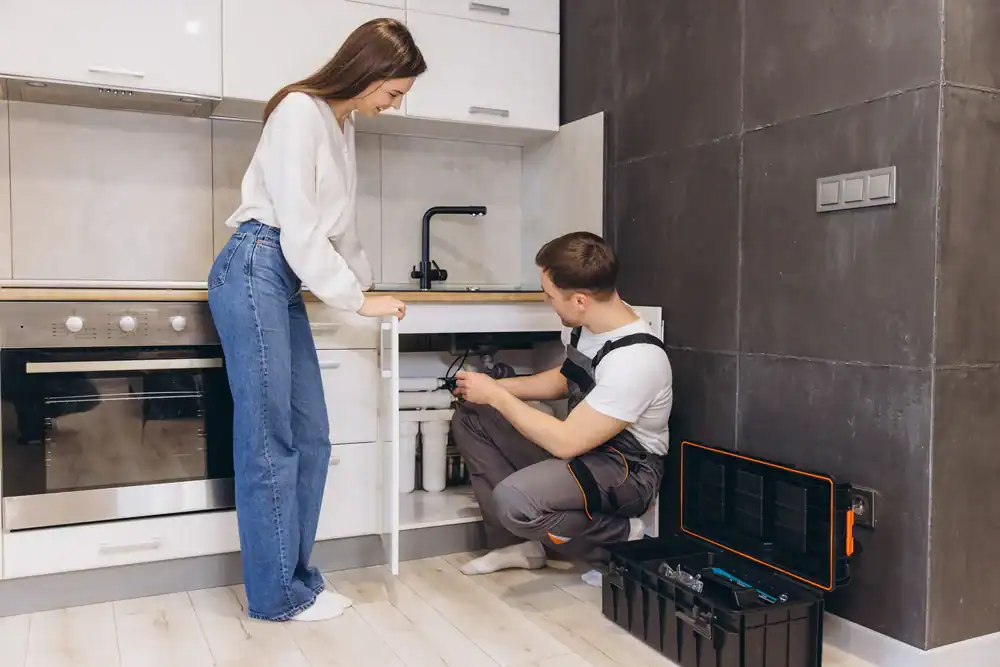
Installation happens on your schedule. We’re not ripping apart your house—most systems integrate into your existing plumbing without major construction. Once it’s in, we test it to make sure it’s doing exactly what it’s supposed to do.
You get a system designed for your water, not a generic solution that kind of works.
Ready to get started?
Whole-house systems filter every drop of water entering your home. Every faucet, every shower, every appliance gets treated water. You’re protecting your entire plumbing system, not just one tap.
Reverse osmosis systems handle your drinking water specifically. These go under your sink and run water through multiple filtration stages, removing contaminants down to microscopic levels. You get clean drinking water without the bottles.
Activated carbon filtration tackles taste, odor, and chlorine. If your water smells like a swimming pool or tastes metallic, carbon filters pull those compounds out before the water reaches your glass.
UV water purification kills bacteria and waterborne organisms without chemicals. A UV light system destroys anything living in your water—especially important in Kerr City where groundwater can pick up agricultural bacteria and runoff contamination.
Iron and sulfur removal systems are critical in Florida. If you’ve got rust stains or that rotten egg smell, you need specialized filtration that targets those specific minerals before they reach your fixtures.
We also offer salt-free water conditioning for homes that want scale prevention without traditional water softeners. No salt, no electricity, no wastewater—just protection against mineral buildup.
Every system gets customized based on your water quality testing results and your family’s daily water usage.
You start with drinking water quality testing. We can’t recommend a system until we know what’s in your water, and Kerr City water varies significantly from house to house depending on your well depth and location.
The test tells us your hardness level, iron content, sulfur presence, pH balance, bacterial counts, and any contaminants. Those results determine whether you need a whole-house system, point-of-use filtration, or both.
If your main issue is hard water damaging appliances, a whole-house solution makes sense. If you’re more concerned about what you’re drinking, under-sink filter installation with reverse osmosis might be the priority. Most homes end up needing a combination—whole-house filtration for protection plus reverse osmosis for drinking water.
We design the system around your specific test results and your budget. There’s no one-size-fits-all answer, which is why companies that try to sell you a system before testing your water aren’t doing you any favors.
A water softener specifically removes hardness minerals—calcium and magnesium—that cause scale buildup. It uses salt to exchange those minerals for sodium ions. Your water feels slippery, soap lathers better, and your appliances don’t get clogged with mineral deposits.
A water filtration system removes contaminants, chemicals, bacteria, and particles. It’s focused on safety and taste, not just hardness. Filtration can include activated carbon for chlorine and odor, reverse osmosis for deep contaminant removal, or UV purification for bacteria.
Most Kerr City homes need both. Florida water is notoriously hard, so you’re dealing with scale issues. But you’re also dealing with sulfur, iron, agricultural runoff, and potential bacterial contamination from shallow groundwater.
We often install a softener or conditioner to handle hardness, then layer in filtration stages to address everything else. The softener protects your pipes and appliances. The filtration protects your health and makes the water actually pleasant to drink.
You can have soft water that still tastes terrible or contains contaminants. That’s why testing matters—so we know exactly what you’re up against.
It depends entirely on the type of system and how much water you’re running through it. Activated carbon filters typically need replacement every six to twelve months. Reverse osmosis membranes last two to three years. Whole-house filter cartridges might go six months to a year.
The heavier your water usage and the worse your water quality, the faster filters get exhausted. A family of five with high iron content will burn through filters faster than a couple with relatively clean well water.
We set up a maintenance schedule based on your specific system and usage patterns. Most systems have indicator lights or pressure gauges that tell you when filters are getting clogged. You’re not guessing—the system tells you when it’s time.
UV bulbs need annual replacement even if they still light up, because their bacteria-killing effectiveness drops off after about 9,000 hours of use. Salt-based softeners need salt refills every few months depending on your hardness level and water consumption.
Regular maintenance isn’t optional if you want the system to keep working. A clogged filter doesn’t just stop filtering—it can restrict water flow and damage the system. We can handle the maintenance for you, or we’ll show you how to do it yourself if you prefer.
A properly sized and installed system shouldn’t cause noticeable pressure loss. The key word is “properly sized.” If someone installs an undersized system or uses cheap filters with restrictive flow rates, yes, you’ll feel it.
Whole-house systems are designed to handle your home’s peak flow rate—the maximum gallons per minute you’d use if every fixture ran simultaneously. We calculate that based on your home’s size and plumbing before recommending a system.
Some pressure drop is normal as water moves through filtration media, but we’re talking about a few PSI, not enough to make your shower feel weak. If you’re starting with low pressure because of old plumbing or a weak well pump, filtration might make that more noticeable, but the filtration isn’t the root cause.
Clogged filters will definitely kill your pressure, which is why maintenance matters. A filter that’s packed with trapped sediment and iron creates a bottleneck. Replace it on schedule and pressure stays consistent.
Under-sink reverse osmosis systems work differently—they fill a small storage tank slowly throughout the day, then deliver filtered water on demand from that tank. You’re not filtering in real-time when you turn on the faucet, so there’s no pressure issue at that tap.
If pressure matters to you—and it should—make sure whoever installs your system actually calculates flow rates instead of just bolting in whatever they have on the truck.
You can install some systems yourself if you’re comfortable with basic plumbing. Under-sink filters and countertop units are fairly straightforward—you’re connecting to a cold water line and mounting a filter housing. Manufacturers design them for DIY installation.
Whole-house systems are a different story. You’re cutting into your main water line, installing bypass valves, mounting large tanks, and potentially dealing with electrical connections for UV systems or control valves. If you mess up the installation, you could end up with leaks, water damage, or a system that doesn’t work correctly.
The bigger issue is knowing what to install in the first place. Without proper water testing and analysis, you’re guessing. You might install a carbon filter when you actually need iron removal first. You might size the system wrong for your flow rate. You might miss a bacteria problem that needs UV treatment.
We’ve seen plenty of DIY installations that technically function but don’t solve the actual problem. Someone installs a basic sediment filter when their real issue is dissolved minerals that pass right through. Or they install a softener but skip the filtration, so their water is soft but still smells like sulfur.
Professional installation also means warranty protection. Most manufacturers require professional installation to honor their warranties. If something fails and you installed it yourself, you’re buying the replacement parts out of pocket.
If you want to maintain the system yourself after professional installation, that’s completely reasonable. We’ll show you how to change filters and what to watch for. But the initial setup and system design—that’s worth having someone who knows Florida water handle it.
Please provide your email address so that we can stay in touch and answer any questions you have! We will be reaching back out shortly.
"*" indicates required fields