Reach Out Today
Please provide your email address so that we can stay in touch and answer any questions you have! We will be reaching back out shortly.

Hear from Our Customers
Your water heater stops dying every few years. The white crust around your faucets disappears. Your skin doesn’t feel tight and dry after every shower.
These aren’t small conveniences. Jacksonville Beach water can hit 28 grains per gallon of hardness—that’s nearly three times what’s considered “very hard” by national standards. At that level, you’re looking at $1,130 to $1,980 in annual damage from scale buildup, appliance failure, and wasted detergent alone.
A proper whole house water filtration system handles both the mineral content and the contamination. That means reverse osmosis systems for drinking water quality testing at the tap, activated carbon filtration to remove chlorine and chemical taste, and UV water purification to eliminate bacteria without adding more chemicals to your water supply.
You’ll use half the soap. Your dishes come out clear. Your clothes last longer because they’re not being beaten up by mineral deposits in every wash cycle. And you stop replacing appliances years before they should actually fail.
We don’t do plumbing. We don’t install water heaters. We focus entirely on water treatment because that’s what Jacksonville Beach homes actually need.
We’re A-rated with the Better Business Bureau with a 5-star rating and zero complaints. We’re members of the National Water Quality Association, which means our technicians hold certifications most companies don’t bother with. And we’re one of the few local companies that will actually service what we install—something you won’t get from the national outfits operating here.
We also give $500 off to military members and first responders, and we support the Tunnels to Towers Foundation because we believe in taking care of the people who take care of us.
First, we test your water. Not just hardness—we’re looking at contaminants, pH, iron, sulfur, and anything else that’s affecting your quality or causing damage. Jacksonville Beach pulls from the Floridan Aquifer, and depending on where you are, your water profile can be different from your neighbor two streets over.
Once we know what we’re dealing with, we’ll walk you through what system makes sense. That might be a whole-house carbon filter and softener. It might include an under-sink filter installation for drinking water with reverse osmosis. If you’re on a well or have bacterial concerns, we’ll talk about UV water purification as part of the setup.
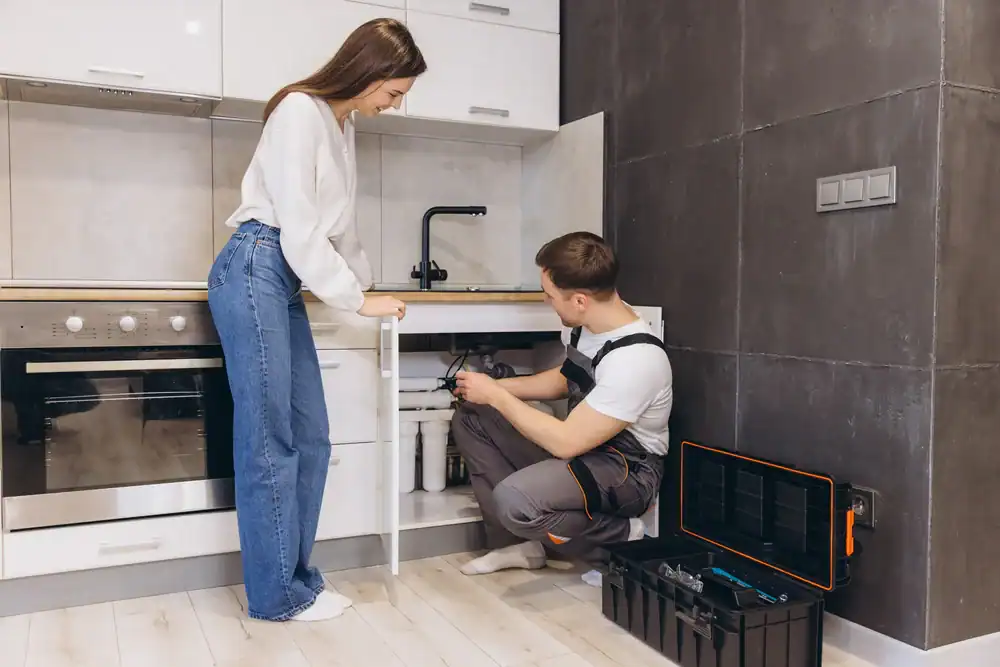
Installation typically takes a few hours. We’re not tearing apart your house—we’re adding equipment at the point of entry so every faucet, every shower, every appliance gets treated water from that point forward. After it’s in, we’ll show you how it works, what maintenance looks like, and how to reach us if anything ever comes up.
Then we stay in touch. Filters get changed on schedule. Systems get checked. If something stops working right, we’re the ones who come back and fix it.
Ready to get started?
A complete water filtration system in Jacksonville Beach usually includes three layers. You’ve got a whole-house filter at the main line to catch sediment and reduce chlorine before water even enters your plumbing. Then a softener to remove the calcium and magnesium that’s scaling up everything. And finally, a point-of-use reverse osmosis system under your kitchen sink for drinking water quality testing and contamination removal.
That reverse osmosis setup is where you handle the stuff that really matters for health—PFAS, lead, microplastics, and the four contaminants that show up in Jacksonville’s water above health advocacy guidelines. Activated carbon filtration pulls out chemicals and improves taste. The RO membrane blocks particles down to 0.0001 microns.
Some homes need more. If you’ve got bacteria or virus concerns, UV water purification kills pathogens without adding chlorine or other disinfectants. If you’ve got iron staining your sinks and toilets, that requires a different kind of filter before the softener.
We size everything based on your household water usage, your specific contamination profile, and what you’re trying to protect. It’s not one-size-fits-all, and anyone telling you otherwise is selling you something that won’t work right in six months.
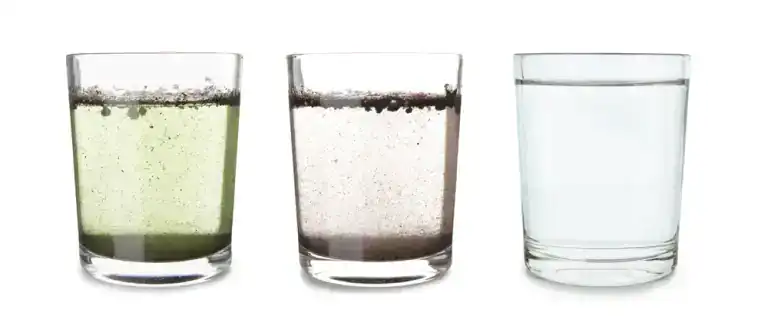
For a complete whole-house setup including softener, carbon filter, and reverse osmosis drinking system, you’re typically looking at $3,000 to $8,000 depending on size and features. That’s not a small number, but compare it to the $1,130 to $1,980 you’re losing every year to hard water damage.
Your water heater alone costs about $200 extra annually in energy because of scale buildup. You’re spending $180 more on detergent and cleaning products. Appliance repairs and early replacements add another $400 to $800. A good system pays for itself in three to five years just in money you stop wasting.
We don’t finance in-house, but most of our customers use a home equity line or roll it into a refinance if they’re already doing that. Military and first responders get $500 off upfront, which helps. The bigger question isn’t what it costs—it’s what you’re already paying by not having one.
Reverse osmosis systems remove more than 90 contaminants including the ones Jacksonville residents should actually worry about. That includes PFAS, which has been linked to cancer and developmental issues in children. It removes lead, which still shows up in older plumbing even though it’s not in the source water. It pulls out chlorine, fluoride, arsenic, nitrates, and microplastics.
The RO membrane works by forcing water through a barrier with pores so small that only water molecules get through. Everything else—dissolved solids, heavy metals, chemicals—gets flushed to drain. You end up with water that’s cleaner than what you’d buy in bottles, and you’re not creating plastic waste or spending $400 a year on cases from the store.
The system we install most often combines reverse osmosis with activated carbon filtration and a remineralization stage. That gives you the contamination removal of RO plus better taste and a slight mineral content that’s actually good for you. It’s a more complete approach than just RO alone.
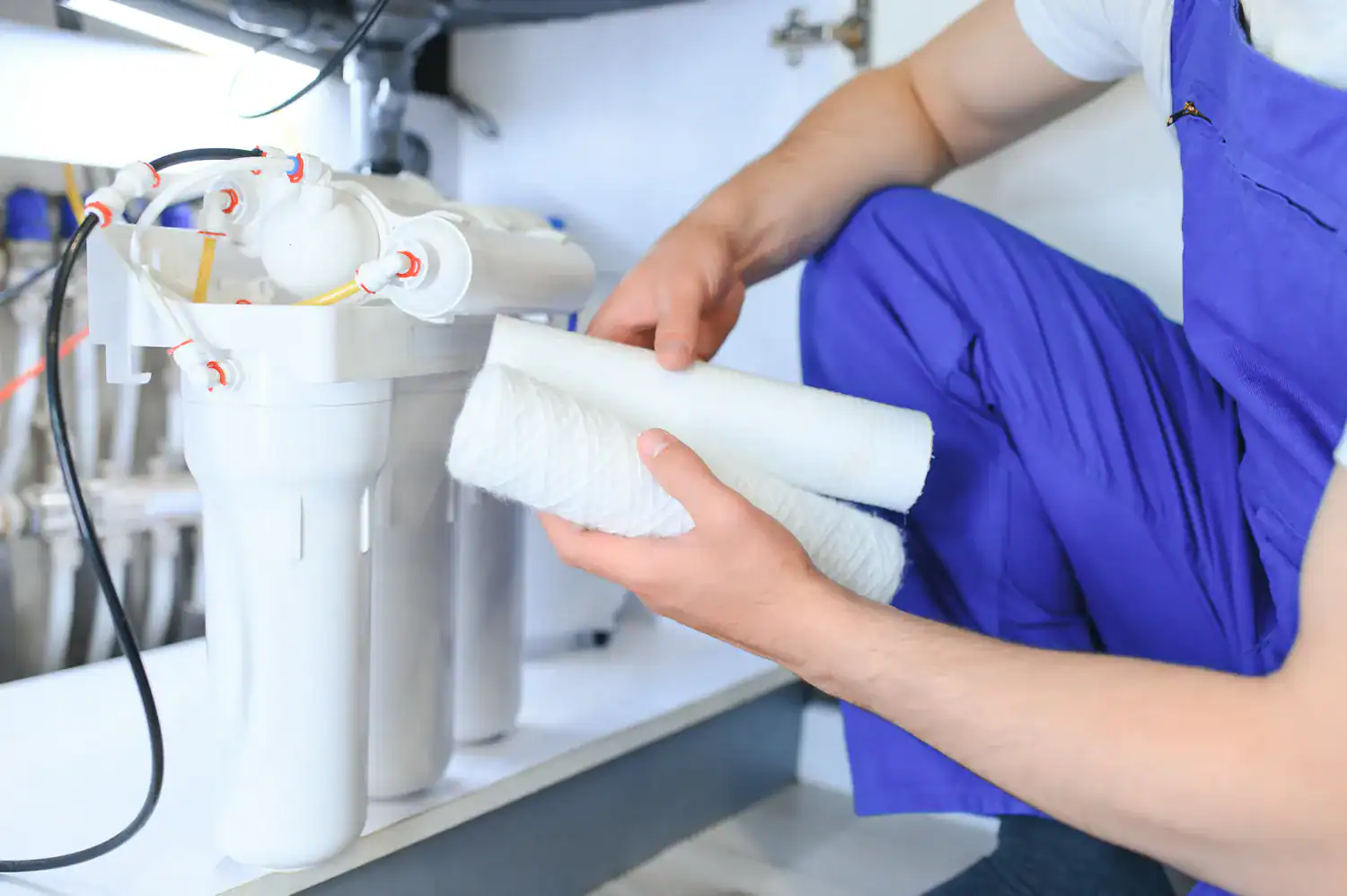
Carbon filters typically need changing every six to twelve months depending on your water usage and quality. Softener resin can last five to ten years if the system is sized right and you’re using the correct salt. Reverse osmosis membranes usually go two to three years before they need replacement.
The key is staying on schedule. A clogged carbon filter stops removing chlorine and chemicals effectively. A worn-out RO membrane lets contaminants through. And if your softener runs out of salt or the resin bed gets fouled, you’re back to hard water running through your pipes.
We set up maintenance reminders and handle the filter changes if you want us to. Some customers prefer to do it themselves—it’s not complicated, and we’ll show you how. Either way, the cost is maybe $150 to $300 a year in filters and salt, which is a lot less than one appliance repair or plumbing call because you let the system go too long without service.
Not by itself. A standard water softener removes calcium and magnesium—the minerals that cause hardness and scale. It doesn’t remove hydrogen sulfide, which is what causes that rotten egg smell some Jacksonville Beach homes get.
If you’ve got sulfur in your water, you need a different approach. Usually that’s an oxidizing filter before the softener, or an aeration system that releases the gas before water enters your house. Activated carbon filtration can help with mild sulfur issues, but if the smell is strong, you need equipment specifically designed to handle it.
The good news is it’s fixable, and it’s not uncommon in this area. We test for sulfur during the initial water analysis, and if it’s present, we’ll design the system to handle that along with hardness and everything else. You shouldn’t have to choose between soft water and water that doesn’t smell like swamp gas.
Probably not, but it depends on your situation. Jacksonville Beach city water is treated and disinfected before it reaches your home. The chlorine you taste is there specifically to kill bacteria and viruses in the distribution system.
UV purification makes more sense if you’re on a well, if you have a compromised immune system in the household, or if there’s been a history of boil water notices in your area. It’s also worth considering if your home has old plumbing where biofilm or bacteria could be growing inside the pipes themselves.
The advantage of UV is that it kills pathogens without adding chemicals. If you’re removing chlorine with carbon filtration or reverse osmosis, you’re also removing the disinfectant that was keeping bacteria from growing. A UV system gives you that protection back without reintroducing chlorine. It’s an extra layer, and for some homes it makes sense. For others, it’s overkill.
Please provide your email address so that we can stay in touch and answer any questions you have! We will be reaching back out shortly.
"*" indicates required fields