Reach Out Today
Please provide your email address so that we can stay in touch and answer any questions you have! We will be reaching back out shortly.

Hear from Our Customers
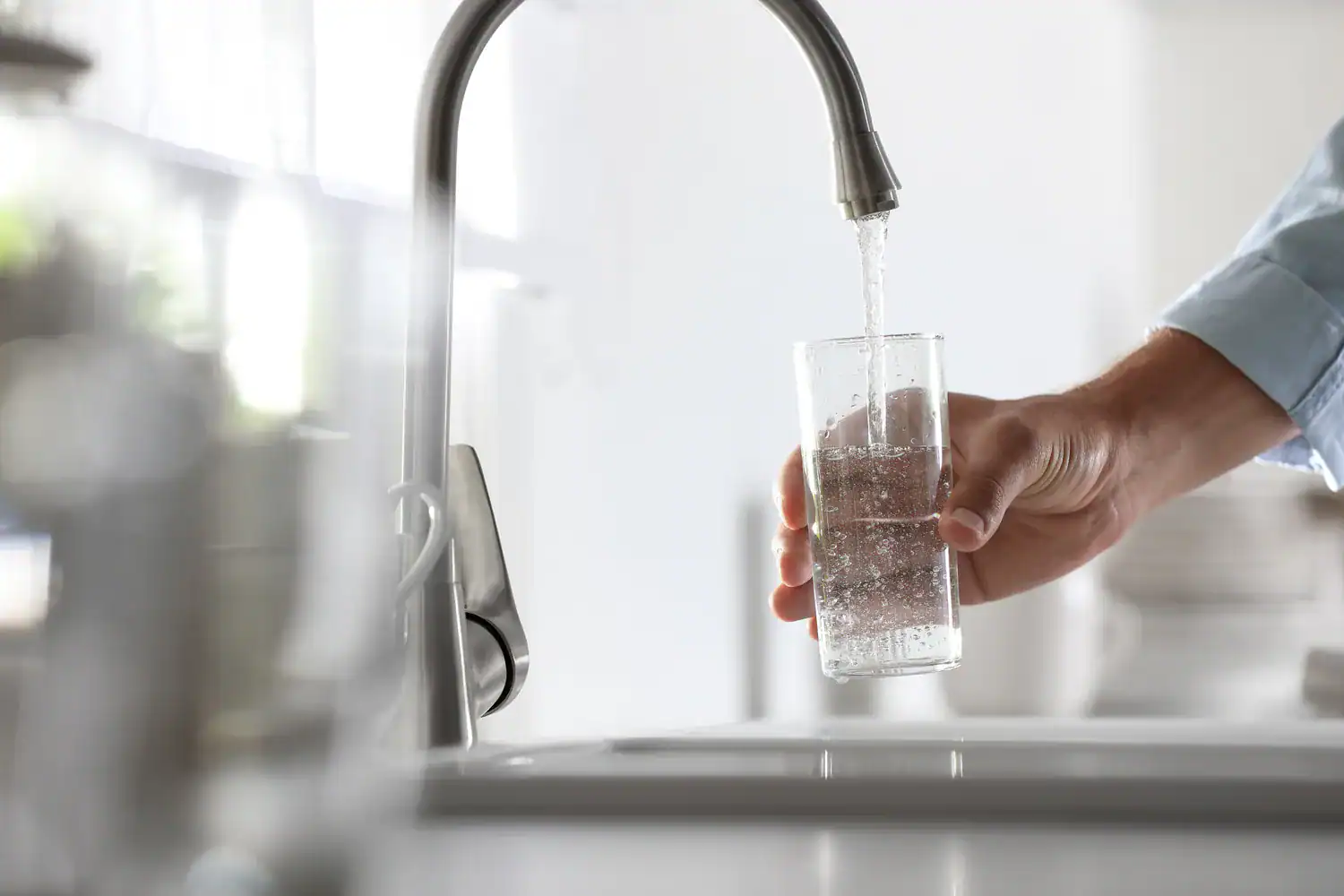
You stop buying bottled water by the case. Your kids drink straight from the tap without you second-guessing it. Your coffee tastes better, your skin doesn’t feel tight after a shower, and your appliances aren’t caked with buildup.
That’s what happens when your water filtration system removes 99% of contaminants at the point where water enters your home. Not just at one faucet—everywhere. Kitchen, bathrooms, laundry, refrigerator.
Most families in Holden Heights spend over $100 a month on bottled water. That’s $1,200 a year for water with more microplastics than what’s coming out of your tap—if your tap had the right filter. A reverse osmosis system or whole-house activated carbon filtration setup pays for itself, and you’re not hauling plastic jugs from the store twice a week.
Florida’s water has real issues. PFAS contamination shows up in 23 counties. Nitrates from fertilizer runoff are a growing problem. Chlorine levels fluctuate. You’re not paranoid for wanting to know what your family is drinking—you’re paying attention.
Quality Safe Water of Florida LLC doesn’t install water heaters or fix leaky pipes. We specialize in water purification, softening, and filtration for homeowners in Central Florida who want systems that actually work long-term.
We’re A-rated with the Better Business Bureau. Five stars, zero complaints. We’re members of the National Water Quality Association, which means we follow industry standards that matter. And we’ve been serving families in Holden Heights and the surrounding Orlando area long enough to know exactly what contaminants you’re dealing with and which systems hold up in Florida’s climate.
You’ll find cheaper options. You’ll also find national companies with horrible reputations for selling systems they don’t service. We’re local, we answer the phone, and we stand behind what we install. If you’re military or a first responder, we knock $500 off—because that matters to us.
First, we test your water. Not a guess, not a generic recommendation—actual testing to see what’s in your supply. PFAS, nitrates, chlorine, hardness, iron, whatever’s there. That tells us which filtration technology you actually need.
Then we walk you through your options. Reverse osmosis systems for drinking water quality testing at the tap. Whole-house activated carbon filtration if you want every faucet covered. UV water purification if bacteria or microorganisms are the issue. Under-sink filter installation for targeted treatment. We explain what each system does, what it costs, and what makes sense for your home.
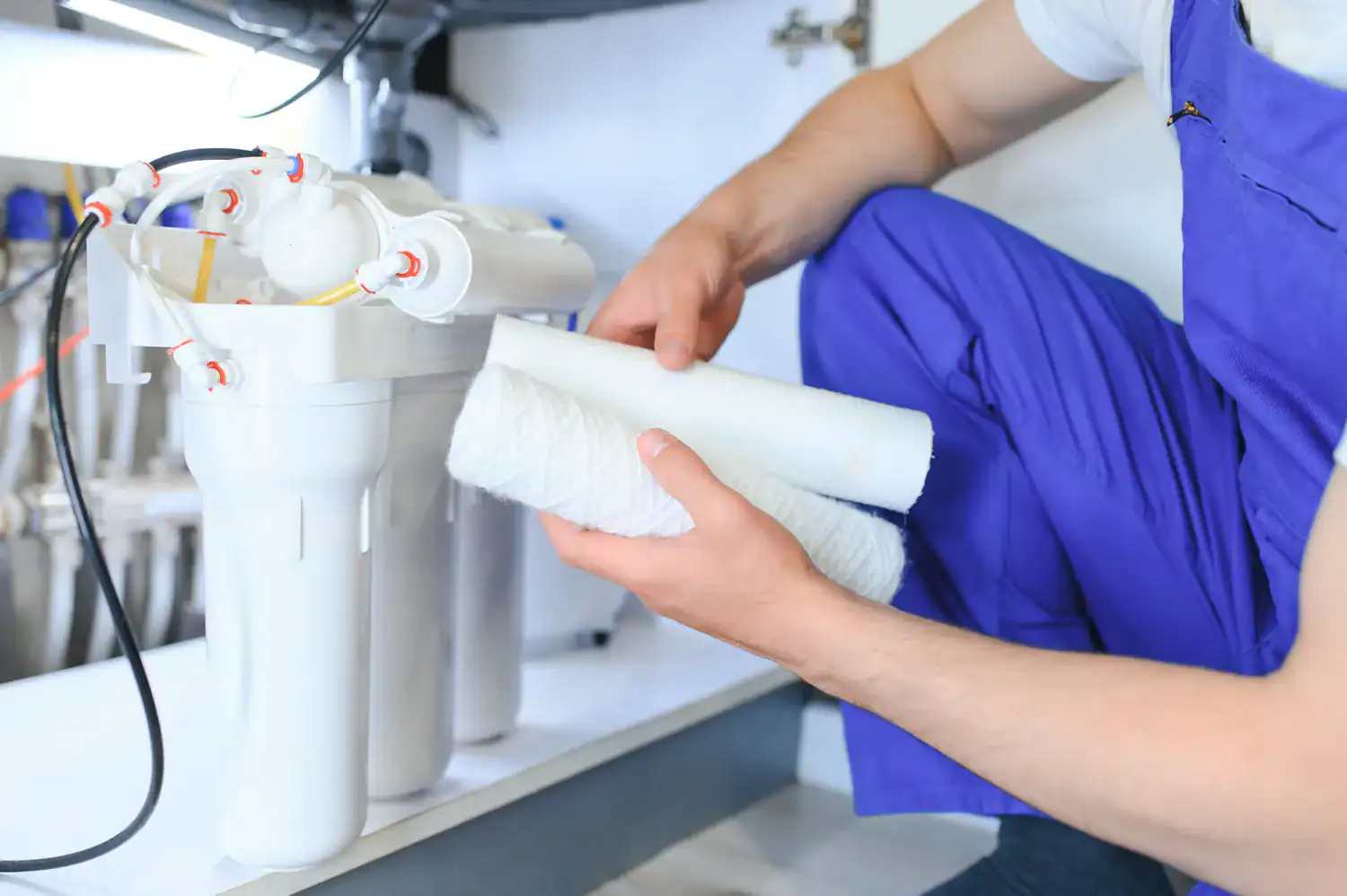
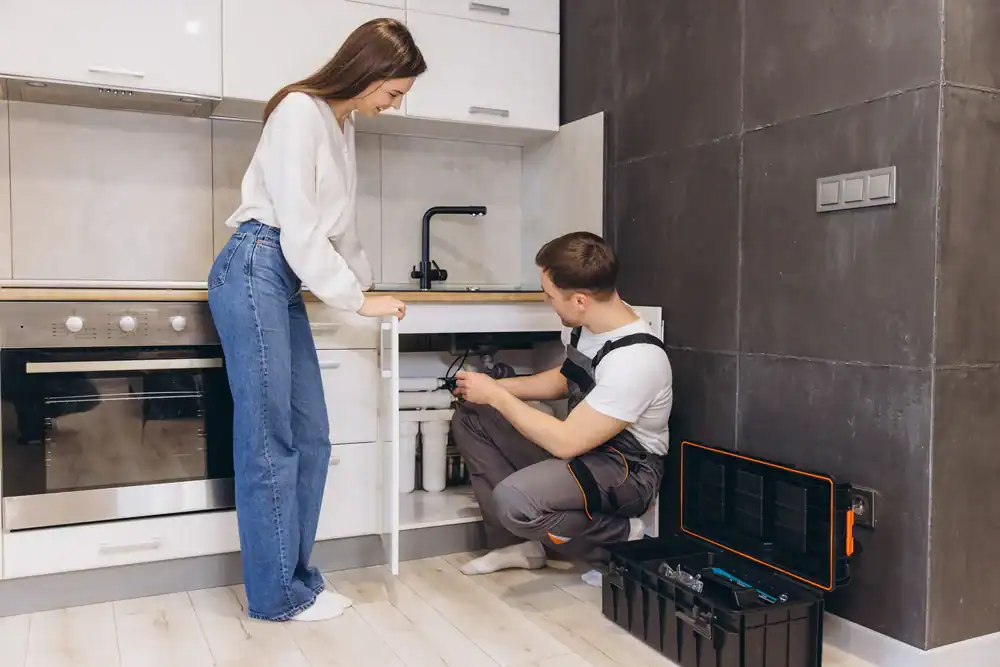
Installation happens at your main water line—the point of entry. That’s where we intercept everything before it reaches your kitchen, bathrooms, and appliances. We install a bypass valve so you’ve got access during maintenance, and we make sure everything is up to code. Most systems are up and running the same day.
After that, you’ve got clean water at every tap. We set you up with a maintenance schedule—filter changes, system checks, whatever your setup needs. You’re not figuring this out on your own.
Ready to get started?
You’re getting filtration that removes the stuff Florida homeowners worry about. PFAS chemicals—the “forever chemicals” that showed up in 63% of Florida spring samples. Nitrates from agriculture and fertilizer runoff. Chlorine and disinfection byproducts from municipal treatment. Iron that stains your sinks and tubs.
Our reverse osmosis systems remove 99% of contaminants and produce bottled-quality water right from your tap. Activated carbon filtration handles chlorine, taste, and odor issues across your whole house. UV purification kills bacteria and viruses without adding chemicals. We match the system to what’s actually in your water—not what sells best.
Holden Heights pulls from municipal supplies, but that doesn’t mean your water is problem-free. EPA data shows contaminants in municipal water across all 50 states, and Florida ranked second-highest for Safe Drinking Water Act violations in recent studies. You’re not overreacting by wanting a layer of protection between the city’s treatment and your family’s glasses.
We also install point-of-use systems if you just want your kitchen handled, but most families go whole-house once they realize the cost difference isn’t that steep and the protection covers everything—showers, laundry, ice makers, toilets. Your plumbing and appliances last longer when they’re not dealing with hard water and sediment buildup.
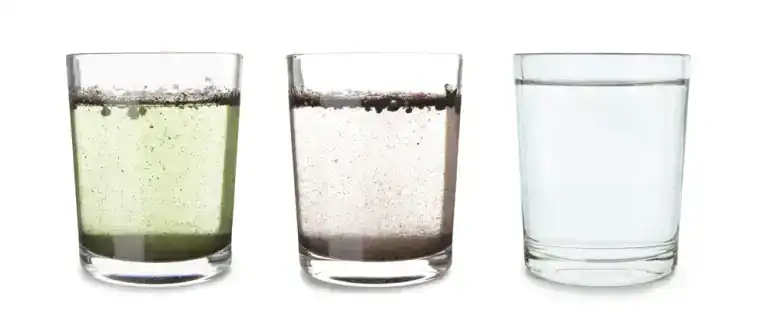
It depends on the system, but here’s what matters for Florida homeowners. Reverse osmosis systems remove up to 99% of contaminants, including PFAS, nitrates, chlorine, lead, arsenic, fluoride, and dissolved solids. That’s why they’re used to produce bottled water—they’re thorough.
Activated carbon filters handle chlorine, volatile organic compounds, bad taste, and odor. They’re great for whole-house setups because they treat high volumes of water without slowing down your pressure. UV purification kills bacteria, viruses, and microorganisms, which matters if you’re on well water or if your municipal supply has issues with disinfection byproducts.
Florida’s water has specific problems. PFAS contamination is widespread—detected in 23 counties and in 63% of spring samples. Nitrates from fertilizer runoff are climbing. Blue-green algae blooms happen year-round but spike in summer and fall, and they release toxins that standard treatment doesn’t always catch. If you’re in Holden Heights on city water, chlorine levels fluctuate and disinfection byproducts are a concern.
We test your water first, then recommend the filtration technology that actually addresses what’s in your supply. No point in installing a system that doesn’t match the problem.
Most families in Central Florida spend $100 or more per month on bottled water. That’s $1,200 a year, and you’re drinking water with significantly more microplastics than filtered tap water. A whole-house water filtration system costs more upfront—typically a few thousand depending on the technology—but it pays for itself in under three years.
Point-of-entry systems treat all the water coming into your home, so you’re not just filtering one faucet. Your kitchen, bathrooms, laundry, refrigerator, ice maker—they all get treated water. Compare that to buying cases of bottled water that only cover drinking and cooking, and the math tilts fast.
There’s also the appliance factor. Hard water and sediment shorten the lifespan of your water heater, dishwasher, and washing machine. Filtration systems reduce buildup and scaling, which means fewer repairs and replacements down the road. That’s not a small savings when a water heater runs $1,500+ to replace.
We offer financing if the upfront cost is a concern, and we give a $500 discount to military members and first responders. The goal is to make clean water accessible, not to sell you something you can’t afford. But if you’re already spending $1,200 a year on bottled water, you’re paying for a filtration system in installments—you just don’t own anything at the end.
You might need both, or you might just need filtration. It depends on what’s in your water. A water softener removes hardness—calcium and magnesium that cause scaling and make soap less effective. A filtration system removes contaminants like chlorine, PFAS, nitrates, and sediment. They solve different problems.
If your water leaves white buildup on faucets, makes your skin feel filmy after a shower, or causes your appliances to scale up, you’ve got hard water. A softener fixes that. If your water smells like chlorine, tastes off, or you’re worried about contamination, you need filtration. Many homeowners in Central Florida install both because municipal water here tends to be hard and treated with chlorine.
We test your water to see what you’re dealing with. Hardness is measured in grains per gallon—anything over 7 is considered hard, and Florida’s water often runs higher than that. Contaminant levels vary by neighborhood and source, so we don’t guess. Testing takes the mystery out of it.
Some systems combine softening and filtration, but they’re not always the best solution for both issues. We’ll tell you if a combo unit makes sense or if separate systems give you better results. The goal is to match the equipment to your water, not to upsell you on features you don’t need.
It depends on the system and how much water you use. Activated carbon filters in whole-house systems typically last six months to a year. Reverse osmosis membranes can go two to three years, but the pre-filters and post-filters need changing every six to twelve months. UV bulbs last about a year before they lose effectiveness.
We set you up with a maintenance schedule when we install your system. You’ll know when filters need changing, and we can handle it for you or walk you through doing it yourself if you prefer. Most under-sink filter installations are straightforward enough for DIY maintenance, but whole-house systems are easier to let us manage because they’re tied into your main line.
Skipping filter changes is where people run into problems. A clogged filter drops your water pressure, and an expired filter stops removing contaminants effectively. You’re basically running untreated water through a system that’s not doing its job anymore. That’s why we send reminders and offer service plans—so you’re not guessing when it’s time.
Filter costs vary. Carbon filters run $50 to $150 depending on size. RO membranes are $75 to $200. UV bulbs are around $100. It’s an ongoing cost, but it’s predictable and a lot less than what you’d spend on bottled water or dealing with appliance repairs from untreated water. We’re upfront about maintenance costs before you buy, so there are no surprises.
It can, but it shouldn’t if the system is sized and installed correctly. Whole-house filtration systems are designed to handle the flow rate your home needs without creating a bottleneck. If your pressure drops noticeably, it usually means the system is undersized, the filters are clogged, or something wasn’t installed right.
We size systems based on your home’s plumbing and your household’s water usage. A family of four needs a different flow rate than a couple with no kids. If we’re installing a point-of-entry filter, we make sure it can handle peak demand—like when someone’s in the shower, the dishwasher is running, and someone else turns on the kitchen faucet.
Reverse osmosis systems for under-sink installations do reduce flow slightly because the water is being pushed through a membrane, but that’s only at the one tap. It doesn’t affect your whole house. You’ll notice it takes a few seconds longer to fill a pot, but the tradeoff is water that’s as clean as bottled.
If you’ve already got low pressure in Holden Heights, that’s usually a municipal supply issue or old plumbing, not the filtration system. We test pressure before installation so we know what we’re working with. If pressure is already marginal, we’ll recommend a system that won’t make it worse or suggest a booster pump if needed. The goal is clean water without sacrificing the pressure you’re used to.
Please provide your email address so that we can stay in touch and answer any questions you have! We will be reaching back out shortly.
"*" indicates required fields