Reach Out Today
Please provide your email address so that we can stay in touch and answer any questions you have! We will be reaching back out shortly.


Hear from Our Customers

No more orange rings in your toilets. No rotten egg smell when you turn on the shower. No embarrassment when guests visit.
A whole-house water filtration system treats every drop before it reaches your faucets, appliances, and fixtures. That means cleaner dishes, softer laundry, longer-lasting water heaters, and water you’d actually want to drink straight from the tap.
Most homeowners in Glynlea/Grove Park deal with iron staining, sulfur odors, or hard water buildup. Those aren’t cosmetic issues. Iron bacteria can damage your plumbing. Hard water shortens the life of your appliances. And if you’re buying bottled water because your tap water tastes bad, you’re spending more than you think.
Filtration fixes the source. You stop scrubbing stains that come back every week. Your soap works better. Your coffee tastes normal. And you’re not replacing appliances years earlier than you should.
We have an A+ rating with the Better Business Bureau and five stars with zero complaints. We’re members of the National Water Quality Association, and we’ve spent over 50 years working exclusively on water treatment in Central Florida.
We don’t do plumbing. We don’t install water heaters. We focus on one thing: making your water safe, clean, and usable throughout your entire home.
Lake County sits on a limestone aquifer, which means your well water picks up calcium, magnesium, iron, and sulfur as it moves through the ground. We test your water first, then design a system based on what’s actually in it—not a one-size-fits-all box from a big-box store. Every home is different. Your system should be too.

We start with a free water analysis at your home. We test for hardness, iron, sulfur, bacteria, pH, and other contaminants common in Glynlea/Grove Park well water. That tells us what you’re dealing with and what needs to be removed.
Once we know what’s in your water, we design a system to handle it. That might include activated carbon filtration for taste and odor, a reverse osmosis system for drinking water, UV purification to kill bacteria, or iron and sulfur removal if you’ve got staining or smell. Some homes need all of it. Some need two stages. It depends on your water and how you use it.
After you approve the system, we schedule the installation. Most whole-house systems go in where your water line enters the home, so every tap gets filtered water. We don’t subcontract the work. Our team handles it start to finish.
Once it’s running, we walk you through maintenance. Some systems need a filter swap once a year. Others run for years with minimal upkeep. We’ll tell you exactly what to expect, and we’re available if something changes.

Ready to get started?
A complete system treats water at multiple stages depending on what’s in it. Activated carbon filtration removes chlorine, chemicals, and odors. If your water smells like rotten eggs, that’s hydrogen sulfide, and carbon handles it.
Reverse osmosis systems are typically installed under the kitchen sink for drinking water. They remove heavy metals, microplastics, and dissolved solids that other filters miss. If you want the cleanest possible drinking water, reverse osmosis is the standard.
UV water purification kills bacteria and viruses using ultraviolet light. If you’re on well water in Lake County, bacterial contamination is a real risk, especially if you’ve got iron bacteria. UV sterilization is a chemical-free way to make sure your water is safe.
Iron and sulfur removal systems are common here. If you’ve got orange stains or that rotten egg smell, you need a system designed specifically for those contaminants. A standard softener won’t fix it. We use filtration and oxidation methods that actually remove the iron and sulfur instead of just masking them.
Hard water treatment can be done with or without salt. Traditional softeners work, but they require ongoing salt purchases and use more water. Salt-free conditioners don’t remove hardness, but they prevent scale buildup without the maintenance. We’ll explain both and let you decide what fits your home.
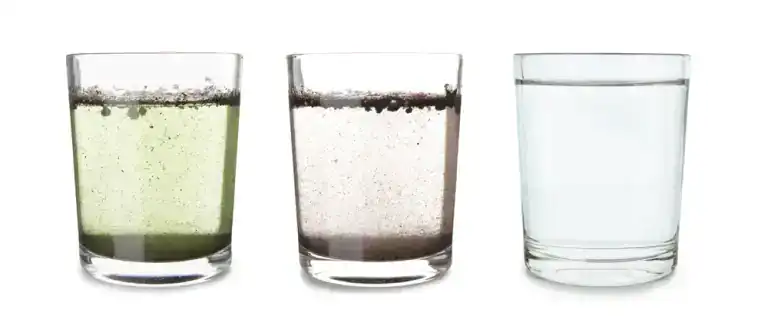
If your water smells, stains your fixtures, or tastes bad, you need filtration. Those are the obvious signs.
But even if your water looks fine, you might still have issues. Hard water doesn’t always leave visible stains right away, but it’s shortening the life of your water heater and appliances. Bacteria and heavy metals don’t have a smell or color, but they’re not safe to drink.
The only way to know for sure is to test your water. We do that for free. We test for hardness, iron, sulfur, bacteria, pH, and other common contaminants in Lake County well water. Once we see the results, we’ll tell you what’s in there and whether you need to do anything about it. No pressure, just information.
An under-sink filter only treats the water at one tap, usually your kitchen sink. It’s good for drinking water, but it doesn’t help your shower, washing machine, dishwasher, or toilets.
A whole-house water filtration system treats all the water coming into your home. That means every faucet, every appliance, and every fixture gets filtered water. If you’ve got iron staining in your bathrooms or hard water ruining your water heater, an under-sink filter won’t touch it.
Most homes in Glynlea/Grove Park benefit from both. A whole-house system handles iron, sulfur, and hardness. Then a reverse osmosis system under the kitchen sink takes care of drinking water. You get clean water everywhere it matters, not just one spot.
It depends on the type of system and what’s in your water. Most whole-house filters need a cartridge replacement once or twice a year. That’s a simple swap that takes ten minutes.
Reverse osmosis systems need a membrane change every two to three years and filter changes every six to twelve months. We’ll show you how to do it, or we can handle it for you.
Salt-based softeners need salt added regularly, usually every few weeks depending on your water usage. Salt-free systems need almost no maintenance. UV systems need a bulb replacement once a year. If you’ve got an iron or sulfur removal system, you might need to clean the media tank occasionally, but that’s not frequent. We’ll give you a maintenance schedule based on your specific system so you know exactly what to expect and when.
Yes, but you need the right type of system. The rotten egg smell is hydrogen sulfide gas, and a standard water softener won’t remove it.
Activated carbon filtration works for low levels of sulfur. If the smell is strong, you’ll need an oxidation system that converts the hydrogen sulfide into sulfur particles, then filters them out. Some systems use aeration, others use chemical oxidation, and some use catalytic media.
We test your water first to see how much sulfur is in there, then recommend a system that actually handles it. A lot of homeowners in Lake County have tried cheap filters or softeners that didn’t work because they weren’t designed for sulfur. We’ve been dealing with this exact problem for 50 years, so we know what works and what doesn’t.
Not necessarily. It depends on what’s in your water and what you’re trying to fix.
A water softener removes hardness, which is calcium and magnesium. If you’ve got scale buildup on your fixtures or your soap doesn’t lather well, that’s hardness, and a softener fixes it. But softeners don’t remove iron, sulfur, bacteria, or chemicals.
A filtration system removes contaminants like iron, chlorine, and sediment. Some filtration systems also condition hardness without using salt, which prevents scale without the ongoing cost and maintenance of a traditional softener.
Most homes in Glynlea/Grove Park have multiple issues—hardness, iron, and sulfur are common together. In that case, you’d need a system that addresses all three. We design systems that handle everything in one setup, so you’re not buying separate units that don’t work together.
Please provide your email address so that we can stay in touch and answer any questions you have! We will be reaching back out shortly.
"*" indicates required fields