Reach Out Today
Please provide your email address so that we can stay in touch and answer any questions you have! We will be reaching back out shortly.

Hear from Our Customers
That rotten egg smell when you turn on the shower? Gone. The rust stains creeping across your toilet bowl and grout lines? Handled. When your water is treated correctly for what Nassau County’s aquifer actually produces, the difference shows up everywhere — in how your home smells, how your fixtures look, and how your appliances hold up over time.
Fernandina Beach sits on a coastal section of the Floridan Aquifer that behaves differently from inland Florida water. The USGS has documented saline intrusion in this specific area, meaning some local wells carry elevated chloride levels that standard softeners aren’t built to address. Tannins from the surrounding marshland give water a tea-colored tint. Iron stains everything it touches. If your current setup wasn’t designed with these specific conditions in mind, it’s probably not doing the job you paid for.
Homeowners in communities like Amelia Island Plantation, North Hampton, and the Historic Downtown District are also protecting serious real estate investments. Hard water scale quietly destroys water heaters and plumbing. Acidic water corrodes copper pipes. A whole-house filtration system is one of the most straightforward ways to protect what your home is worth — and actually enjoy the water coming out of every tap.
We’ve been designing and installing water treatment systems across North Florida for more than five decades. That’s not a number dropped for effect — it means we’ve worked with the Floridan Aquifer long enough to understand exactly how it behaves in a coastal market like Fernandina, where the water chemistry near the beach is genuinely different from what you’d find 30 miles inland.
We hold a BBB A-rating with a 5-star score and zero complaints on file. In an industry the Florida Attorney General has specifically flagged for deceptive sales tactics and fraudulent water testing, that record matters. Our membership in the National Water Quality Association (WQA) means our work is held to independently verified professional and ethical standards — not just a self-issued claim.
Every system we install uses NSF-certified components and WQA-certified media. And unlike national chains that install and disappear, we service what we sell — and we service other brands too. If another company left you with a system and stopped returning calls, that’s fixable.
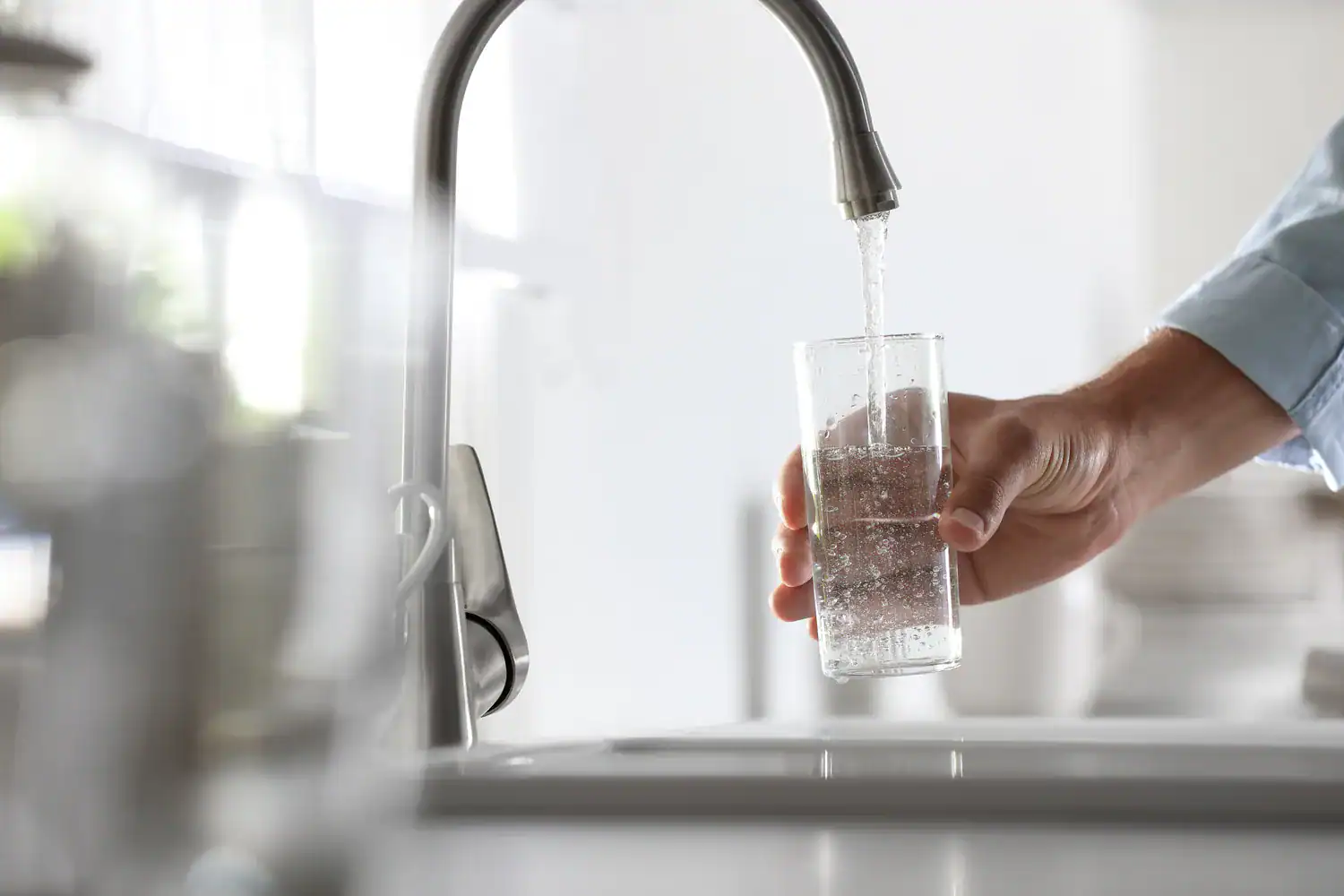
It starts with a free, in-home water analysis — a real one. Not the theatrical chemical-drop test some companies use to make any water look dangerous. This is a laboratory-grade evaluation that tests specifically for the contaminants documented in Fernandina Beach and Nassau County water: iron, sulfur, hardness, tannins, pH, total dissolved solids, and chlorine byproducts including TTHMs. If your water doesn’t need a system, you’ll hear that. If it does, our recommendation is based on your actual results.
From there, we design a system around what your water genuinely requires. For a well on the south end of Amelia Island dealing with tannins and iron, that looks different from a city-water home in the Historic Downtown District concerned about disinfection byproducts. Nassau County’s coastal geology, the proximity to marshland, and the documented saline intrusion risk in deeper wells all factor into what we specify. This isn’t a product pitch — it’s an engineering decision based on your specific address.
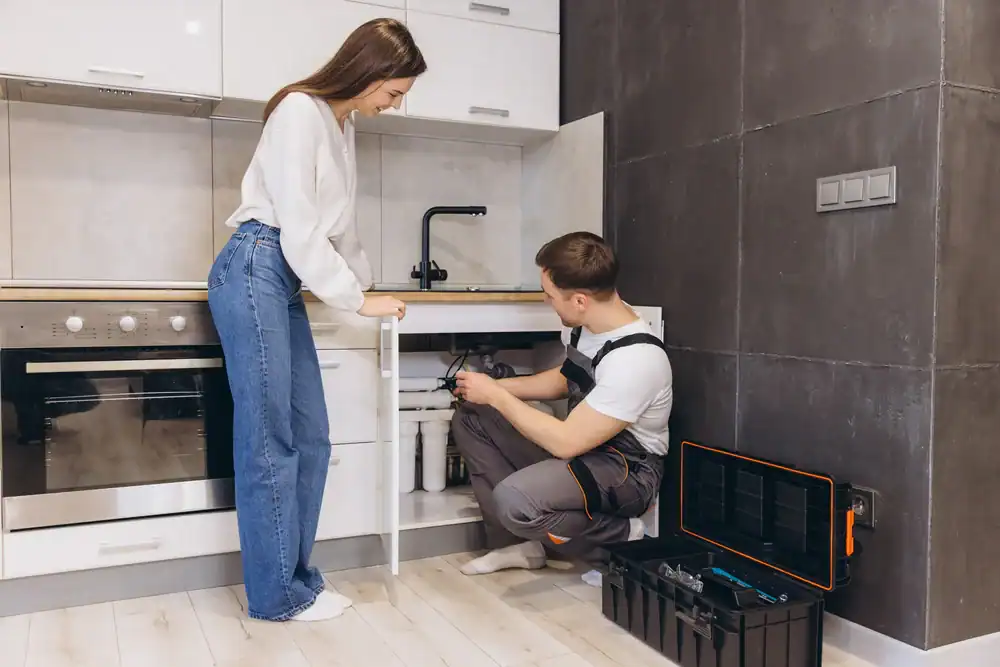
Installation is handled by our licensed, insured technicians. Permits are pulled where required by Nassau County and the City of Fernandina Beach. After the system is in, the relationship doesn’t end — ongoing service, filter replacements, and maintenance are all part of the picture. You won’t be left searching for someone to answer the phone six months later.
Ready to get started?
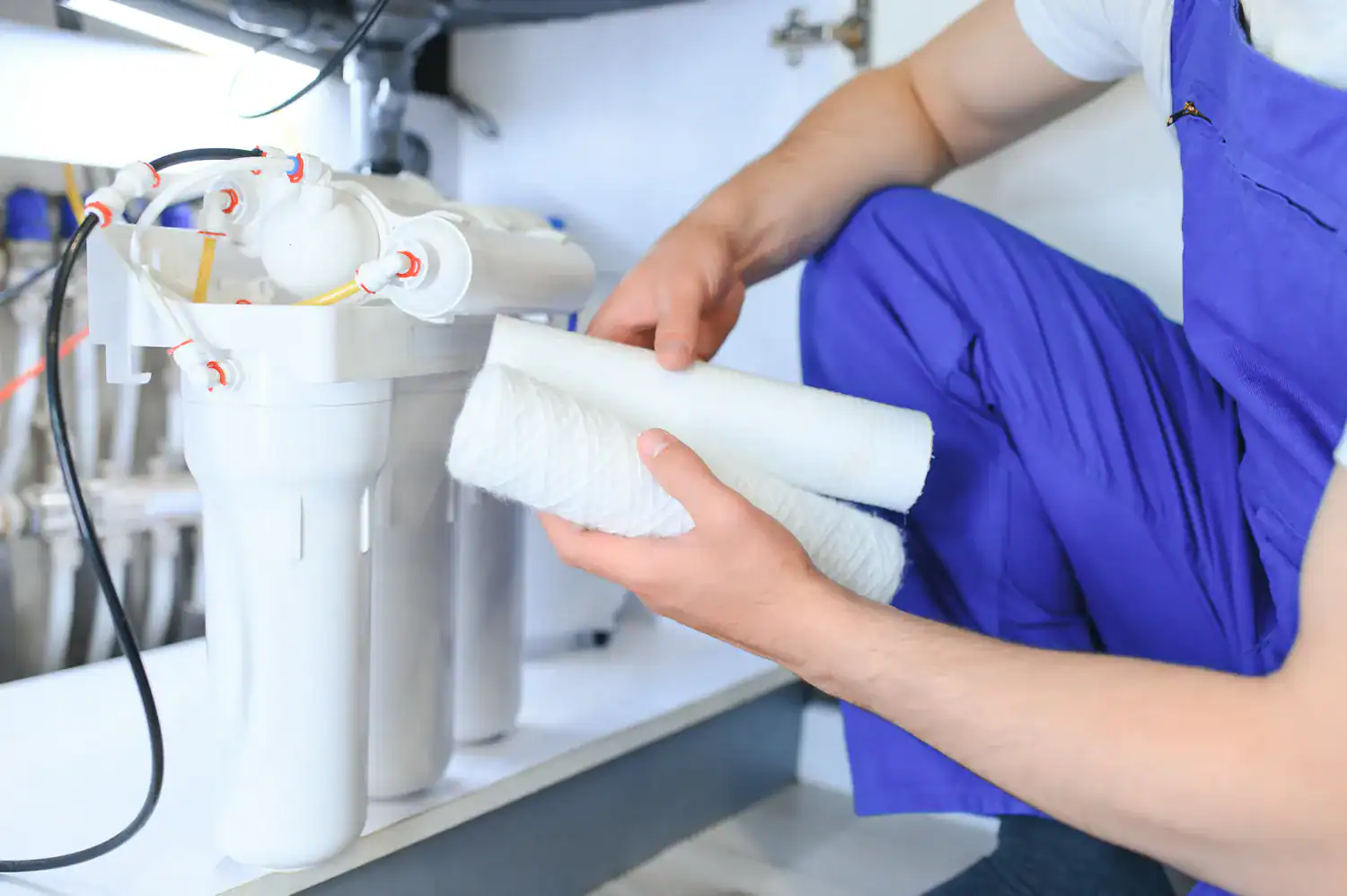
Our core specialty is whole-house water purification — systems that treat every tap in your home, not just the kitchen sink. For Nassau County homeowners dealing with iron and sulfur from private wells, that typically means a multi-stage system combining sediment filtration, activated carbon, and targeted iron or sulfur removal media. For city water users in Fernandina concerned about TTHMs — which the Fernandina Beach Water Treatment Plant has had documented monitoring issues around — activated carbon filtration at the whole-house level reduces exposure not just when you drink, but when you shower, where inhalation and skin absorption also contribute.
We offer reverse osmosis drinking water systems as a standalone solution or paired with a whole-house system for an added layer of purification at the kitchen tap. Salt-free conditioning, UV purification for bacterial concerns — especially relevant after heavy rain events or flooding near coastal and marsh-adjacent properties — and pH neutralization for homes dealing with acidic water that’s slowly corroding copper pipes are all part of our service range. Water softening is available where hardness is the primary issue.
We also service existing systems from other brands. If you have equipment from a previous provider that’s no longer being maintained, we can pick that up without starting over. And for active military, veterans, and first responders connected to Naval Station Mayport or Kings Bay — a significant part of the Fernandina and Nassau County community — we offer a $500 discount on qualifying installations.
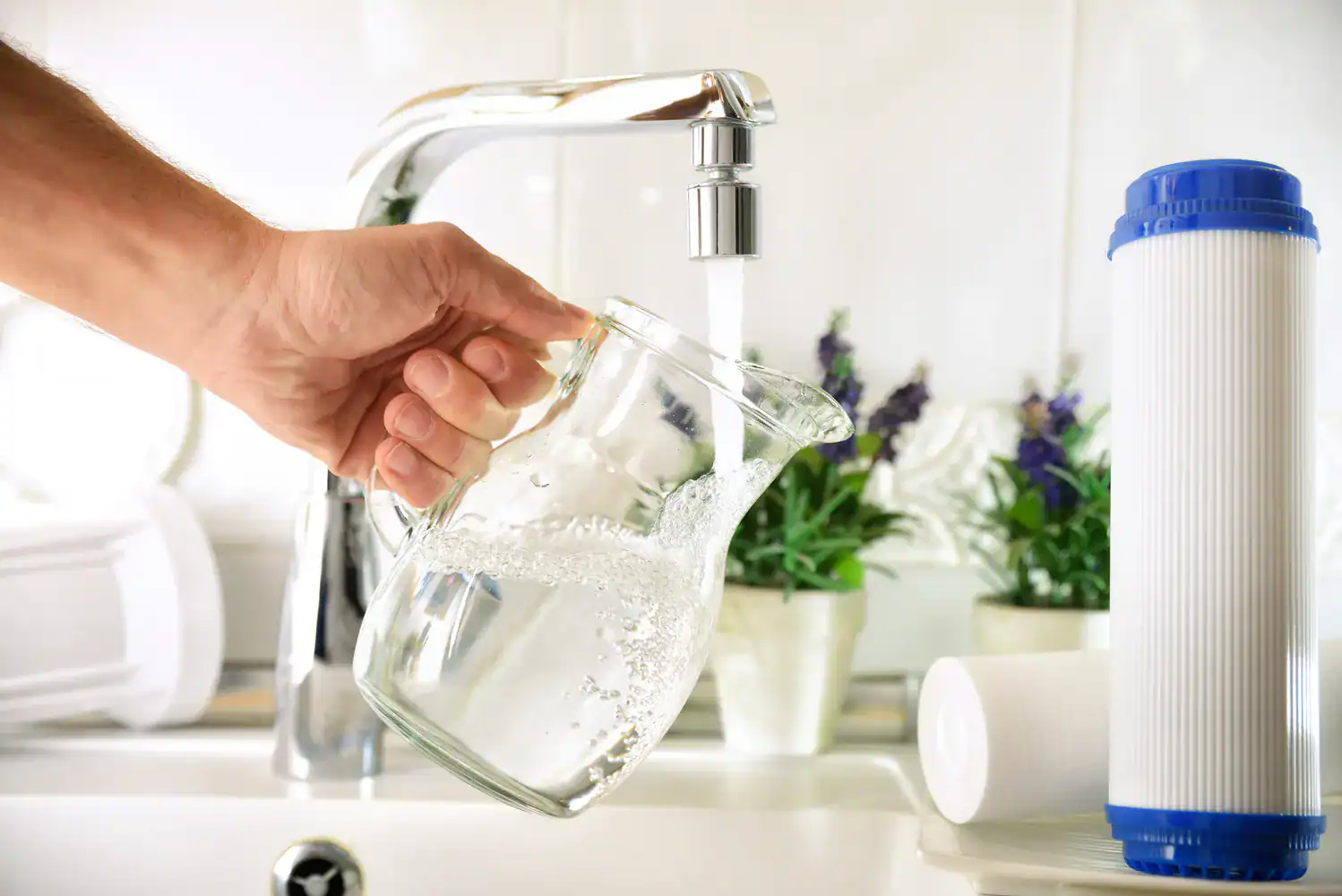
Technically, yes — the City of Fernandina Beach treats its municipal water and it meets EPA legal standards. But “meets legal limits” and “completely clean” aren’t the same thing. The EPA’s legal limit for Total Trihalomethanes (TTHMs) is 80 parts per billion. The EWG’s health guideline is 0.15 parts per billion — a fraction of that. TTHMs are disinfection byproducts that form when chlorine reacts with organic matter in the water supply, and they’ve been identified as a concern in Fernandina Beach’s water system. The city also issued a public notice in 2025 acknowledging a gap in required TTHM monitoring.
That doesn’t mean the water is dangerous to drink in a single glass. But for homeowners in Fernandina who drink it daily, cook with it, and shower in it — where you can also absorb and inhale byproducts — it’s a reasonable thing to want addressed. A whole-house activated carbon filtration system is one of the most effective ways to reduce TTHMs at every point of use in your home, not just the kitchen faucet.
That smell is hydrogen sulfide — a naturally occurring gas that’s extremely common in the Floridan Aquifer, especially in the coastal and marsh-adjacent areas around Fernandina. It’s produced when sulfur bacteria interact with organic matter in the groundwater. The smell is unmistakable, and it doesn’t take much of it to make your water unusable for cooking, showering, or having guests over without embarrassment.
Beyond the odor, hydrogen sulfide is corrosive. It accelerates wear on water heaters, plumbing fixtures, and appliances over time. The fix depends on the concentration level in your specific well — lower levels can often be handled with activated carbon or oxidizing filtration, while higher concentrations may require an aeration system or chemical injection. That’s exactly why a proper water test matters before any equipment is recommended. Guessing at the solution wastes money and usually doesn’t solve the problem.
A water softener does one specific thing: it removes hardness minerals — calcium and magnesium — through an ion exchange process, replacing them with a small amount of sodium. It’s effective for scale buildup and soap lathering issues, but it does nothing for sulfur odor, iron staining, tannin discoloration, sediment, chlorine byproducts, or pH problems. In Nassau County, where well water commonly carries iron, sulfur, and tannins alongside hardness, a softener alone usually isn’t enough.
A whole-house filtration system is a broader solution — it can be designed to address multiple contaminants at once, often combining a sediment pre-filter, an iron or sulfur removal stage, activated carbon for chlorine and byproducts, and sometimes a softening stage built in. What makes sense for your home depends on what’s actually in your water. That’s why starting with a real water test, rather than defaulting to a product, is the right first step. Some Fernandina Beach homes need both. Some need one or the other. The answer is in the results.
It’s a genuinely different situation. The USGS has specifically studied the Floridan Aquifer in the Fernandina Beach area and documented saline intrusion — decades of heavy pumping near the coast have drawn saltwater up into the aquifer, and in some deeper wells, chloride concentrations have reached levels far above normal freshwater ranges. That elevated sodium and chloride content isn’t something a standard water softener is designed to handle, and it can accelerate corrosion in plumbing and appliances if left untreated.
On top of that, Nassau County’s coastal and forested landscape contributes tannins — organic compounds from decaying vegetation — that give water a tea-colored tint and can interfere with softener performance. The combination of tannins, iron, sulfur, potential saline influence, and pH variability means that Amelia Island well water often requires a multi-stage approach tailored to the specific chemistry of that individual well. A system designed for a home in Central Florida simply may not be the right fit here.
It depends on the scope of the installation. In the City of Fernandina Beach and Nassau County, plumbing-connected installations — which whole-house filtration systems are — generally require a permit and must be performed by a licensed contractor. This is not a gray area to skip over. Unpermitted plumbing work can create issues when you sell your home, void homeowner’s insurance claims related to water damage, and leave you with no recourse if something goes wrong.
We handle licensing, insurance, and permitting as part of every installation. You don’t need to figure out what Nassau County requires or whether your specific system triggers a permit — that’s managed on your behalf. It’s one of the practical reasons working with a licensed, established company matters more than hiring whoever shows up cheapest on a lead site. The paperwork is part of doing the job right.
Please provide your email address so that we can stay in touch and answer any questions you have! We will be reaching back out shortly.
"*" indicates required fields
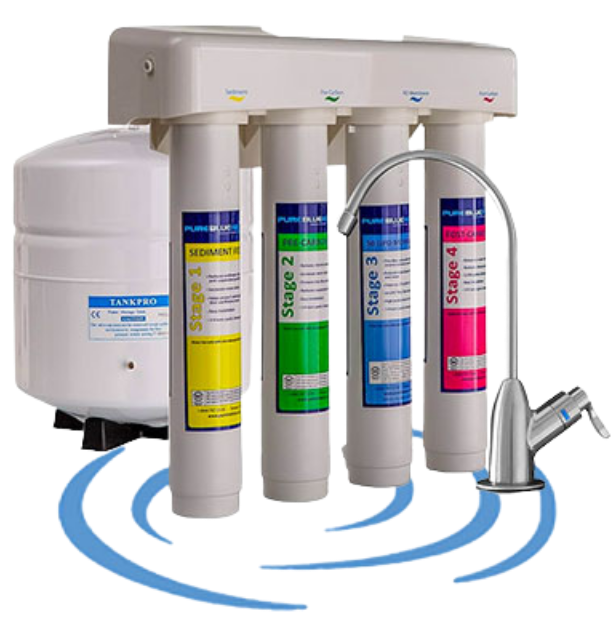
Get a free reverse osmosis drinking water system with the purchase of any whole-home water purification system.
*Cannot be combined with other offers. Mention this special when you call.