Reach Out Today
Please provide your email address so that we can stay in touch and answer any questions you have! We will be reaching back out shortly.


Hear from Our Customers

That white buildup on your shower door isn’t a cleaning problem — it’s a water problem. The Floridan Aquifer, which supplies all 20 groundwater wells serving The Villages’ water system, naturally carries high levels of calcium and magnesium. That mineral load doesn’t just look bad on your fixtures. It quietly shortens the life of your water heater, dishwasher, and washing machine, and it makes soap and shampoo work half as well as they should.
For a home built in the mid-1990s — which describes a lot of De La Vista — that’s decades of scale accumulating inside your pipes and appliances. A properly sized whole-house filtration system stops that process and protects the investment you’ve already made in your home.
Then there’s what you can’t see. The Environmental Working Group’s database for the Villages of Lake-Sumter water system confirms the presence of haloacetic acids — disinfection byproducts formed when chlorine reacts with organic matter during municipal treatment. These compounds are present at levels that meet federal legal standards, but federal standards and genuine health standards aren’t always the same thing. Reverse osmosis and whole-house carbon filtration reduce these contaminants to the lowest achievable levels, so your water isn’t just technically legal — it’s actually clean.
We’ve been installing and servicing water treatment systems across Central Florida for more than 50 years. We’ve watched The Villages grow from a small retirement community into one of the largest cities in Florida, and we know exactly what the Floridan Aquifer delivers to homes north of County Road 466 — the original section of The Villages where De La Vista sits.
Our Better Business Bureau record is A-rated with a 5-star score and zero complaints. In an industry the Florida Attorney General’s office has had to police for fraud, that kind of clean record isn’t common. We’re also members of the National Water Quality Association, which requires passing a professional examination and committing to a formal code of ethics — not just paying a membership fee.
Every system we install uses NSF-certified components and WQA-certified media. And unlike some companies that disappear after the sale, we service what we install — and we’ll service systems installed by other companies too. If you’ve got an existing unit that’s been neglected, we can take it over.
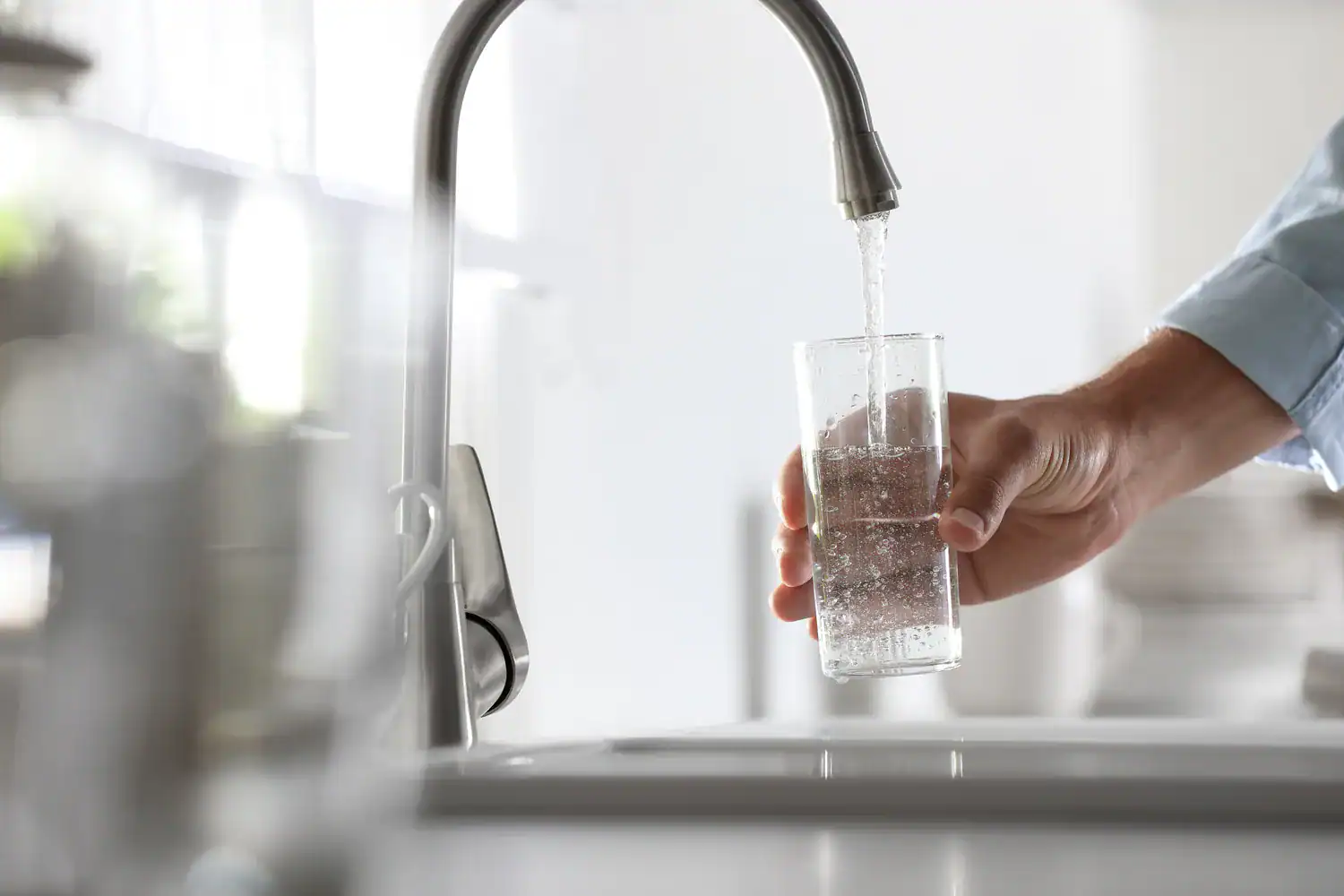
It starts with a free in-home water analysis. Not a theatrical demonstration with chemical drops designed to make any water look dangerous — an actual diagnostic that measures your water’s hardness, chlorine levels, pH, total dissolved solids, iron content, and other relevant contaminants specific to your home. De La Vista’s water comes from Sumter County’s portion of the Floridan Aquifer, and the results can vary by service zone, home age, and even the season. The current Phase III Water Shortage Order issued by the Southwest Florida Water Management District — active through mid-2026 — reflects real aquifer stress in this area, which can concentrate minerals and affect water quality at the tap. That analysis captures what’s actually happening in your home right now.
From there, we recommend a system based on what your water actually needs — not a one-size package pulled off a shelf. Whole-house filtration, reverse osmosis, water softening, salt-free conditioning, UV purification — the right combination depends on your results, your household size, and your priorities. There’s no pressure to buy anything on the spot.
Once you decide to move forward, installation is handled by our licensed technicians who understand local plumbing standards in Sumter County. After installation, the system is tested before anyone leaves your home, and ongoing service is available to keep everything running the way it should.
Ready to get started?
Whole-house water filtration is our specialty and the service we’ve built our reputation on across North and Central Florida. For De La Vista residents, that typically means a system designed to tackle the Floridan Aquifer’s hardness, the chlorine taste and odor that comes with municipal treatment, and the disinfection byproducts confirmed in the Villages of Lake-Sumter water system.
A whole-house setup treats every drop of water that enters your home — every tap, every shower, every appliance. That’s different from a single under-sink filter, which only addresses one point of use while your water heater and dishwasher continue running on untreated water. For homes in De La Vista that are 25 to 30 years old, protecting the entire plumbing system matters.
For drinking water specifically, a reverse osmosis system provides the deepest level of filtration available for residential use — reducing haloacetic acids, radium, heavy metals, and other contaminants to trace or undetectable levels. Many De La Vista residents pair an under-sink RO unit with a whole-house carbon and softening system to cover both bases. If you’re currently spending money on bottled water because the tap doesn’t taste right, an RO system typically pays for itself within a few years. We also offer a $500 discount for military personnel and first responders — and given The Villages’ significant veteran population, that’s a discount worth asking about when you call.
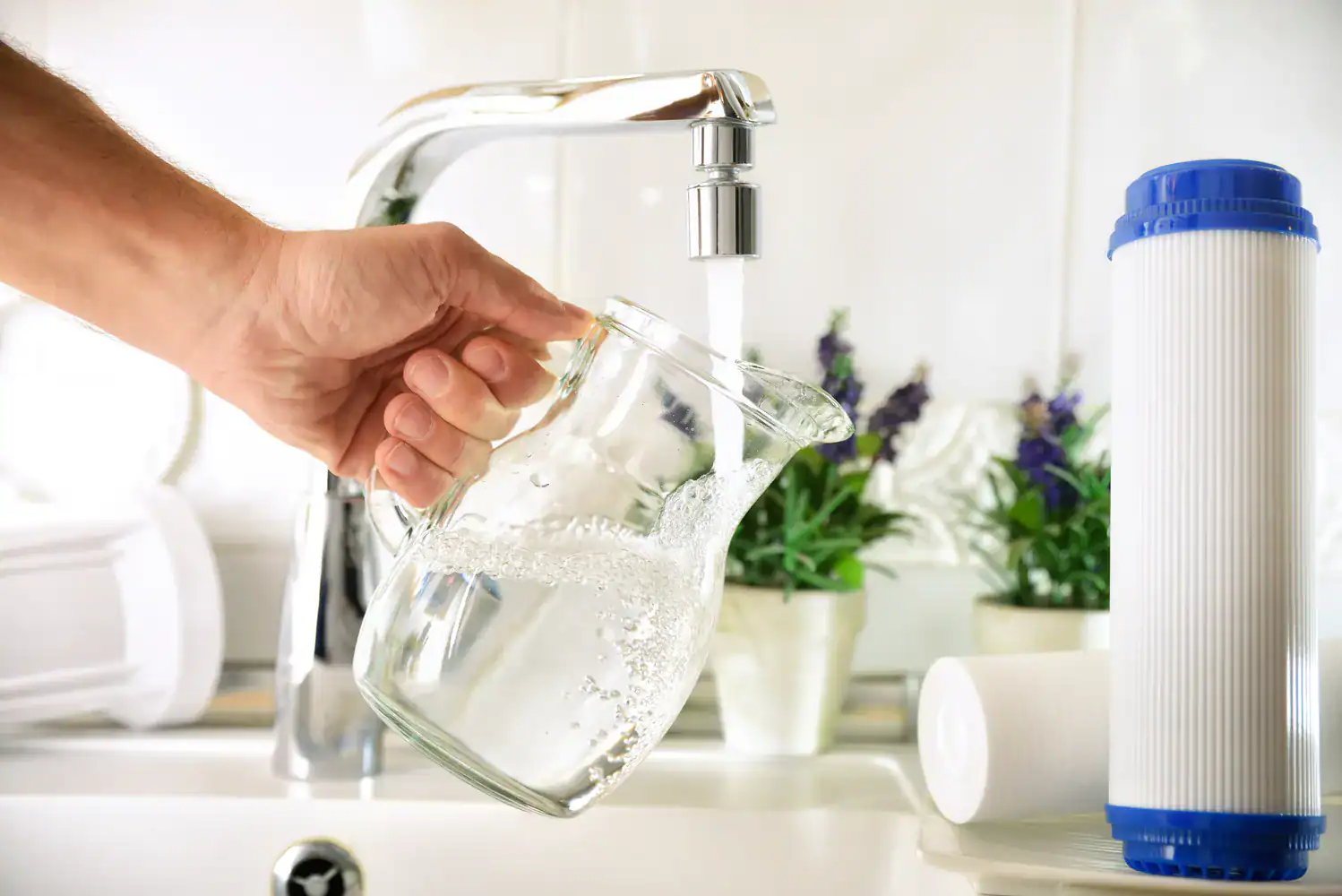
The Villages draws its water from the Floridan Aquifer through 20 groundwater wells managed by Little Sumter Utilities. That aquifer water is naturally high in calcium and magnesium, which is what causes the hard water most De La Vista residents deal with daily. Beyond hardness, the Environmental Working Group’s tap water database for the Villages of Lake-Sumter water system — identified by EPA System ID FL3350942 — confirms the presence of haloacetic acids (HAA5) and radium. Haloacetic acids are disinfection byproducts that form when chlorine used in municipal treatment reacts with naturally occurring organic matter in the water. Radium occurs naturally in limestone-based aquifer systems like the Floridan.
Both are present at levels that comply with federal legal limits. But federal legal limits and EWG’s health guidelines — which are based on a one-in-a-million lifetime cancer risk threshold — are not the same number. The gap between those two standards is exactly where a whole-house filtration and reverse osmosis system does its most important work. A free water analysis from us will show you exactly what’s in your specific home’s water, not just what the utility reports for the broader system.
Yes — and in a home built in the mid-1990s, which describes much of De La Vista, the damage has likely been accumulating for a long time. Hard water leaves calcium and magnesium deposits inside pipes, water heaters, dishwashers, and washing machines. Over time, that scale buildup reduces heating efficiency, clogs fixtures, and shortens appliance lifespans. Your water heater works harder to heat water through a layer of mineral scale. Your dishwasher leaves spots on glasses. Your shower fixtures develop that white crust that no cleaning product fully removes.
The Floridan Aquifer delivers some of the hardest water in Central Florida, and Sumter County’s service zones are no exception. A water softener or salt-free conditioner — sized correctly for your home after a real water analysis — stops that mineral accumulation and protects everything downstream. For a 30-year-old home in De La Vista, that protection is genuinely overdue.
It does — and for most De La Vista residents, that’s one of the first changes they notice after installation. The Villages’ municipal water is chlorinated during treatment, which is necessary and required by law. But chlorine and its byproducts — including the trihalomethanes and haloacetic acids that form during treatment — carry a detectable taste and smell that affects everything from your drinking water to your morning coffee to the way your skin and hair feel after a shower.
Activated carbon filtration, which is a standard component in our whole-house systems, removes chlorine and its associated byproducts throughout the entire home — not just at one faucet. When every tap in your house delivers water that tastes and smells clean, most people stop buying bottled water almost immediately. The average household spending $30 to $50 a month on bottled water will save several hundred dollars a year — and eliminate a lot of plastic in the process.
A water softener and a whole-house filtration system do different things, and in De La Vista, most homes benefit from both working together. A water softener specifically targets hardness — it removes the calcium and magnesium ions that cause scale buildup on fixtures, inside pipes, and in appliances. It does that job very well, but it doesn’t address chlorine taste, disinfection byproducts, sediment, or other contaminants in your water.
A whole-house filtration system — typically built around activated carbon and sediment filtration — addresses chlorine, chloramines, volatile organic compounds, and particulates throughout your entire home’s water supply. Reverse osmosis adds another layer at the drinking water level, reducing contaminants like haloacetic acids and radium that carbon filtration alone doesn’t fully eliminate. Our approach is to analyze your water first and then recommend the right combination for your specific situation — which for most De La Vista homes means a softening component paired with whole-house filtration, rather than one or the other alone.
The honest answer is that it depends on what’s in your water and how you plan to use it. A whole-house activated carbon and softening system handles the most common issues in De La Vista — hardness, chlorine taste, scale buildup, and general water quality throughout the home. For most households, that’s a meaningful improvement on its own.
Reverse osmosis goes further. It’s the most effective residential technology available for reducing dissolved contaminants — including the haloacetic acids and radium confirmed in the Villages of Lake-Sumter water system, as well as PFAS compounds, nitrates, and heavy metals that carbon filtration doesn’t fully address. An under-sink RO unit is typically installed in the kitchen and delivers filtered water to a dedicated faucet, which most households use for drinking and cooking. Many De La Vista residents run a whole-house system for protection throughout the home and an RO unit specifically for the water they consume. Our free water analysis will show you which contaminants are present at what levels, and from there the recommendation is straightforward — not a sales pitch, just a response to what the data shows.
Please provide your email address so that we can stay in touch and answer any questions you have! We will be reaching back out shortly.
"*" indicates required fields