Reach Out Today
Please provide your email address so that we can stay in touch and answer any questions you have! We will be reaching back out shortly.


Hear from Our Customers
When your water is properly filtered, the difference shows up everywhere — not just in a glass. Your skin stops feeling dry after a shower. Your laundry comes out softer. The cloudy film on your fixtures disappears. For a Premier home in De Allende, that’s not a small thing. These homes run larger — 2,300 to 3,600 square feet, multiple bathrooms, full appliance suites — and every one of those systems is running on Floridan Aquifer water that’s been picking up calcium and magnesium as it moves through Central Florida limestone for decades.
The VCSA utility that serves De Allende draws from that aquifer, and the water it delivers is measurably hard. That mineral load quietly damages water heaters, dishwashers, and washing machines over time. For homes built in the early 1990s — which most of De Allende is — that’s 30-plus years of untreated hard water working through the plumbing. The damage compounds quietly, and most homeowners don’t connect the dots until an appliance fails early or a fixture corrodes.
Beyond hardness, independent testing has flagged disinfection byproducts — haloacetic acids and trihalomethanes — in The Villages water systems. These form when chlorine reacts with organic matter in the aquifer supply. They may meet federal legal limits, but health-protective standards set by organizations like the Environmental Working Group are stricter. A properly specified reverse osmosis system removes 95 to 99 percent of dissolved solids, including those compounds, so the water you’re drinking and cooking with is actually clean — not just legally acceptable.
We’ve been installing and servicing water treatment systems across North and Central Florida for more than five decades. That means we were working this region before The Villages existed, and we know De Allende’s water challenges intimately. We understand the Floridan Aquifer, the VCSA utility system that serves your neighborhood, and what Central Florida groundwater does to homes like yours over time.
Our BBB record is A-rated with a 5-star rating and zero complaints filed. In an industry where the Florida Attorney General has had to prosecute water treatment companies for fraud — including one shut down for selling systems at $6,700 to $9,700 using fabricated health claims — a clean, verifiable record like ours is the most honest thing a company can show you. We’re also members of the National Water Quality Association, which requires passing a formal exam and agreeing to a code of ethics. That’s not a badge you buy.
We service what we install. We also service systems installed by other companies. If you moved into your De Allende home and inherited a softener from a previous owner — or a system from a company that no longer answers the phone — that’s a call we’ll take.
The process starts with a real water analysis — not the theatrical chemical-drop test some companies use to make any water look dangerous. We run a legitimate diagnostic that tests for what actually matters in your home’s supply: hardness, iron, pH, total dissolved solids, chlorine byproducts, bacteria, and more. For a home in De Allende served by the VCSA utility, that means testing specifically for the mineral load and disinfection byproducts documented in this water system — not running a generic demo designed to close a sale.
Once the analysis is complete, the recommendation is built around what the results actually show. A large Premier home with multiple bathrooms and a full appliance suite has different flow rate requirements than a smaller villa. The system is sized and specified for your home — using NSF-certified components and, where appropriate, WQA-certified TAC media for salt-free treatment. Nothing gets proposed until the data justifies it.
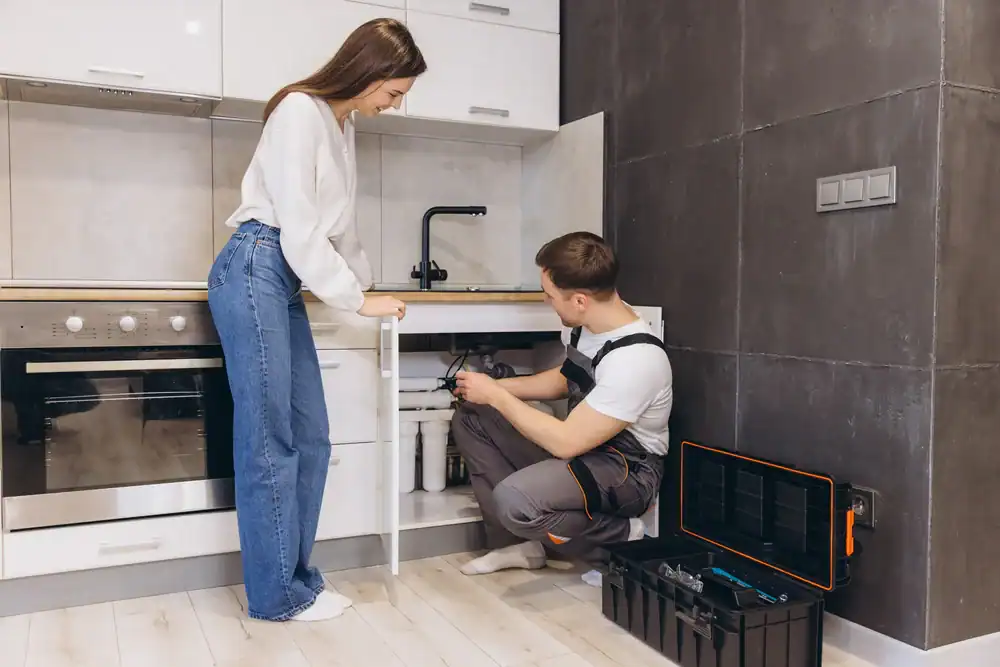
Installation is handled by our experienced technicians who understand the local permitting environment and The Villages’ community standards. Most whole-house systems are installed in the garage or utility area, keeping everything out of sight and compliant with community guidelines. After installation, we walk you through maintenance expectations — filter replacement schedules, membrane lifespan, what to watch for — so you’re not left guessing. And if something needs attention down the road, we’re the ones who answer the call.
Ready to get started?
The water coming into your De Allende home carries a specific chemical profile — hard minerals from the Floridan Aquifer, chlorine added during treatment, and disinfection byproducts that form in the distribution system before the water reaches your tap. A well-matched filtration system addresses all of it, not just the part that’s easiest to sell.
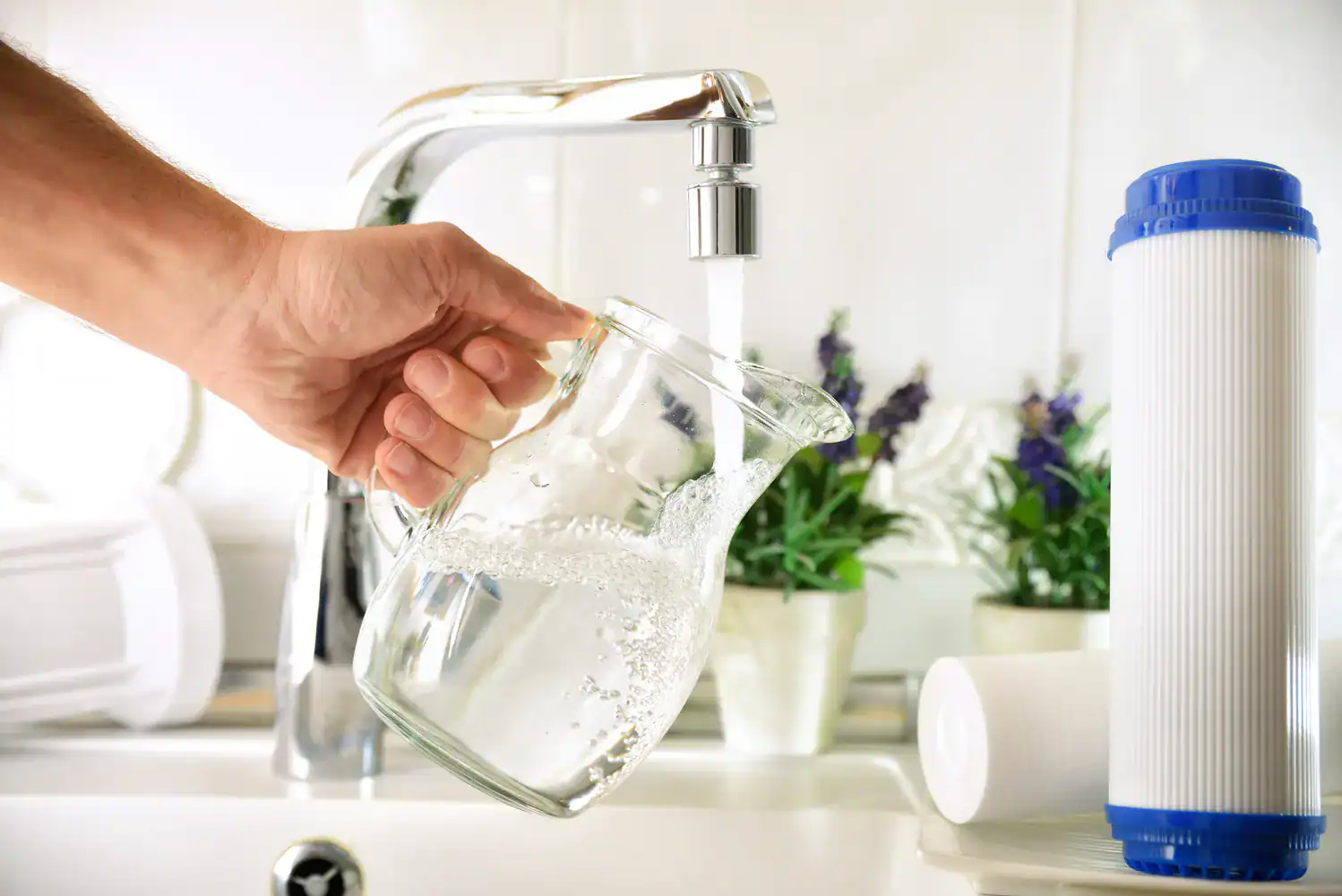
For most Premier homes in De Allende, a whole-house approach makes the most sense. That typically means a sediment pre-filter to catch particulates, an activated carbon stage to reduce chlorine and organic compounds, and a softening or conditioning component to address the hardness that the VCSA supply consistently delivers. For drinking water specifically, a reverse osmosis system at the kitchen tap removes 95 to 99 percent of dissolved solids — including nitrates, heavy metals, and the PFAS compounds that have been detected across Florida’s aquifer system. Whole-house RO is also available for households that want that level of filtration at every tap. Installed costs for a whole-house filtration system typically run $1,800 to $3,200. A dedicated reverse osmosis drinking water system generally runs $1,000 to $2,500 for residential installation. Annual maintenance on an RO system averages $80 to $150 depending on filter and membrane replacement cycles.
Every system we install uses NSF-certified components. For homes where salt-free treatment is preferred — a common consideration for residents managing sodium intake — WQA-certified TAC media is available as an alternative to traditional salt-based softening.
Yes — and the damage is usually already happening before most homeowners notice it. De Allende is served by the Village Center Service Area utility, which draws its supply from the Floridan Aquifer through a network of production wells. That aquifer runs through porous limestone and dolomite across Central Florida, and as the water moves through that rock, it picks up calcium and magnesium. The result is water with measurable hardness that leaves scale deposits inside pipes, on fixtures, and inside appliances.
For homes in De Allende specifically, this matters more than it might in a newer neighborhood. These are Premier homes built in the early 1990s — which means they’ve been running this same mineral-heavy water through their plumbing for 30 or more years. Scale buildup reduces the efficiency of water heaters, shortens the lifespan of dishwashers and washing machines, and leaves residue on glassware, shower doors, and fixtures. A water softener or whole-house conditioning system stops that process. It doesn’t reverse what’s already happened, but it stops the accumulation from continuing and protects the appliances and plumbing you still have.
Independent testing data from the Environmental Working Group has identified haloacetic acids — specifically HAA5 and HAA9 — as well as total trihalomethanes in The Villages water systems. These compounds form when chlorine used to disinfect the water reacts with naturally occurring organic matter in the aquifer supply. They may fall within federal legal limits, but health guidelines based on cancer risk thresholds are stricter than what the law requires, and detected levels in this system have exceeded those health-protective benchmarks.
Nitrate has also been flagged in Villages of Lake-Sumter water data — a concern tied to agricultural and urban runoff and septic discharge into groundwater. For De Allende residents who are health-conscious — and at a median community age of 74, most are — this isn’t abstract. It’s what’s in the water you’re drinking and cooking with daily. A reverse osmosis system at the kitchen tap is the most effective residential solution for these compounds, removing 95 to 99 percent of dissolved solids including disinfection byproducts, nitrates, and heavy metals.
PFAS — often called “forever chemicals” — are a class of synthetic compounds used in industrial and consumer products for decades. They don’t break down naturally, they accumulate in the body over time, and they’ve been linked to serious health outcomes including certain cancers, thyroid disruption, and immune system effects. Nearly 9 million Floridians have PFAS in their drinking water, and a 2024 UF Health study detected PFAS in 63 percent of Florida spring vent samples tested — springs that are fed by the same Floridan Aquifer that supplies The Villages.
Most municipal water treatment facilities remove less than 10 percent of PFAS. That means the treatment happening at the utility level before water reaches your home is not designed to address this class of contaminants effectively. The proven residential solution is a properly specified reverse osmosis system, which reduces PFAS to levels below detection thresholds in independent testing. If PFAS is a concern for your household — and given the statewide data, it’s a reasonable one — our water analysis will tell you what’s actually present in your home’s supply before any system is recommended.
The honest answer is that you don’t know until your water is tested — and neither does any company that tries to recommend a system before running a real analysis. The water in your De Allende home has a specific chemical profile based on the VCSA utility supply, the age of your home’s plumbing, and factors like iron content and pH that vary from property to property. A system that’s right for a newer villa in a different district may be over- or under-specified for a 3,000-square-foot Premier home in CDD 1.
We start every consultation with a diagnostic water analysis — not a theatrical demonstration, but an actual test for the contaminants that matter in this water system. From there, the recommendation is built around what your water actually contains and what your household actually needs. For most De Allende homes, that conversation covers whole-house filtration for hardness and sediment, an activated carbon stage for chlorine and organic compounds, and a reverse osmosis system for drinking water. But the specifics depend on your results, your home’s size, and your priorities — and that’s the only honest way to answer this question.
The lifespan depends on the type of system and how well it’s maintained. A whole-house water softener or conditioning system, properly serviced, typically lasts 10 to 15 years. Reverse osmosis membranes generally need replacement every 2 to 5 years depending on water quality and usage volume. Pre-filters — the sediment and carbon stages that protect the membrane — usually need to be swapped every 6 to 12 months. Annual maintenance on a residential RO system typically runs $80 to $150.
For De Allende homeowners, the maintenance question is especially relevant because many of these homes were built in the early 1990s. If the previous owner installed a water treatment system at construction and it was never properly serviced — or if it was installed by a company that no longer operates in the area — that system may be well past its effective lifespan. We service systems we install, and we also service systems installed by other companies. If you’re not sure what you have or whether it’s still working, that’s exactly the kind of call worth making before the system fails entirely.
Please provide your email address so that we can stay in touch and answer any questions you have! We will be reaching back out shortly.
"*" indicates required fields