Reach Out Today
Please provide your email address so that we can stay in touch and answer any questions you have! We will be reaching back out shortly.

Hear from Our Customers
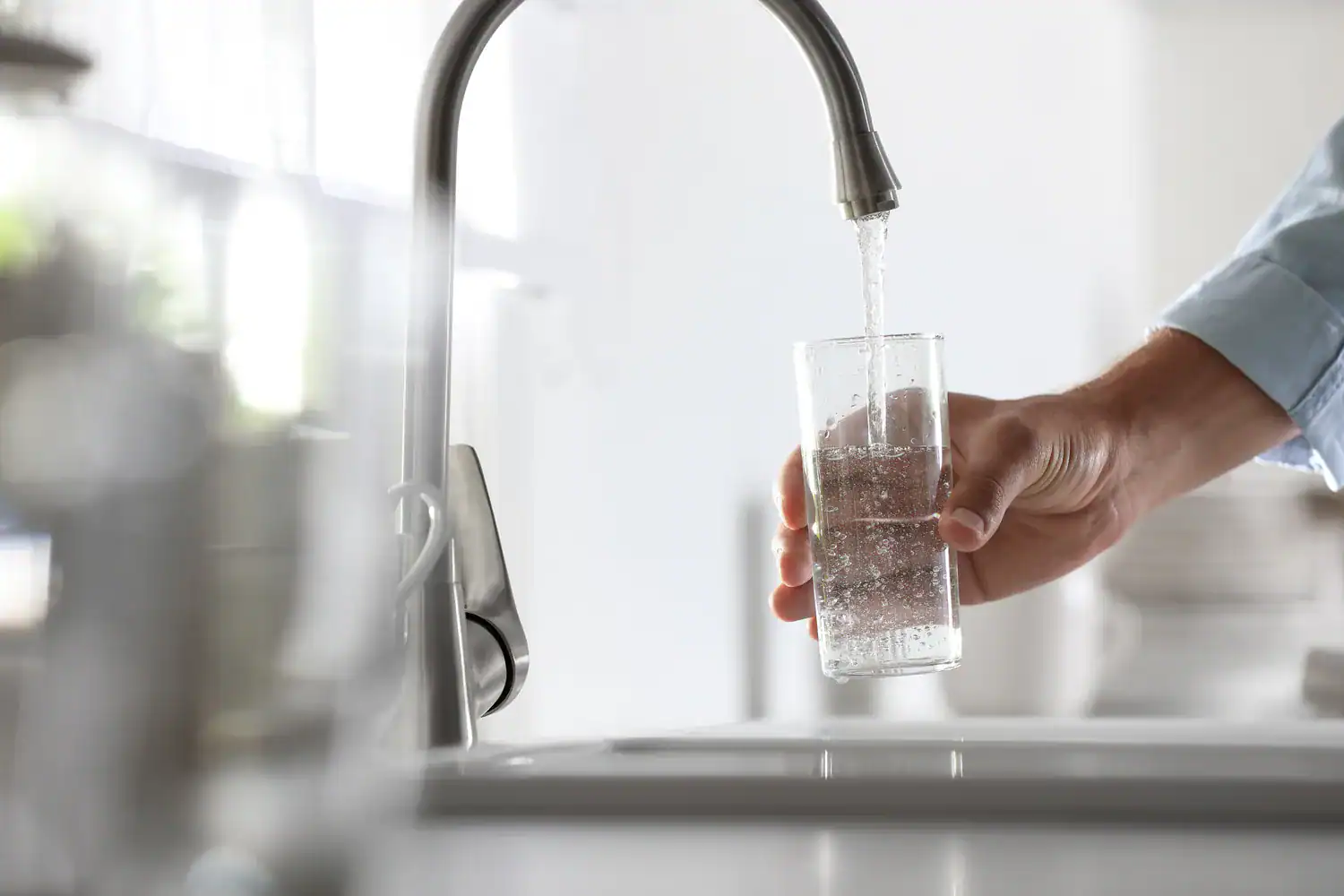
The chlorine smell when you fill a glass from the tap is not just unpleasant — it is a sign that disinfection byproducts are present. Miami-Dade’s water contains trihalomethanes at levels 221 times above what independent health guidelines recommend, and haloacetic acids at 286 times those same thresholds. Both are within federal legal limits, which is exactly why you cannot rely on “it passed the test” as your standard for what your family drinks every day.
Hard water is the other problem most Country Club homeowners feel before they fully understand it. Miami-Dade tap water measures at 383 parts per million — classified as quite hard — and it shows up as white scale on your faucets, cloudy dishes out of the dishwasher, and a water heater that runs less efficiently every year. For homeowners in the ranch-style neighborhoods off NW 67th Avenue or in the estates near the Country Club of Miami golf course, that mineral buildup is quietly shortening the life of every appliance connected to your water supply.
When you address both problems at once — filtration for contaminants and treatment for hardness — the difference is immediate and lasting. Water tastes and smells the way it should. Fixtures stay clean. Appliances last longer. And you stop spending money on bottled water to avoid the stuff coming out of your own tap.
We have been in the water treatment business for more than 50 years. Our BBB A-rating and five-star record with zero complaints are not marketing language — they are publicly verifiable facts in an industry where the Florida Attorney General has had to prosecute companies for deceptive practices, including firms that sold systems for nearly $10,000 using fraudulent health claims. In that context, a clean record means something real.
We hold membership in the National Water Quality Association, install NSF-certified components, and use WQA-certified TAC media. Every system recommendation comes from an actual water analysis — not a theatrical sales demonstration designed to frighten you into buying something you may not need.
For Country Club homeowners, from the older neighborhoods in the northeast section of the CDP to the newer builds near Miami Lakes, we provide a recommendation based on what is actually in your water. That is the only way this works honestly.
It starts with a free water analysis at your home. This is not a sales trick where someone drops a tablet into a glass of water until it turns an alarming color. It is an actual test that measures what is present in your specific water supply — PFAS levels, hardness, chlorine byproducts, pH, total dissolved solids, and more. Country Club’s water comes from the Miami-Dade Water and Sewer Department, which draws from the Biscayne Aquifer, and the results reflect what that specific source delivers to your address.
Once the analysis is complete, you get a clear recommendation. If your water shows elevated PFAS and disinfection byproducts — which Miami-Dade water consistently does — a reverse osmosis system at the point of use handles dissolved contaminants at the 95 to 99 percent removal level. If hardness is the primary concern, a whole-house softening system addresses that before water reaches any fixture or appliance. Many homes in Country Club benefit from a combination of both.
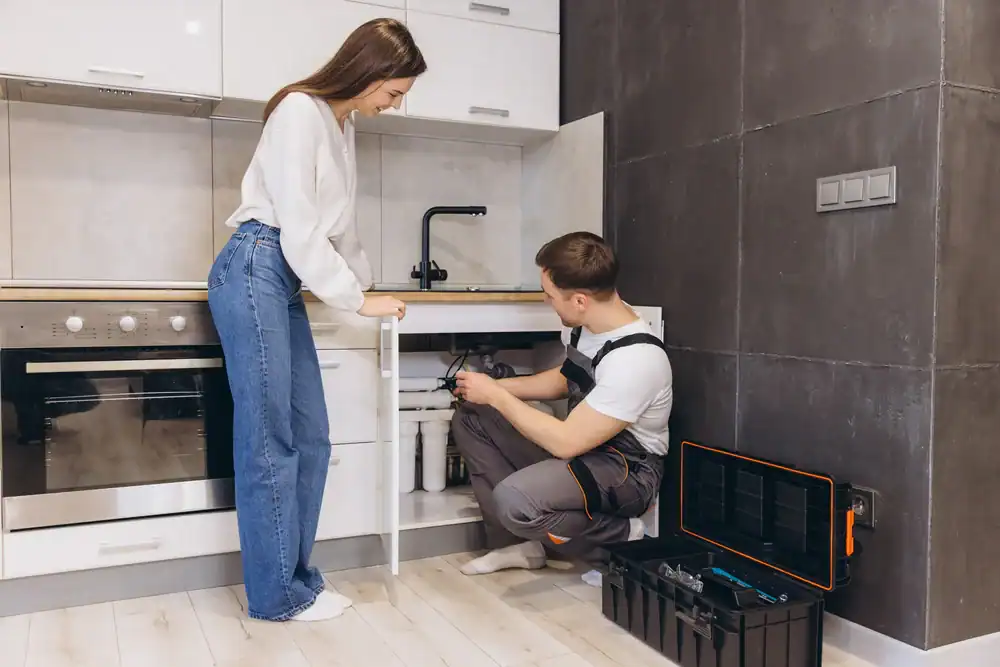
We handle installation with licensed professionals and, where required under Miami-Dade County’s plumbing code, obtain permits properly. After installation, we test the system, explain how it works, and back it with ongoing service. If something ever needs attention — whether we installed it or another company left it behind — we service it.
Ready to get started?
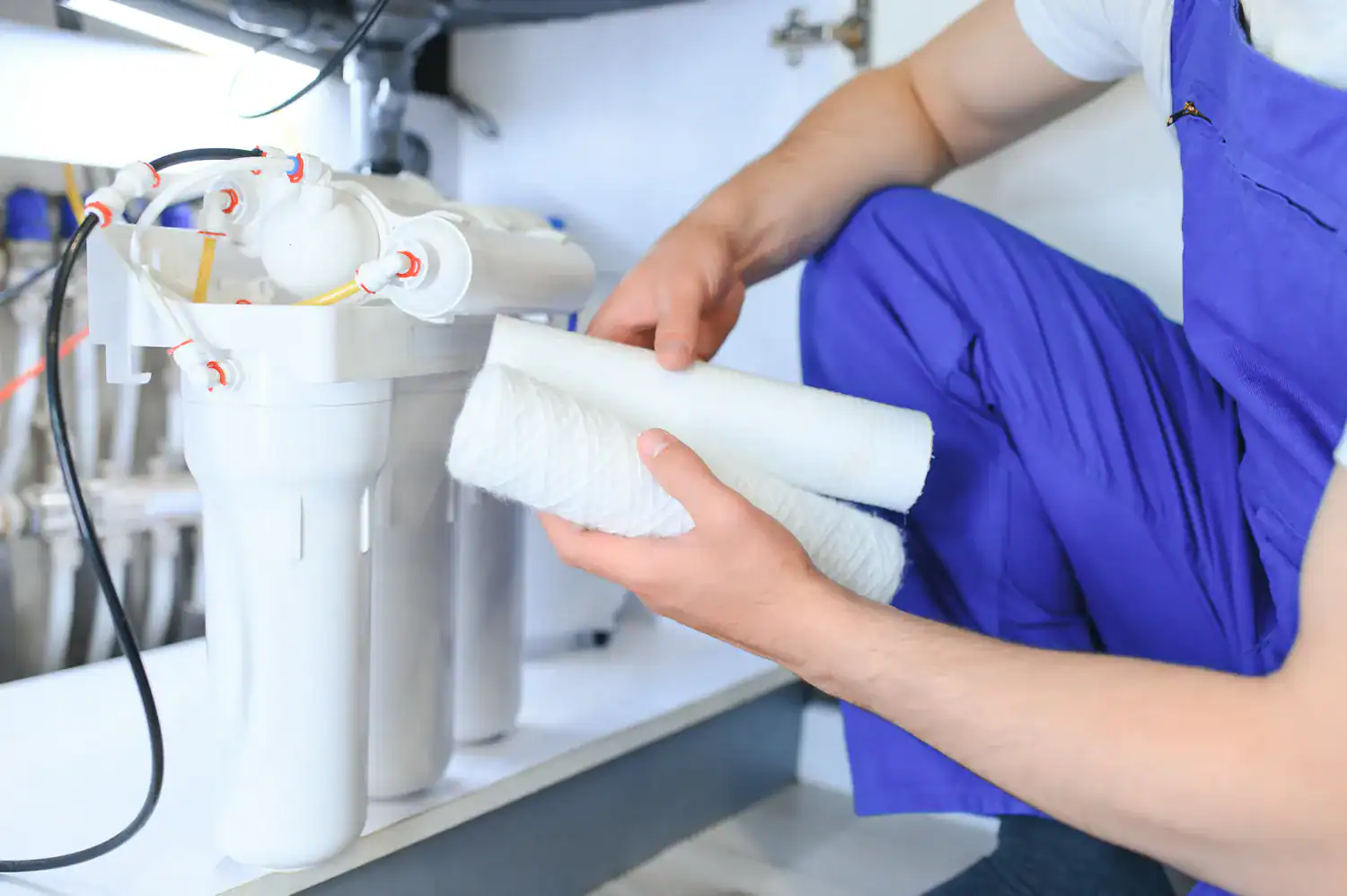
The most common setup for a Country Club home combines a whole-house sediment pre-filter, an activated carbon filtration stage for chlorine and disinfection byproducts, a water softener for the 383 ppm hardness that Miami-Dade water carries, and an under-sink reverse osmosis system at the kitchen for drinking and cooking water. Each stage handles a different layer of what Miami-Dade’s Biscayne Aquifer water brings into your home.
For homeowners in older ranch-style homes in Country Club’s northeast section — where plumbing from the 1980s and 1990s may contribute additional concerns at the point of use — a whole-house point-of-entry system provides protection before water reaches any pipe, fixture, or appliance inside the home. For the larger properties near the Country Club of Miami golf course, whole-house capacity and flow rate are factored into the system design so performance does not drop across multiple bathrooms and appliances running simultaneously.
We also offer UV purification, which is worth considering in South Florida specifically. During hurricane season and after major storm events, Miami-Dade has issued boil-water notices — and a UV stage provides an additional layer of microbial protection when the municipal system is under stress. Every system is sized and specified for the actual home, not pulled from a shelf and handed over. And if you are a military veteran or first responder — and Country Club has many — a $500 discount applies to your whole-house system.
Yes, and the numbers are specific. Miami-Dade’s water supply has tested positive for PFOS at 18.98 parts per trillion and PFOA at 7.2 parts per trillion. The EPA’s 2024 maximum contaminant level for each of those compounds is 4 parts per trillion — meaning both exceed the federal limit. Total PFAS in Miami-Dade water has been measured at 56.7 parts per trillion, compared to the Environmental Working Group’s recommended threshold of 1 part per trillion.
These are not estimates or projections. They come from documented testing of Miami-Dade’s water supply, which serves Country Club through the Water and Sewer Department drawing from the Biscayne Aquifer. Researchers at Florida International University have also detected PFAS in rainwater falling on the South Florida region, which means contamination enters the aquifer from multiple directions. A properly specified reverse osmosis system removes 95 to 99 percent of dissolved PFAS compounds and is the most effective residential solution currently available for this specific problem.
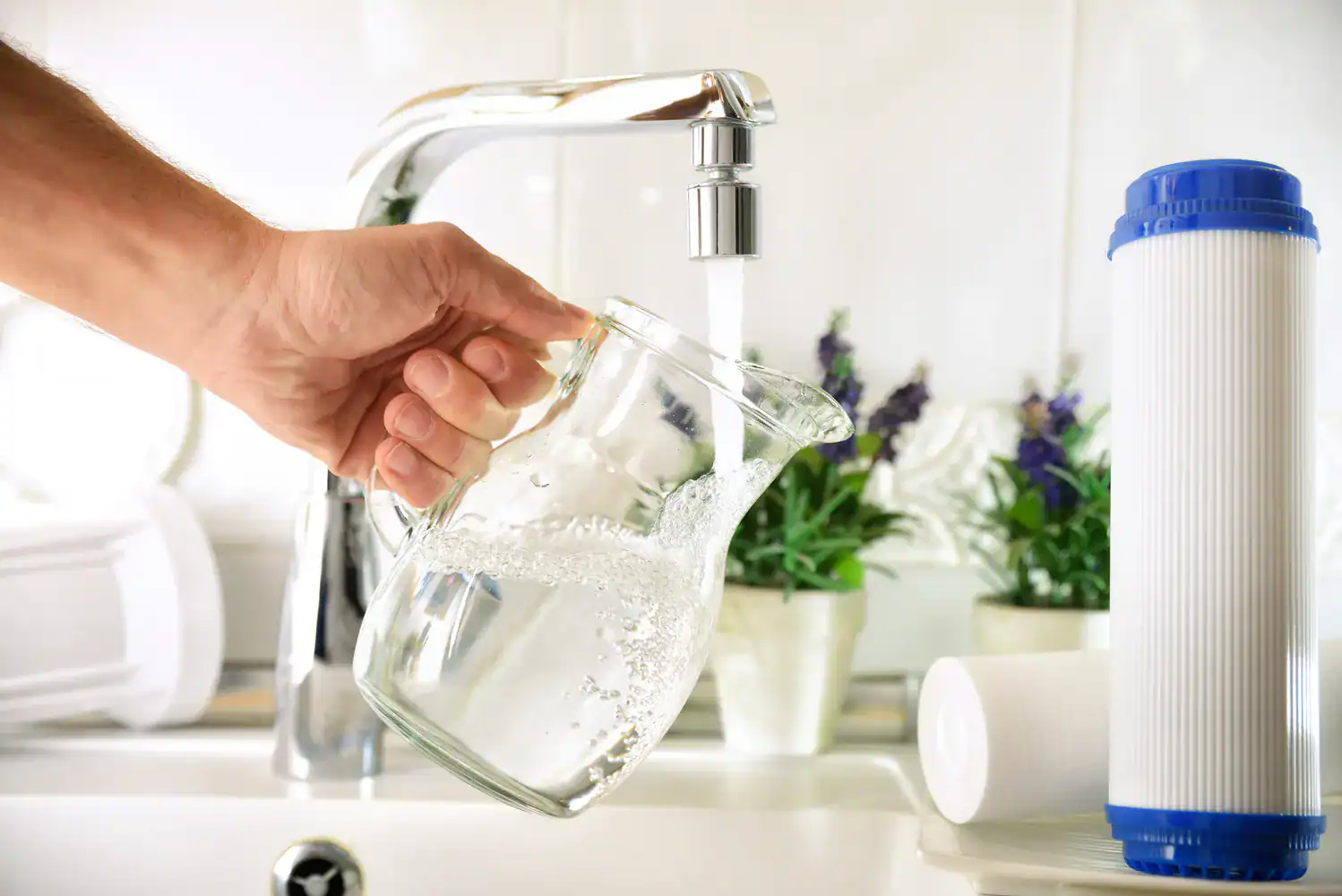
Miami-Dade tap water measures at 383 parts per million, which puts it in the “quite hard” classification. At that level, mineral deposits accumulate inside water heaters, dishwashers, washing machines, and refrigerator ice makers — reducing efficiency over time and shortening the lifespan of every appliance connected to your water supply. You also see it on the outside: white scale around faucets, spotted dishes, and showerheads that gradually lose pressure as mineral buildup restricts flow.
For Country Club homeowners, where median home values sit around $340,900 and most households own two vehicles and maintain their properties seriously, the cost of replacing appliances ahead of schedule is real and avoidable. A whole-house water softener eliminates hardness at the point of entry, before water reaches any fixture or appliance inside the home. Soap and shampoo also lather more effectively in softened water, which is a smaller but noticeable daily difference most households appreciate within the first week.
It depends on what your water analysis shows and what problems you are trying to solve. An under-sink reverse osmosis system is the most effective option for drinking and cooking water — it removes dissolved contaminants including PFAS, lead, nitrates, and total dissolved solids at the point of use. If your primary concern is what goes into your body, that is where to start.
A whole-house system addresses water at the point of entry, which means every faucet, shower, appliance, and pipe in the home benefits. This matters most for hardness — because a softener only protects your appliances if it treats the water before it reaches them. It also matters for chlorine and disinfection byproducts, which you absorb through skin and inhale as steam during a hot shower, not just through drinking. Many Country Club homes benefit from both: a whole-house softener and carbon filter at the entry point, plus an RO system under the kitchen sink for drinking water. The free water analysis determines which combination actually makes sense for your specific address and water results.
South Florida’s hurricane season runs June through November, and it creates real, documented water quality risks that do not apply to most of the country. The Biscayne Aquifer — which supplies Country Club’s municipal water — is a shallow, porous limestone formation. When major storms bring flooding and storm surge, surface contaminants can infiltrate the aquifer quickly. Miami-Dade has issued boil-water notices after significant storm events, and infrastructure stress during and after hurricanes can temporarily compromise water quality even when the system is technically operational.
A whole-house filtration system with a UV purification stage provides an additional layer of protection during those windows. UV systems neutralize bacteria and viruses without adding chemicals to your water, and they operate continuously regardless of what is happening outside. For Country Club families who have lived through multiple storm seasons, this is not a hypothetical scenario — it is a recurring reality that makes year-round filtration a practical investment rather than just a comfort upgrade.
This is one of the most important questions you can ask. The common version of a deceptive approach involves dropping a tablet or chemical into a glass of your tap water until it turns an alarming color, then using that reaction to justify selling you an expensive system. The Florida Attorney General’s office has prosecuted companies in this industry for exactly this kind of deception, including one firm that sold systems priced between $6,700 and $9,700 using fraudulent health claims.
A legitimate water analysis measures specific parameters — hardness, pH, total dissolved solids, chlorine levels, and where warranted, PFAS and heavy metals — and gives you numbers you can verify independently. Our free water analysis is the starting point for every recommendation, and no system is proposed without it. If the results do not indicate a problem that a particular system solves, that system is not recommended. The goal is a correct match between your water’s actual condition and the right treatment — not the highest-margin sale.
Please provide your email address so that we can stay in touch and answer any questions you have! We will be reaching back out shortly.
"*" indicates required fields