Reach Out Today
Please provide your email address so that we can stay in touch and answer any questions you have! We will be reaching back out shortly.

Hear from Our Customers
Most residents in Bridgeport at Laurel Valley notice the hard water first. The streaks on shower glass that won’t wipe off. The white buildup around faucets. Dishes coming out of the dishwasher spotted no matter what you do. That’s not a cleaning problem — it’s a water problem. And it’s doing the same thing inside your pipes, your water heater, and every appliance connected to your plumbing.
The water serving CDD 8 comes from groundwater sources that run through mineral-heavy aquifer rock before it ever reaches your tap. The Villages of Lake–Sumter water treatment plants process it, but treatment doesn’t eliminate hardness, and it introduces its own byproducts — specifically trihalomethanes and haloacetic acids, which form when chlorine reacts with organic matter during treatment. These are documented in the EWG Tap Water Database for this exact water system. They meet federal legal limits, but legal and safe aren’t always the same thing.
When you have the right filtration in place, the difference shows up fast. Skin that doesn’t feel tight after a shower. Glassware that actually comes out clear. Appliances that last longer because they’re not scaling up from the inside. And drinking water that tastes the way water should — without reaching for a bottle every time you’re thirsty. For a home you’ve invested in, that’s not a luxury. It’s just smart.
We’re based in Leesburg, FL — just up US 27 from The Villages and the Bridgeport at Laurel Valley area. That proximity isn’t incidental. It means our team servicing your home knows Central Florida’s water chemistry the way most companies never will. The Floridan Aquifer, the Sumter County utility systems, the specific mineral profile that makes hard water such a persistent issue in Bridgeport at Laurel Valley and the surrounding villages — this is the water we’ve been working with for over 50 years.
We hold a BBB A-rating with a 5-star score and zero complaints. In an industry where the Florida Attorney General has had to warn consumers about deceptive water treatment sales tactics, that record means something real. We’re also a member of the National Water Quality Association — a credential that requires passing a professional exam and committing to a formal code of ethics. We install NSF-certified equipment, and we service what we sell. If you’ve been left without support by another company, we can step in and take over your system too.
It starts with a free in-home water analysis. Not the kind where someone drops a chemical into a glass and watches it turn orange — an actual diagnostic that measures iron, hardness, pH, total dissolved solids, and other contaminants specific to your water source. For homes in Bridgeport at Laurel Valley connected to the Villages of Lake–Sumter utility system, that test typically surfaces elevated hardness levels alongside disinfection byproducts. For homes on well water in the surrounding Sumter County area, you may also see iron, sulfur, or bacterial concerns that require a different approach entirely.
Once the test results are in, we build a recommendation around what your water actually shows — not a pre-packaged system pulled off a shelf. Our philosophy has always been that one size doesn’t fit all, and in Central Florida’s groundwater environment, that’s especially true. A whole-house filtration system might be the right call. A reverse osmosis drinking water system at the kitchen tap might be what makes the biggest difference for your household. Sometimes it’s both.
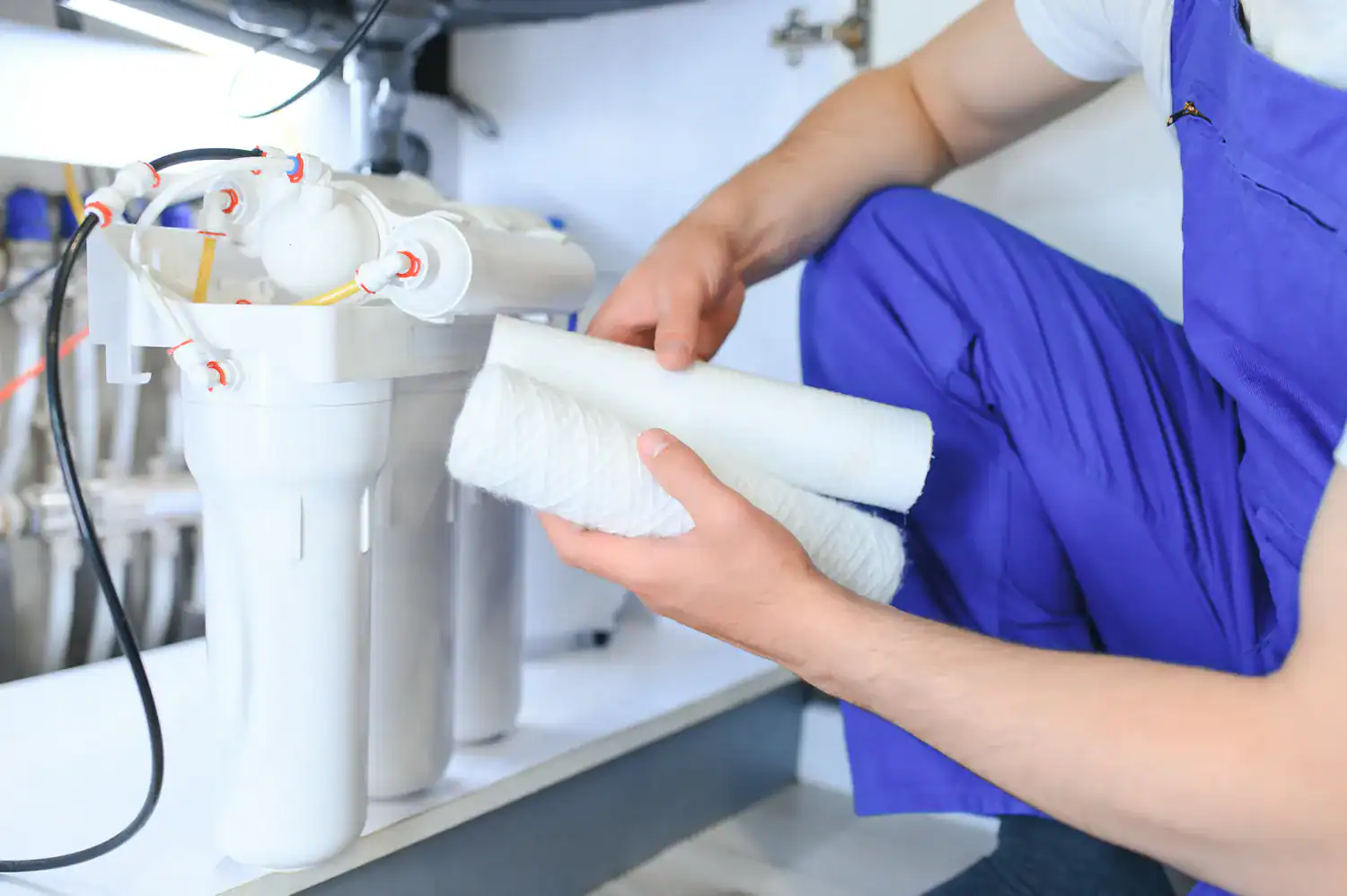
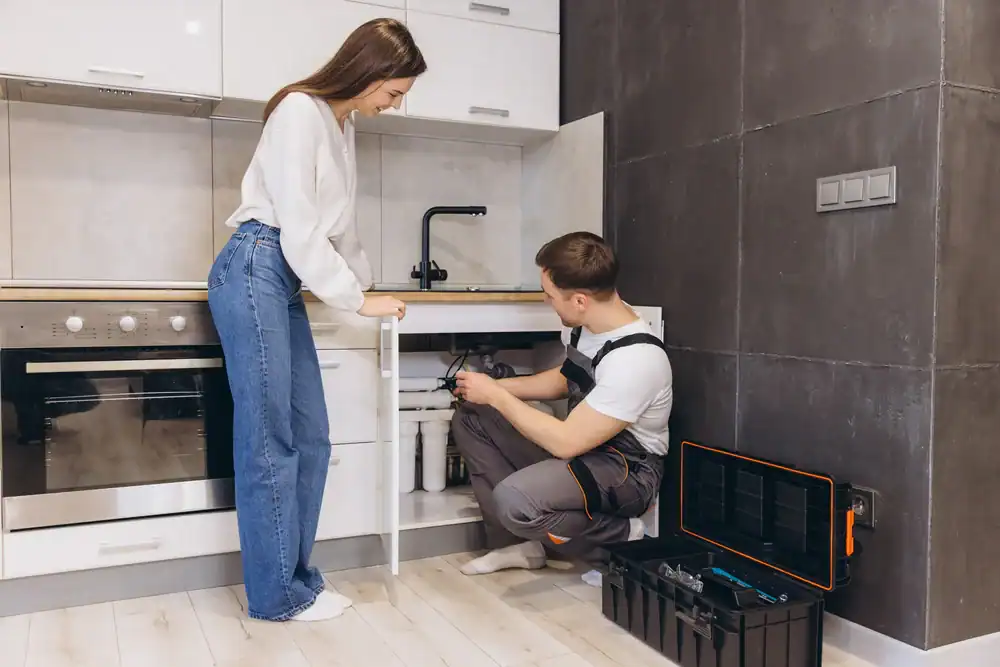
Installation is handled by our team directly — not a subcontracted crew. After installation, we walk you through maintenance expectations, filter replacement schedules, and how to reach us when something needs attention. That last part matters more than most people realize until they need it.
Ready to get started?
The groundwater that feeds homes in Bridgeport at Laurel Valley carries a specific set of challenges — hardness from dissolved calcium and magnesium, disinfection byproducts introduced during municipal treatment, and trace contaminants like chromium, arsenic, and nitrates documented in the local water supply. The systems we install are designed around that reality, not a generic Florida water profile.
A whole-house water filtration system handles the water at the point it enters your home, so every tap, shower, appliance, and pipe benefits. Activated carbon filtration targets chlorine, trihalomethanes, and haloacetic acids — the byproducts most commonly flagged in the Villages of Lake–Sumter water system. For hardness, a salt-based water softener or a salt-free conditioning system stops scale formation before it reaches your plumbing. If you’d prefer not to manage salt, the salt-free option uses WQA-certified TAC media to neutralize minerals without adding sodium to your water.
For drinking water specifically, an under-sink reverse osmosis system removes up to 99% of dissolved solids — including heavy metals, nitrates, and PFAS compounds that whole-house systems aren’t designed to catch. Annual maintenance on an RO system runs roughly $80–$150, which is less than most households in The Villages spend on bottled water in two months. If you’re active or retired military or a first responder, a $500 discount applies to your system — no hoops, no fine print.
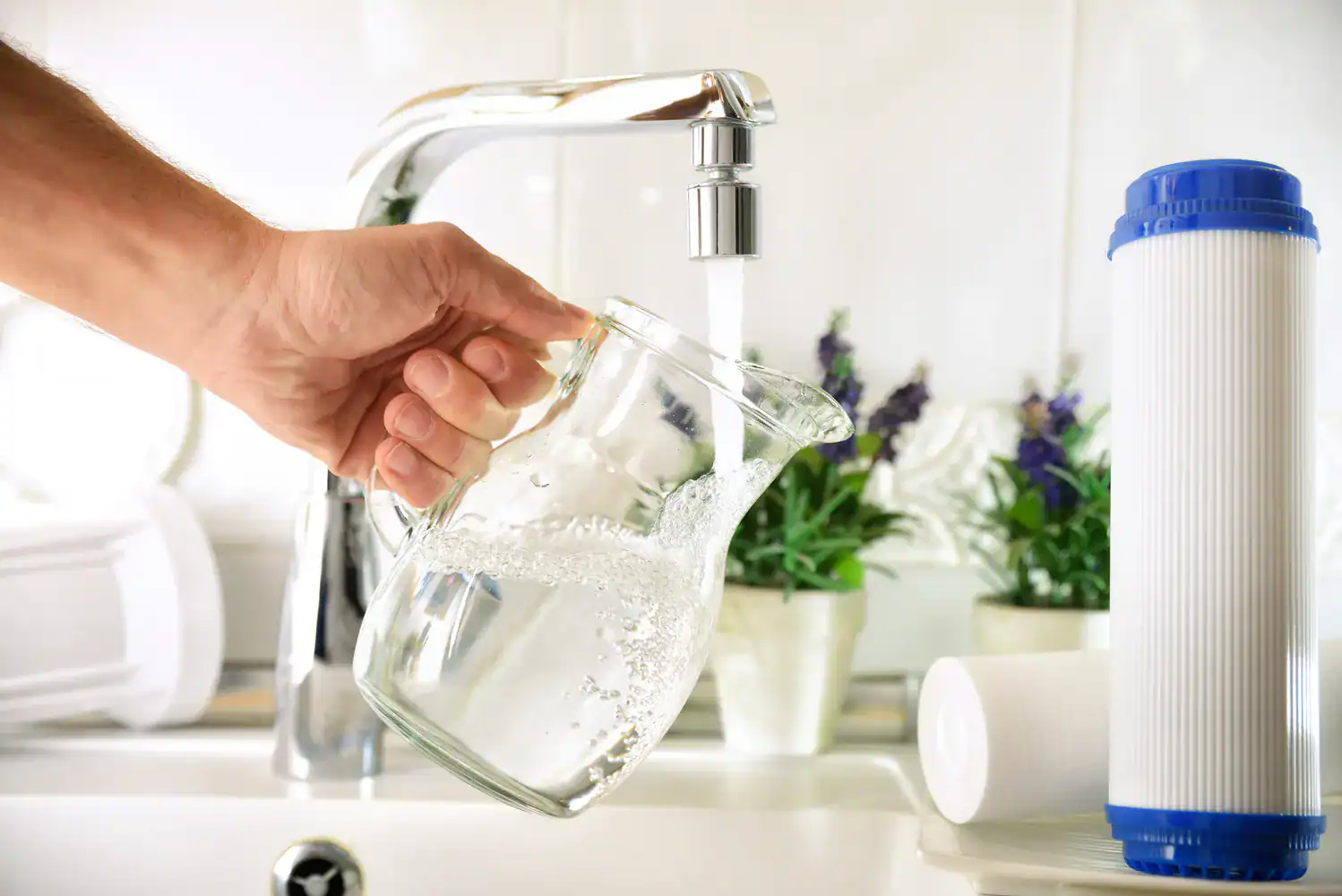
It’s not overstated. The water serving Bridgeport at Laurel Valley and the surrounding CDD 8 villages comes from the Floridan Aquifer — a groundwater system known throughout Central Florida for high mineral content. Hardness levels in this area routinely fall between 100 and 300 parts per million, and multiple independent water treatment sources have specifically identified The Villages as a hard water area. The Villages of Lake–Sumter water treatment plants process the water before it reaches your home, but they don’t remove hardness — that’s not what municipal treatment is designed to do.
The effects show up in ways most residents recognize immediately: mineral deposits around faucets and showerheads, spots on dishes and glassware, scale buildup inside appliances, and skin that feels dry after showering. These aren’t cosmetic annoyances — scale accumulation inside a water heater or washing machine shortens the lifespan of those appliances meaningfully. A water softener or salt-free conditioning system addresses the problem at the source, before the water reaches anything in your home.
The Environmental Working Group’s Tap Water Database for the Villages of Lake–Sumter water system documents a range of detected contaminants. The most significant from a health standpoint are total trihalomethanes (TTHMs) and haloacetic acids — disinfection byproducts that form when chlorine reacts with organic matter during water treatment. The EWG’s health guideline for TTHMs is 0.15 parts per billion, a threshold set at a one-in-one-million lifetime cancer risk level. The water meets federal legal standards, but those legal limits were set decades ago and haven’t kept pace with current health research.
Additional contaminants detected in this system include chromium (hexavalent), arsenic, chlorate, nitrate, molybdenum, strontium, vanadium, and thallium. None of this means the water is immediately dangerous to drink, but it does mean that relying solely on municipal treatment for your drinking water is a reasonable thing to question. A reverse osmosis drinking water system removes the vast majority of these contaminants — including heavy metals and disinfection byproducts — at the point of use.
They solve different problems, and in many homes in Bridgeport at Laurel Valley — where hard water is a persistent issue — you may benefit from both. A water softener is specifically designed to address hardness by removing calcium and magnesium ions from the water through an ion exchange process. It’s the right tool for preventing scale buildup in pipes and appliances, improving lather with soap and shampoo, and protecting fixtures from mineral deposits. Salt-based softeners are the most effective option; salt-free conditioning systems are an alternative for households that want to avoid adding sodium to their water.
A whole-house water filtration system is broader in scope. It targets contaminants like chlorine, trihalomethanes, sediment, and other chemicals that affect taste, odor, and long-term health. Activated carbon filters are the most common technology for this purpose and are highly effective at removing the disinfection byproducts documented in the local water supply. When you combine a softener with a whole-house filter, you’re addressing both the mineral content and the chemical content of your water — which is typically the most complete solution for homes in this area.
Costs vary depending on what your water test shows and what combination of systems makes sense for your home. A professional whole-house filtration system installation in this area typically runs between $1,800 and $3,200, depending on the size of the system and the specific contaminants being addressed. If you’re adding a water softener, that’s generally an additional investment in a similar range. An under-sink reverse osmosis system for drinking water typically falls between $1,000 and $2,500 installed, with annual maintenance costs of around $80–$150 for filter replacements.
The honest framing here is that these are one-time investments that protect ongoing expenses — your appliances, your plumbing, your water heater, and the cost of bottled water you’re probably already buying. For a home in Bridgeport at Laurel Valley where you’ve already invested $200,000 or more, protecting that investment from hard water scale damage is a straightforward calculation. We don’t recommend equipment your water doesn’t need — the free water analysis is what drives the recommendation, not a preset sales package.
Yes — reverse osmosis is one of the most effective technologies available for removing PFAS compounds, and it also removes heavy metals including arsenic, chromium, lead, and nitrates at very high rates, typically 95–99% reduction depending on the specific contaminant and system quality. This matters in Sumter County and the broader Central Florida region because nearly 9 million Floridians have PFAS in their drinking water, and most municipal treatment facilities are not designed to remove them. The Villages of Lake–Sumter water system is no exception.
An under-sink RO system works by forcing water through a semipermeable membrane that blocks dissolved solids, contaminants, and most chemical compounds while allowing clean water molecules through. The result is stored in a small tank under your sink and dispensed through a dedicated tap. It’s not a whole-house solution — it’s specifically for drinking and cooking water — but for that purpose, it’s the most thorough filtration technology available at the residential level. We install NSF-certified RO systems and handle filter replacements on a maintenance schedule so you’re not guessing when it’s time to swap components.
Please provide your email address so that we can stay in touch and answer any questions you have! We will be reaching back out shortly.
"*" indicates required fields