Reach Out Today
Please provide your email address so that we can stay in touch and answer any questions you have! We will be reaching back out shortly.


Hear from Our Customers
The homes in the Village of Saint James were built in 2011 and 2012. That means your original plumbing, water heater, and appliances have been running on Floridan Aquifer water for over thirteen years. That water is hard — and hard water leaves calcium and magnesium deposits on everything it touches. Inside your pipes. On your showerheads. In your dishwasher. Around your faucet bases. It does not stop on its own.
A salt free conditioning system using Template Assisted Crystallization changes how those minerals behave. Instead of bonding to surfaces and building up over time, they’re converted into microscopic crystals that pass harmlessly through your plumbing. Your water heater runs more efficiently. Your fixtures stay cleaner. Your pipes don’t narrow from the inside. The white crust that keeps coming back on your faucets — that stops too.
For a patio villa or courtyard home in St. James, this matters in a specific way. These are compact, well-appointed homes — not large suburban properties with oversized utility rooms and easy access to everything. When scale clogs a line or kills a water heater in a 1,400 square foot villa, there is no good time and no cheap fix. Getting ahead of it now, while your plumbing is still in good shape, is the move that saves you money and keeps your retirement on track.
We are based in Leesburg — less than twenty miles from the Village of Saint James. That is not a coincidence. Lake and Sumter Counties have been our service territory for decades, and we know exactly what the Floridan Aquifer does to homes in St. James and throughout this area. We have seen the scale. We know the water. We understand what a thirteen-year-old water heater in a Central Florida villa is up against.
We hold an A+ rating with the Better Business Bureau and a five-star average with zero complaints on record. In an industry where national brands routinely generate post-sale service complaints, that track record is genuinely uncommon. We are also members of the Water Quality Association, which means our technicians are trained to industry standards and bound by a professional code of ethics — not just showing up with a product and a pitch.
When you call Quality Safe Water, you reach someone local. When you need service, a local technician comes. That kind of accountability travels fast in a community like St. James, where word-of-mouth moves from the SeaBreeze Recreation Center to the Sandhill Crane golf course before the week is out.
It starts with a conversation, not a sales pitch. When you reach out to Quality Safe Water, we ask about your home — the size, the current water quality issues you’re noticing, how long you’ve been in St. James, and what your plumbing setup looks like. That information matters because a correctly sized system performs; an undersized one does not. The Floridan Aquifer delivers hard water throughout this region, but the right system configuration depends on your specific home’s flow rate and usage patterns.
From there, a local technician comes to your home, assesses your main water line, and walks you through exactly what will be installed and where. The salt free TAC conditioner installs directly on your incoming water line — no drain connection, no electrical hookup, no brine tank taking up space in your utility closet. For the compact patio villas and courtyard homes in St. James, that minimal footprint is a real practical advantage. Installation is typically completed in a single visit.
After installation, the system runs continuously and silently. No regeneration cycles. No salt deliveries to schedule. No monthly maintenance. The media inside the system lasts five to seven years, and the system itself is built to run for a decade or more. If you have questions six months in, you call the same local number and get the same local team.
Ready to get started?
The salt free treatment system we install uses Template Assisted Crystallization — a technology that has been independently tested and verified to prevent scale at over ninety percent effectiveness under DVGW Standard W512 protocol, which is the most rigorous third-party benchmark in the water treatment industry. This is not a magnetic device or an electronic gadget with unverified claims. It is a media-based system with real testing behind it.
What it does not do is worth knowing upfront. It does not remove calcium and magnesium from your water — it converts them into a harmless crystalline form. If you test your water after installation, it will still show hardness minerals present. That is by design. This also means your water will not feel slippery the way salt-softened water does. If you are expecting that sensation, you will not find it here — and a company that does not tell you that upfront is not doing you any favors.
For St. James residents drawing from the Villages of Lake-Sumter Water Treatment Plants, the system pairs well with a whole-house carbon pre-filter that addresses the chlorine taste and odor that municipal treatment introduces. The Environmental Working Group’s tap water database has also flagged this water system for trihalomethane levels — disinfection byproducts that form during chlorine treatment. A combined salt free conditioning and carbon filtration setup addresses both the scale and the taste concerns in a single installation, with zero brine discharge into the community’s shared wastewater infrastructure.
Yes — and it is worth understanding why before you decide. The water serving St. James comes from the Floridan Aquifer through the Villages of Lake-Sumter Water Treatment Plants. That aquifer delivers water with high calcium and magnesium content throughout Central Florida, and St. James is no exception. Salt free Template Assisted Crystallization systems have been independently tested under DVGW Standard W512 protocol — the most rigorous third-party benchmark in the industry — and consistently demonstrate over ninety percent scale prevention effectiveness in water conditions like these.
The key thing to understand is what “works” means with this technology. TAC does not remove hardness minerals from your water. It converts them into microscopic crystals that cannot bond to pipe walls, fixtures, or appliance heating elements. A standard hardness test after installation will still detect those minerals — because they are still there, just in a form that cannot cause damage. Scale stops forming. Fixtures stay cleaner. Appliances run more efficiently. That is what working looks like with this system.
A traditional salt-based softener works through ion exchange — it pulls calcium and magnesium out of your water and replaces them with sodium. The result is soft water that feels slippery, which many people recognize. But it also means sodium is added to every glass of water, every pot of food, and every cup of coffee made in your home. For residents managing blood pressure, heart health, or kidney function — which is a real consideration in a community where the majority of residents are over sixty-five — that sodium load is worth thinking about.
Salt softeners also require ongoing maintenance. You are buying and hauling forty-pound salt bags on a regular schedule, the system runs regeneration cycles that consume water, and brine wastewater is discharged into the sewer system with every cycle. In St. James and throughout The Villages, where thousands of homes share a managed wastewater infrastructure, that adds up. A salt free TAC system adds nothing to your water, produces zero brine discharge, uses no electricity, and requires no maintenance for five to seven years. The lifestyle difference is significant.
It is not too late, but the timing does matter. The homes in the Village of Saint James were constructed in 2011 and 2012, which means your plumbing is now over thirteen years old. That is long enough for meaningful scale accumulation to have occurred inside your pipes, water heater, and appliances — but in most cases, not so long that the damage is irreversible. A salt free conditioning system installed now will stop additional scale formation immediately. It will not dissolve existing buildup that has already hardened inside your pipes, but it will prevent the problem from progressing.
The more urgent concern at this stage is your water heater. A water heater that has been running on hard Floridan Aquifer water for thirteen-plus years without protection has likely accumulated significant scale on its heating elements. Scale reduces heating efficiency and dramatically shortens the unit’s service life. The average cost of a water heater failure in a hard water home runs around $4,400. Getting a salt free system in place now, and having your water heater inspected if you have not recently, is the practical move for a home at this age.
Yes — and honestly, the compact design of a salt free TAC system is one of the reasons it works especially well in St. James homes. The patio villas, courtyard villas, and cottage homes in the Village of Saint James range from roughly 1,156 to 2,111 square feet. There is no oversized utility room, no large storage area for salt bags, and no obvious place to put the brine tank that a traditional salt softener requires. A salt free conditioner installs directly on your main water line and takes up minimal space — no tank, no drain connection, no electrical hookup.
We size the system specifically to your home’s flow rate and the local water conditions, so you are not getting a one-size-fits-all unit that underperforms because it was not matched to your actual setup. Installation is typically completed in a single visit, and once it is in, it runs without asking anything of you. For a home designed around low-maintenance living, that is exactly the kind of system that belongs in it.
The chlorine taste in your water is a byproduct of municipal treatment. The Villages of Lake-Sumter Water Treatment Plants use chlorine as a disinfectant — which is standard practice and keeps the water safe — but residual chlorine in the water that reaches your tap is what creates that flat, chemical taste and smell. It is a common complaint among residents throughout St. James and The Villages, and it is worth addressing separately from the hard water issue.
A salt free TAC conditioner alone does not remove chlorine — that is not what it is designed to do. However, we typically pair the salt free system with a whole-house carbon pre-filter, which is highly effective at reducing chlorine taste and odor before the water reaches any fixture in your home. The Environmental Working Group has also flagged the Villages of Lake-Sumter water system for trihalomethane levels — compounds that form when chlorine reacts with organic matter during treatment. A combined salt free conditioning and carbon filtration setup addresses both the scale problem and the taste and safety concerns in a single installation, which is the more complete solution for homes in St. James.
Please provide your email address so that we can stay in touch and answer any questions you have! We will be reaching back out shortly.
"*" indicates required fields
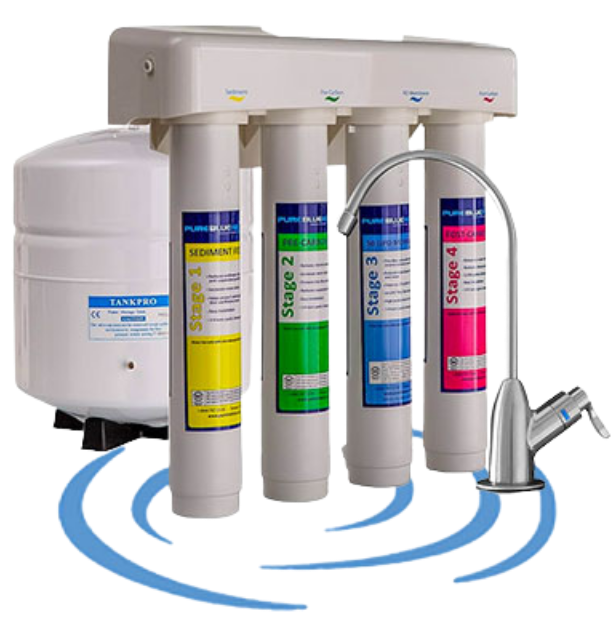
Get a free reverse osmosis drinking water system with the purchase of any whole-home water purification system.
*Cannot be combined with other offers. Mention this special when you call.