Reach Out Today
Please provide your email address so that we can stay in touch and answer any questions you have! We will be reaching back out shortly.


Hear from Our Customers
You stop seeing white crust around your faucets within weeks. Your shower doors stay clearer longer. Your water heater stops working overtime to heat through layers of mineral buildup.
That’s what happens when you prevent scale instead of just reacting to it. A salt-free water conditioner uses Template Assisted Crystallization to turn hardness minerals into microscopic crystals that flow through your pipes instead of sticking to them. You’re not removing calcium and magnesium—you’re changing how they behave.
St. Augustine South sits on ancient limestone bedrock, which means your water dissolves massive amounts of minerals before it reaches your home. Most homes here deal with 150 to 250 ppm of hardness. That’s enough to cost you $13,800 to $20,300 over ten years in extra detergent, higher energy bills, appliance repairs, and plumbing fixes.
A saltless water system stops that damage without the ongoing costs of salt, without wasting water during regeneration cycles, and without stripping out the minerals that are actually good for you. Your appliances run cleaner. Your pipes stay open. Your water heater lasts three to five years longer than it would otherwise.
We have an A+ rating with the Better Business Bureau and five stars with zero complaints. We’re members of the National Water Quality Association, which means we follow industry standards that most companies skip.
We don’t do plumbing or water heaters. We do water treatment—softening, filtration, and whole-house purification. That focus matters because we’re not trying to upsell you on services we barely understand. We analyze your water, design a system that fits your home and your hardness levels, and install it correctly the first time.
St. Augustine South homeowners deal with some of the hardest water in Florida because of the geology underneath you. We’ve been solving that problem locally for decades, and we know exactly what works here and what doesn’t.
We start with a water analysis. You need to know your hardness level, what else is in your water, and whether a water descaler system is the right fit or if you need something else entirely.
Once we know what we’re dealing with, we size the system to your home’s water usage and your specific hardness levels. A system that’s too small won’t keep up. A system that’s too large is a waste of money. We custom-design it based on your actual needs, not a one-size-fits-all guess.
Installation takes a few hours. The system goes on your main water line and starts working immediately. There’s no drain connection, no electricity, and no salt reservoir to fill. Water flows through a media tank where Template Assisted Crystallization converts dissolved calcium and magnesium into tiny crystals that stay suspended in the water instead of forming scale.
After installation, you’re done. The system runs continuously with no regeneration cycles and no waste. The only maintenance is replacing the media every five to seven years, which costs far less over time than buying salt every month and dealing with the repairs that hard water causes.

Ready to get started?
You get a whole-house hard water conditioner that prevents scale buildup in your pipes, on your fixtures, and inside your appliances. The system doesn’t remove hardness—it changes the structure of the minerals so they can’t attach to surfaces.
That means you keep the calcium and magnesium in your water, which is better for drinking and cooking. You’re not adding sodium to your water like you would with a traditional softener, and you’re not wasting water or electricity to make the system run.
In St. Augustine South, where hard water costs homeowners an extra $180 a year in detergent, $200 to $350 in higher energy bills, and $500 to $900 in appliance repairs, a saltless water system pays for itself in two to four years. After that, you’re saving money every year while your appliances last longer and your plumbing stays clear.
The system requires minimal maintenance. No salt to haul. No settings to adjust. No regeneration schedule to monitor. It just works, year after year, with media replacement every five to seven years as the only recurring cost.
We also offer a $500 discount for military members and first responders, and we’re proud supporters of the Tunnels to Towers Foundation. When you work with us, you’re working with a company that’s been part of this community for decades and plans to stay that way.
Yes, but it depends on your specific hardness level. Most homes in St. Augustine South have water in the 150 to 250 ppm range, which is moderate to hard. Salt-free water conditioners work well in that range because they’re designed to prevent scale formation, not remove hardness.
If your water tests above 250 ppm, you might need a traditional softener or a combination approach. That’s why we start with a water analysis—so we’re recommending what actually works for your water, not just selling you a system.
The Template Assisted Crystallization technology in these systems converts hardness minerals into crystals that stay in the water but don’t stick to surfaces. That stops the damage hard water causes without removing the minerals entirely. You won’t get the slippery feel of softened water, but you will stop seeing scale buildup and you’ll protect your appliances from the wear that hard water causes.
The upfront cost is similar, but the long-term costs are much lower. A traditional softener requires salt every month, which runs about $10 to $20 per bag depending on how much water you use. Over ten years, that’s $1,200 to $2,400 just in salt.
Traditional softeners also waste water during regeneration—anywhere from 25 to 65 gallons per cycle, depending on the system. In St. Augustine South, where water costs are rising, that adds up. You’re also using electricity to run the regeneration cycles.
A salt-free water conditioner has none of those ongoing costs. No salt, no wasted water, no electricity. The only maintenance is replacing the media every five to seven years, which typically costs a few hundred dollars. When you factor in the savings on detergent, energy, and appliance repairs, the system usually pays for itself in two to four years. After that, you’re ahead.
A water softener removes hardness minerals through an ion exchange process. It swaps calcium and magnesium for sodium, which stops scale buildup but also strips out the minerals and adds salt to your water. Softeners require regular salt refills and waste water during regeneration.
A water conditioner doesn’t remove hardness—it changes the structure of the minerals so they can’t form scale. The calcium and magnesium stay in your water, which is better for drinking and doesn’t add sodium. There’s no regeneration, no salt, and no water waste.
The trade-off is that conditioned water doesn’t feel “soft” the way softened water does. You won’t get that slick feeling in the shower. But you will stop scale buildup, protect your appliances, and keep beneficial minerals in your water. For a lot of St. Augustine South homeowners, especially those concerned about sodium intake or environmental impact, that’s a better fit than a traditional softener.
The media inside the system needs replacement every five to seven years, depending on your water quality and usage. That’s the only regular maintenance. There are no moving parts, no electronics, and no regeneration cycles to monitor.
Compare that to a traditional softener, where you’re refilling salt every few weeks, cleaning the brine tank periodically, and potentially dealing with valve failures or control board issues. Salt-free systems are simpler, which means there’s less to go wrong.
When it’s time to replace the media, we handle it. The process takes about an hour, and then you’re set for another five to seven years. The cost is a fraction of what you’d spend on salt and repairs for a traditional softener over the same period. Most homeowners find that the low maintenance is one of the biggest benefits of going salt-free.
No, a salt-free water conditioner only addresses hardness and scale prevention. It doesn’t filter out chlorine, sediment, or other contaminants. If you’re dealing with chlorine taste, which is common in St. Augustine South’s municipal water, you’ll need a separate filtration system.
We typically recommend pairing a hard water conditioner with a whole-house carbon filter if you want to address both hardness and taste issues. The carbon filter removes chlorine, improves taste and odor, and protects the conditioner media from chlorine damage, which can extend its life.
If you’re concerned about other contaminants—like the “forever chemicals” that have been a topic of discussion in Florida—we can test for those and recommend the right filtration approach. A salt-free conditioner is one piece of a complete water treatment system, not a standalone solution for every water quality issue. We’ll tell you exactly what you need based on your water test, not try to sell you more than that.
Please provide your email address so that we can stay in touch and answer any questions you have! We will be reaching back out shortly.
"*" indicates required fields
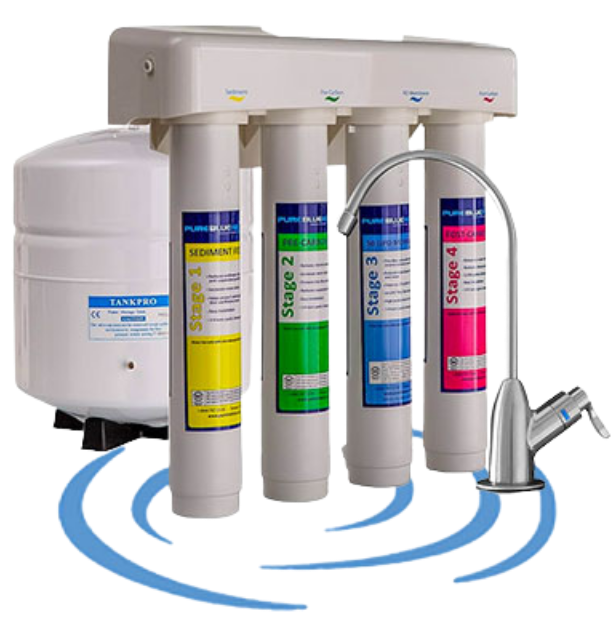
Get a free reverse osmosis drinking water system with the purchase of any whole-home water purification system.
*Cannot be combined with other offers. Mention this special when you call.