Reach Out Today
Please provide your email address so that we can stay in touch and answer any questions you have! We will be reaching back out shortly.


Hear from Our Customers
Your water heater stops collecting scale. Your showerheads stay clear. Your dishwasher doesn’t leave that chalky film on glasses anymore.
These aren’t small wins. South Apopka’s water runs around 129 ppm—that’s seven grains per gallon, which puts it firmly in the hard water category. Left alone, that mineral content cuts appliance efficiency by up to 30%, clogs pipes, and costs you more every month in energy and repairs.
A saltless water system handles the minerals without removing them. It uses Template Assisted Crystallization—TAC for short—to change how those minerals behave. Instead of sticking to surfaces and building up, they stay suspended in the water and wash away. Your plumbing stays cleaner. Your appliances run better. And the whole thing happens without electricity, without salt, and without ongoing costs.
You’re not just preventing future damage. The system starts working on existing buildup too. Most homeowners notice better water flow and cleaner fixtures within two to three months.
We’re not new to Central Florida’s water problems. We’ve been analyzing water and designing systems for homes across the state since the early 1970s. That’s five decades of seeing what works, what fails, and what actually holds up in Florida’s conditions.
We’re A-rated by the Better Business Bureau with a 5-star rating and zero complaints. We’re members of the Water Quality Association. And we don’t sell one-size-fits-all systems, because your water isn’t the same as your neighbor’s.
Every installation starts with a water test. We look at hardness, pH, contaminants, and usage patterns. Then we design a system around what your household actually needs. If you’re military or a first responder, we take $500 off—no strings attached.
First, we test your water. Not a guess, not a generic report—your specific water from your specific tap. That tells us what we’re dealing with: mineral levels, contaminants, pH, chlorine, anything that affects how a system should be set up.
Next, we design the system. Based on your test results and how much water your household uses, we spec out the right size unit and the right media. This isn’t pulled from a catalog. It’s built around your home.
Installation takes a few hours. We tie the system into your main line so all the water coming into your house runs through it. No electricity hookup. No drain line. No salt reservoir. It’s a simpler setup than a traditional softener, and there’s a lot less that can go wrong.
Once it’s in, you’re done. The media inside the tank lasts five to seven years before it needs replacing. There’s no regeneration cycle, no programming, no salt to haul in from the garage. The system just runs.

Ready to get started?
You get a system designed specifically for South Apopka water conditions. Orlando’s municipal supply averages 129 ppm, but depending on where you are and what time of year it is, that number shifts. We account for that.
You get a water descaler system that prevents scale without chemicals, without salt, and without waste. The TAC media inside transforms calcium and magnesium into microscopic crystals that can’t bond to surfaces. It’s not magic—it’s chemistry. And it works on both hot and cold water lines.
You also get a system that keeps the beneficial minerals in your water. A traditional softener strips them out and replaces them with sodium. A water softener alternative like this leaves magnesium and calcium intact, which is better for drinking and better for your health.
The installation includes everything: the tank, the media, the fittings, and the labor. We don’t subcontract the work. Our team handles it. And if something ever needs attention, we’re the ones who come back—not a national call center that doesn’t know your system.
A traditional softener removes hardness minerals through an ion exchange process. It swaps calcium and magnesium for sodium, which stops scale but adds salt to your water. It also uses electricity, wastes water during regeneration, and requires you to buy and load salt every month.
A salt-free water conditioner doesn’t remove minerals. It changes their structure so they can’t form scale. You keep the beneficial minerals, you don’t add sodium, and there’s no regeneration cycle to manage. That means no electricity, no water waste, and no ongoing costs.
The tradeoff is that a hard water conditioner won’t give you that slick, soapy feel some people associate with softened water. But it will protect your plumbing, extend appliance life, and eliminate scale buildup—without the maintenance.
It helps, but it’s not instant. Once the system is installed, the treated water gradually works on existing scale deposits. The same process that prevents new buildup also loosens old buildup over time.
Most homeowners start noticing improvements within two to three months. Water pressure gets better. Showerheads run clearer. Faucet aerators stop clogging as often. The longer the system runs, the more noticeable the difference.
If your pipes are heavily scaled, it can take six months to a year to see the full effect. But the process is happening every day, and it’s not doing any damage to your plumbing. It’s just reversing what the hard water did in the first place.
The tank itself can last 15 to 20 years if it’s installed correctly and not exposed to extreme conditions. There are no moving parts, no electrical components, and no valves that cycle on and off. It’s a simple, durable setup.
The media inside the tank is what does the work, and that needs to be replaced every five to seven years depending on your water quality and usage. It’s not a complicated job—we swap out the media, test the system, and you’re back in business.
Compare that to a traditional softener, which has a control valve, a brine tank, and a motor that runs regeneration cycles. Those components wear out. Most softeners need major service or replacement every eight to twelve years, and that’s on top of the monthly salt costs.
Almost none. There’s no salt to add, no settings to adjust, and no brine tank to clean out. The system runs on water pressure alone, so there’s no power supply to monitor or replace.
The only real maintenance is replacing the media every five to seven years. We handle that when the time comes. Some homeowners like to have us come out and check the system annually just to make sure everything’s still running clean, but it’s not required.
If you’re used to dealing with a traditional softener—buying salt, checking brine levels, cleaning out the tank, reprogramming the timer—this is going to feel like nothing. You install it, and then you forget about it.
Yes. South Apopka’s water typically measures around 129 ppm, or about seven grains per gallon. That’s considered moderately hard, and it’s well within the range where a salt-free water conditioner performs effectively.
We’ve installed these systems all over Central Florida, and the water conditions here are actually ideal for TAC technology. The system handles calcium and magnesium without issue, and because we’re designing it based on your specific water test, we’re accounting for any other factors—pH, chlorine, iron—that might affect performance.
If your water is unusually hard or has other complicating factors, we’ll tell you up front. We’re not going to install a system that won’t work. But in most cases, a properly sized water descaler system is more than enough to handle what’s coming out of your tap.
Please provide your email address so that we can stay in touch and answer any questions you have! We will be reaching back out shortly.
"*" indicates required fields
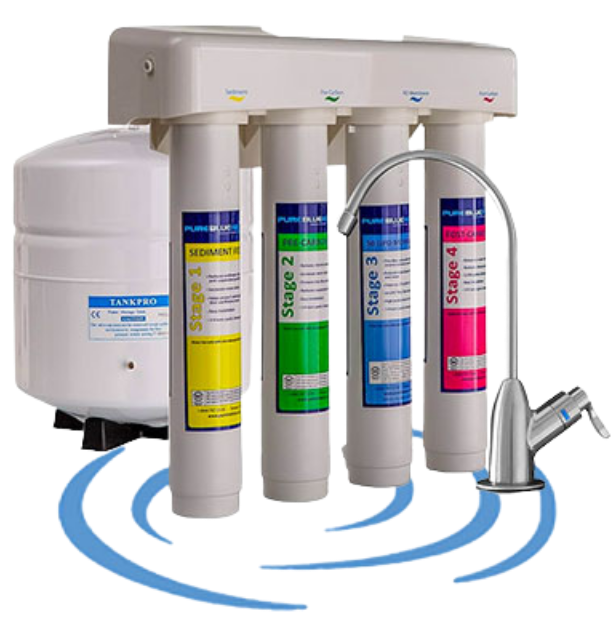
Get a free reverse osmosis drinking water system with the purchase of any whole-home water purification system.
*Cannot be combined with other offers. Mention this special when you call.