Reach Out Today
Please provide your email address so that we can stay in touch and answer any questions you have! We will be reaching back out shortly.


Hear from Our Customers

Sanibel’s water comes from deep in the Suwannee Aquifer — pulled up brackish, treated through reverse osmosis by the Island Water Association, and delivered to your tap at around 56 parts per million. That’s relatively soft by Florida standards. But soft doesn’t mean clean, and it doesn’t mean your home is fully protected.
Third-party water quality data identifies agricultural chemicals and disinfection byproducts in the local supply — including DBCP and Alachlor — that municipal treatment doesn’t fully eliminate. A whole-house salt free system adds the layer of filtration that sits between the IWA distribution line and everything inside your home: your fixtures, your water heater, your ice maker, your showers. That’s the gap most Sanibel homeowners don’t know exists until something goes wrong.
For the homeowners who rebuilt after Hurricane Ian — and there are hundreds of you — this matters even more. You just spent $300 to $500 per square foot putting your home back together. New plumbing, new appliances, new everything. A whole-house salt free treatment system is the one piece most contractors don’t mention, and the one that protects everything else you just paid for. It runs without salt, without electricity, and without a single service call for months at a time — which is exactly what you need when you’re splitting time between Sanibel and somewhere up north.
We’ve been solving Florida water problems for more than 50 years. That kind of track record doesn’t happen by accident — it happens because the same team that installs your system is the same team you call when you have a question six months later. No subcontractors. No national call center. No disappearing act after the paperwork is signed.
We hold an A+ rating with the Better Business Bureau with zero complaints on record — which, in the water treatment industry, is genuinely rare. We’re also members of the Water Quality Association, the national body that holds its members to a professional code of ethics and ongoing education. When you’re on an island accessible only by a toll causeway, you need a company that will actually come back. That record is your proof we do.
We know Lee County. We know the Island Water Association’s reverse osmosis process, what the Suwannee Aquifer produces, and what Sanibel homeowners are actually dealing with post-Ian. That’s not something a national brand can say.

It starts with a conversation, not a sales pitch. We’ll ask you about your home — when it was built or rebuilt, what your plumbing looks like, whether you’re on island full-time or part of the year, and what concerns you most about your water. For Sanibel homeowners who went through major renovations after Hurricane Ian, that conversation also covers the new plumbing and appliances you’re now protecting. The goal is to understand your situation before recommending anything.
From there, we’ll test your water and walk you through what we find — including any contaminants present in the IWA supply that your current setup isn’t filtering out. You get a clear recommendation, a straight answer on cost, and no pressure. If a salt free TAC system is the right fit, we’ll explain exactly how Template Assisted Crystallization works: it transforms dissolved calcium and magnesium into microscopic crystals that pass harmlessly through your pipes and appliances without bonding to surfaces. No scale. No damage. No salt.
Installation is professional, permitted where required under Sanibel’s building code, and done by the same team you spoke with — not a crew dispatched from a regional hub who’s never been to the island. Once it’s in, there’s nothing to manage. No bags to haul. No cycles to monitor. No electricity required. It works the day it goes in and keeps working whether you’re watching the sunset from Lighthouse Beach or back home for the summer.

Ready to get started?
Sanibel is not a typical Florida market, and a salt free treatment system installed here shouldn’t be treated like a cookie-cutter job. The water source is unique — IWA’s reverse osmosis process produces finished water that’s softer than most of Florida, but the presence of detected contaminants in the local supply means filtration still matters. Our whole-house approach for Sanibel addresses both: a salt free TAC conditioner for scale prevention and appliance protection, paired with whole-house filtration for contaminant removal.
The environmental piece is real here, not just a talking point. Sanibel was incorporated in 1974 specifically to protect the island’s natural character. More than half the land is permanently preserved. The J.N. “Ding” Darling National Wildlife Refuge covers over 6,400 acres of mangrove ecosystem right in the island’s interior. Traditional salt-based softeners discharge brine into local water systems and septic infrastructure. Salt free systems produce zero discharge, use no electricity, and generate no wastewater. In a community founded on conservation, that alignment matters.
For seasonal residents and second-home owners — a significant portion of Sanibel’s property-owning population — the zero-maintenance profile is as important as the environmental one. No salt to run out while you’re away. No regeneration cycles to check on remotely. The system does its job continuously, quietly, and without you. We also offer a $500 discount for active military and veterans, and first responders — a straightforward acknowledgment of the people who showed up for this island when it needed them most.
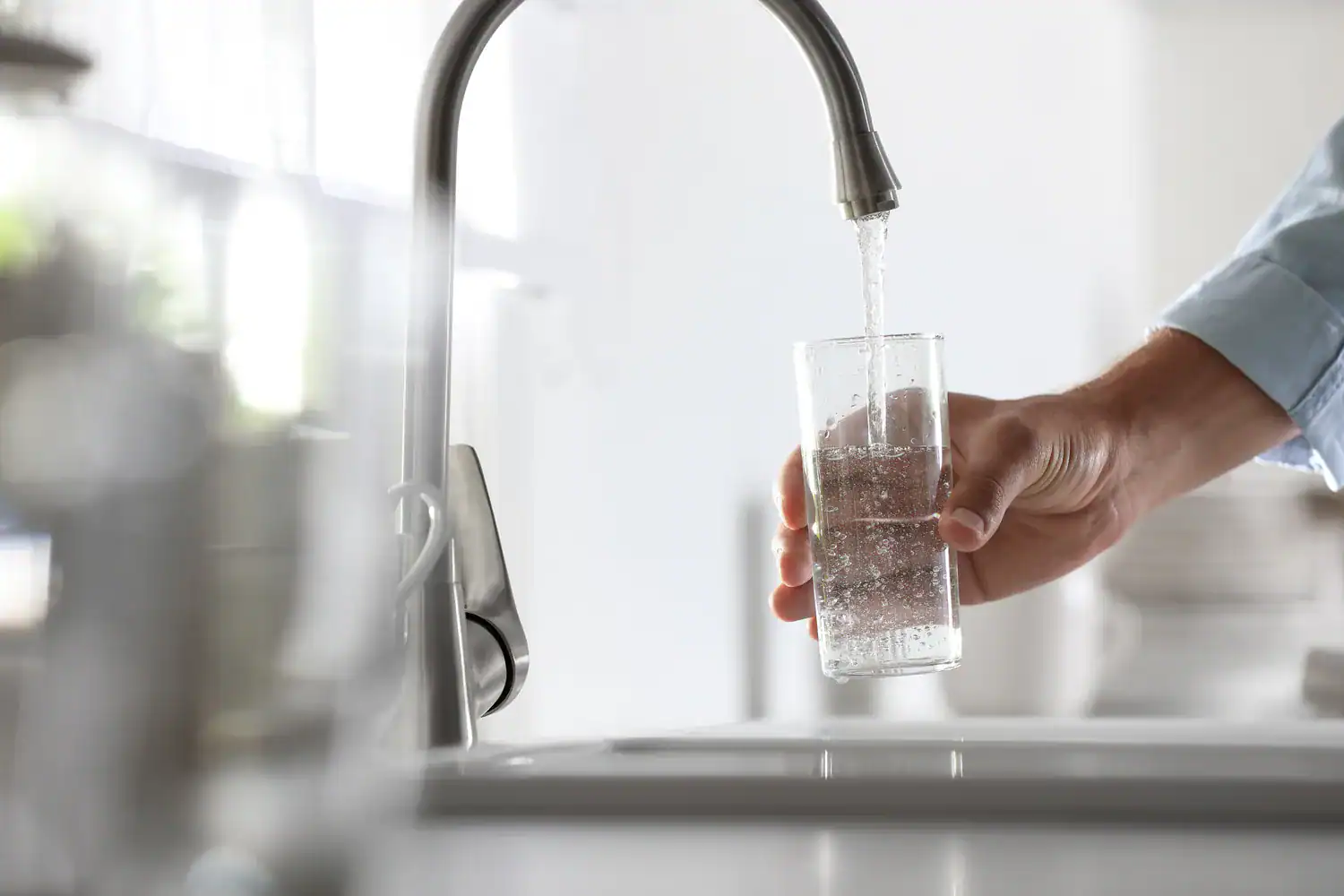
The IWA does a solid job. Their reverse osmosis process pulls brackish water from the Suwannee Aquifer and delivers finished water at around 56 parts per million — which is considered mildly soft and not aggressively scale-forming by Florida standards. If your only concern were hardness, you’d have a reasonable argument for doing nothing.
But hardness isn’t the whole picture. Third-party water quality data for the IWA service area identifies the presence of agricultural chemicals and disinfection byproducts — including DBCP and Alachlor — that municipal treatment doesn’t fully eliminate before the water reaches your tap. A whole-house filtration system addresses those contaminants. Pair that with a salt free conditioner for any residual mineral management and appliance protection, and you have a complete solution that the IWA’s municipal system alone doesn’t provide. It’s not about distrust of IWA — it’s about adding a layer of control inside your own home.
A traditional salt-based softener removes calcium and magnesium from your water through an ion exchange process — it literally pulls those minerals out and flushes them away with a brine solution during regeneration cycles. That brine has to go somewhere, and in Sanibel’s case, it ends up in the local water system or your septic infrastructure. It also means hauling 40-pound salt bags regularly, monitoring the system, and dealing with service calls when the control head fails.
A salt free system using Template Assisted Crystallization doesn’t remove the minerals — it transforms them. The calcium and magnesium become microscopic crystals that flow through your pipes and appliances without bonding to surfaces. No scale buildup. No damage. The minerals stay in your water, they just can’t harm your home. There’s no salt, no electricity, no regeneration cycle, and nothing to maintain. For a community like Sanibel — where environmental stewardship is built into the city’s founding identity and where many homeowners are away for months at a time — that combination of zero discharge and zero maintenance is hard to beat.
Honestly, it’s the best time. When you’re rebuilding from the studs up, you have access to the plumbing that you won’t have once the walls are closed. Installing a whole-house water treatment system during a renovation is cleaner, faster, and often less expensive than retrofitting into a finished home. More importantly, you’re starting fresh — new pipes, new water heater, new appliances — and protecting them from day one means you’re not undoing mineral or contaminant damage that accumulated over years.
A lot of Sanibel homeowners who went through major Ian rebuilds at $300 to $500 per square foot made careful decisions about every other system in the house. Water treatment is frequently the last thing on the list and the first thing that affects everything else. If your contractor didn’t bring it up, that’s not unusual — most plumbing and construction crews aren’t water treatment specialists. We are, and we can work around your rebuild timeline to get the system in at the right stage of the project.
This is one of the strongest use cases for salt free treatment, and it’s especially relevant on Sanibel where a meaningful portion of homeowners are seasonal residents or split their time between the island and another home. A salt free TAC system has no moving parts, no electronic control head, no salt tank, and no regeneration cycle. There is nothing to run out, nothing to monitor remotely, and nothing that fails from sitting idle for a few months.
Traditional salt-based softeners, by contrast, need regular attention. Salt runs out. Brine tanks can develop bacterial growth if they sit too long without cycling. Control heads can malfunction. If you come back to your Sanibel home in October after a summer away and your softener has been sitting empty for three months, you may have a problem. With a salt free system, you come back to a home whose pipes, fixtures, and appliances have been protected continuously — without anyone touching the system while you were gone. That’s the kind of reliability that makes sense for island living.
The Island Water Association’s water consistently meets EPA regulatory standards, so this isn’t a crisis situation — but meeting regulatory limits and having truly clean water aren’t always the same thing. Third-party water quality data for the IWA service area has identified the presence of DBCP (1,2-Dibromo-3-chloropropane), Alachlor, and Desisopropylatrazine. These are agricultural chemicals and disinfection-related compounds that can be present at levels below the legal action threshold but above what many homeowners would choose to drink or cook with if they knew.
A whole-house filtration system — the kind we install as part of a complete water treatment setup — is designed to address these types of contaminants at the point where water enters your home, before it reaches any tap, appliance, or shower. For a household where the water is used for drinking, cooking, and bathing, that’s a meaningful layer of protection. It’s also the layer that IWA’s distribution system, by design, doesn’t provide inside your home.
Please provide your email address so that we can stay in touch and answer any questions you have! We will be reaching back out shortly.
"*" indicates required fields