Reach Out Today
Please provide your email address so that we can stay in touch and answer any questions you have! We will be reaching back out shortly.


Hear from Our Customers
Your water heater stops working 30% harder just to heat water. Scale quits building up inside pipes and on fixtures. Dishwashers and washing machines run cleaner, longer.
You’re not adding sodium to your drinking water. You’re not hauling 40-pound salt bags every month. And you’re not dumping chlorides into the waste stream that several Florida cities are starting to regulate.
The water coming out of your tap keeps the beneficial minerals your body needs. Calcium and magnesium stay in the water where they belong. But those same minerals don’t stick to your pipes, your showerheads, or your tankless water heater coils. That’s the difference between softening and conditioning.
Regency homeowners deal with water hardness levels that regularly hit 180 ppm or higher. That’s hard enough to shorten appliance life and create visible scale on everything water touches. A salt-free water conditioner handles that load without the ongoing cost, environmental impact, or maintenance burden of traditional systems.
We hold an A rating with the Better Business Bureau and a 5-star rating with zero complaints. We’re members of the National Water Quality Association. We’ve installed systems in hospitals, health clinics, and hundreds of homes across Northeast Florida.
We don’t sell plumbing services or water heaters. We focus on water treatment, and we service what we install. That’s not standard in this industry, but it should be.
Regency sits in an area where the Floridan aquifer delivers consistently hard water. We’ve tested enough water in this zip code to know what works and what doesn’t. Most homes here fall into the 150-250 ppm range. That’s not extreme, but it’s enough to cause real problems if left untreated.
We start with a free water test at your home. Not a basic hardness test—a full analysis that shows what’s actually in your water. That tells us which system fits your household size, water usage, and specific water chemistry.
Once you decide to move forward, we schedule installation at a time that works for you. The system gets installed on your main water line. It treats all the water coming into your home before it reaches any fixture or appliance. Installation typically takes a few hours, and we clean up completely before we leave.
The system uses Template Assisted Crystallization. That’s a process where minerals stay in the water but get converted into a crystal form that doesn’t stick to surfaces. Arizona State University validated the science. It works without electricity, without salt, and without producing wastewater during a regeneration cycle.
After installation, the system runs on its own. There’s no programming, no salt to add, no filters to change on a monthly basis. You’ll start noticing less spotting on glasses within a couple weeks. Showerheads stay cleaner. Appliances stop accumulating the white buildup that eventually chokes flow and kills efficiency.

Ready to get started?
You get a system sized correctly for your home’s water usage and hardness level. We don’t install one-size-fits-all units. A household using 80 gallons per day needs different capacity than one using 300.
Installation includes all necessary fittings, connections, and integration with your existing plumbing. We test the system before we leave to make sure it’s working correctly. And unlike some of the national companies operating in Florida, we provide ongoing service if anything ever needs attention.
Regency homeowners are dealing with the same geological reality as the rest of Northeast Florida—karstic limestone that loads groundwater with calcium and magnesium. The Floridan aquifer produces some of the hardest water in the state. Your system needs to handle that consistently, year after year.
These systems typically last 10-15 years or longer with minimal maintenance. Compare that to traditional softeners that need salt every month, resin bed replacement every few years, and regular servicing to keep the regeneration cycle functioning. The math works in favor of salt-free treatment, especially when you factor in water waste and environmental regulations that are tightening across Florida.
We also offer a $500 discount for military members and first responders. If that applies to you, mention it when you call.
Yes, but it works differently than you might expect. The system doesn’t remove minerals from your water. It changes their structure so they don’t bond to surfaces.
When calcium and magnesium pass through the conditioning media, they form microscopic crystals. Those crystals stay suspended in the water instead of adhering to pipes, faucets, and heating elements. You’ll still see some mineral residue if you let water evaporate on glass or tile, but it wipes off easily instead of forming the hard, chalky scale that requires scraping.
Most customers notice the difference within two to three weeks. Existing scale starts to break down gradually as conditioned water flows through your plumbing. New scale stops forming immediately. Showerheads that used to clog every few months stay clear. Faucet aerators stop building up the white crust that restricts flow.
Magnetic and electronic descalers make claims that aren’t backed by the same level of research. Template Assisted Crystallization has been studied by Arizona State University and validated as an effective scale prevention method.
The media inside a TAC system provides a physical template where minerals crystallize in a form that won’t stick. It’s a mechanical process, not an electromagnetic one. There’s no electricity involved, no signal being sent through the pipe, and no reliance on water velocity or flow rate to work properly.
Magnetic systems often fail when water sits still in pipes for extended periods. TAC systems work regardless of flow conditions. The crystals form on contact with the media, and once they’re formed, they stay stable. That’s why you see these systems installed in commercial settings, hospitals, and high-demand environments where performance has to be consistent.
No. Pressure drop across a properly sized salt-free conditioner is minimal—usually less than 2 psi. That’s not enough for you to notice any difference at your fixtures.
Traditional softeners can create noticeable pressure loss, especially during regeneration when water has to bypass the system or flow through a restricted path. Salt-free systems don’t have a regeneration cycle. Water flows through the media 24/7 without interruption.
Sizing matters here. If a system is undersized for your household’s peak flow rate, you could see pressure issues. That’s why we test your water and calculate your usage before recommending a specific unit. A home with four bathrooms and high simultaneous usage needs more capacity than a smaller home with one or two people. We match the system to your actual demand so pressure stays consistent throughout your house.
No. A salt-free conditioner addresses hardness minerals and scale prevention. It doesn’t filter out chlorine, chloramines, sediment, or other contaminants.
If your water has taste or odor issues, or if you’re concerned about specific contaminants, that requires a separate filtration system. We can test for those issues during the same water analysis and recommend the right combination of treatment.
Many Regency homeowners end up with both—a whole-house carbon filter for chlorine and taste, plus a salt-free conditioner for scale. The two systems work together without interfering with each other. Filtration handles contaminants. Conditioning handles minerals. Each one does a specific job.
Trying to solve every water problem with one piece of equipment usually means you’re not solving any of them well. We’d rather install the right system for each issue than sell you something that underperforms because it’s trying to do too much.
Upfront cost for a salt-free system is often comparable to or slightly higher than a quality salt-based softener. The difference shows up in operating costs over time.
Traditional softeners need salt every month. Depending on your water hardness and usage, that’s $100 to $300 per year. They also use water during regeneration—sometimes 50 gallons or more per cycle. And they require periodic servicing to keep the control valve and resin bed functioning properly.
Salt-free systems have essentially no operating cost. No salt. No wastewater. No electricity. Maintenance is minimal—usually just a media replacement every 5-7 years depending on water quality and usage. When you calculate total cost of ownership over 10 years, salt-free treatment typically costs less.
There’s also a regulatory angle. Some Florida municipalities are restricting or banning salt-based softeners because of the chloride load they put into wastewater treatment systems. If your area adopts those restrictions, a salt-based system becomes a liability. Salt-free systems comply with current and anticipated regulations.
Please provide your email address so that we can stay in touch and answer any questions you have! We will be reaching back out shortly.
"*" indicates required fields
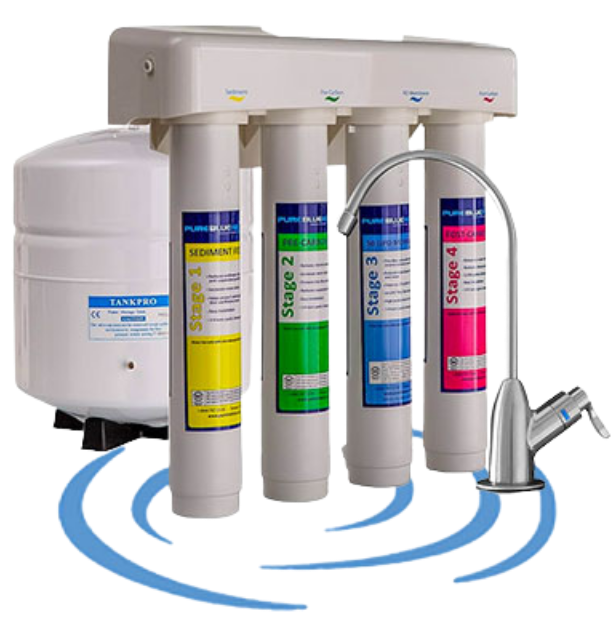
Get a free reverse osmosis drinking water system with the purchase of any whole-home water purification system.
*Cannot be combined with other offers. Mention this special when you call.