Reach Out Today
Please provide your email address so that we can stay in touch and answer any questions you have! We will be reaching back out shortly.


Hear from Our Customers
Your water heater stops losing efficiency to mineral buildup. That alone can save you hundreds per year in energy costs, and it extends the life of the unit by years.
Your faucets and showerheads stay clear. No more scraping white crust off fixtures every few weeks or watching water pressure drop as pipes clog with lime scale.
Dishes come out of the dishwasher without spots. Your washing machine runs cleaner. And you’re not stripping beneficial calcium and magnesium out of your drinking water just to avoid the problems hard water causes. A salt-free water conditioner handles scale without removing the minerals your body actually needs.
We don’t install water heaters or fix leaks. We analyze your water, design a system that addresses what’s actually in it, and install whole-house treatment that works for Central Florida conditions.
Pine Castle sits in an area where water hardness averages around 129 PPM—moderate, but enough to cause real problems over time. We’ve worked with enough homes here to know what that looks like: scale on fixtures, reduced appliance efficiency, higher energy bills.
We’re A-rated with the Better Business Bureau and members of the National Water Quality Association. That’s not marketing language. It means we follow industry standards and back up what we install.
We start with a water analysis. Not a sales pitch—an actual test of what’s in your water and at what levels. That tells us whether a salt-free system makes sense for your situation or if you need something else.
If a water descaler system fits, we’ll walk through how Template Assisted Crystallization works. The short version: it converts dissolved calcium and magnesium into crystals that can’t stick to surfaces. Your water still contains those minerals, but they pass through your pipes and appliances without forming scale. Studies show TAC reduces scale formation by 88% to 97%.
Installation doesn’t require a drain connection or electrical hookup. The system goes inline with your main water line. No regeneration cycles, no salt deliveries, no brine discharge. Once it’s in, it runs on its own. The media inside typically lasts over eight years before it needs replacement.

Ready to get started?
You stop adding salt to your water. That matters if you’re watching sodium intake, and it definitely matters for your yard and septic system if you have one. Traditional softeners discharge brine, which is why some areas restrict or ban them. A saltless water system avoids that issue entirely.
You use less energy. Water heaters with scale buildup work harder and cost more to run. Removing existing scale—which these systems actually do over time—brings efficiency back. In Central Florida, where air conditioning already pushes summer electric bills high, that difference adds up.
You keep calcium and magnesium in your drinking water. Those aren’t contaminants. They’re minerals your body uses. A hard water conditioner that prevents scale without removing beneficial minerals gives you the functional benefits of soft water without the tradeoffs.
And you skip the maintenance routine that comes with salt-based softeners. No hauling bags. No setting regeneration schedules. No wondering if the system recharged overnight or if you’re about to run out of capacity.
It changes the structure of the minerals so they can’t bond to surfaces. Template Assisted Crystallization uses a catalytic media that converts dissolved calcium and magnesium into microscopic crystals as water passes through.
Those crystals stay suspended in the water. They flow through your pipes, your water heater, your appliances—but they don’t stick. That’s the difference between water that causes scale and water that doesn’t, even when the mineral content stays the same.
The technology has been used in Germany for 15 years and in North America for seven. Arizona State University tested it and found scale reduction levels consistently above 90%. It’s not experimental. It works, and it works without removing anything from your water.
Yes, gradually. As the treated water flows through your system, it actually breaks down existing scale deposits. You won’t see it happen overnight, but over weeks and months, you’ll notice improved water pressure and less buildup on fixtures.
How fast it works depends on how much scale you’re starting with. Homes with decades of accumulation take longer than newer properties. But the process is consistent—the same crystallization effect that prevents new scale also works on old deposits.
This is one area where salt-free systems outperform traditional softeners. A softener prevents new scale but doesn’t reverse what’s already there. TAC does both.
Almost nothing for the first eight-plus years. The catalytic media inside doesn’t need regeneration, backwashing, or chemical treatment. It just works as water flows through.
You’re not buying salt. You’re not programming regeneration cycles. You’re not cleaning brine tanks or checking resin beds. The system has no moving parts and doesn’t use electricity, so there’s nothing to break down in the mechanical sense.
When the media eventually does need replacement—typically after eight to ten years depending on water volume and quality—that’s a service call, not a DIY project. But compared to the ongoing maintenance of a traditional softener, the time and cost savings are significant. Most homeowners save around $400 per year on salt alone.
For most Pine Castle homes, yes. The Orlando area averages 129 PPM hardness, which falls in the moderate range. TAC systems handle that effectively without any of the drawbacks of salt-based softening.
If your water tests significantly harder—say you’re pulling from a well with 250+ PPM—we’ll tell you that during the analysis. Some situations do call for traditional softening, and we’re not going to install something that won’t solve your problem just to make a sale.
But for typical municipal water in this area, a water softener alternative like TAC gives you scale prevention, appliance protection, and better water quality without adding sodium, wasting water during regeneration, or requiring constant maintenance. It’s a good fit for what you’re dealing with here.
Upfront costs are comparable, sometimes slightly higher depending on the system size and your home’s plumbing setup. But the long-term cost picture shifts heavily in favor of salt-free treatment.
You’re eliminating ongoing salt purchases—$400 or more per year for most households. You’re using less electricity since there’s no regeneration cycle. You’re not sending extra water down the drain during backwash. And you’re extending appliance life by preventing the scale that kills water heaters, dishwashers, and washing machines early.
We include a custom water analysis and design the system based on your actual needs, not a one-size-fits-all approach. That means you’re paying for what works for your water and your home, nothing more. We’ll give you a straight number after we test your water and see what you’re working with.
Please provide your email address so that we can stay in touch and answer any questions you have! We will be reaching back out shortly.
"*" indicates required fields
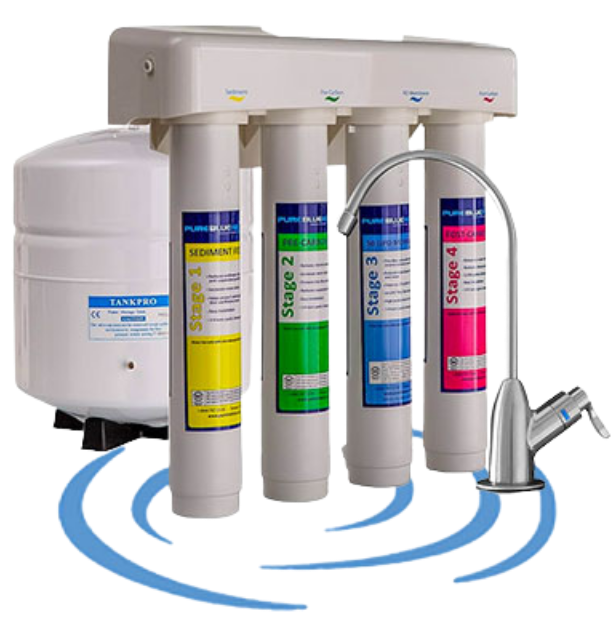
Get a free reverse osmosis drinking water system with the purchase of any whole-home water purification system.
*Cannot be combined with other offers. Mention this special when you call.