Reach Out Today
Please provide your email address so that we can stay in touch and answer any questions you have! We will be reaching back out shortly.


Hear from Our Customers
Your water heater stops working as hard. The white crust around faucets disappears. Your dishwasher and washing machine run cleaner, longer, and more efficiently.
That’s what happens when you prevent scale from forming in the first place. A salt-free water conditioner doesn’t strip minerals out—it changes their structure so they can’t stick to your pipes, appliances, or fixtures. You still get calcium and magnesium in your drinking water, but they flow through your system instead of building up inside it.
In Pedro, where water hardness regularly hits 150 to 300 parts per million, that buildup happens fast. Most homeowners don’t realize how much damage is happening until a water heater fails early or a dishwasher stops draining right. A water descaler system handles the problem before it costs you thousands in repairs or replacements.
We focus entirely on water treatment. Not plumbing. Not water heaters. Just filtration, purification, and conditioning systems that actually work in Florida’s unique water conditions.
We’re A-rated with the Better Business Bureau, hold a 5-star rating with zero complaints, and we’re members of the National Water Quality Association. That’s not marketing language—it’s a track record you can verify. We’ve built our reputation in communities like Pedro by showing up, doing the work right, and standing behind what we install.
If you’re military or a first responder, we offer a $500 discount. We also support the Tunnels to Towers Foundation because we believe in taking care of the people who take care of us.
A saltless water system uses Template Assisted Crystallization, or TAC. It’s not softening—it’s conditioning. The difference matters.
When hard water flows through the system, the calcium and magnesium pass over a catalytic media. That media converts those minerals into microscopic crystals. Those crystals stay in the water, but they can’t bond to surfaces anymore. They just flow through your pipes and out your faucets without leaving residue behind.
There’s no regeneration cycle. No brine discharge. No electricity. The system runs continuously without any waste, and the media typically lasts five to seven years before it needs replacement. You’re not adding sodium to your water, and you’re not removing the minerals that are actually good for you. You’re just stopping them from causing problems.
The result is a water softener alternative that protects your home without the environmental impact or ongoing maintenance of traditional salt-based systems.

Ready to get started?
Every installation starts with a water test. We need to know your exact hardness level, pH, and whether there are other contaminants that could interfere with the system’s performance. In Pedro, most water comes from the Floridan Aquifer, which means high mineral content and occasional iron or sulfur.
Once we confirm your water profile, we size the system based on your household’s flow rate and daily usage. Undersizing a hard water conditioner is one of the most common mistakes in this industry—it leads to poor performance and frustrated homeowners. We don’t cut corners on sizing.
Installation includes the tank, media, bypass valve, and all necessary fittings. We mount it after your main shutoff so it treats all the water entering your home. The system comes with a warranty, and we provide clear guidance on what to expect during the first few weeks as the crystals start working through your existing buildup. You’ll also get a maintenance schedule, though there’s not much to do beyond an occasional visual check.
No, and that’s an important distinction. A salt-free system doesn’t soften water—it conditions it. Traditional softeners use ion exchange to remove calcium and magnesium and replace them with sodium. That process creates the slick feel you get in softened water, and it does eliminate hardness.
A salt-free water conditioner leaves those minerals in the water but changes their form so they don’t cause scale. You won’t get that slippery feel in the shower, but you also won’t be adding sodium to your water or dealing with the ongoing cost and hassle of salt. The minerals stay in, which is better for your health, but they stop sticking to your pipes and appliances.
If you’re comparing the two, think about what problem you’re actually trying to solve. If it’s scale buildup, appliance damage, and maintenance costs, a saltless water system handles that without the downsides of a traditional softener.
The tank itself can last 10 to 20 years depending on water quality and usage. The catalytic media inside typically needs replacement every five to seven years. That’s the only real maintenance cost you’ll face.
In Florida, where water hardness is consistently high, the media works harder than it would in other parts of the country. Pedro’s water regularly tests between 150 and 300 ppm, which is considered hard to very hard. That means the system is actively conditioning a lot of mineral content every day.
The good news is that replacement media isn’t expensive, and the process is straightforward. Compare that to a salt-based system, where you’re buying salt every month, using electricity to run regeneration cycles, and wasting hundreds of gallons of water each year. The long-term cost and convenience of a salt-free system make it a smarter investment for most Florida homeowners.
Yes, but it takes time. A water descaler system prevents new scale from forming immediately, but it also gradually breaks down existing buildup. As the conditioned water flows through your pipes, the crystals help loosen the old scale so it can flush out over time.
How long that takes depends on how much buildup you have. If your water heater is heavily scaled, you might see improvement over several months. Faucets and showerheads usually clear up faster because water flows through them more frequently.
Some homeowners choose to have their water heater flushed or their aerators cleaned when they first install the system. That speeds up the process and gives you a cleaner starting point. Either way, the system stops the problem from getting worse and starts reversing the damage that’s already there. You just need to give it time to work.
No, and that’s actually one of the reasons they’re becoming more popular here. Some Florida municipalities have started limiting or banning salt-based softeners because of the environmental impact. Salt discharge ends up in local water supplies and ecosystems, and the regeneration process wastes a significant amount of water.
Salt-free systems don’t have those issues. There’s no brine discharge, no wastewater, and no chemicals being added to your water. That makes them safe for septic systems and compliant with local environmental regulations. You don’t need a permit, and you won’t run into problems if your city tightens restrictions in the future.
If you’re in an area where water conservation matters or you’re concerned about your environmental footprint, a saltless water system is the cleaner option. It does the job without creating waste or adding to the problem.
A water filter removes contaminants like chlorine, sediment, or chemicals. A salt-free treatment system addresses hardness minerals—specifically calcium and magnesium—that cause scale buildup. They solve different problems.
Most Florida homes benefit from both. A whole-house filter improves taste, removes chlorine and sediment, and protects your appliances from abrasive particles. A hard water conditioner prevents scale and extends the life of your plumbing and water-using appliances. They work together, but they’re not interchangeable.
If you’re dealing with stains, soap scum, or appliances that fail early, the issue is probably hardness, not contamination. A filter won’t fix that. You need a system that conditions the minerals so they stop causing problems. That’s what a salt-free water conditioner does.
Please provide your email address so that we can stay in touch and answer any questions you have! We will be reaching back out shortly.
"*" indicates required fields
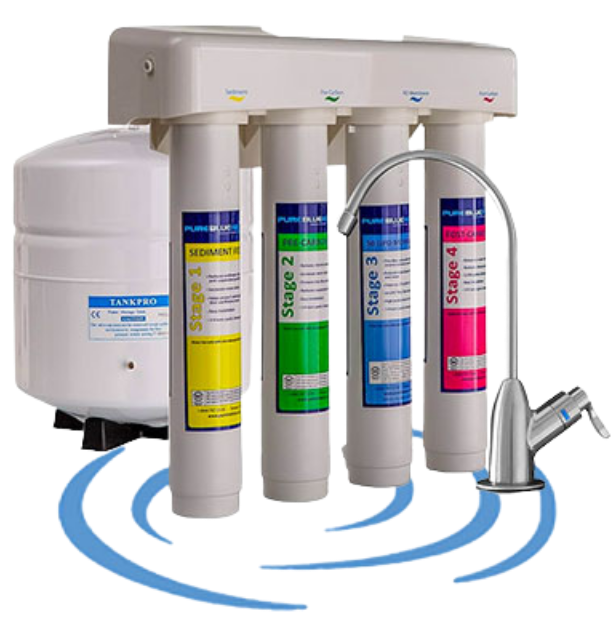
Get a free reverse osmosis drinking water system with the purchase of any whole-home water purification system.
*Cannot be combined with other offers. Mention this special when you call.