Reach Out Today
Please provide your email address so that we can stay in touch and answer any questions you have! We will be reaching back out shortly.


Hear from Our Customers

You’re not hauling 40-pound salt bags anymore. You’re not scheduling maintenance visits or watching your water bill climb from regeneration cycles. Your septic system isn’t processing hundreds of gallons of brine discharge every month.
A salt-free water conditioner handles Florida’s hard water differently. It doesn’t remove minerals—it changes how they behave. The calcium and magnesium stay in your water, but they can’t bond to your pipes, water heater, or appliances. That means no scale buildup, no clogged aerators, and no white film on your shower doors.
Your water heater runs efficiently because it’s not fighting through layers of mineral deposits. Your dishwasher and washing machine last years longer. You’re not replacing faucets or showerheads because of calcification. And when you add up what you’re not spending on salt, service calls, and early appliance replacements, the system pays for itself faster than most homeowners expect.
We have an A-rating with the Better Business Bureau and a 5-star customer rating with zero complaints. We’re members of the National Water Quality Association, which means we’re held to professional standards most companies skip.
Normandy homeowners deal with some of the hardest water in Florida—limestone geology means your water typically tests around 180 ppm for hardness. We’ve installed salt-free systems throughout Lake County for decades, so we know exactly what works here and what doesn’t.
When national companies sell you a system and disappear, we’re still here. We service what we install, and we don’t make promises we can’t keep.
A saltless water system uses Template Assisted Crystallization. That’s the technical term for what happens when hard water minerals pass through a catalytic media bed. The minerals convert into microscopic crystal structures that can’t stick to surfaces.
Your water flows through the system—no electricity, no backwashing, no regeneration cycles. The media does its job without moving parts or timers. The crystals stay suspended in the water and wash away instead of building up as scale.
You’ll notice the difference within weeks. Existing scale starts breaking down gradually. New deposits don’t form. Your water heater, pipes, and appliances stay clean without you doing anything.
The media lasts 5 to 7 years before it needs replacement, and that costs less than what you’d spend on salt over the same period. There’s no monthly maintenance, no service contracts, and no ongoing expenses beyond that single media change years down the road.

Ready to get started?
Your system includes professional installation, which matters more than most people realize. A water descaler system needs proper sizing based on your home’s flow rate and your water’s specific hardness level. We test your water first, then match the system to your actual conditions—not some generic recommendation.
Florida’s water is particularly aggressive because of high mineral content combined with heat and humidity. Normandy pulls water from the Floridan aquifer, which means you’re dealing with limestone-heavy water that’s classified as hard to very hard. A properly sized system handles that load without losing effectiveness over time.
You also get ongoing support. When you have questions about performance or notice something unusual, you’re calling a local company that answers the phone. We’re not a national chain that sells systems and moves on. We’re here when you need us, and we stand behind what we install.
Military members and first responders get a $500 discount because we believe in supporting the people who serve this community.
A traditional softener removes calcium and magnesium through ion exchange, which requires salt, electricity, and regular maintenance. You’re adding sodium to your water and discharging brine into your septic or sewer system. Most homeowners spend $60 to $120 per year on salt alone, plus another $160 to $420 annually on maintenance and service.
A salt-free system doesn’t remove minerals—it prevents them from forming scale. You keep the minerals in your water, which means no sodium addition and no discharge issues. There’s no electricity usage, no regeneration cycles, and no monthly maintenance. The only cost after installation is media replacement every 5 to 7 years.
The tradeoff is that you won’t get the “slippery” feel some people associate with softened water. But you will get scale prevention, appliance protection, and significantly lower operating costs. For most Normandy homeowners dealing with hard water, that’s the better long-term solution.
It reduces existing scale gradually, but it’s not an instant fix. The same process that prevents new scale formation also works on old deposits. The crystallized minerals in your treated water have a mild descaling effect as they flow past existing buildup.
Most homeowners notice improvement within 2 to 3 months. Faucet aerators stop clogging. Showerheads spray more evenly. Water heaters run more efficiently. The timeline depends on how much scale you’re starting with and how long it’s been accumulating.
If you’ve got decades of buildup in older pipes, the system will help but it won’t perform miracles. For moderate scale accumulation—which is what most homes have—you’ll see real improvement without needing a plumber to tear into your walls. The key is that once the system is installed, you’re preventing new scale from forming while the old stuff gradually breaks down.
Almost none. There are no moving parts, no electronics, and no regeneration cycles to monitor. You’re not refilling anything or scheduling service visits.
The catalytic media inside the tank does all the work, and it lasts 5 to 7 years before needing replacement. When that time comes, we swap out the media—it’s a straightforward process that takes less than an hour. The cost is a few hundred dollars, which is still less than what you’d spend on salt and maintenance for a traditional softener over the same period.
Between media changes, you don’t need to do anything. No filter cartridges to swap, no salt levels to check, no settings to adjust. The system works passively as water flows through it. That’s the entire maintenance schedule.
Upfront costs are comparable—most complete systems run between $1,200 and $3,500 depending on size and features. The difference shows up in operating costs.
A salt-based system costs $60 to $120 annually for salt, plus $160 to $420 per year for maintenance and service. Over 10 years, you’re looking at $2,200 to $5,400 in ongoing expenses. A salt-free system has essentially zero operating costs until media replacement at the 5 to 7 year mark, which runs a few hundred dollars.
You’re also avoiding the hidden costs of scale damage. Hard water reduces appliance lifespan by up to 30% and increases energy consumption because your water heater works harder when it’s coated in mineral deposits. A water descaler system prevents that damage, which means fewer appliance replacements and lower utility bills.
For Normandy homeowners planning to stay in their homes long-term, the math favors salt-free treatment by a significant margin.
It works with both, but well water sometimes needs additional treatment first. City water in Normandy is already filtered and disinfected before it reaches your home. Well water can contain sediment, bacteria, iron, sulfur, or other contaminants that need to be addressed separately.
If your well water is high in iron, for example, you’ll want an iron filter before the salt-free system. If you’ve got sediment issues, a whole-house sediment filter should come first. The hard water conditioner handles mineral crystallization, but it’s not designed to filter out particulates or treat water quality issues beyond hardness.
We test your water before recommending a system. That tells us exactly what’s in your water and what treatment approach makes sense. For some well water situations, you might need a multi-stage setup. For others, the salt-free system alone does the job. It depends entirely on your specific water chemistry, which is why testing comes first.
Please provide your email address so that we can stay in touch and answer any questions you have! We will be reaching back out shortly.
"*" indicates required fields
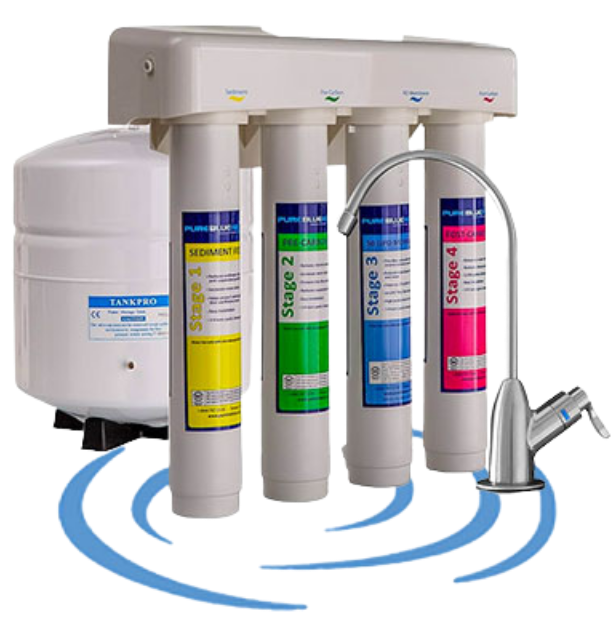
Get a free reverse osmosis drinking water system with the purchase of any whole-home water purification system.
*Cannot be combined with other offers. Mention this special when you call.