Reach Out Today
Please provide your email address so that we can stay in touch and answer any questions you have! We will be reaching back out shortly.


Hear from Our Customers

Your water heater stops collecting that crusty white buildup inside the tank. That alone can add three to five years to its life—maybe more if your water runs over 150 ppm hardness, which most of Martin County does.
Your faucets, showerheads, and appliances stay cleaner. You’re not scrubbing mineral stains off glass or dealing with clogged aerators every few months. The dishwasher runs better. The washing machine doesn’t leave that gritty residue on clothes.
And if you’re on a septic system, you’re not flushing hundreds of gallons of salty brine into your drainfield every week. That matters more now with Florida’s tightening septic regulations. A saltless water system keeps your septic bacteria healthy and your system compliant without extra work on your end.
You also skip the ongoing costs. No salt bags. No electricity to run a regeneration cycle. No water waste. The system just works—quietly, in the background—using Template Assisted Crystallization to turn hardness minerals into crystals that won’t stick to anything.
We’ve been serving homeowners across Martin County with whole-house water treatment systems that solve real problems. We’re members of the National Water Quality Association, A-rated with the Better Business Bureau, and we don’t sell you something just to disappear after installation.
If you’re in Stuart, Palm City, Jensen Beach, or anywhere else in Martin County, you’ve likely dealt with the same hard water issues everyone here faces. Municipal water in Stuart tests over 150 ppm for hardness minerals. Well water can run even higher. That’s why so many locals are switching to water descaler systems that handle scale without the downsides of salt.
We focus on systems that make sense for Florida—especially for homes with septic systems, water restrictions, or anyone tired of lugging salt bags. Our salt-free water conditioners don’t need electricity, don’t waste water, and don’t dump sodium into your drainfield. They just prevent scale from forming where it causes damage.
A salt-free system doesn’t remove hardness minerals from your water. Instead, it changes their structure so they can’t bond to surfaces. The technology is called Template Assisted Crystallization, or TAC for short.
As water flows through the system, hardness minerals—mostly calcium and magnesium—come into contact with a specialized media. That media acts as a template, converting dissolved minerals into microscopic crystals. Those crystals stay suspended in the water. They flow right through your pipes, faucets, and appliances without sticking or building up.
It’s a physical process, not a chemical one. No salt gets added. No minerals get stripped out. Your water keeps the calcium and magnesium that are actually good for you—they just can’t cause scale anymore.
The system installs on your main water line, usually right after your pressure tank if you’re on a well, or after the meter if you’re on city water. There’s no drain line needed and no power cord to plug in. Once it’s in, it runs passively. The media inside typically lasts five to seven years depending on your water quality and usage. When it’s time, we swap out the media and you’re good for another cycle.

Ready to get started?
Every installation starts with a water test. We need to know what’s in your water before recommending a system size or configuration. Hardness levels, iron content, pH—it all matters when sizing a saltless water system correctly.
Once we confirm what you need, we install a whole-house unit on your main line. The system is compact compared to traditional softeners. It doesn’t need a drain, so installation is simpler and there’s less to go wrong. Most homes in Martin County can have a system installed in a few hours.
You’ll also get a walkthrough on what to expect. The media inside doesn’t require backwashing or regeneration, so there’s no timer to set or salt to monitor. It just runs. If you lose power during a hurricane, the system keeps working—no electricity required. That’s a big deal here in Florida where storms can knock out power for days.
We also make sure you understand the difference between a water softener alternative like this and a traditional salt-based softener. You won’t get that slippery feel in the shower because we’re not removing minerals. You will stop seeing scale on your fixtures, and your appliances will stop collecting buildup. For most people, that’s the outcome that matters.
It depends on what you mean by “work.” A traditional softener removes hardness minerals through ion exchange, which stops scale and gives you that slick feeling in the shower. A salt-free conditioner doesn’t remove minerals—it changes their structure so they can’t form scale.
For scale prevention, TAC technology has been tested extensively. Studies show it reduces scale formation by 88% to over 99%, depending on water conditions. That’s enough to protect your water heater, keep your pipes clear, and stop buildup on fixtures. German DVGW-512 certification backs up those claims, and the technology has been used in Europe for over 15 years.
What it won’t do is give you soft water in the traditional sense. You’ll still see some spotting on glassware if you let dishes air dry. You might use slightly more soap. But you keep the healthy minerals, you don’t add sodium to your water, and you avoid all the maintenance and environmental issues that come with salt-based systems. For most Martin County homeowners—especially those on septic systems—that trade-off makes sense.
Yes, and that’s actually one of the main reasons people in Martin County choose salt-free treatment. Traditional water softeners discharge brine during regeneration—sometimes 50 to 100 gallons of salty water every few days. That brine flows into your septic system, and the sodium can disrupt the bacteria that break down waste.
The National Environmental Services Center has pointed out that high sodium levels from softener discharge can interfere with microbial activity in septic tanks. Over time, that can reduce how efficiently your system processes waste. It’s not an immediate failure, but it’s a stress on the system that adds up.
A saltless water system doesn’t discharge anything. There’s no regeneration cycle, no brine, no extra water going down the drain. It’s a passive system that treats water as it flows through. That makes it completely septic-safe. With Florida’s new septic regulations rolling out through 2030, avoiding unnecessary sodium discharge is a smart move—especially in areas like Martin County where septic systems are common and environmental standards are tightening.
The TAC media inside a salt-free conditioner typically lasts five to seven years under normal residential use. That lifespan can vary depending on your water quality, daily usage, and whether you have any other contaminants like iron or manganese that might affect the media.
Unlike a traditional softener that needs salt refills every month, the media in a salt-free system just sits there doing its job. There’s no regeneration cycle wearing it down. No backwashing. No moving parts. It’s a set-it-and-forget-it setup until the media reaches the end of its effective life.
When it’s time for replacement, we swap out the old media and reload the tank with fresh material. The process is straightforward, and once it’s done, you’re good for another five to seven years. Compare that to the ongoing cost and hassle of buying salt every month, and the math usually works in favor of the salt-free option—especially when you factor in the time you’re not spending on maintenance.
They stay in your water, but in a form that can’t cause problems. When water passes through the TAC media, calcium and magnesium ions are converted into microscopic crystals. Those crystals remain suspended in the water instead of bonding to surfaces.
Think of it this way: the minerals are still there, but they’ve lost their ability to stick. They flow through your pipes, past your faucets, through your water heater, and down the drain without forming scale. You’re still drinking the same calcium and magnesium that were always in your water—you’re just not dealing with the crusty buildup anymore.
That’s actually a benefit for a lot of people. Calcium and magnesium are good for you. They contribute to bone health, heart function, and other bodily processes. Traditional softeners replace those minerals with sodium, which some people need to avoid for health reasons. A water descaler system lets you keep the minerals without the scale. You get the protection where it matters—your plumbing and appliances—without changing the nutritional content of your water.
No. That’s one of the big advantages of a salt-free water conditioner compared to a traditional softener. There’s no control valve that needs power, no regeneration cycle to run, and no brine to flush out. The system works entirely through physical contact between your water and the TAC media.
That means installation is simpler. We don’t need to run a power line to the unit or connect a drain for backwash discharge. The system just ties into your main water line, and that’s it. For homes where running electrical or drain lines would be complicated or expensive, that’s a real benefit.
It also means the system keeps working during power outages. If a hurricane knocks out electricity for days—something Martin County residents know can happen—your water treatment doesn’t stop. The system keeps conditioning your water as long as water is flowing through it. No backup generator needed. No worrying about whether your softener is offline while you’re trying to keep your household running during a storm.
Please provide your email address so that we can stay in touch and answer any questions you have! We will be reaching back out shortly.
"*" indicates required fields
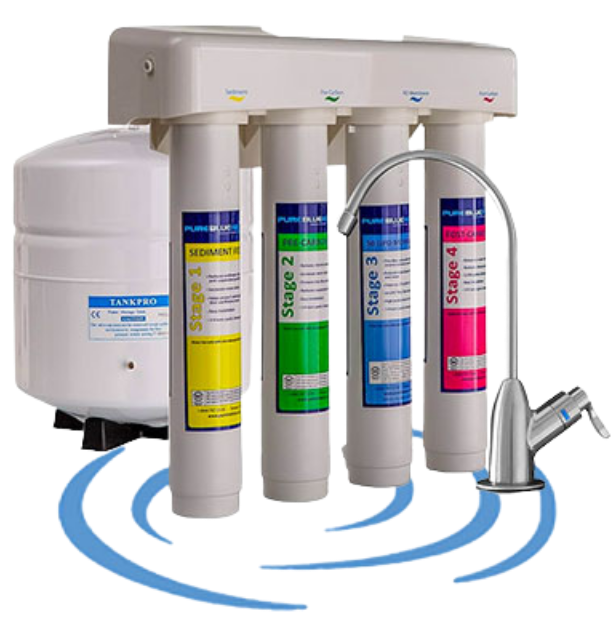
Get a free reverse osmosis drinking water system with the purchase of any whole-home water purification system.
*Cannot be combined with other offers. Mention this special when you call.