Reach Out Today
Please provide your email address so that we can stay in touch and answer any questions you have! We will be reaching back out shortly.


Hear from Our Customers
Your water heater stops fighting scale buildup and starts heating efficiently again. That alone can cut your heating costs by up to 24%, according to Water Quality Research Foundation studies.
Your dishwasher and washing machine last years longer because mineral deposits aren’t clogging valves or coating heating elements. Glasses come out clear. Laundry feels softer. Shower doors stay cleaner without that chalky film you’ve been scrubbing off every week.
A salt-free water conditioner uses template assisted crystallization to change how calcium and magnesium behave in your water. The minerals stay in the water, but they can’t stick to your pipes, fixtures, or appliances anymore. You get scale prevention without adding sodium to your drinking water, without creating wastewater, and without hauling 40-pound salt bags every month.
Your plumbing system stops narrowing from the inside out. Water pressure stays consistent. Appliances run at full efficiency instead of working harder and wearing out faster.
We hold an A+ Better Business Bureau rating with five stars and zero complaints. That’s not marketing language. That’s a track record you can verify before you call.
We’re members of the National Water Quality Association, which means we follow professional standards for water treatment installation and service. We’re not a national franchise that sells systems and disappears. We’re based in Longbranch, and we’ve built our reputation on doing what we say we’ll do.
Longbranch pulls water from the Floridan Aquifer, which runs through limestone and picks up calcium and magnesium on the way up. That’s why your water hardness typically sits between 100 and 300 parts per million. A saltless water system handles that range without chemicals, electricity, or drain lines. We size systems based on your actual water usage and hardness levels, not guesswork.
We start with a water test at your home. Hardness levels vary across Longbranch, and your system needs to match your water chemistry and household size. Testing takes about 20 minutes and tells us exactly what you’re dealing with.
Once we know your water profile, we recommend a system that fits your flow rate and usage patterns. Installation typically takes a few hours. The system goes inline with your main water supply, before it splits off to your water heater and fixtures. No drain line, no electrical hookup, no salt storage.
Inside the system, water flows through a catalytic media that triggers template assisted crystallization. Calcium and magnesium transform into microscopic crystals that stay suspended in the water instead of bonding to surfaces. The process is physical, not chemical. Nothing gets added to your water, and nothing gets removed.
After installation, the system runs on its own. You’re not checking salt levels or programming regeneration cycles. Maintenance involves an occasional inspection and media replacement every few years, depending on your water quality and usage. That’s it.

Ready to get started?
A properly sized salt-free system handles your entire home’s water supply. Every faucet, every appliance, every shower gets conditioned water. You’re not treating just the hot water or just the kitchen. The whole house benefits.
In Longbranch, where summer humidity and heat already stress your HVAC and water heater, reducing scale buildup directly impacts your energy bills. Water heaters maintain 100% efficiency with treated water, compared to a 25% efficiency drop with untreated hard water. Your dishwasher and washing machine use less detergent and run more effective cycles because soap actually lathers instead of reacting with minerals.
You’re also avoiding the environmental issues that come with traditional salt-based softeners. Florida’s aquifer recharge areas and surface water don’t need more sodium. A saltless water system creates zero wastewater discharge, uses no electricity, and doesn’t add sodium to your drinking water. That matters if anyone in your household monitors sodium intake for health reasons.
The system itself typically lasts 10 to 20 years with minimal maintenance. Compare that to traditional softeners that need salt refills, regular cleaning, and more frequent repairs. You’re making a one-time investment that protects everything water touches in your home.
Yes, but it works differently than a traditional softener. A salt-free system doesn’t remove calcium and magnesium from your water. Instead, it changes their structure so they can’t bond to surfaces.
The process is called template assisted crystallization. As water flows through the system’s catalytic media, hard minerals form microscopic crystals. These crystals stay suspended in the water instead of sticking to your pipes, water heater elements, or fixture surfaces.
You’ll still have minerals in your water, which is actually fine for drinking. But those minerals won’t coat your plumbing or build up inside your appliances. Your water heater stays efficient, your dishwasher doesn’t get clogged, and your showerhead doesn’t develop that white crusty buildup. The scale prevention is real and measurable.
Upfront costs for salt-free systems and traditional softeners are often similar, but the long-term expense is where they differ. A salt-free system has no ongoing costs for salt, electricity, or wastewater discharge.
Traditional softeners need 40-pound bags of salt every few weeks, depending on your water usage and hardness. That’s $5 to $10 per bag, plus the hassle of hauling them. You’re also running a system that uses electricity for regeneration cycles and sends sodium-rich wastewater down the drain.
A saltless water system runs passively with no power and no consumables. Maintenance is minimal—usually just a media replacement every 5 to 10 years, depending on your water quality. Over a 10-year period, you’re saving hundreds of dollars in salt and electricity while avoiding the environmental impact of brine discharge. The system pays for itself through lower operating costs and longer appliance life.
Your water won’t feel slippery like it does with a salt-based softener, because the minerals are still present. Some people prefer this. Others expect that slick feeling and think something’s wrong when they don’t get it.
What you will notice is fewer hard water symptoms. Soap lathers better. Shampoo rinses cleaner. Your skin and hair don’t feel as dry or heavy after a shower. Dishes come out of the dishwasher without spots, and your glassware stays clear.
The difference shows up more in what doesn’t happen. You stop scrubbing soap scum off shower doors every week. Your faucets don’t develop mineral buildup. Your white laundry stays white instead of turning dingy. If you’ve been dealing with hard water problems in Longbranch, you’ll see the improvement within a few weeks of installation.
A quality salt-free system typically lasts 10 to 20 years, depending on your water hardness, daily usage, and how well the system was sized for your home. That’s longer than most traditional softeners, which average 5 to 10 years before major repairs or replacement.
The catalytic media inside the system does eventually need replacement, usually every 5 to 10 years. That’s a straightforward service call, not a full system replacement. The tank and plumbing connections stay in place.
Proper sizing matters. If your system is undersized for your household’s water demand, it’ll work harder and wear out faster. That’s why we test your water and calculate your peak flow rate before recommending a system. A correctly sized unit handles your water volume without strain, which extends its lifespan and keeps it working effectively.
Yes. Longbranch’s water comes from the Floridan Aquifer, and hardness typically ranges from 100 to 300 parts per million. That’s moderate to hard, and it’s well within the range that salt-free systems handle effectively.
The key is matching the system to your specific hardness level and household size. A family of four using 80 gallons per person per day needs a different flow rate and media volume than a couple using 50 gallons per person. We test your water on-site to get an accurate hardness reading, then size the system accordingly.
Longbranch water also contains trace minerals and organic matter that can affect system performance if ignored. That’s why we look at total dissolved solids, pH, and iron levels during testing. If your water has high iron or sediment, we may recommend a pre-filter to protect the salt-free system and keep it running efficiently. The goal is a system that works with your water, not against it.
Please provide your email address so that we can stay in touch and answer any questions you have! We will be reaching back out shortly.
"*" indicates required fields
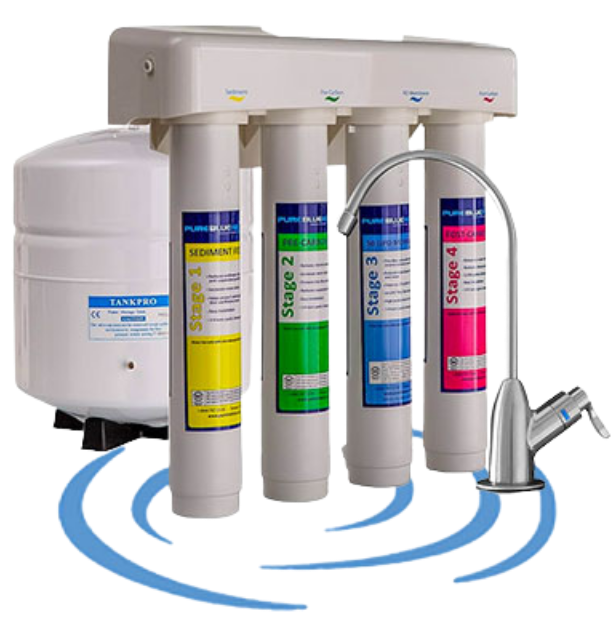
Get a free reverse osmosis drinking water system with the purchase of any whole-home water purification system.
*Cannot be combined with other offers. Mention this special when you call.