Reach Out Today
Please provide your email address so that we can stay in touch and answer any questions you have! We will be reaching back out shortly.


Hear from Our Customers
Your shower doors stay clearer longer. Your coffee maker doesn’t crust over in six months. Your water heater isn’t working 30% harder just to do its job.
That’s what happens when you address Lake Eola Heights water at 17.2 grains per gallon of hardness without stripping out the minerals your body actually needs. A salt-free water conditioner transforms calcium and magnesium into microscopic crystals that flow right through your plumbing instead of sticking to every surface they touch.
You’re not adding chemicals. You’re not dumping salt into a tank every month. You’re not waiting for a regeneration cycle or paying for electricity to run a system 24/7. The water coming into your home gets conditioned as it flows through, and everything downstream stays protected.
This is whole-house scale prevention that works with your water, not against it. Your appliances last longer. Your fixtures stay cleaner. Your family still gets the calcium and magnesium that traditional softeners remove. And you’re done buying salt.
We have an A-rating with the Better Business Bureau and a 5-star rating with zero complaints. We’re members of the National Water Quality Association, and we’ve spent over 50 years installing water treatment systems for Florida homeowners who are tired of dealing with some of the hardest water in the country.
Lake Eola Heights gets its water from Orange County Utilities, which serves over 1.3 million residents pulling from Florida’s limestone-rich aquifers. That geology creates the mineral content that’s destroying your appliances and coating your fixtures. We test your specific water, design a system based on what’s actually in it, and install a saltless water system that handles your household’s flow rate and usage.
We offer a $500 discount for military members and first responders because we believe in supporting the people who support our community. When you call us, you’re working with a local team that understands exactly what Lake Eola Heights water does to your home.
We start with water testing. Not a generic assessment—an actual analysis of what’s in your water and how much of it. That tells us what size system you need and what media will work best for your household.
Once we know what we’re dealing with, we design a system around your home’s flow rate and daily water usage. A family of four uses water differently than a couple or a household of six. The system has to keep up without creating pressure drops or bottlenecks.
Installation happens at your main water line so every faucet, fixture, and appliance gets conditioned water. The media inside uses Template Assisted Crystallization to change the structure of calcium and magnesium as water flows through. Those minerals turn into crystals that don’t bond to surfaces. They stay suspended in the water and wash down the drain.
There’s no programming, no regeneration cycle, no brine tank to monitor. The system runs continuously without electricity. You’ll start noticing less buildup on fixtures within a few weeks, and your appliances stop accumulating the scale that shortens their lifespan. Media replacement happens every 5 to 7 years depending on your water quality and usage—that’s the only maintenance.

Ready to get started?
Every system we install is sized specifically for your home based on actual water test results. You’re not getting an off-the-shelf unit that might be too small or unnecessarily oversized. We match the system to your household’s peak flow demand and daily usage so you never run out of conditioned water.
The hard water conditioner installs at your main line and protects everything downstream—every shower, sink, appliance, and water-using fixture in your home. You’re not treating water at individual points of use. You’re conditioning all of it before it reaches your plumbing.
Because Lake Eola Heights water is extremely hard, you need a system that can handle high mineral content without constant maintenance. Our saltless systems don’t require electricity, don’t waste water during regeneration, and don’t add sodium to your water. If you’re on a septic system, there’s no brine discharge to worry about. If your city has restrictions on salt discharge, you’re already in compliance.
You keep the beneficial minerals in your water while preventing the damage those same minerals cause when they’re left untreated. That’s the advantage of a water descaler system over traditional ion exchange softeners—you get scale protection and mineral retention in one system with zero ongoing operating costs.
Yes, but it works differently than a traditional softener, and that difference matters depending on what you’re trying to accomplish. A salt-free water conditioner doesn’t remove hardness minerals—it changes their structure so they can’t form scale. That means your water still tests as “hard” but it doesn’t act hard.
For Lake Eola Heights water at 17.2 grains per gallon, a salt-free system prevents scale buildup in your pipes, on your fixtures, and inside your appliances. You won’t see the crusty white deposits on faucets and showerheads. Your water heater won’t accumulate the scale that makes it work harder and fail sooner. Your dishwasher and washing machine stay cleaner longer.
What you won’t get is the slippery feel of softened water or the ability to create excess soap lather. Some people prefer that, others don’t. If your main goal is protecting your plumbing and appliances without the maintenance and operating costs of a traditional softener, a salt-free system handles Orlando’s hard water just fine.
Almost none. There’s no salt to add, no brine tank to monitor, no regeneration cycles to program, and no electricity to power the system. It runs continuously as water flows through, and the media inside does its job without any input from you.
The only maintenance is replacing the media every 5 to 7 years, and that timeline depends on your water quality and how much water your household uses. When it’s time, we handle the media replacement. You don’t need to do anything between installation and that first media change.
Compare that to a traditional softener, which requires regular salt refills that can cost $100 to $200 per year depending on your usage. You’re also checking brine levels, making sure regeneration cycles are running correctly, and using electricity to power the control valve. A saltless system eliminates all of that. You install it, and it works.
Yes. That’s one of the main differences between a salt-free conditioner and a traditional ion exchange softener. A softener removes calcium and magnesium and replaces them with sodium. A salt-free system leaves those minerals in your water—it just changes their form so they don’t stick to surfaces and create scale.
Calcium and magnesium are essential minerals that contribute to your daily nutritional intake. If you’re drinking softened water, you’re losing those minerals and adding sodium instead. For some people, especially those watching their sodium intake, that’s a problem.
With a water descaler system, your water still contains the minerals your body uses, but those minerals won’t destroy your plumbing and appliances. You’re getting the health benefits without the household damage. If you want to remove minerals entirely, that’s what a softener does. If you want to keep them while preventing scale, that’s what a salt-free system does.
The system itself can last 15 to 20 years or more with proper installation and minimal maintenance. The media inside needs replacement every 5 to 7 years depending on your water quality and household usage, but the tank, fittings, and overall system structure are built to last.
Florida water is tough on treatment systems because of the high mineral content and the heat, but a quality salt-free system is designed to handle it. There are no moving parts to wear out, no electronic controls to fail, and no regeneration cycles that create mechanical stress. It’s a simpler system with fewer failure points.
When you compare that to a traditional softener, which has control valves, brine tanks, and moving parts that can break down, a saltless system has a longer functional lifespan with less that can go wrong. You’re investing in a system that protects your home for decades, not just a few years.
A water softener removes hardness minerals through ion exchange and replaces them with sodium. A water conditioner changes the structure of those minerals so they stay in your water but don’t form scale. Both prevent hard water damage, but they do it in completely different ways.
If you want water that feels slippery and creates lots of soap lather, a softener does that. If you want to eliminate minerals entirely, a softener does that too. But it requires salt, electricity, regular maintenance, and it discharges brine during regeneration. Some Florida cities restrict that discharge, and if you’re on a septic system, the extra sodium load can cause problems.
A water conditioner—specifically a salt-free conditioner—prevents scale without removing minerals, without using salt, and without wasting water or electricity. Your water doesn’t feel different, but your plumbing, appliances, and fixtures stay protected. It’s a simpler system with lower operating costs and no environmental impact. Which one is better depends on what you want your water to do and how much maintenance you’re willing to deal with.
Please provide your email address so that we can stay in touch and answer any questions you have! We will be reaching back out shortly.
"*" indicates required fields
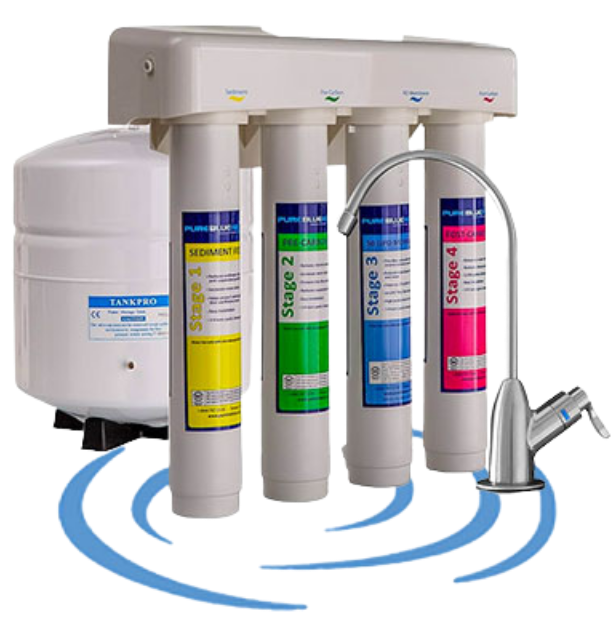
Get a free reverse osmosis drinking water system with the purchase of any whole-home water purification system.
*Cannot be combined with other offers. Mention this special when you call.