Reach Out Today
Please provide your email address so that we can stay in touch and answer any questions you have! We will be reaching back out shortly.


Hear from Our Customers
Your water heater stops building up that thick mineral layer that kills efficiency and drives up your electric bill. Your showerheads and faucets stay clear instead of clogging with white buildup. Your dishwasher actually cleans dishes without leaving spots, and your washing machine stops wearing out your clothes 40% faster than it should.
A salt-free water conditioner treats the minerals in your water differently than a traditional softener. Instead of removing calcium and magnesium, it changes their structure so they can’t stick to your pipes, appliances, or fixtures. You get 99.6% scale prevention using Template Assisted Crystallization technology—without adding salt, using electricity, or creating wastewater that damages septic systems and local waterways.
The minerals stay in your water, which matters more than most people realize. Calcium and magnesium are good for you. They improve taste and support bone health. You’re just stopping them from destroying everything they touch in your home.
We have an A+ rating with the Better Business Bureau and five stars with zero complaints. That doesn’t happen by accident in an industry where national companies oversell systems and under-deliver on service.
We’re members of the National Water Quality Association, and we’ve spent over 50 years learning exactly how Florida’s limestone-heavy aquifers affect your water. Lacota sits right in the middle of some of the hardest water in the state—regularly testing between 200-300 parts per million. That’s not just “hard.” That’s destructive if you don’t address it correctly.
We offer a $500 discount to military members and first responders because we believe in supporting the people who serve this community. And we’re involved with the Tunnels to Towers Foundation because some things matter more than business.
We start with a water test at your home in Lacota, FL. Not a guess, not a generic recommendation—a real analysis of what’s in your water and how hard it actually is. That tells us whether a saltless water system makes sense for your situation or if you need a different approach.
If a salt-free water conditioner fits, we install it at your main water line where it treats all the water entering your home. The system uses TAC media—small beads that turn dissolved minerals into microscopic crystals that can’t bond to surfaces. It’s a physical process, not a chemical one, so there’s nothing to add, no electricity to run, and no backwash cycle dumping brine into your septic or the environment.
Once it’s in, you’re done. There’s no maintenance schedule where you’re checking salt levels or cleaning resin tanks. You get whole-house scale prevention that works silently in the background while your appliances, pipes, and fixtures stay protected. The media typically lasts years before it needs replacing, and when it does, it’s a straightforward swap—not a service nightmare.

Ready to get started?
Your water heater is the first thing that benefits. In Lacota, FL, where water hardness averages over 200 PPM, mineral buildup inside tanks and on heating elements is the number one reason water heaters fail early. A hard water conditioner stops that buildup before it starts, which means your heater runs more efficiently and lasts longer.
Your plumbing system is next. Scale narrows the diameter of your pipes over time, reducing water pressure and increasing the chance of leaks or breaks. You’ll notice it first in your shower—weak flow, inconsistent temperature. A water softener alternative prevents that narrowing without removing the minerals your body actually needs.
Then there’s everything else: your dishwasher, washing machine, coffee maker, ice maker, and every faucet and fixture in your house. Scale clogs spray arms, damages seals, and leaves residue on everything. With a saltless water system, those problems stop. Your appliances work the way they’re supposed to, and you’re not scrubbing white buildup off your showerhead every other month.
No, and that’s an important distinction. A traditional water softener removes calcium and magnesium through an ion exchange process, which technically “softens” the water by eliminating hardness minerals. A salt-free system doesn’t remove those minerals—it changes their structure so they stay suspended in the water instead of bonding to surfaces.
You won’t get the slippery feel in the shower that softened water creates, and you won’t see soap lather quite as much. But you will stop scale buildup in your pipes, on your fixtures, and inside your appliances. For most people in Lacota, FL, that’s the actual problem they’re trying to solve—not whether their water feels different, but whether it’s destroying their home.
If you have extremely hard water above 300 PPM or specific needs like certain industrial applications, a traditional softener might make more sense. But for typical residential use where you want scale prevention without the environmental impact, maintenance, and operating costs of a salt-based system, a water descaler system does the job.
You might see some spotting, but it’ll be significantly less than what you’re dealing with now. The minerals are still in your water—they’re just not sticking and building up the way they do with untreated hard water. Spots happen when water evaporates and leaves minerals behind, and since those minerals are still present, you can get some residue.
The difference is that the spots wipe off easily instead of forming thick, crusty deposits that require serious scrubbing or chemical cleaners to remove. Most people find that a quick wipe-down after a shower or running a rinse aid in the dishwasher solves any minor spotting issues.
If spotting is your primary concern and you want it completely eliminated, a traditional softener removes the minerals entirely, so you won’t see spots at all. But you’ll trade that for the cost and hassle of salt, the environmental impact of brine discharge, and losing the health benefits of calcium and magnesium in your drinking water. It’s about what matters most to you.
Most systems cost less than $50 per year to operate, and many cost nothing at all after installation. There’s no electricity required, no salt to buy, and no water wasted in a backwash cycle. Your only real expense is occasional media replacement, which typically happens every few years depending on your water quality and usage.
Compare that to a traditional softener where you’re buying salt bags every month, using electricity to run the control valve and regeneration cycles, and sending hundreds of gallons of water down the drain during backwashing. Those costs add up fast—usually a few hundred dollars per year at minimum.
The upfront cost of a quality salt-free water conditioner is often comparable to or slightly less than a traditional softener, and the long-term savings are significant. You’re also protecting your appliances from scale damage, which means fewer repairs and replacements over time. When your water heater lasts 12 years instead of 7 because it’s not fighting mineral buildup, that’s real money saved.
Yes, and it’s actually one of the best reasons to choose a saltless water system over a traditional softener. Salt-based softeners discharge brine during their regeneration cycle, and that brine can damage the bacterial balance in your septic tank. Those bacteria are what break down waste, and when you disrupt them with regular salt dumps, your septic system doesn’t work as efficiently.
Some areas in Florida have restrictions or outright bans on salt-based softeners because of the environmental impact on septic systems and local water supplies. A salt-free system produces zero wastewater and adds nothing to your septic tank, so there’s no impact at all.
If you’re in Lacota, FL on a septic system and dealing with hard water, a water softener alternative is often your only practical option. It gives you scale prevention without creating problems for your septic system or violating any local regulations about brine discharge.
TAC media typically lasts between three to five years in residential applications, though that can vary based on your water hardness, daily usage, and water quality. The media doesn’t “wear out” in the traditional sense—it gradually loses its ability to effectively crystallize minerals as it gets coated with sediment and other particles in your water.
When it’s time to replace the media, it’s a straightforward process. You’re not replacing the entire system, just the media inside the tank. Most homeowners have it done during a routine service visit, and the system is back online the same day.
Some manufacturers offer longer-lasting media or systems with lifetime warranties on certain components, which can extend the time between replacements. We test your system during annual checkups to see how the media is performing and let you know when replacement is getting close. You won’t wake up one day to a system that suddenly stopped working—performance declines gradually, and we catch it before it becomes a problem.
Please provide your email address so that we can stay in touch and answer any questions you have! We will be reaching back out shortly.
"*" indicates required fields
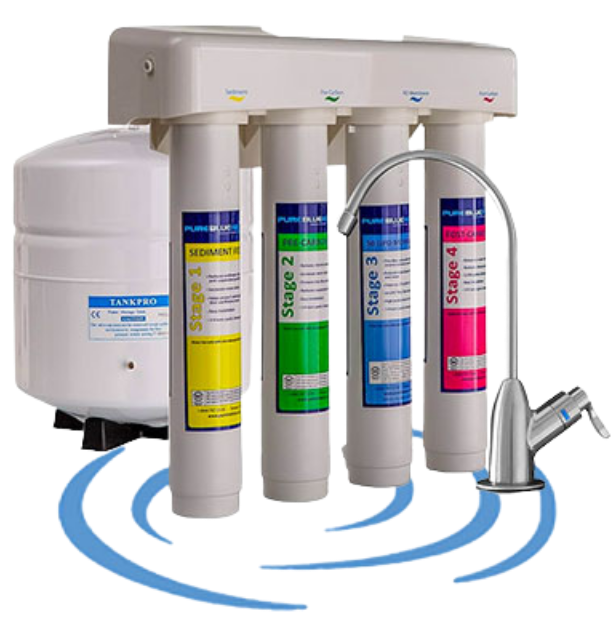
Get a free reverse osmosis drinking water system with the purchase of any whole-home water purification system.
*Cannot be combined with other offers. Mention this special when you call.