Reach Out Today
Please provide your email address so that we can stay in touch and answer any questions you have! We will be reaching back out shortly.


Hear from Our Customers
When your water is running between 10 and 15 grains per gallon — which is exactly where Hammock at Fenney sits — scale doesn’t just show up on your faucets. It’s quietly building inside your water heater, your dishwasher, and the pipes behind your walls. Most homeowners don’t notice until something fails. By then, you’re looking at a repair or replacement that could run well into the thousands.
A salt free conditioner using Template Assisted Crystallization changes that equation. The minerals stay in the water — they just can’t bond to surfaces anymore. What you get on the other side is cleaner fixtures, appliances that run the way they’re supposed to, and a water heater that isn’t working twice as hard because of scale buildup cutting its efficiency.
For Hammock at Fenney specifically, two things make this more relevant than most places. First, you chose this community for low-maintenance living — and a system that runs without salt deliveries, regeneration cycles, or monthly attention fits that lifestyle exactly. Second, if you’re managing blood pressure or following a low-sodium diet, a traditional salt softener adds sodium to every glass of water you drink. A salt free system adds nothing. The minerals stay in their natural form, and your water stays clean without chemistry.
We’ve been treating Central Florida’s hard water for more than 50 years. That’s not a marketing line — it means we’ve been working with the Floridan Aquifer, the same groundwater source feeding every home in Hammock at Fenney, longer than most of our competitors have been in business. We’re based out of Leesburg, about 30 miles from Hammock at Fenney, and we know the water utility system serving Wildwood and the surrounding Sumter County communities firsthand.
We hold an A+ rating with the Better Business Bureau — with zero complaints on record. In this industry, that’s genuinely rare. We’re also members of the National Water Quality Association, which requires real examinations, a professional code of ethics, and ongoing education. These aren’t participation trophies. They’re the kind of credentials that tell you a company takes what it does seriously and has the track record to back it up.
It starts with a water test. Before anything gets installed, we evaluate what’s actually in your water — hardness level, mineral content, and any other factors that affect which system is the right fit for your home. In Hammock at Fenney, that almost always means addressing significant calcium and magnesium levels, but the test confirms the specifics rather than assuming.
From there, the right salt free system gets sized for your home and installed at the main water line — typically where water enters the house — so every fixture, appliance, and tap in the home is covered from that point forward. The system works through a process called Template Assisted Crystallization, or TAC. As water passes through the media, calcium and magnesium are converted into microscopic crystals that stay suspended in the water and flow through your plumbing without attaching to surfaces. No bonding, no scale.
Installation is handled by our own trained team — not a subcontractor — and is done in compliance with The Villages’ community standards. The system requires no electricity, no drain connection, and no ongoing maintenance beyond a media change every five to seven years. Once it’s in, it runs. That’s it.
Ready to get started?
Hammock at Fenney homes — whether you’re in a Cottage home or a Designer home with a screened lanai overlooking the Red Fox Golf Course — share one thing in common: they’re all pulling from the same Floridan Aquifer water that runs at some of the hardest mineral levels in the state. The salt free systems we install are sized and configured specifically for your home’s water usage and flow rate, not pulled off a shelf and dropped in.
The system protects everything the water touches. That means your water heater, your dishwasher, your washing machine, your faucets, and the plumbing inside your walls. For newer construction homes in the Hammock at Fenney area, getting treatment in early is especially important — scale damage is cumulative, and the sooner it’s addressed, the more of your appliances’ lifespan you protect. For homeowners who split time between Hammock at Fenney and another residence, the zero-maintenance nature of this system means there’s nothing to manage when you’re away.
We also offer whole-house filtration and residential reverse osmosis as companion services for homeowners who want to go further than scale prevention alone. If your goal is full whole-house purification — not just conditioning — we can walk you through what that looks like for your specific home and water profile.
The water in Hammock at Fenney comes entirely from the Upper Floridan Aquifer, which runs through some of the most mineral-dense geology in the southeastern United States. In The Villages area — including the Wildwood and South Sumter utility districts that serve Hammock at Fenney — water hardness is documented at roughly 10 to 15 grains per gallon. Anything above 10.5 GPG is classified as “very hard” by industry standards. You’re at or above that threshold every day.
What that means practically is that scale is building inside your water heater, your dishwasher, and your pipes whether you can see it or not. A water heater operating in very hard water can lose up to 48% of its energy efficiency as scale accumulates on the heating element — which shows up directly on your utility bill. When it eventually fails, replacement runs $1,500 to $3,000 on average. The white crust on your faucets and the spots on your glassware are just the visible part of a problem that’s also happening where you can’t see it.
A traditional salt-based water softener removes calcium and magnesium from the water entirely through a process called ion exchange — it swaps those minerals out for sodium ions. The result is water that feels noticeably slippery, and it does prevent scale effectively. But it also adds sodium to your water supply, requires regular salt refills, runs regeneration cycles that use water and electricity, and discharges brine into the wastewater system.
A salt free conditioner using Template Assisted Crystallization doesn’t remove the minerals — it changes their form. The calcium and magnesium get converted into tiny crystals that can’t stick to pipe walls or appliance surfaces. Your water doesn’t feel different, but the scale stops forming. For Hammock at Fenney residents managing heart health or following a low-sodium diet, this distinction matters. You’re not adding anything to your water. And for a community built around low-maintenance living, a system with no salt to buy, no regeneration to schedule, and no ongoing upkeep is a genuinely better fit than a softener that demands regular attention.
Skepticism here is fair — the water treatment market has no shortage of products that overpromise. The honest answer is that it depends entirely on the technology. Magnetic and electronic water conditioners, which you’ll see advertised online for under $100, have very limited independent evidence behind them. Template Assisted Crystallization is a different category. It has been independently tested under the DVGW Standard W512 protocol — the recognized international benchmark for scale prevention technology — and demonstrated 90% or greater scale prevention effectiveness consistently.
That said, it’s worth being clear about what it does and doesn’t do. A salt free TAC system prevents scale from forming. It does not make your water feel soft or slippery the way a salt softener does. If you’re expecting that tactile difference, you won’t get it with this system. What you will get is protection for your appliances and plumbing, which is the actual problem worth solving for most homeowners. We’ll test your water before recommending anything, so the system you get is matched to what your water actually needs — not what’s easiest to sell.
It’s actually one of the best fits. A significant portion of Hammock at Fenney residents spend part of the year elsewhere — and a traditional salt-based softener is a real inconvenience for part-time residents. Salt tanks run out. Regeneration cycles need monitoring. If you’re gone for three or four months, you’re either arranging for someone to manage it or coming back to a system that’s been sitting idle and potentially causing issues.
A salt free TAC system requires none of that. There’s no salt to refill, no regeneration cycle to schedule, and no monitoring needed during extended absences. The system runs passively — it conditions water as it flows through and does nothing when no water is flowing. You can leave for the summer and come back to Hammock at Fenney knowing your water heater, dishwasher, and plumbing have been protected the entire time without anyone lifting a finger. For seasonal residents, that peace of mind is genuinely worth something.
This is a question worth asking, especially in a community built around one of Central Florida’s natural springs. Traditional salt-based softeners discharge brine — concentrated salt waste — into the wastewater system. In Florida, where the health of springs like Fenney Spring and the broader Floridan Aquifer is an ongoing environmental concern, that salt loading is a real issue. Florida’s springs are sensitive to mineral and chemical inputs, and brine discharge from residential softeners contributes to that problem at scale.
A salt free system produces zero brine discharge. It uses no electricity, generates no wastewater, and adds nothing to the water that leaves your home. The minerals in your water are physically transformed, not chemically treated. For Hammock at Fenney residents who chose this community specifically because of its oak hammock preserves, nature trails, and the natural spring environment, a salt free system is the water treatment option that aligns with the environment you moved here to enjoy — not one that works against it.
Please provide your email address so that we can stay in touch and answer any questions you have! We will be reaching back out shortly.
"*" indicates required fields
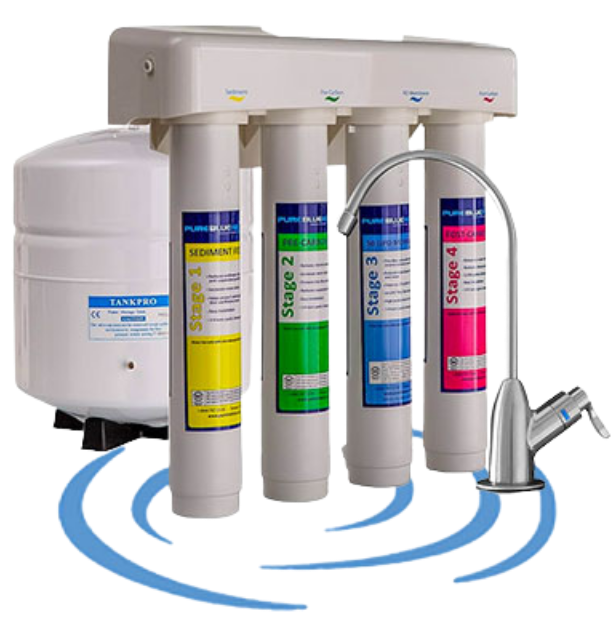
Get a free reverse osmosis drinking water system with the purchase of any whole-home water purification system.
*Cannot be combined with other offers. Mention this special when you call.