Reach Out Today
Please provide your email address so that we can stay in touch and answer any questions you have! We will be reaching back out shortly.


Hear from Our Customers

Scale buildup is quiet damage. You don’t see it happening, but you eventually see the results — a water heater that fails early, a showerhead that loses pressure, glassware that comes out of the dishwasher looking cloudy no matter what you do. At 10–15 grains per gallon, Dunedin’s municipal water supply sits firmly in the hard-to-very-hard range, and that hardness is consistent year-round. There’s no rainy season that softens things up, no seasonal break. It’s a constant.
A salt free anti-scale system changes that. The calcium and magnesium minerals stay in your water — they don’t get stripped out — but they get transformed into a crystallized form that can’t bond to pipe walls, heating elements, or fixture surfaces. The damage mechanism is neutralized. What you’re left with is water that flows through your home without quietly destroying everything it touches.
For Dunedin homeowners specifically, this matters on two levels. First, with median home values above $423,000, the plumbing, water heater, and appliances inside your home represent a real portion of that investment. Protecting them isn’t optional maintenance — it’s basic ownership. Second, Pinellas County Utilities uses chloramines as a disinfectant, which are harder to remove than standard chlorine and affect the way your water tastes and smells. Pairing a salt free conditioning system with whole-house filtration addresses both problems at once.
Quality Safe Water of Florida LLC has been working on Florida water problems for more than five decades. That’s not a marketing number — it means we’ve dealt with the full range of what Florida water systems throw at homeowners, including the blended municipal supply that Pinellas County runs, which combines Floridan Aquifer groundwater, surface water, and desalinated Gulf water. It’s a different animal than inland Florida wells, and it takes someone who actually knows the difference.
Our BBB record is A+ with zero complaints on file. In a local market where at least one Dunedin-area water treatment company has a complaint on record for damaging a customer’s water heater during a service call, that distinction is worth paying attention to. We’re also members of the Water Quality Association, which sets the professional and ethical standards most consumers never think to ask about — until something goes wrong.
If you’re active military, a veteran, or a first responder, we offer a straightforward $500 discount. No fine print.

It starts with a free water test. Before anything gets recommended or installed, one of our technicians assesses your actual water conditions — the hardness level, the chloramine presence, the flow rate coming into your home. Dunedin’s municipal supply through Tampa Bay Water runs at 10–15 GPG, but your specific home’s conditions can vary depending on your plumbing age, fixture condition, and how long scale has already been accumulating. Homes built in the 1950s, 60s, and 70s — and Dunedin has plenty of them — often have decades of mineral buildup already sitting in their pipes. The water test tells you what you’re actually dealing with.
From there, the system gets sized correctly for your home’s flow rate and water pressure. This is where professional installation matters. A system that’s undersized for your home’s demand won’t condition the water effectively. A system that’s installed incorrectly can void the manufacturer warranty and leave you with the same problems you started with. We handle the installation from start to finish, and because we only do water treatment — not plumbing, not water heaters — every job gets our full attention.
Once the system is running, there’s nothing to manage. No salt to buy or haul. No brine tank to monitor. No regeneration cycles. If you’re one of Dunedin’s seasonal residents who heads north after spring training season and comes back in the fall, the system runs the same whether you’re home or not. That’s the point.
Ready to get started?
A whole-house salt free treatment system installs at the point of entry — where the water line enters your home — so every tap, appliance, shower, and fixture gets conditioned water from the start. You’re not treating one faucet or one zone. You’re protecting the entire system.
The core technology is Template Assisted Crystallization, or TAC. Independent testing under the DVGW W512 protocol — the industry’s most rigorous standard for this type of system — found TAC achieves over 90% scale prevention effectiveness. That’s not a manufacturer claim. That’s third-party validation. It consistently outperforms magnetic and electronic alternatives that get marketed aggressively but don’t hold up under controlled testing. For Dunedin’s 10–15 GPG water hardness, TAC is appropriately matched to the actual problem.
Because the system doesn’t use salt, it produces zero brine discharge. For homeowners near the Intracoastal Waterway, the Gulf Coast, or within a short drive of Honeymoon Island State Park and Caladesi Island, that’s the responsible choice. Traditional softeners discharge sodium-laden wastewater back into the system. A salt free conditioner doesn’t. It also uses no electricity and requires no ongoing consumables, which matters especially for Dunedin’s retiree and fixed-income homeowners who’ve been paying $240–$600 a year in salt costs with a conventional softener. That expense simply goes away.
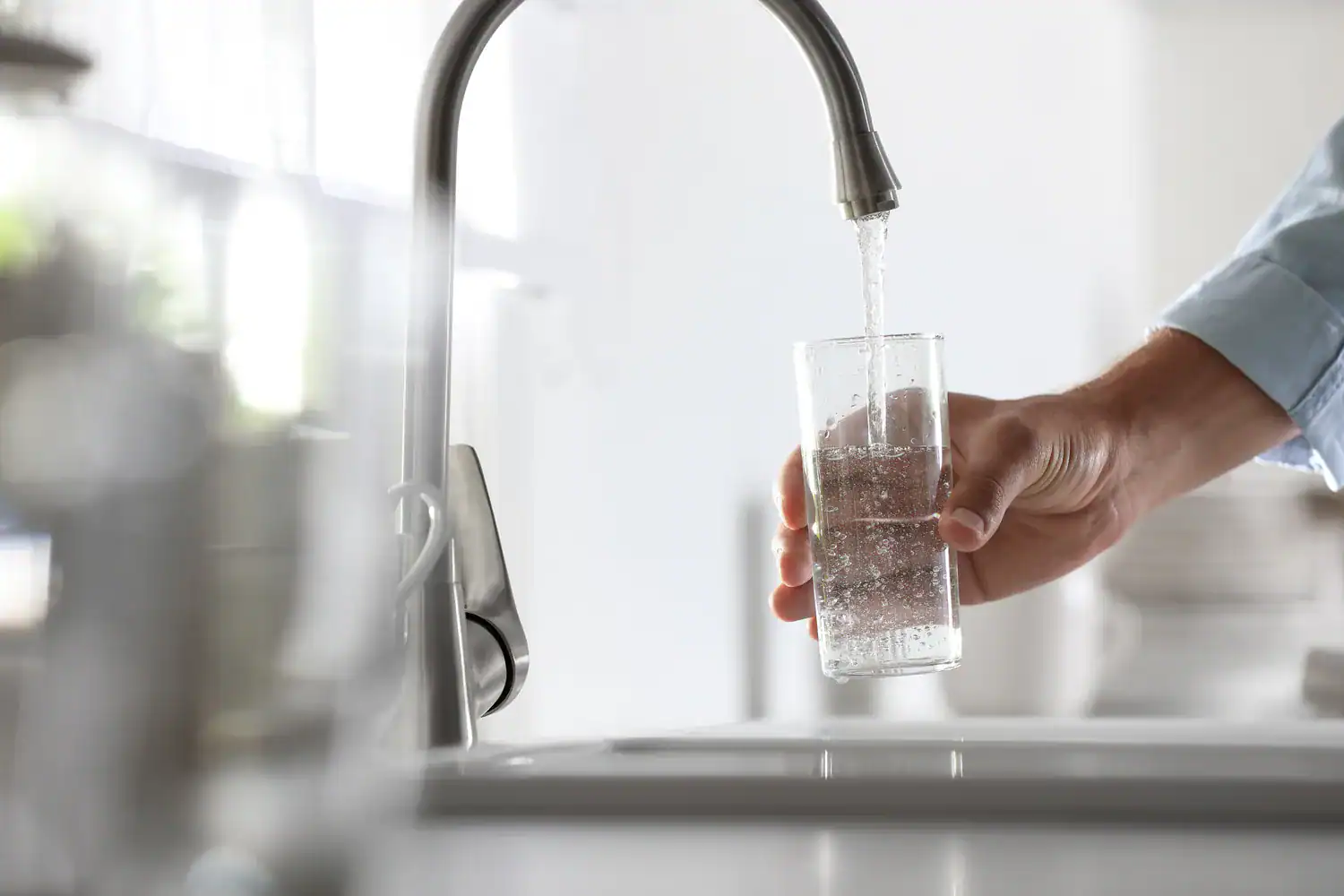
Pinellas County Utilities officially reports water hardness at 10–15 grains per gallon. The adjacent Clearwater water system — which draws from the same regional Tampa Bay Water supply — measured 178 mg/L, or roughly 10.4 GPG, in recent quality reports. Both fall squarely in the “hard” classification, with the upper end of Pinellas County’s range pushing into “very hard” territory. That’s not a borderline reading. It’s enough to cause consistent, measurable damage over time.
What that looks like in practice: water heaters lose efficiency as scale coats the heating element, forcing them to work harder and fail earlier than they should. Dishwashers leave mineral film on glassware. Showerheads clog gradually. Washing machines wear faster. None of it is dramatic or sudden — it’s slow, quiet degradation that adds up to premature appliance replacement and higher energy bills. In a Dunedin home worth $400,000 or more, that’s not a small thing to ignore.
The skepticism is fair. The water treatment industry has a long history of overselling products that don’t perform — magnetic devices, electronic descalers, and various “no-salt” systems that make big promises and deliver inconsistent results. Template Assisted Crystallization is different, and the difference is documented.
The DVGW W512 testing protocol is the most rigorous independent standard for evaluating scale prevention technology. TAC systems tested under W512 consistently achieve over 90% scale prevention effectiveness. That figure comes from controlled, third-party testing — not manufacturer marketing materials. Magnetic and electronic alternatives tested under the same protocol significantly underperform by comparison. TAC works by restructuring calcium and magnesium minerals into stable microscopic crystals that pass through your plumbing without bonding to any surface. Your water will still test “hard” — the minerals aren’t removed — but they can no longer form the scale deposits that damage your appliances and pipes. The chemistry is sound, the testing is real, and the results show up in your home over time.
A traditional ion-exchange water softener removes calcium and magnesium from your water entirely, replacing them with sodium ions. The result is genuinely soft water — it feels different on your skin, produces more lather with soap, and won’t leave scale deposits. But it comes with real tradeoffs. You’re adding sodium to your water, which some people on low-sodium diets or with certain health conditions want to avoid. The system requires a brine tank that needs regular salt refills — typically every 4–8 weeks depending on your household’s water use. And during regeneration cycles, it discharges salt-laden wastewater.
A salt free TAC conditioner doesn’t soften water in the technical sense — it conditions it. The minerals stay in your water, but they’re transformed so they can’t cause scale. There’s no sodium added, no salt to buy, no regeneration cycle, and no wastewater discharge. For Dunedin homeowners near the Gulf Coast and the Intracoastal Waterway, the zero-discharge aspect is a genuine environmental consideration, not just a selling point. For seasonal residents who spend months away from their Dunedin homes, the zero-maintenance aspect is equally significant — there’s nothing to monitor, refill, or service while you’re gone.
Yes, and here’s why that question is worth asking. Dunedin’s water doesn’t come from a single straightforward source. Tampa Bay Water blends Floridan Aquifer groundwater, surface water from the Alafia and Hillsborough Rivers, and desalinated seawater from Tampa Bay. That blended supply gets treated at the Keller Water Treatment Facility and distributed throughout Pinellas County at a rate of roughly 50–55 million gallons per day. The blend ratio can shift slightly by season, but the hardness consistently stays in the 10–15 GPG range — which is well within the effective operating range for TAC technology.
Pinellas County Utilities also uses chloramines rather than free chlorine as a disinfectant. Chloramines are harder to remove than standard chlorine and can affect taste and odor in ways that a conditioning system alone won’t address. If that’s a concern — and for many Dunedin homeowners it is — combining a TAC salt free system with a whole-house carbon filtration stage handles both issues. A proper water test before installation confirms exactly what your home’s supply looks like and ensures the system is matched correctly to your conditions.
TAC media — the crystallization material inside the conditioning tank — typically lasts 3–5 years before it needs to be replaced, depending on your water volume and hardness level. At Dunedin’s 10–15 GPG hardness, you’re on the higher end of the demand spectrum, so staying on top of that replacement schedule matters. Outside of that, there’s genuinely very little to do. No salt purchases, no brine tank monitoring, no regeneration cycles, no electricity consumption. The system runs passively.
This is one of the reasons salt free systems make particular sense for Dunedin’s significant seasonal resident population. If you’re a homeowner who spends part of the year away — whether that’s a Canadian snowbird connected to the Blue Jays spring training community or a northern retiree who summers elsewhere — you’re not coming home to a softener that ran out of salt three months ago and let hard water run untreated through your pipes the whole time. The TAC system doesn’t need you present to function. It just works.
Please provide your email address so that we can stay in touch and answer any questions you have! We will be reaching back out shortly.
"*" indicates required fields
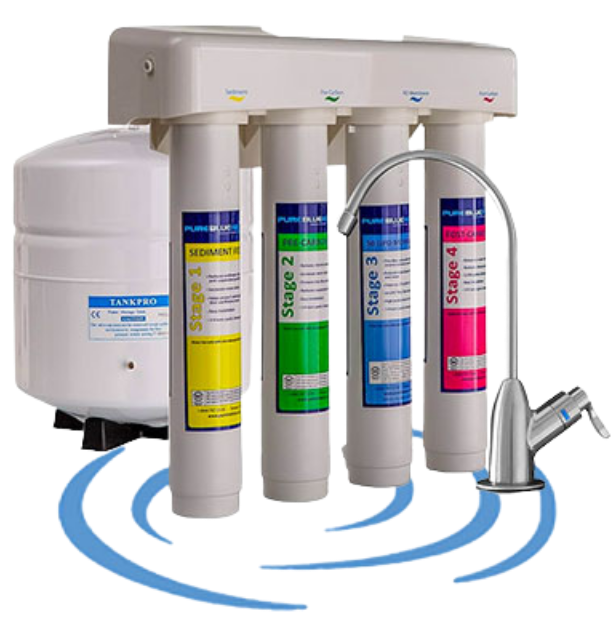
Get a free reverse osmosis drinking water system with the purchase of any whole-home water purification system.
*Cannot be combined with other offers. Mention this special when you call.