Reach Out Today
Please provide your email address so that we can stay in touch and answer any questions you have! We will be reaching back out shortly.


Hear from Our Customers
If you’ve noticed white buildup around your faucets, cloudy glasses coming out of the dishwasher, or a showerhead that looks like it’s been through a decade of neglect — that’s your water doing it. The Floridan Aquifer delivers hard to very hard water throughout Sumter County, and Caroline is no exception. Every gallon that flows through your home carries a mineral load that slowly coats the inside of your pipes, shortens the life of your water heater, and makes daily cleaning harder than it should be.
A salt free anti-scale system changes that. The calcium and magnesium don’t disappear — they get converted into microscopic crystals that flow through your plumbing without bonding to anything. No scale buildup. No clogged fixtures. No chalky film on the coffee maker you use every morning. Your appliances run more efficiently, your cleaning routine gets easier, and your home stops taking the slow, invisible hit it’s been taking since the day you moved in.
For Caroline homeowners, this matters more than it might in a newer development. Homes here were built in the mid-2000s — which means nearly two decades of hard water have already been through your plumbing. The longer you wait, the more accumulated damage you’re working against. Getting a system in now protects what’s left and extends the life of everything water touches in your home.
We’re based in Leesburg — the community right on Caroline’s northern border. This isn’t a national brand routing calls through a call center and dispatching whoever’s available. We’re a local company that has been treating Central Florida water for more than five decades, staffed by people who know exactly what comes out of Sumter County taps and why it matters to Caroline residents specifically.
We hold an A+ BBB rating with zero complaints on record and are active members of the Water Quality Association. In a market where some national competitors have built a reputation for selling systems and going quiet afterward, that record means something real. The Villages is a tight-knit community — people talk, neighbors compare notes on Nextdoor, and a bad experience travels fast. Our clean history in this region isn’t a marketing line. It’s a verifiable fact you can look up before you ever pick up the phone.
It starts with understanding what’s actually in your water. Before anything gets installed, we review your home’s water source and conditions. Caroline homes draw from the North Sumter County Utility system, which pulls from the Floridan Aquifer — so the hardness profile here is well-documented and consistent. There’s no guesswork involved. The assessment confirms what the system needs to address and makes sure the right configuration gets installed for your home’s size and usage.
Installation is straightforward. The system goes in at your home’s point of entry — typically in the garage or utility area — and connects directly to your main water line. There’s no drain connection required, no electrical hookup, and no modifications to your existing plumbing beyond the connection point. Most installations are completed in a single visit. The system runs continuously from that point forward without any input from you.
After installation, the only thing on your calendar is a media replacement every five to seven years. That’s it. No salt deliveries, no regeneration cycles to monitor, no service calls because something stopped working. The system is designed to run quietly in the background while your water heater, dishwasher, and fixtures stop accumulating the scale damage that’s been building up since your home was first plumbed. For a Caroline homeowner who moved here to enjoy retirement — not to manage a water system — that simplicity is the whole point.
Ready to get started?
The system we install uses Template Assisted Crystallization — TAC — which is the most independently tested and verified technology in the salt free category. DVGW Standard W512 testing, the benchmark used by independent water quality researchers, confirms TAC prevents scale formation at rates consistently above 90%. That’s not a manufacturer claim. That’s third-party science.
For Caroline homeowners, there are a few details that make this system particularly well-suited to your situation. First, you’re on municipal water — not a private well — which means the primary issue is hardness and disinfection byproducts, not iron or sulfur. TAC addresses hardness directly without requiring additional pre-treatment in most cases. Second, the system produces zero wastewater and uses no electricity. That matters in Sumter County, where the Southwest Florida Water Management District declared a Phase II Severe Water Shortage in early 2026 and water conservation is an active, ongoing concern. A traditional salt-based softener wastes 25 to 65 gallons per regeneration cycle. Our system wastes none.
And if you or your spouse is on a low-sodium diet — which is common in a community where the median age is over 70 — this matters more than most people realize. Traditional softeners add sodium to your water through the ion exchange process. A salt free conditioner adds nothing. The minerals stay in the water in a harmless crystallized form. Your water is conditioned, not chemically altered. We also offer a $500 discount for military personnel and first responders — a meaningful acknowledgment for the many veterans who have made Caroline their retirement home.
Yes — and it’s not a close call. Caroline’s water comes from the North Sumter County Utility system, which draws from the Floridan Aquifer. That aquifer is the primary water source for roughly 10 million Floridians and is well-documented for producing hard to very hard water throughout Sumter County. Independent water quality databases, including the EWG Tap Water Database, specifically flag the Villages of Lake-Sumter water system for elevated hardness levels.
What that means practically is that every tap in your home is delivering water that carries a significant calcium and magnesium load. Without treatment, those minerals accumulate inside your water heater, dishwasher, pipes, and fixtures over time. For a home built in the mid-2000s — like most in Caroline — that’s nearly two decades of buildup already in progress. A salt free system installed now stops further accumulation and lets your appliances operate the way they were designed to.
A traditional water softener removes calcium and magnesium from your water entirely through a process called ion exchange — swapping those minerals out for sodium. The result is genuinely soft water, but it comes with trade-offs: ongoing salt purchases, 40-pound bags to haul, a brine tank to maintain, regeneration cycles that waste 25 to 65 gallons of water each time, and sodium added to every gallon that flows through your home.
A salt free conditioner doesn’t remove the minerals — it transforms them. Using Template Assisted Crystallization, the calcium and magnesium are converted into microscopic crystals that stay suspended in the water and pass through your plumbing without bonding to surfaces. Your water will still test as “hard” on a standard kit, but the scale-forming behavior stops. No salt, no wastewater, no electricity, no maintenance beyond a media swap every five to seven years. For a Caroline homeowner on a low-sodium diet or simply not interested in managing a brine tank, that distinction is significant.
That’s one of the strongest arguments for installing one. In Florida’s hard water environment, water heaters are among the first casualties. Scale buildup insulates the heating element, forces it to work harder, and shortens its lifespan well before it should fail. Research from the Water Quality Research Foundation found that scale accumulation can increase a water heater’s energy consumption by up to 48%. In a home that runs its water heater year-round — which every home in Central Florida does — that inefficiency compounds monthly.
For Caroline specifically, this is an urgent consideration. Homes here are approaching 20 years old. If the original water heater is still in place and has never had treated water running through it, there’s a meaningful chance scale has already affected its performance and lifespan. A salt free TAC system won’t reverse existing damage, but it stops new accumulation from that point forward — protecting whatever life is left in the unit and fully protecting any replacement you put in. The same logic applies to your dishwasher, washing machine, and any other water-using appliance in your home.
It’s actually one of the main reasons many residents in Caroline and surrounding communities choose salt free over traditional softening. A conventional water softener works by replacing calcium and magnesium ions with sodium ions. The amount of sodium added depends on your water’s hardness level — and in Sumter County, where the water is hard to very hard, that sodium contribution is not negligible. For someone managing blood pressure, heart health, or following a physician-recommended low-sodium diet, that’s a real concern worth taking seriously.
A salt free conditioner adds zero sodium to your water. The minerals are crystallized, not replaced. The water coming out of your tap has the same mineral content it had going in — it just no longer forms scale inside your pipes and appliances. For the large portion of Caroline’s population that is health-conscious and managing dietary sodium intake, this is a meaningful functional difference, not just a marketing angle. It’s worth discussing with your doctor if you’re currently on a sodium-restricted diet and using a traditional softener.
The system itself is built to last 10 to 20 years under normal residential use. The TAC media inside the tank — the material responsible for the crystallization process — typically needs to be replaced every five to seven years depending on your water usage and hardness levels. In Caroline, where the water is consistently hard year-round, you can expect to be on the standard five-to-seven-year cycle rather than an extended one.
Outside of that media replacement, there is genuinely nothing to maintain. No salt to buy or carry. No brine tank to monitor. No regeneration cycles to schedule or adjust. No electricity running to the unit. The system operates passively and continuously from the day it’s installed. For homeowners in Caroline who chose The Villages for the lifestyle — not for a new set of household chores — that level of hands-off operation is one of the most practical advantages this type of system offers.
Please provide your email address so that we can stay in touch and answer any questions you have! We will be reaching back out shortly.
"*" indicates required fields
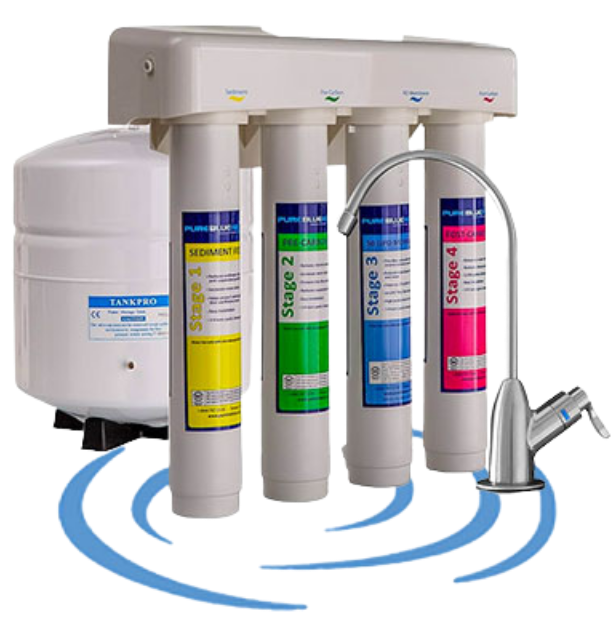
Get a free reverse osmosis drinking water system with the purchase of any whole-home water purification system.
*Cannot be combined with other offers. Mention this special when you call.