Reach Out Today
Please provide your email address so that we can stay in touch and answer any questions you have! We will be reaching back out shortly.


Hear from Our Customers
Your water heater lasts 3-5 years longer. Your dishwasher stops leaving white spots on glasses. Your shower doors stay clearer between cleanings.
You’re not buying 40-pound salt bags every month or paying for electricity to regenerate a system overnight. There’s no brine discharge going into the ground, which matters in areas where local restrictions are tightening.
The minerals stay in your water—calcium and magnesium that your body actually uses. But they don’t stick to your pipes, appliances, or fixtures anymore. That’s the difference between removing hardness and preventing scale, and it’s why a salt-free water conditioner works differently than what most people grew up with.
We hold an A-rating with the Better Business Bureau and a 5-star rating with zero complaints. We’re members of the Water Quality Association, which means we follow industry standards that actually matter.
We don’t sell systems and disappear. We’re based in Florida, we understand how hard water behaves here, and we back up what we install. That’s why military members and first responders get $500 off—it’s not a marketing gimmick, it’s how we operate.
We also support the Tunnels to Towers Foundation because some things matter more than profit margins. When you call us, you’re working with people who live in the same water conditions you do.
A saltless water system uses Template Assisted Crystallization—TAC for short. As water flows through the media, hardness minerals transform into microscopic crystals that can’t bond to surfaces. They stay suspended in the water and wash harmlessly down the drain.
There’s no regeneration cycle, no backwashing, no electricity. The system operates continuously at flow rates up to 15.3 gallons per minute without dropping pressure. You don’t lose water capacity during peak usage times because nothing ever shuts down to clean itself.
Installation takes a few hours. We connect it to your main water line so every faucet, appliance, and fixture gets protection. No drain line is needed, no electrical outlet required. Once it’s in, it runs maintenance-free for years—typically anywhere from 5 to 20 years depending on your water conditions and usage.

Ready to get started?
You get whole-house scale prevention that works with Avenues water conditions. Most Central Florida homes deal with hardness between 7 and 15 grains per gallon—right in the range where a water descaler system performs best.
The media inside doesn’t need replacing for years. There are no moving parts to break, no timers to reset, no settings to adjust. It handles iron content below 0.3 ppm and works with pH levels under 8.3, which covers the majority of residential water in this area.
You’ll see less buildup on faucets and showerheads. Your water heater won’t accumulate the sediment layer that makes it work harder and fail sooner. Appliances that use water—dishwashers, washing machines, coffee makers—run more efficiently because scale isn’t choking their components.
And you keep the minerals. If you’ve ever noticed how “slippery” softened water feels, that’s because traditional systems strip everything out. With a hard water conditioner, your water still has body to it. Some people prefer that, especially for drinking and cooking.
No, and that’s not a bad thing. A traditional softener removes hardness minerals through ion exchange—swapping calcium and magnesium for sodium. That’s true softening, and it changes the water chemistry.
A salt-free system doesn’t remove minerals. It alters their structure so they can’t form scale. You still have hard water by technical definition, but you don’t get the problems hard water causes. Your soap lathers normally, your skin doesn’t feel filmy, and your pipes stay clear.
If you need zero hardness for a specific reason—like certain medical equipment or industrial applications—then you need a traditional softener. But for protecting your home and avoiding the cost and maintenance of salt-based systems, a saltless water system handles what most homeowners actually care about.
TAC media typically lasts 5-7 years in residential applications, sometimes longer depending on water quality and usage. When it does need replacement, it’s a straightforward service call—not a full system replacement.
Compare that to traditional softeners, where resin beds need replacement every 10-15 years but the system itself often fails around year 8-12 due to valve problems, motor burnout, or control board issues. Salt-free systems have fewer failure points because there’s less to break.
The longevity comes from simplicity. No electronics, no mechanical valves cycling thousands of times, no salt corroding internal components. The housing lasts decades. The media is the only consumable, and even that outlasts most of the maintenance intervals you’d face with conventional equipment.
It can reduce existing scale over time, but it’s not a fast process. The main benefit is prevention—stopping new scale from forming while gradually breaking down what’s already there.
As treated water flows through your system, it can slowly dissolve some of the mineral deposits clinging to surfaces. You might notice your water pressure improving slightly over several months, or your water heater becoming quieter as sediment breaks loose. But if you have severe buildup, you may need a professional descaling service first.
The real value shows up in year two, three, and beyond. Your plumbing stays clean instead of getting worse. Your appliances don’t accumulate the layer of scale that shortens their lifespan. You’re protecting your investment going forward, which matters more than trying to reverse decades of damage overnight.
Practically none. You’re not adding salt every month, you’re not cleaning brine tanks, and you’re not troubleshooting error codes on a control head.
Traditional softeners need salt refills that cost $100-200 annually. They use electricity to power regeneration cycles, and they waste 25-50 gallons of water each time they backwash. If something breaks—a valve, a timer, a motor—you’re looking at a service call and parts.
With a water descaler system, you install it and forget about it. No consumables to buy, no cycles to monitor, no water waste. The only maintenance is eventual media replacement after several years, and that’s scheduled, not emergency. For homeowners who want protection without the ongoing hassle, that difference matters.
Yes. If your hardness is above 15 grains per gallon, alkalinity exceeds 250 mg/L, pH is over 8.3, or iron content is above 0.3 ppm, a salt-free system struggles. At that point, you need a different approach—either traditional softening or additional pre-treatment.
Well water with high iron is the most common issue in Florida. Iron doesn’t just cause staining, it can foul the TAC media and reduce effectiveness. If you’re on well water, we test first to make sure a saltless system is the right fit.
City water in Avenues typically falls within the ideal range. Hardness usually runs 7-12 grains per gallon, pH stays reasonable, and iron isn’t a factor. But we don’t guess—we test your specific water before recommending a system, because installing the wrong equipment helps no one.
Please provide your email address so that we can stay in touch and answer any questions you have! We will be reaching back out shortly.
"*" indicates required fields
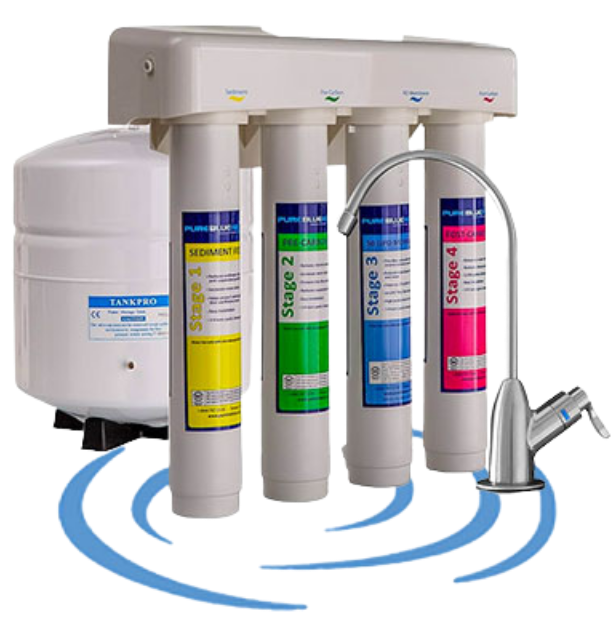
Get a free reverse osmosis drinking water system with the purchase of any whole-home water purification system.
*Cannot be combined with other offers. Mention this special when you call.