Reach Out Today
Please provide your email address so that we can stay in touch and answer any questions you have! We will be reaching back out shortly.


Hear from Our Customers
Your water heater stops collecting scale. Your fixtures stay cleaner longer. Your dishwasher and washing machine run more efficiently because minerals aren’t caking onto heating elements or clogging spray arms.
You’re not buying 40-pound bags of salt every month. You’re not programming regeneration cycles or checking brine tanks. The system sits on your main line and works continuously without electricity, without waste water, and without you thinking about it.
Armstrong sits in Lake County, where well water averages 100 to 180 parts per million hardness. That’s enough to shorten the life of a water heater by three to five years if you do nothing. A salt-free water conditioner changes how those minerals behave so they can’t stick to your pipes or appliances. You keep the calcium and magnesium your body needs, but your plumbing doesn’t pay the price.
We have an A+ Better Business Bureau rating, a five-star customer rating, and more than five decades of experience treating Florida’s hard water. We’re members of the National Water Quality Association, and we only do water treatment—no plumbing, no water heaters, just purification and conditioning systems.
Armstrong homeowners deal with limestone-heavy aquifer water that dissolves into your supply as it filters through Florida’s karst geology. We’ve been solving that exact problem across North and Central Florida long enough to know what works and what’s just marketing. Our reputation speaks louder than our ads, and we back it up with systems designed specifically for your water and your home’s usage.
We also offer a $500 discount for military members and first responders, and we’re proud supporters of the Tunnels to Towers Foundation.
We start with a water test at your home. That tells us your exact hardness level, what minerals are present, and how much water your household uses daily. From there, we size a system that fits your main water line and treats every drop entering your house.
The technology is called Template Assisted Crystallization, or TAC. It doesn’t remove calcium and magnesium—it changes their structure. As water passes through the media, those minerals form microscopic crystals that stay suspended in the water instead of bonding to surfaces. Your pipes, your appliances, and your fixtures get the same water flow, but without the buildup.
Installation takes a few hours. The system connects inline after your main shutoff, before water branches out to your home. No drain line, no electrical outlet, no programming. Once it’s in, it runs on its own. The only maintenance is replacing the media every five to seven years, which costs a few hundred dollars and takes less time than a year’s worth of salt deliveries.

Ready to get started?
Every installation includes a custom-sized saltless water system based on your water analysis and household demand. You get whole-house coverage, meaning every faucet, shower, appliance, and fixture receives conditioned water. The system is designed to last, with no moving parts, no electronics, and no ongoing chemical or salt purchases.
Florida’s limestone geology makes Armstrong’s water moderately hard, similar to Orlando and Gainesville. That level of hardness won’t ruin your day, but it will ruin your water heater if left untreated. A water descaler system prevents that without the environmental impact of salt discharge or the water waste that comes with regeneration cycles. It’s safe for septic systems, doesn’t add sodium to your drinking water, and operates completely maintenance-free for years at a time.
You also get professional installation from a team that’s been doing this for fifty years, not a national franchise with a rotating door of subcontractors. We service what we sell, and we’ll be here when you need us.
Yes, but it works differently than a traditional softener. A salt-free system doesn’t remove hardness minerals—it changes their structure so they can’t form scale. The calcium and magnesium are still in your water, but they’ve been converted into crystals that stay suspended instead of sticking to pipes, heating elements, and fixtures.
You’ll still see the benefits: cleaner dishes, longer appliance life, better water pressure, and no crusty buildup around faucets. The difference is you’re preventing scale formation instead of removing the minerals entirely. That means you keep the health benefits of calcium and magnesium in your drinking water, and you avoid adding sodium through a salt-based ion exchange process.
For Armstrong homeowners, this approach makes sense. Your water isn’t extremely hard, so you don’t need aggressive softening. You just need to stop scale from shortening the life of your water heater and clogging up your plumbing.
The system itself can last 20 years or more because there are no moving parts, no electronics, and no regeneration cycles that create wear. The only component that needs attention is the TAC media inside the tank, which typically lasts five to seven years depending on your water quality and usage.
Replacing the media costs a few hundred dollars and takes about an hour. Compare that to a salt-based softener, where you’re spending $100 to $200 per year on salt alone, plus the time it takes to haul bags and refill the brine tank every month. Over a decade, the salt-free option is less expensive and far less hassle.
There’s no programming to adjust, no salt bridges to break up, no resin beads to clean, and no brine tank to monitor. You install it, and it works. When the media eventually needs replacing, we handle it.
A water softener removes hardness minerals through ion exchange, swapping calcium and magnesium for sodium. It requires salt, electricity, a drain connection, and regular maintenance. The result is truly “soft” water with no hardness minerals present.
A water conditioner—like a salt-free system—doesn’t remove minerals. It alters their chemical structure so they can’t form scale. You still have hard water by technical definition, but it behaves like soft water in your plumbing and appliances. No scale buildup, no spotting, no shortened appliance life.
The trade-off is simple. If you want zero hardness and don’t mind the maintenance, salt-based softening works. If you want scale protection without the ongoing costs, environmental impact, or sodium in your water, conditioning is the better fit. For most Armstrong homes with moderate hardness, a hard water conditioner gives you everything you actually need without the things you don’t want.
You won’t get the slippery feel that comes with salt-softened water, because that sensation is caused by sodium coating your skin. Some people love that feeling. Others find it hard to rinse off soap or shampoo.
With a salt-free system, your water feels normal—just cleaner. You’ll notice less soap scum in the shower, fewer spots on glassware, and softer laundry without the need for extra detergent. Your skin and hair won’t feel as dry, because you’re not stripping away the natural minerals that help with hydration.
The biggest difference shows up over time. Your water heater runs more efficiently. Your faucets don’t develop white crust. Your appliances last longer. It’s not a dramatic day-one transformation—it’s a steady improvement that saves you money and frustration down the road.
Yes, as long as your well water has been tested and doesn’t have issues beyond hardness. Salt-free systems handle calcium and magnesium very well, but they don’t remove iron, sulfur, bacteria, or other contaminants that sometimes show up in Florida well water.
If your water leaves orange or brown stains, smells like rotten eggs, or has visible sediment, you’ll need additional treatment before the conditioner. We test your water first to see exactly what’s in it, then design a system that addresses all of it—not just hardness.
Armstrong sits over the Floridan Aquifer, which generally produces clean water with moderate hardness. Most homes in the area only need scale prevention, not a full filtration setup. But every property is different, and we won’t know what you need until we test your specific water. That’s why we start every project with an analysis, not a sales pitch.
Please provide your email address so that we can stay in touch and answer any questions you have! We will be reaching back out shortly.
"*" indicates required fields
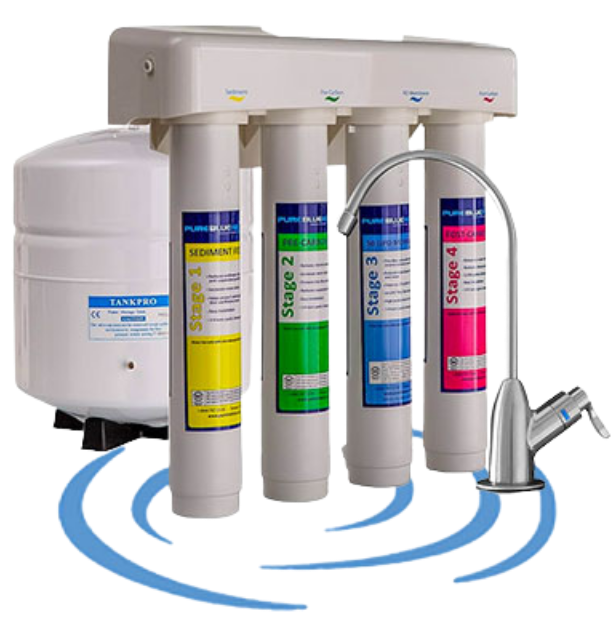
Get a free reverse osmosis drinking water system with the purchase of any whole-home water purification system.
*Cannot be combined with other offers. Mention this special when you call.