Reach Out Today
Please provide your email address so that we can stay in touch and answer any questions you have! We will be reaching back out shortly.

Hear from Our Customers
You stop tasting chlorine in your morning coffee. You stop buying cases of bottled water every week. You stop wondering what’s actually coming out of the tap in a home that’s been standing since 1965.
For a lot of Winter Park homeowners, that last one hits hardest because the houses here are beautiful, historic, and worth protecting, and the water running through their copper pipes has been quietly working against them for years.
The City of Winter Park adds sodium hydroxide to its treated water specifically to slow down corrosion in copper plumbing. That’s in their own treatment documentation. What it tells you is that the water chemistry here is aggressive enough toward older pipes that the city takes steps to offset it at the plant level. A whole-house reverse osmosis or filtration system picks up where the city leaves off, reducing the mineral load and disinfection byproducts before they reach your fixtures, your appliances, and your family.
The Environmental Working Group’s database for the City of Winter Park water system flags haloacetic acids byproducts of chlorination at levels that exceed independent health guidelines, even while staying within legal limits. That gap between “legal” and “healthy” is real. Closing it doesn’t require a major renovation. It requires the right system, installed correctly, by someone who actually tested your water first.
We don’t do plumbing. We don’t do water heaters. Water treatment is the only thing on our menu which means every technician, every recommendation, and every system we install has come from years of focused experience in exactly this field, in exactly this state.
We hold an A-rating with the Better Business Bureau, a 5-star rating, and zero complaints on record. In an industry where post-sale disappearing acts are practically a cliché, that track record is worth something. You can verify it yourself at bbb.org it’s a public record, not a marketing claim. We’re also members of the National Water Quality Association, which requires ongoing training and adherence to standards most competitors in the Winter Park market don’t bother to pursue.
From the lakefront estates along the Chain of Lakes to the historic neighborhoods near Rollins College, we’ve worked with homeowners throughout Winter Park and Central Florida who are done settling for water that’s merely compliant. If you want someone who knows the Floridan Aquifer, knows Winter Park’s treatment process, and will test your water before recommending anything that’s us.
It starts with a real water test. Not a hardness strip designed to justify a predetermined recommendation actual lab-grade analysis of what’s present in your water at your address in Winter Park.
The City of Winter Park’s municipal supply has a known profile: Floridan Aquifer source water, ozonation for naturally occurring hydrogen sulfide, chlorination, fluoridation, and sodium hydroxide for corrosion control. But the condition of the distribution lines serving your block, the age of your home’s internal plumbing, and your proximity to specific infrastructure all affect what’s actually coming out of your tap. The test tells the full story.
From there, we recommend a system based on what your water actually needs not what’s easiest to install or highest margin to sell. For most Winter Park homeowners, that conversation leads to either an under-sink RO drinking water system for targeted purification at the kitchen tap, or a whole-house system that addresses water quality at every point of use.
Homes built before 1980 and there are a lot of them in Winter Park often benefit most from whole-house treatment, because the scale and mineral buildup from hard aquifer water affects water heaters, dishwashers, and copper pipes over time, not just the glass you drink from.
Installation is handled by our trained technicians who know what they’re doing in older homes. If the scope of work requires a plumbing permit through the City of Winter Park’s building department, we handle that properly no shortcuts, no saddle valves where they don’t belong. After installation, you get a walkthrough of the system, filter replacement schedules, and a clear point of contact for any questions down the road.
Ready to get started?
A reverse osmosis system works by pushing water through a semipermeable membrane under pressure, stripping out dissolved contaminants that carbon filtration alone can’t touch. That includes haloacetic acids, nitrates, PFAS compounds, lead, and the disinfection byproducts that form when chlorine interacts with the organic matter naturally present in Floridan Aquifer water. The result at your tap is water that’s been reduced to its cleanest possible form without the plastic waste, the recurring cost, or the inconvenience of bottled water.
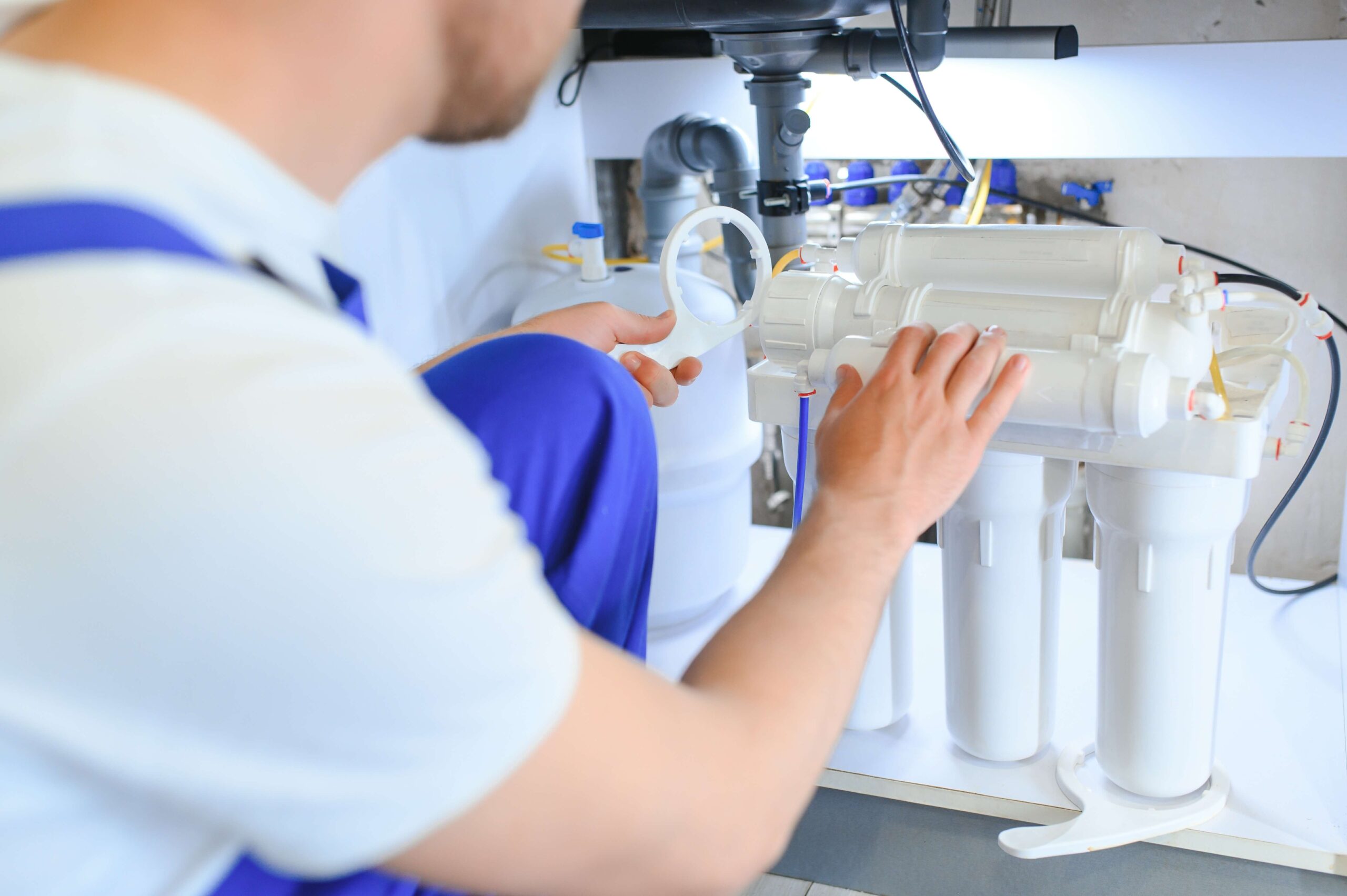
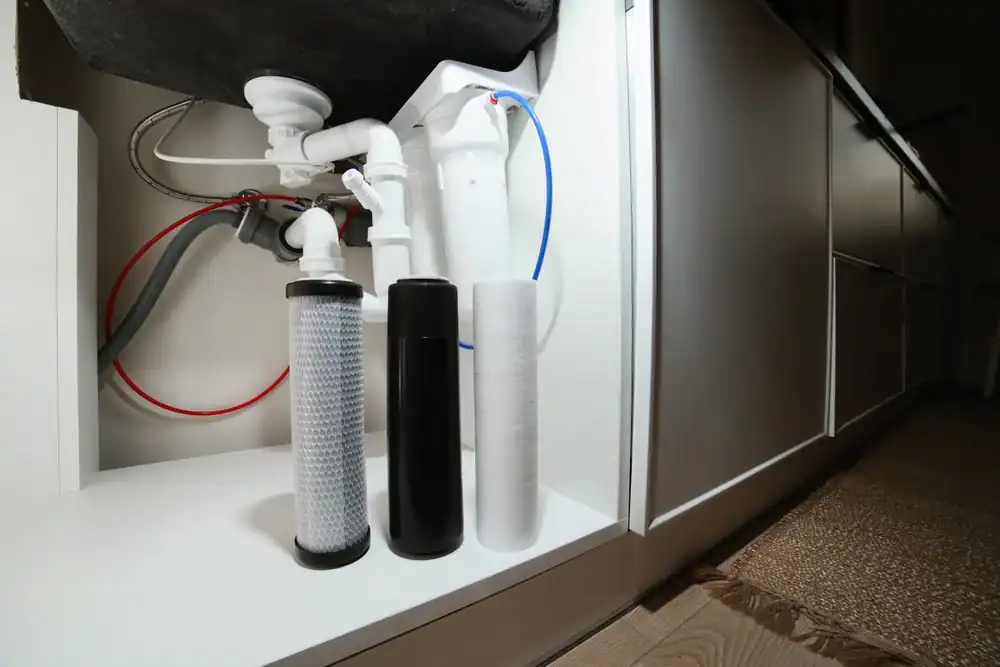
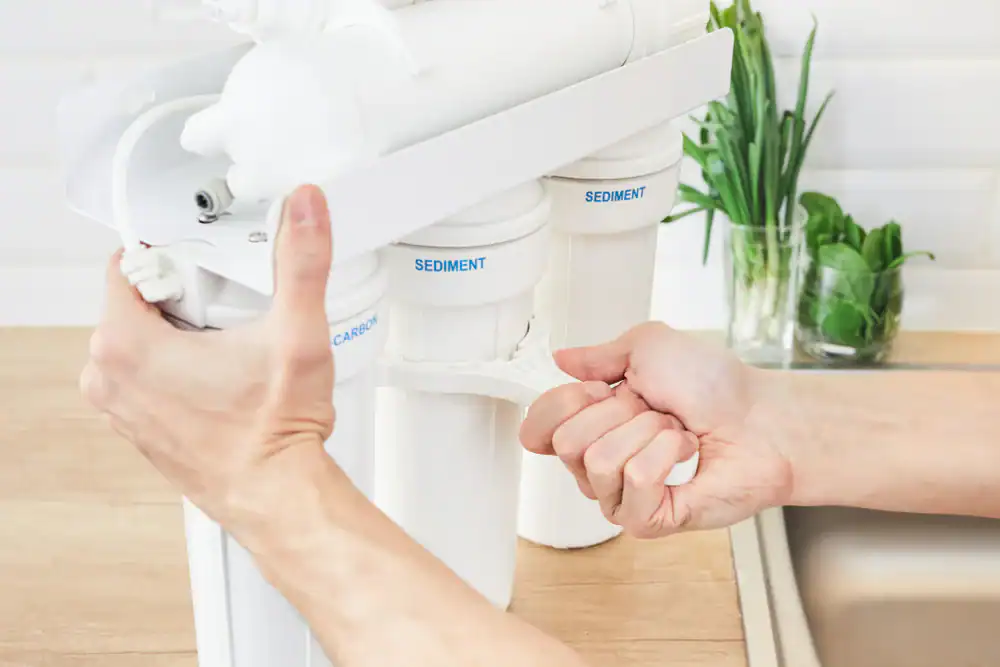
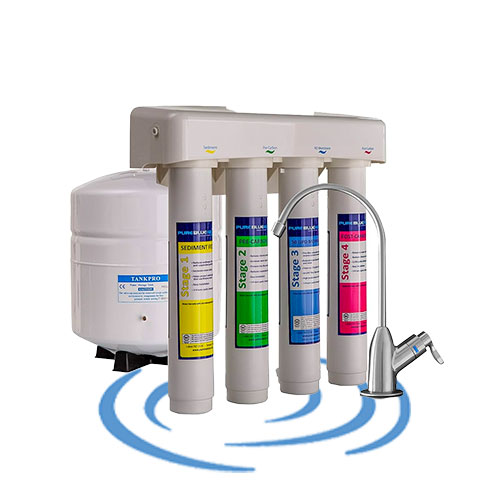
For Winter Park homeowners, the under-sink RO system is the most common starting point. It connects to your existing cold water supply line beneath the kitchen sink, runs through a multi-stage filtration process sediment pre-filter, carbon block, RO membrane, post-filter and delivers purified water through a dedicated faucet. It also feeds your refrigerator’s ice maker and water dispenser if the lines are connected.
Maintenance is straightforward: pre-filters typically need replacing every six to twelve months, and the RO membrane lasts two to three years under normal household use.
For homeowners in neighborhoods like Windsong, the Via streets, or along the Chain of Lakes where homes are larger, water usage is higher, and the investment in the property warrants a more comprehensive approach a whole-house reverse osmosis or multi-stage purification system addresses water quality at every tap, every shower, every appliance. We size and configure these systems based on your home’s square footage, occupancy, and water test results. The system that goes into a 4,500-square-foot lakefront home on Lake Maitland is not the same system that goes into a 1,800-square-foot bungalow near Hannibal Square and it shouldn’t be.

The City of Winter Park draws its water from the lower Floridan Aquifer through six municipal wells that reach depths of up to 1,330 feet. Before it reaches your tap, that water is ozonated to remove naturally occurring hydrogen sulfide, chlorinated, fluoridated, and treated with sodium hydroxide to slow corrosion in copper pipes. The treatment process is thorough and the water meets all federal and state legal standards.
That said, the Environmental Working Group’s database for the City of Winter Park water system (PWS ID FL3481482) identifies haloacetic acids specifically HAA5 and HAA9 as contaminants detected at levels that exceed independent health guidelines, even while remaining within legal limits. These are disinfection byproducts that form when chlorine reacts with organic matter in the source water. We remove 95 to 99 percent of these compounds with a properly configured reverse osmosis system before the water reaches your glass.
Yes water drawn from the Floridan Aquifer carries a natural mineral load from its passage through limestone and dolomite formations, which produces moderately hard water throughout Winter Park and Central Florida. You’ve probably already seen the evidence: white scale deposits on faucets and showerheads, cloudy glassware out of the dishwasher, reduced lathering from soap and shampoo, or a water heater that’s working harder than it should.
The more significant issue for Winter Park specifically is the effect on older plumbing. A large portion of the city’s housing stock was built between 1950 and 1980, and many of those homes have copper pipes that are susceptible to the kind of slow, cumulative damage that hard, mineralized water causes over time. The city adds sodium hydroxide to its treated water to address this that’s documented in their own treatment process but that corrosion control measure addresses the water leaving the plant, not the water traveling through aging distribution lines and into your home. A whole-house filtration or softening system installed at the point of entry reduces the mineral load before it reaches your pipes, your water heater, and your appliances.
An under-sink reverse osmosis drinking water system typically requires a professional installation that varies depending on the complexity of the hookup and the condition of the existing plumbing under your sink. For older Winter Park homes particularly those built before 1980 with original copper supply lines the installation may require additional fittings or line work to do it correctly.
A whole-house reverse osmosis or multi-stage purification system is a larger investment, generally ranging from several thousand dollars and up depending on the size of your home, the number of points of use, and the specific system configuration your water test results call for. For context, the average Winter Park household spending $75 to $100 per month on bottled water will spend $900 to $1,200 per year on water that’s often no cleaner and sometimes less clean than what a properly installed RO system produces. The math on payback period is usually two to four years for an under-sink system, and the system itself lasts fifteen to twenty years with routine maintenance. We’ll walk you through the full cost picture after testing your water no pressure, no predetermined pitch.
They do different things, and for many Winter Park homeowners, the honest answer is both used together. A water softener addresses hardness by exchanging calcium and magnesium ions for sodium ions through a process called ion exchange. It protects your pipes, your water heater, and your appliances from scale buildup, and it makes soap and shampoo work the way they’re supposed to. What it doesn’t do is remove dissolved contaminants like haloacetic acids, nitrates, PFAS, or the chlorine taste and odor that comes from municipal treatment.
A reverse osmosis system addresses the drinking water side of the equation. It removes the contaminants a softener leaves behind, producing clean, great-tasting water at your kitchen tap. When you combine a whole-house softener with an under-sink RO system, you get comprehensive protection: soft water throughout the house for plumbing and appliance longevity, and purified water at the point of use for drinking and cooking. For homeowners in neighborhoods like Interlachen or along the Chain of Lakes where the homes are significant investments and the water demands are higher that combination is often the most sensible long-term approach. We test your water first and recommend based on what’s actually there, not on what’s easiest to sell.
In Winter Park and Central Florida, the general guidance is to replace sediment and carbon pre-filters every six to twelve months, and the RO membrane every two to three years. In practice, how quickly your filters load up depends on your water usage, the number of people in the household, and the specific contaminant levels in your supply. Winter Park’s municipal water is chlorinated, which means the carbon pre-filter which handles chlorine, taste, and odor is working every time you run the tap. Staying on schedule with pre-filter replacements is important because a saturated pre-filter puts unnecessary strain on the RO membrane, shortening its lifespan.
Florida’s warm climate also matters here. Higher ambient temperatures accelerate bacterial growth in water storage components, which is one reason we recommend annual service visits rather than just filter-by-mail programs where no one actually looks at the system. A technician who opens up the housing, checks the membrane, verifies the pressure, and confirms the system is performing correctly is worth more than a box of replacement cartridges dropped on your doorstep. Routine maintenance typically costs $100 to $200 per year a fraction of what most Winter Park households spend on bottled water in the same period.
Please provide your email address so that we can stay in touch and answer any questions you have! We will be reaching back out shortly.
"*" indicates required fields