Reach Out Today
Please provide your email address so that we can stay in touch and answer any questions you have! We will be reaching back out shortly.

Hear from Our Customers
The water coming out of your tap in West Colonial has been treated that part’s true. Orange County Utilities Department West runs it through a process that meets every legal requirement. But the EWG database tells a different story. Total trihalomethanes, haloacetic acids, arsenic, nitrite, and fluoride have all been detected in this system and several of them exceed health guidelines by a wide margin, even when they’re technically “within the law.”
That gap is what a reverse osmosis system closes.
On top of the contaminant issue, Orange County water tests at 17.2 grains per gallon of hardness. That’s classified as extremely hard and it’s not just a taste problem. That mineral load is building up inside your water heater, your dishwasher, your faucets, and your pipes every single day. In a neighborhood like West Colonial, where a lot of the housing stock dates back to the 1950s and 60s, those pipes have already been working hard for decades.
After a properly installed reverse osmosis system, you’re drinking water that’s had 95–99% of dissolved contaminants removed. Your appliances aren’t fighting mineral buildup every cycle. You stop buying cases of bottled water every week. The difference is real, and it shows up in your water, your utility bill, and the lifespan of everything connected to your plumbing.
We do one thing: water treatment. Not plumbing. Not water heaters. Just water purification, softening, filtration, and reverse osmosis. That focus matters because it means every technician who shows up at your West Colonial home has spent their career specifically on water systems, not dividing their time between drain lines and filter replacements.
We hold a BBB A-rating, a 5-star score, and zero complaints on file. You can verify that yourself at bbb.org it’s public. In an industry where the most common complaint is a company that installs a system and disappears, that record means something. We’re also a member of the National Water Quality Association, which means ongoing training in Florida’s specific water chemistry, including the Floridan Aquifer profile that feeds the OCUD West system serving your neighborhood.
If you’re in the military, law enforcement, or emergency services and with the Orange County Sheriff’s Office headquarters right at the corner of John Young Parkway and West Colonial Drive, a lot of people in this area serve in public safety roles there’s a $500 discount available for you, no fine print.
It starts with a water test a real one, not a quick hardness strip used to justify a sale. We run a lab-grade analysis of your actual OCUD West supply, measuring hardness, pH, chlorine levels, iron content, and the specific contaminants documented in your water system. That data drives the recommendation.
If your water profile calls for an under-sink reverse osmosis drinking water system at the kitchen tap, that’s what we recommend. If your home’s usage, pipe age, and water chemistry point toward a whole-house solution, you’ll hear why with your own test results in front of you.
Once you’ve reviewed the findings and decided on the right system, installation is scheduled and completed efficiently. For most under-sink reverse osmosis drinking water systems, installation is a single visit and doesn’t require a building permit in Florida. Whole-house installations that connect to your main supply line may require a plumbing permit through the City of Orlando or Orange County Building Division we walk you through that process so there are no surprises.
After installation, the system runs automatically. There’s no daily maintenance, no complicated operation. Filter replacements run roughly $100–$200 per year, and we handle that service the same team that installed the system comes back to maintain it. That’s not a promise most water treatment companies in the Orlando area can actually back up with a zero-complaint record.
Ready to get started?
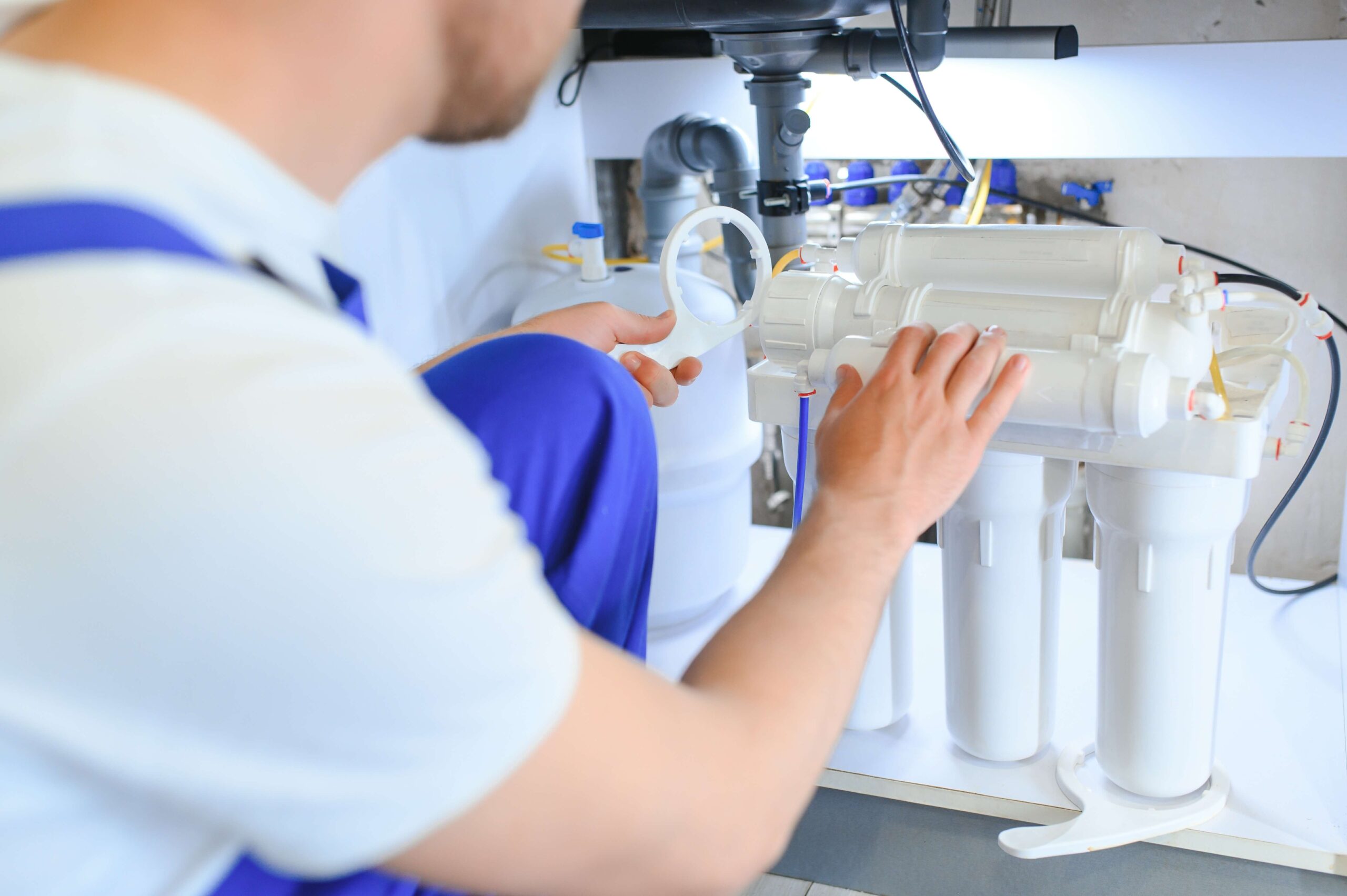
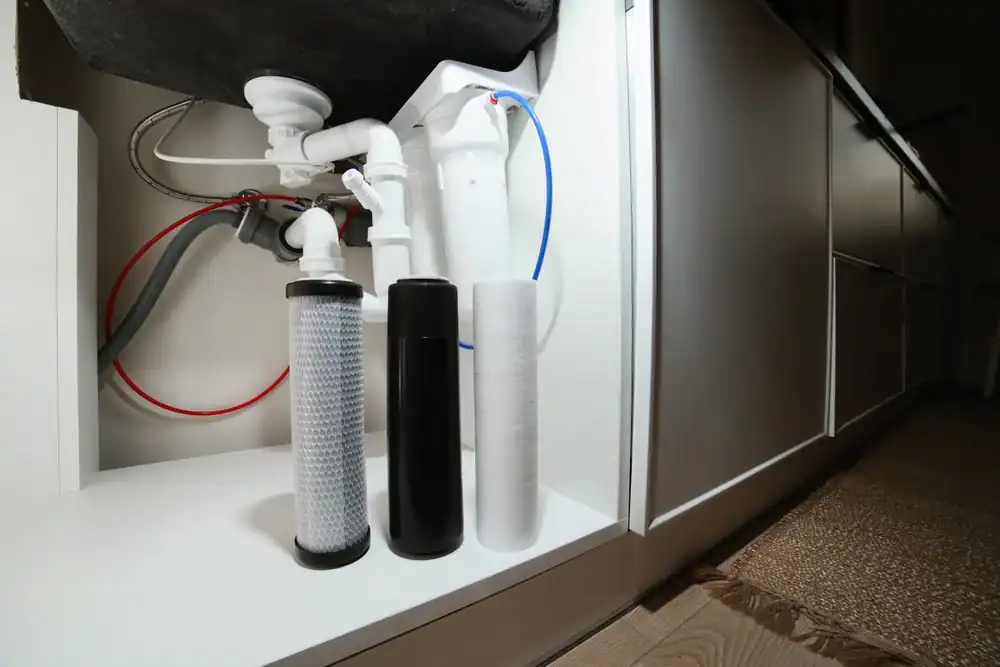
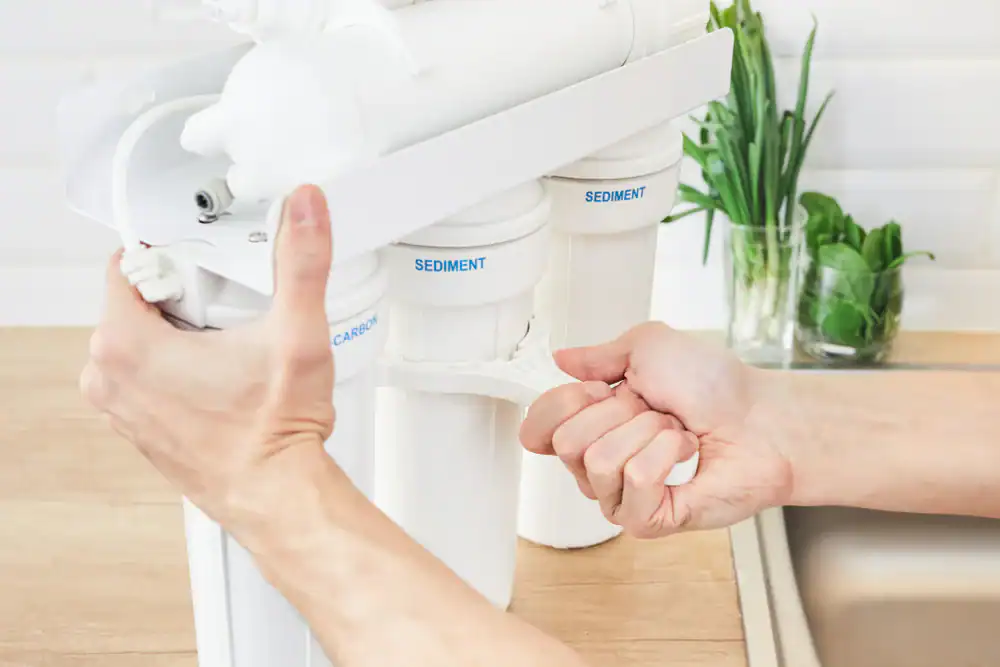
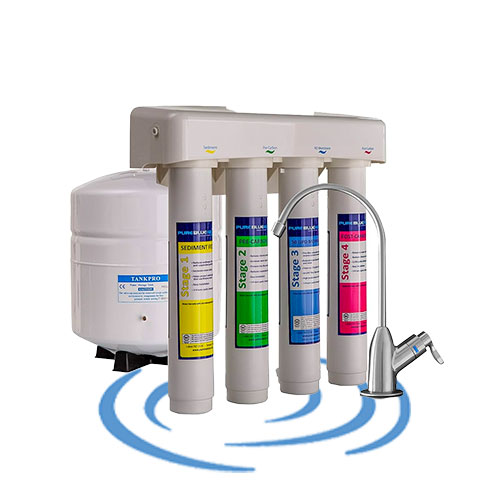
A standard reverse osmosis water filtration system runs your water through multiple stages sediment pre-filtration, carbon block filtration, the RO membrane itself (with pores at 0.0001 microns, smaller than any bacteria, virus, or dissolved chemical), and a post-filter polish before the water reaches your tap. That process removes 95–99% of dissolved contaminants, including the trihalomethanes, haloacetic acids, arsenic, and nitrite documented in the OCUD West supply. It also handles the hardness minerals that are wrecking appliances all over Orange County.
For most West Colonial homeowners, the conversation starts with an under-sink reverse osmosis system for drinking water a practical, lower-barrier entry point that immediately replaces the bottled water habit and gives you clean water at the kitchen tap. For homeowners dealing with scale damage to appliances, whole-house water quality concerns, or the compounding effect of aging 1950s and 60s plumbing, a whole-house reverse osmosis and water treatment system addresses every faucet, every appliance, and every shower in the home.
We’ll tell you clearly which one fits your situation and why. Every system we install comes with ongoing service support. Filter changes, membrane replacements, system checks all handled by the same team that did the install. That continuity is the part that most water treatment companies in the area can’t offer. We can, and our BBB record proves we follow through on it.
Technically, yes OCUD West water meets all federal and state legal standards. But “meets legal standards” and “safe by health guidelines” aren’t the same thing. The EWG Tap Water Database for the OCUD West system shows detections of total trihalomethanes, haloacetic acids including dichloroacetic acid, arsenic, nitrite, fluoride, barium, and chlorate. Some of these contaminants are present at levels that exceed EWG health guidelines by a significant margin, even though they fall within what the EPA legally allows.
For most people, drinking this water over time isn’t an immediate emergency. But the long-term exposure question especially for children, pregnant women, and anyone with a compromised immune system is what drives homeowners in West Colonial to look at reverse osmosis systems. A reverse osmosis system removes 95–99% of these dissolved contaminants, bringing your drinking water well below both legal and health guideline thresholds. It’s the most effective residential solution available for what’s actually in OCUD West water.
Orange County water tests at 17.2 grains per gallon, which puts it in the “extremely hard” category and yes, that level of mineral content causes real appliance damage over time. Hard water leaves calcium and magnesium deposits inside water heaters, dishwashers, washing machines, and faucet aerators. In a water heater, that scale buildup acts as an insulator between the heating element and the water, forcing the unit to work harder and fail earlier than it should.
A water heater that might last 12–15 years in a soft water market can fail in 7–8 years when it’s running on 17.2 GPG water. For West Colonial homeowners particularly those in the midcentury ranch homes and older construction along the Colonial Drive corridor this isn’t a hypothetical. If you’ve already replaced a water heater or noticed white buildup around your faucets and showerheads, that’s exactly what extremely hard water looks like in action. A whole-house water treatment system that addresses hardness at the point of entry protects every appliance and fixture in your home, not just the glass on your counter.
A water softener and a reverse osmosis system do different things, and in Orange County, many homeowners end up benefiting from both. A water softener addresses hardness it exchanges the calcium and magnesium ions in your water for sodium ions, which eliminates scale buildup in pipes and appliances. It makes your water feel better on your skin and hair, and it protects your plumbing and appliances from the mineral damage that 17.2 GPG water causes. But a water softener doesn’t remove dissolved chemical contaminants like trihalomethanes, arsenic, nitrite, or haloacetic acids.
A reverse osmosis system goes further. It uses a semi-permeable membrane with extremely fine pores to physically remove dissolved contaminants from your water the stuff a softener doesn’t touch. Most under-sink reverse osmosis systems are installed at the kitchen tap for drinking and cooking water, while a water softener handles the whole house for appliance protection and general use. The two systems complement each other. During your water test, we’ll look at your specific OCUD West results and tell you what combination actually makes sense for your home not what’s most expensive.
The cost depends on which type of system fits your home and water profile. An under-sink reverse osmosis drinking water system the most common starting point for West Colonial homeowners typically runs in a range that reflects the quality of components, the number of filtration stages, and the installation complexity. Ongoing filter maintenance runs approximately $100–$200 per year, which is significantly less than what most households in this area spend on bottled water annually.
If you’re currently spending $50–$75 a month on cases of water, an under-sink reverse osmosis system pays for itself within the first couple of years. A whole-house reverse osmosis and water treatment system involves a larger upfront investment, but the math changes when you factor in appliance protection. In a market with 17.2 GPG hard water, the cost of replacing a water heater early, dealing with scale damage to a dishwasher, or repiping corroded galvanized lines in an older home adds up fast. We provide a specific quote after your water test the recommendation is based on what your water actually shows, not a standard package pushed on every customer.
It’s a fair question, and the honest answer is: it depends on what your plumbing looks like. A lot of the residential housing stock in West Colonial was built in the 1950s and 1960s and homes from that era may have galvanized steel pipes that have been corroding for decades. Galvanized pipes don’t just age they corrode from the inside out, and that corrosion can introduce iron, rust particles, and scale into your water even after it leaves the municipal treatment plant.
By the time OCUD West water travels from the street through 60-year-old interior plumbing, it may carry additional contaminants that the utility never tested for. For an under-sink reverse osmosis installation in an older home, the process is generally straightforward the system connects to the cold water supply line under the sink and installs a dedicated faucet at the counter. If the existing plumbing is in rough shape, that may affect the installation approach, but it’s something we evaluate during the initial visit. A whole-house installation in an older home requires a more thorough assessment of the existing supply line and entry point. Either way, the water test and home evaluation happen before any recommendation is made, so you’re not committing to anything blind.
Please provide your email address so that we can stay in touch and answer any questions you have! We will be reaching back out shortly.
"*" indicates required fields
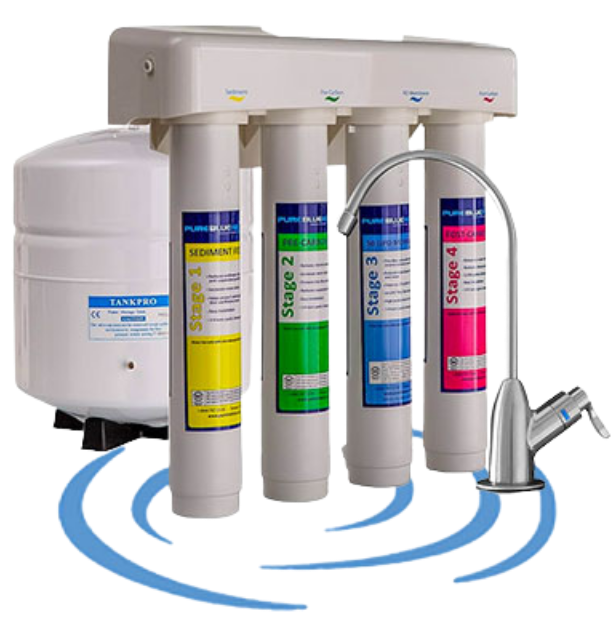
Get a free reverse osmosis drinking water system with the purchase of any whole-home water purification system.
*Cannot be combined with other offers. Mention this special when you call.