Reach Out Today
Please provide your email address so that we can stay in touch and answer any questions you have! We will be reaching back out shortly.

Hear from Our Customers
Most Tangerine homeowners don’t realize how much their water is costing them until something breaks. A water heater that should last 12 years gives out at 7. Faucets scale up. Dishes come out cloudy. The water tastes like it came from a swimming pool.
These aren’t minor annoyances they’re signs that your water is working against your home, not with it. Tangerine draws every drop of its municipal supply from the Floridan Aquifer a massive underground limestone formation that naturally loads water with calcium and magnesium before it ever reaches a treatment plant. The result is water that consistently tests at 17.2 grains per gallon hardness, which puts it in the “extremely hard” category by any standard.
Aeration and chlorination happen at the plant. Mineral removal does not. A reverse osmosis system addresses what the treatment plant doesn’t. You get water that’s genuinely clean at the tap free of the mineral load, the chlorine taste, and the contaminants that standard municipal treatment leaves behind. For a Tangerine home built in 1991 or earlier, which describes much of the area’s housing stock, that protection is long overdue.
We do one thing water treatment. No plumbing. No water heaters. Just water purification, softening, and filtration, with a specific focus on whole-house systems for Tangerine homeowners who want the problem solved correctly the first time.
We hold an A-rating with the Better Business Bureau, a 5-star customer rating, and zero complaints on record. In an industry with a well-documented reputation for sell-and-disappear behavior, that last number is the one that matters most. You can verify it yourself at bbb.org right now. We’re also members of the National Water Quality Association, which means our technicians are trained specifically in Florida’s water chemistry not a generic national playbook applied to every zip code.
Serving communities throughout North and Central Florida, including Orange County and the Tangerine area, we bring direct knowledge of the Floridan Aquifer’s mineral profile, Orange County Utilities’ treatment approach, and the specific challenges that come with lake-adjacent properties near Lake Ola and Lake Beauclaire. We service what we sell, which means when your filter needs replacing or your system needs service, we answer the phone and show up.
It starts with a real water test. Not a quick hardness demo designed to justify selling you the most expensive system on the truck an actual lab-grade analysis of what’s in your water. That matters in Tangerine more than most places, because the community sits at the edge of Orange County’s unincorporated rural zone, where some homes are on municipal water and others draw from private wells.
The right system depends entirely on what’s actually coming out of your tap, and that requires data, not assumptions. Once the test results are in, you get an honest recommendation. If your water needs an under-sink RO drinking water system, that’s what we’ll recommend. If your water shows the kind of iron levels, sulfur odor, or mineral load common to well water near Lake Ola or Lake Beauclaire, the recommendation will account for pre-treatment needs before the RO membrane because skipping that step shortens the membrane’s life and reduces the system’s effectiveness.
Installation is handled by our trained water treatment technicians, not generalist plumbers adding a filter as a side job. For whole-house systems in unincorporated Orange County, any required permits are handled through the county, and we walk you through what applies to your specific installation. After the system is in, we handle maintenance, filter replacements, and service calls because that’s what a company with zero BBB complaints actually does.
Ready to get started?
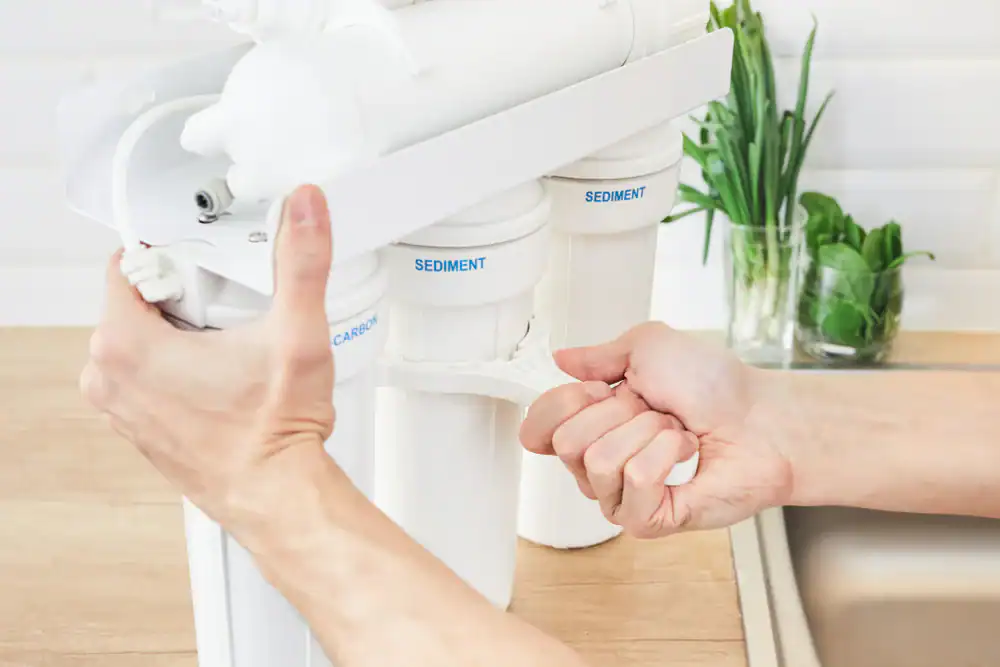
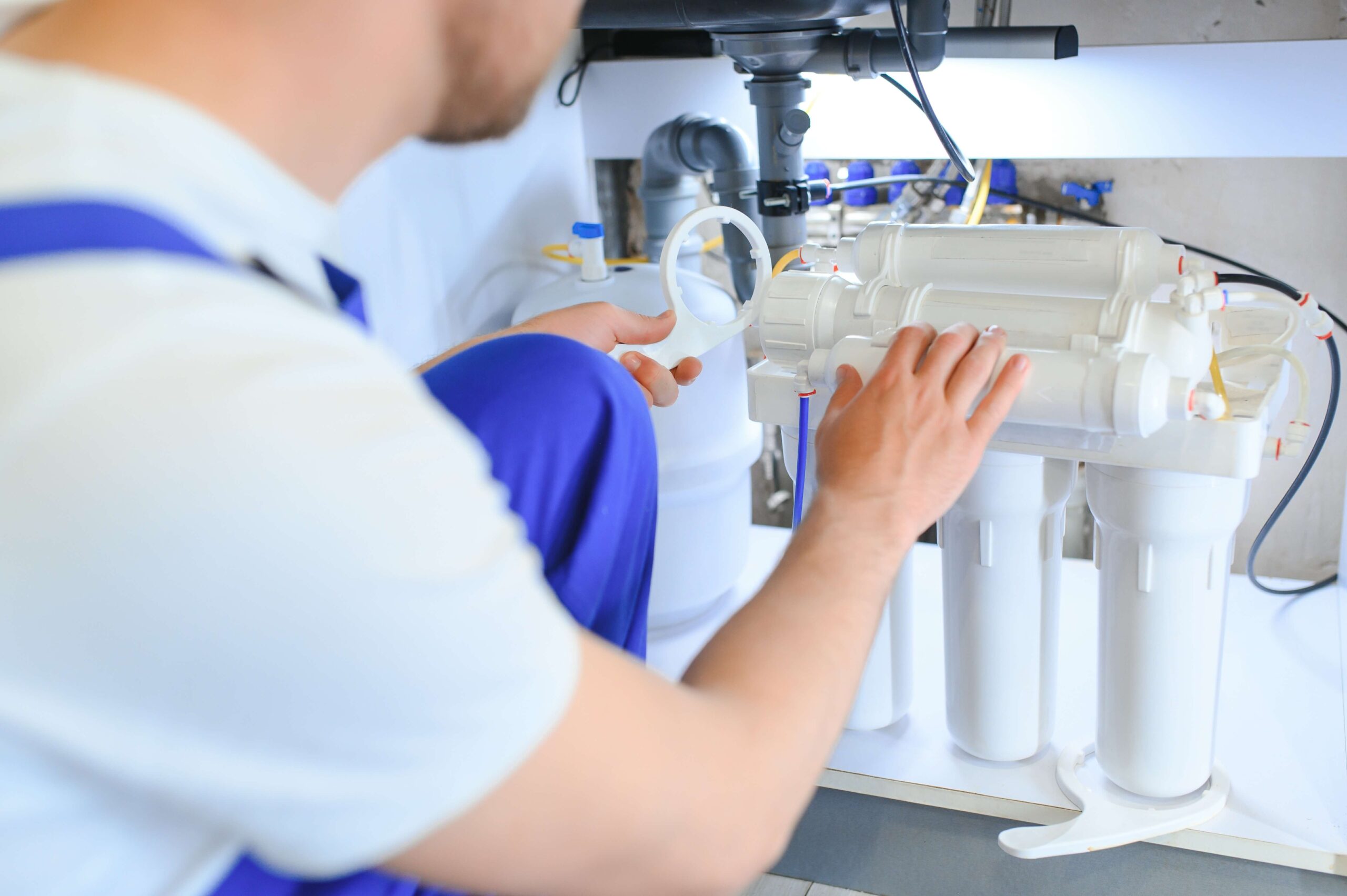
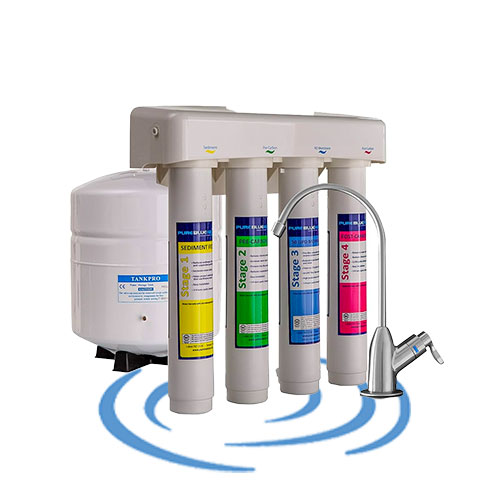
There are two primary directions most Tangerine homeowners go, and the right choice depends on what you’re trying to solve. An under-sink reverse osmosis system targets your drinking and cooking water directly it installs beneath the kitchen sink, connects to a dedicated faucet, and runs your water through a multi-stage filtration process that removes dissolved minerals, chlorine and its byproducts, PFAS, nitrates, and a long list of other contaminants that Orange County’s treatment process doesn’t address.
It’s the most cost-effective starting point and the most common entry for homeowners who’ve been spending $50 to $100 a month on bottled water. A whole-house reverse osmosis or purification system goes further. It treats every water outlet in your Tangerine home showers, laundry, ice makers, every faucet which is where the real protection for your plumbing, appliances, and fixtures lives.
For a Tangerine home with 30-plus years of hard water scale already built up in the pipes, whole-house treatment is the comprehensive answer. It’s also our specialty, and it’s the system type we’re most equipped to size, install, and service correctly. For homeowners on private wells a real consideration in Tangerine’s rural, unincorporated pockets near the Orange-Lake County line the system design typically includes pre-treatment for iron, sediment, or hydrogen sulfide before the RO stage.
Orange County is also participating in PFAS litigation tied to its source water, and reverse osmosis is the only residential technology that removes PFAS at 99% or better. If that concern is on your radar, an RO system is the direct answer.
Technically, Orange County Utilities meets all federal legal standards for drinking water. But meeting legal standards and being genuinely clean are two different things. The Environmental Working Group’s tap water database flags multiple contaminants in Orange County’s water systems that exceed health guidelines even while staying within legal limits.
Orange County is also actively involved in litigation against PFAS manufacturers due to contamination concerns in the Floridan Aquifer the same aquifer that supplies Tangerine’s municipal water. On top of that, Orange County water consistently tests at 17.2 grains per gallon hardness, which is classified as extremely hard. The water won’t make you sick in the immediate sense, but the mineral load, chlorination byproducts, and potential PFAS presence are real, documented concerns.
A reverse osmosis system is the most effective household-level solution for all three and it’s the only technology that addresses PFAS at 99% or better removal.
A water softener and a reverse osmosis system solve different problems, and in a place like Tangerine, many homeowners end up needing both. A water softener addresses hardness it exchanges calcium and magnesium ions for sodium, which protects your pipes, appliances, and fixtures from scale buildup. It’s genuinely effective for that purpose, and given that Orange County water runs at 17.2 grains per gallon, a softener alone can make a significant difference in how long your water heater and plumbing last.
A reverse osmosis system does something different. It filters water through a semi-permeable membrane that removes dissolved contaminants including PFAS, nitrates, chlorine byproducts, heavy metals, and the residual hardness minerals a softener’s ion exchange process doesn’t fully eliminate. Most people use an RO system specifically for their drinking and cooking water, because that’s where what you’re actually consuming matters most. The two systems work well together softening protects the home, RO protects the people in it.
Tangerine is an unincorporated community in Orange County, and its rural, large-lot character means a meaningful portion of homes draw water from private wells rather than Orange County Utilities. If you’re on a well, your water is completely unregulated and untested by any government agency unless you initiate the testing yourself. That’s a significant difference from municipal water, where at least some monitoring is happening.
Well water in this part of Orange County typically draws from the Upper Floridan Aquifer, where hardness can run anywhere from 15 to 40-plus grains per gallon. Iron levels are also commonly elevated in lake-adjacent areas like those near Lake Ola and Lake Beauclaire which shows up as orange staining on fixtures, driveways, and laundry. Hydrogen sulfide, which produces the rotten egg odor common in Florida well water, is another frequent issue.
The Florida Department of Health in Orange County also specifically flags areas near old citrus groves and Tangerine’s entire identity is built on its citrus agricultural past as warranting well testing for legacy pesticide residues including EDB. If you’re on a well, a water test isn’t optional. It’s the only way to know what system you actually need.
The cost range is wide because the right system varies significantly depending on your water source, your home’s size, and what the water test actually shows. A quality under-sink reverse osmosis system professionally installed, multi-stage, with a dedicated faucet typically runs in the range of $500 to $1,200 installed, depending on the number of filtration stages and the membrane rating. That’s the entry point for most homeowners who want clean drinking water without the ongoing cost of bottled water.
A whole-house reverse osmosis or whole-house purification system is a larger investment, generally starting around $2,500 to $5,000 or more depending on home size, water flow requirements, and whether pre-treatment for iron or sediment is needed. For Tangerine homes on private wells with elevated iron or hardness, pre-treatment adds to the system cost but is necessary to protect the RO membrane and maintain performance over time.
The honest comparison is this: the average Tangerine family spending $75 a month on bottled water spends $900 a year on water that mostly came from a municipal RO system to begin with. A residential system pays for itself, and it lasts 15 to 20 years with proper maintenance.
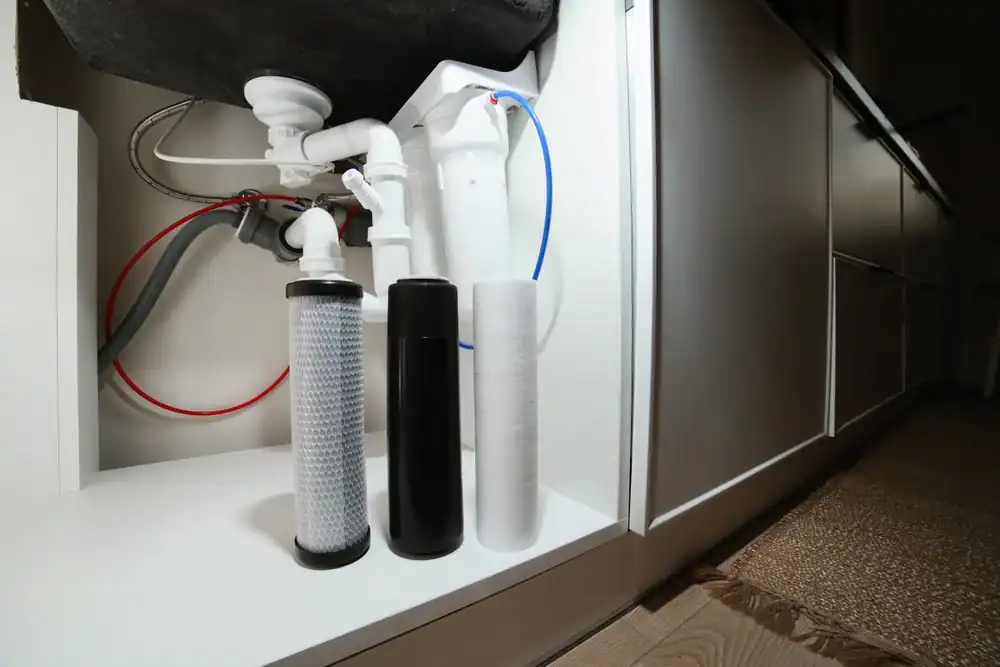
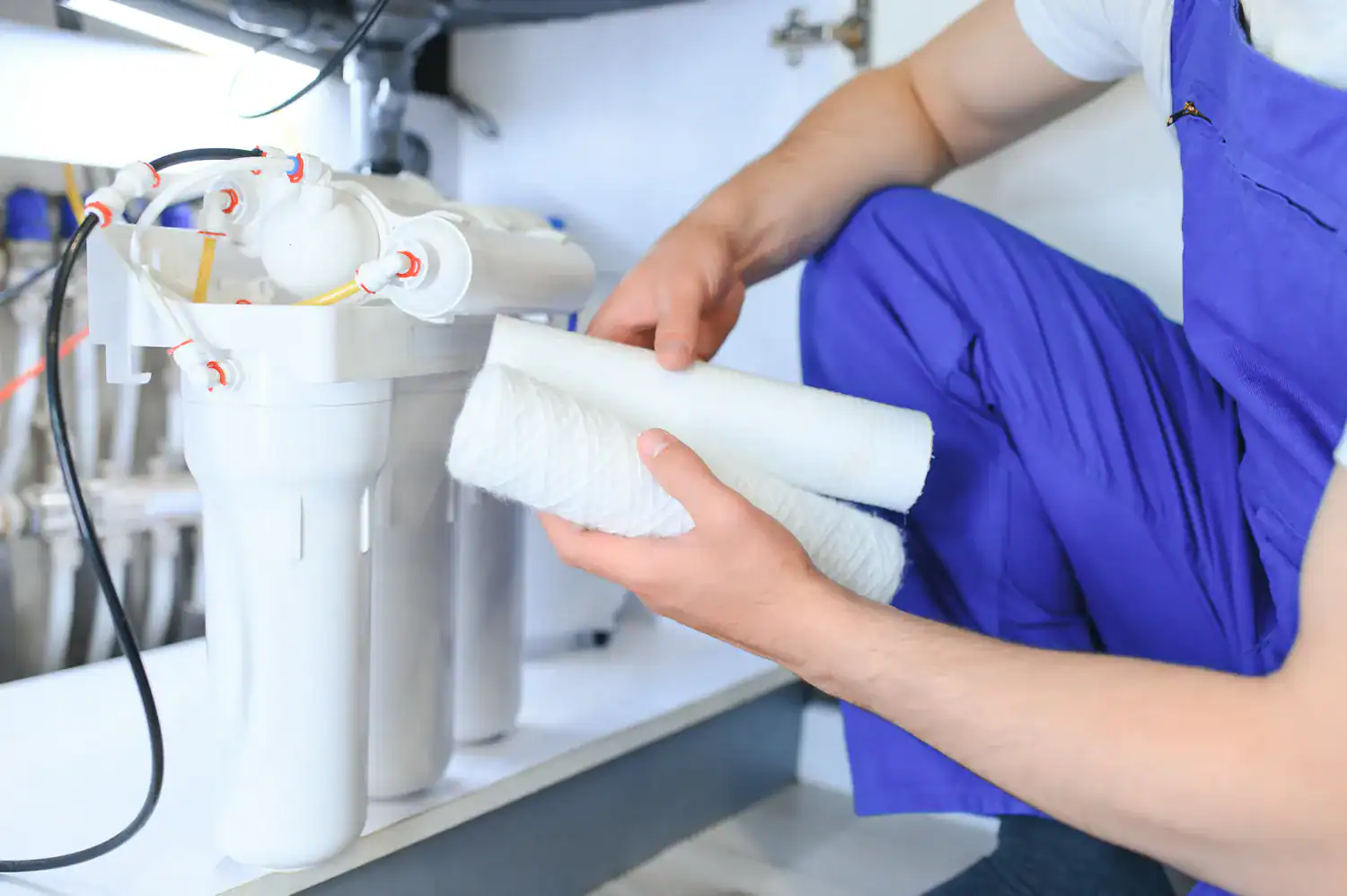
For a standard under-sink RO system, pre-filters and post-filters typically need replacement every 6 to 12 months, depending on your water quality and usage volume. The RO membrane itself lasts longer usually 2 to 3 years under normal conditions, though in areas with very high TDS (total dissolved solids) like Orange County’s aquifer-fed water, you may be on the shorter end of that range. Monitoring your system’s output quality is the most reliable indicator if the water starts tasting off or your TDS meter shows rising levels, it’s time to check the membrane.
For whole-house systems, the maintenance schedule depends on the system design and what pre-treatment components are included. Systems with iron filters or sediment pre-filters serving Tangerine well water users will have their own service intervals on top of the RO membrane schedule. The key thing to understand is that a neglected RO system doesn’t just stop working it can actually pass more contaminants through a degraded membrane than a well-maintained system removes.
We handle ongoing maintenance and filter replacements, which is part of why the zero-complaint BBB record matters: we’re still reachable and responsive after the sale.
Please provide your email address so that we can stay in touch and answer any questions you have! We will be reaching back out shortly.
"*" indicates required fields