Reach Out Today
Please provide your email address so that we can stay in touch and answer any questions you have! We will be reaching back out shortly.

Hear from Our Customers
The first thing most South Davis Shores homeowners notice is the taste. That flat, slightly chemical flavor coming from your tap is free chlorine added by the City of St. Augustine after their treatment process. It’s doing its job in the distribution system, but by the time it reaches your faucet on Anastasia Island, it’s created disinfection byproducts you don’t want in your drinking water. Our reverse osmosis system removes those before the water ever reaches your glass.
Beyond taste, there’s the appliance angle. The Floridan Aquifer water that feeds St. Augustine’s system carries a heavy mineral load and in a coastal South Davis Shores home where salt air is already working against your fixtures and hardware, hard water scale accelerates wear on your water heater, dishwasher, and coffee maker faster than most homeowners realize. Treating your water at the source protects those investments before damage shows up on a repair bill.
For homeowners in older South Davis Shores properties homes built before the mid-1980s that may still have original plumbing or lead solder in the connections the stakes are higher. The St. Augustine water system has documented lead presence at the 90th percentile in its distribution network. A point-of-use reverse osmosis system is the most reliable way to eliminate that risk at the tap, regardless of what’s happening upstream.
We do one thing: water treatment. Not plumbing, not water heaters, not HVAC. Just water purification, filtration, softening, and testing. That focus matters because the water conditions on Anastasia Island are specific, and a generalist company working from a catalog isn’t going to catch the nuances that a dedicated specialist will.
Before anything gets recommended or installed, your water gets tested. Real lab analysis not a quick hardness check designed to justify the most expensive system on the shelf. The results drive the recommendation. If your South Davis Shores home needs an under-sink reverse osmosis system for drinking water, that’s what you’ll hear. If the test shows broader issues worth addressing at the whole-house level, that conversation will be grounded in actual data from your specific tap.
We hold a BBB A-rating with zero complaints on record a fact you can verify yourself at bbb.org and maintain active membership in the National Water Quality Association. Those aren’t marketing claims. They’re public records that reflect how we’ve operated over time.
It starts with a water test. We analyze your tap water using lab-grade testing to identify exactly what’s present mineral content from the Floridan Aquifer, disinfection byproducts from the city’s chlorine treatment, lead levels, and anything else that shows up in your specific supply. For a South Davis Shores home, that test often tells a more complete story than homeowners expect, particularly in properties with older plumbing that predates modern lead-free standards.
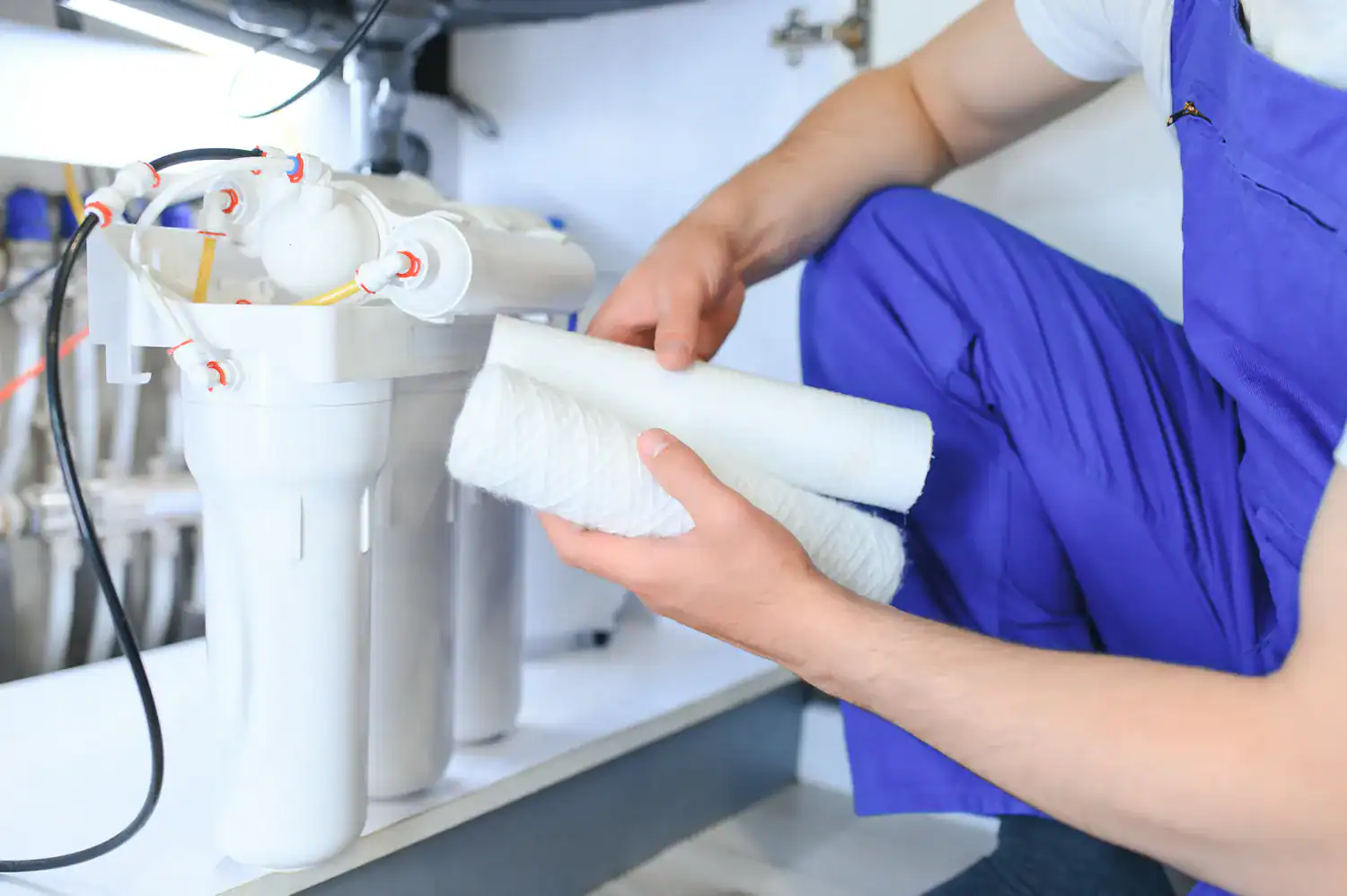
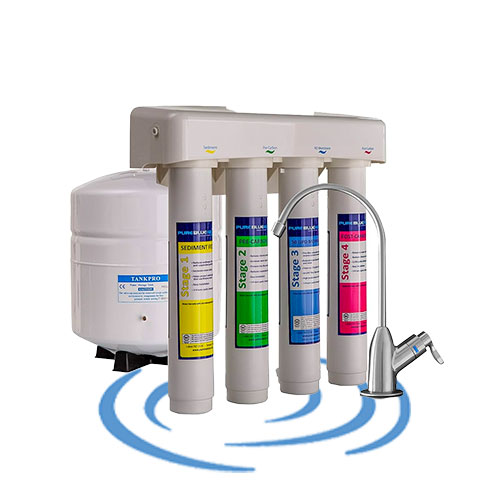
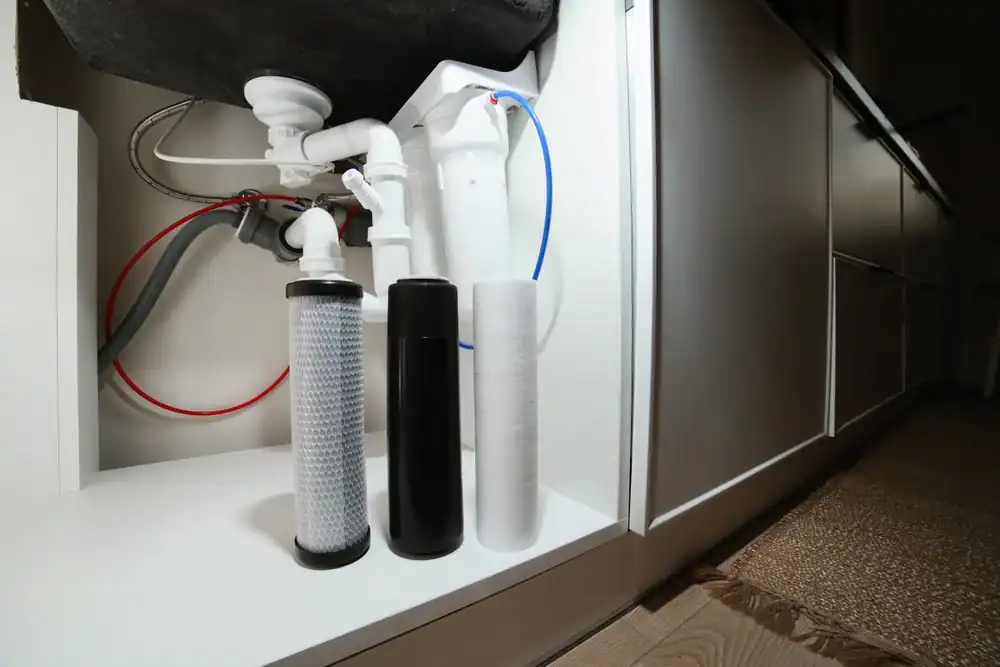
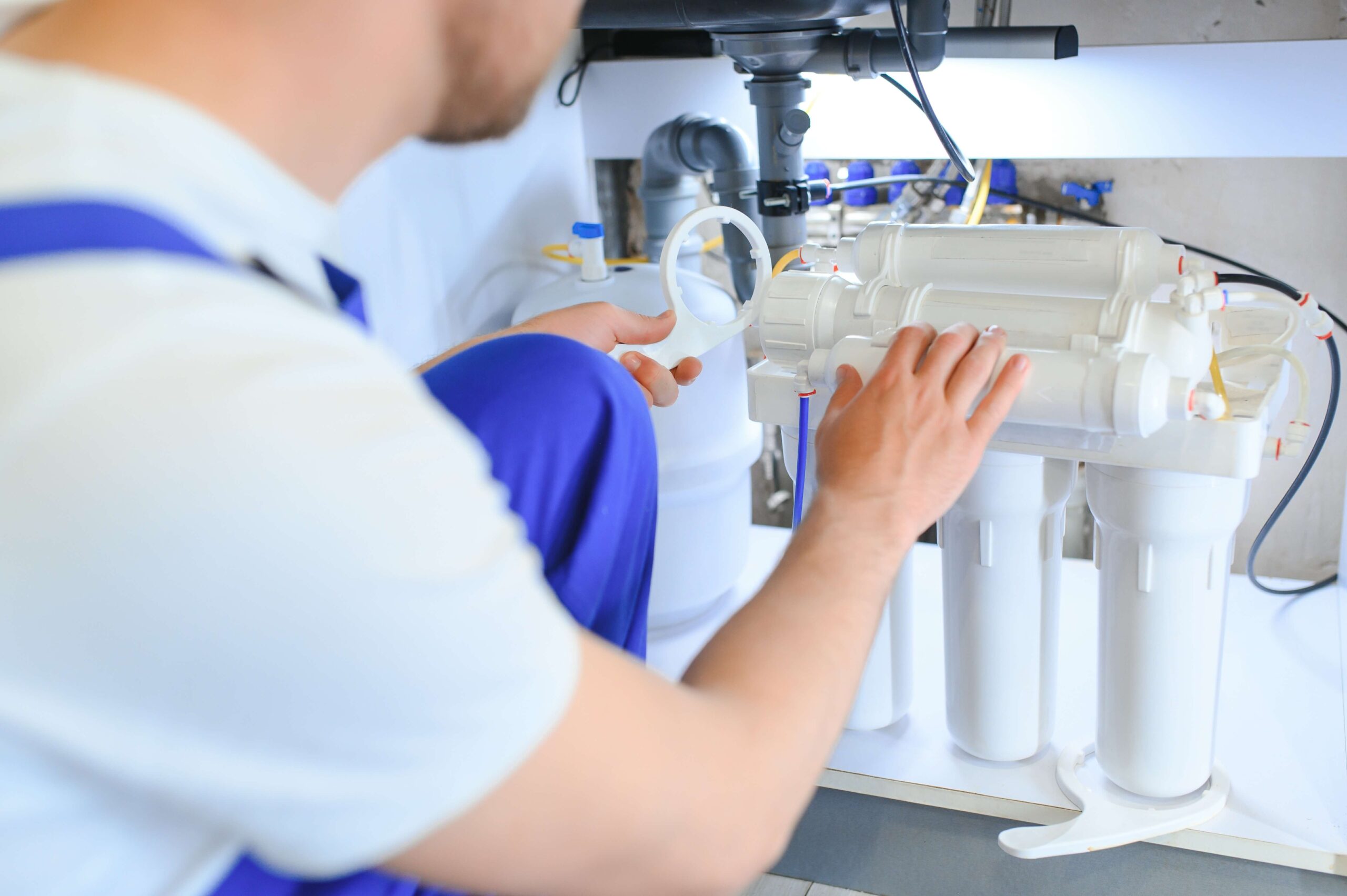
Once the results are in, you get a clear explanation of what’s in your water and what it would take to address it. No pressure, no upsell toward a system you don’t need. If an under-sink reverse osmosis system is the right fit for your drinking water, the installation is clean and unobtrusive typically mounted beneath the kitchen sink with a dedicated faucet, and sized to the actual demand of your household. Whole-house systems follow the same logic: sized to your home’s flow rate and water profile, not pulled off a standard shelf.
After installation, we handle ongoing maintenance filter replacements, membrane checks, system performance monitoring. In a coastal environment where salt air affects hardware and seasonal storm activity can create temporary fluctuations in municipal water quality, having a company that stays engaged after the install is not a small thing. We service what we sell, and in this industry, that distinction is worth paying attention to.
Ready to get started?
The City of St. Augustine runs its own reverse osmosis and nanofiltration plant to treat water drawn from the Upper Floridan Aquifer the city knows what’s in that aquifer and treats it accordingly at the municipal level. What the city cannot control is what happens to that water during distribution: the free chlorine added for disinfection reacts with organic matter in the pipes and produces trihalomethanes and haloacetic acids by the time the water reaches homes in South Davis Shores. The Environmental Working Group has flagged both contaminants specifically for the St. Augustine WTP. An NSF/ANSI 58-certified reverse osmosis system installed at the point of use removes those byproducts before they reach a glass or a pot on your stove.
For homeowners running short-term rentals through Airbnb or VRBO a documented and active segment of the South Davis Shores market water quality is also a guest experience issue. Reviews that mention poor-tasting water or mineral buildup on fixtures affect ratings and revenue. A whole-house purification system addresses that at the property level, not just the kitchen sink.
Every system we install in the St. Johns County area is sized and configured based on the actual test results from that specific home. Active military, veterans, and first responders receive a $500 discount a meaningful offer in a county with strong ties to Naval Air Station Jacksonville and Naval Station Mayport. The Floridan Aquifer isn’t going anywhere, and neither are the disinfection byproducts that come with chlorine treatment. The right system, installed correctly and maintained over time, handles both.
Technically, the City of St. Augustine’s water meets EPA legal maximum contaminant levels so by the regulatory definition, yes, it’s safe. But “meets legal limits” and “no known health risk” aren’t the same thing. The St. Augustine water system has 16 EPA violations on record, with the most recent occurring in 2024, and three contaminants in the system exceed EPA health goals the level at which no known adverse effects occur even while remaining within legal limits. Contaminants identified in the system include lead at the 90th percentile, chlorate, and strontium.
For a South Davis Shores homeowner, especially one in a home built before 1986 with older plumbing or original fixtures, that lead figure is worth taking seriously. The city’s treatment plant processes the water before it enters distribution, but lead can enter the supply between the plant and your tap through aging pipes, old solder, or older fixtures. A point-of-use reverse osmosis system removes lead at the point of consumption, which is the most direct way to address that risk regardless of what’s happening in the distribution network.
The City of St. Augustine uses free chlorine as a disinfectant in its distribution system it’s added after the water leaves the treatment plant to keep the supply safe through miles of pipes before it reaches your South Davis Shores home. That’s standard practice and it works. The problem is that free chlorine has a noticeable taste and smell, and as it travels through the distribution system, it reacts with organic matter to form trihalomethanes (TTHMs) and haloacetic acids (HAAs) disinfection byproducts that the Environmental Working Group has specifically flagged in the St. Augustine WTP water supply.
By the time that water travels across the Bridge of Lions and through the distribution lines to your tap on Anastasia Island, those byproducts are present. A reverse osmosis system installed at the point of use typically under the kitchen sink removes both the residual chlorine and the disinfection byproducts before the water reaches your glass. The difference in taste is immediate and noticeable.
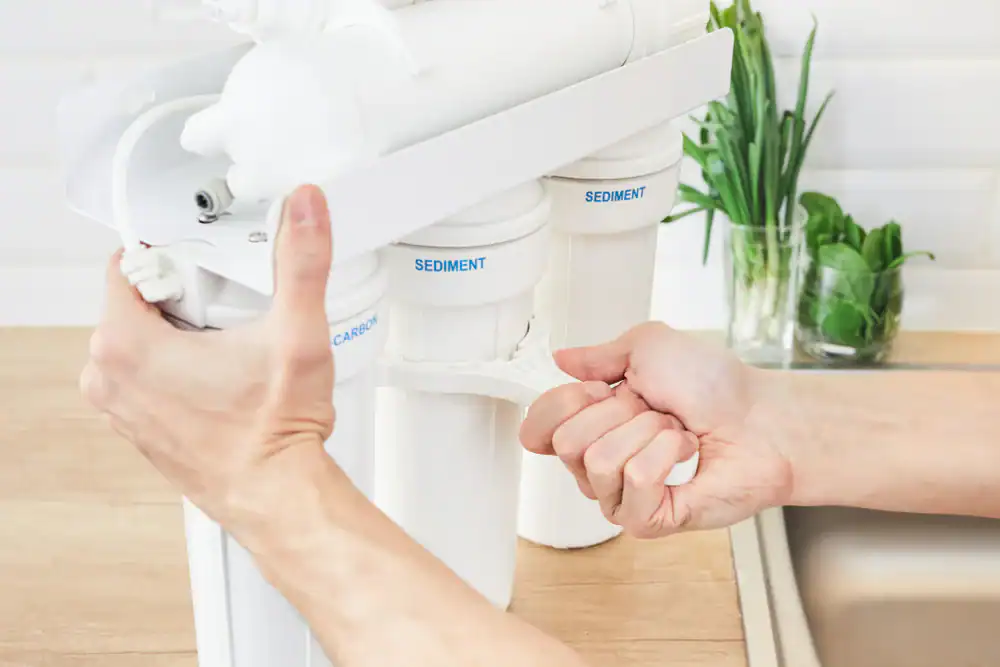
A well-maintained reverse osmosis system typically lasts 10 to 20 years. The system itself the housing, the tank, the faucet is built to last. What requires regular attention are the filter cartridges and the membrane. Pre-filters and post-filters generally need replacement every 6 to 12 months depending on your water quality and usage volume. The RO membrane itself, which does the heavy lifting of removing dissolved contaminants, typically lasts 2 to 5 years before it needs replacement.
In a South Davis Shores home, the coastal environment adds a layer of consideration. Salt air accelerates corrosion of hardware and fittings over time, so the quality of the components used in installation matters and so does having a company that stays engaged after the install to catch issues before they become failures. Annual maintenance visits keep the system performing at full capacity and extend its overall lifespan. The ongoing cost of maintaining a residential RO system typically runs $100 to $200 per year in filter replacements, which is a fraction of what most households spend on bottled water annually.
A properly certified reverse osmosis system specifically one certified to NSF/ANSI Standard 58 removes 95 to 99 percent of dissolved contaminants from your drinking water. That includes lead, chlorine and chloramine, trihalomethanes, haloacetic acids, nitrates, fluoride, arsenic, chromium, barium, radium, and a wide range of other dissolved solids. For South Davis Shores tap water specifically, the most relevant targets are the disinfection byproducts produced by free chlorine treatment TTHMs and HAAs as well as the lead documented in the distribution system at the 90th percentile.
What RO does not remove on its own is biological contamination bacteria and viruses. For that, a UV disinfection stage is added alongside the RO membrane, which is particularly worth considering in a coastal community on a hurricane evacuation zone where storm events can temporarily compromise municipal water pressure and create brief windows of contamination risk. When we test your water and design your system, we account for what’s actually present in your supply not just what’s typically present in a generic Florida water profile.
It depends on what you’re trying to solve. An under-sink reverse osmosis system addresses your drinking and cooking water it’s a point-of-use solution that produces highly purified water at a dedicated faucet, typically in the kitchen. For most homeowners whose primary concern is what they’re drinking and cooking with, that’s the right starting point and it handles the most critical exposure point.
A whole-house system goes further it treats every water outlet in your South Davis Shores home, which means your showers, your laundry, your dishwasher, and your water heater are all running on treated water. In a coastal environment where the combination of hard Floridan Aquifer water and salt air corrosion creates accelerated wear on appliances and fixtures, a whole-house approach has a real appliance-protection argument behind it. Scale buildup in a water heater shortens its lifespan measurably, and replacing a water heater or dishwasher in a coastal home isn’t cheap. The right answer for your specific home comes from the water test once you know what’s in your water and where the biggest concerns are, the decision between point-of-use and whole-house becomes straightforward rather than a guessing game.
Please provide your email address so that we can stay in touch and answer any questions you have! We will be reaching back out shortly.
"*" indicates required fields