Reach Out Today
Please provide your email address so that we can stay in touch and answer any questions you have! We will be reaching back out shortly.

Hear from Our Customers

If you’ve been living with a faint sulfur smell in the morning, orange rings around your toilet bowl, or white scale building up on your fixtures, that’s the Floridan Aquifer doing what it does pushing calcium, magnesium, iron, and sulfur compounds up through limestone and straight into your Ross Prairie home. It’s not a fluke. It’s the geology of southwestern Marion County, and it affects nearly every private well in this area.
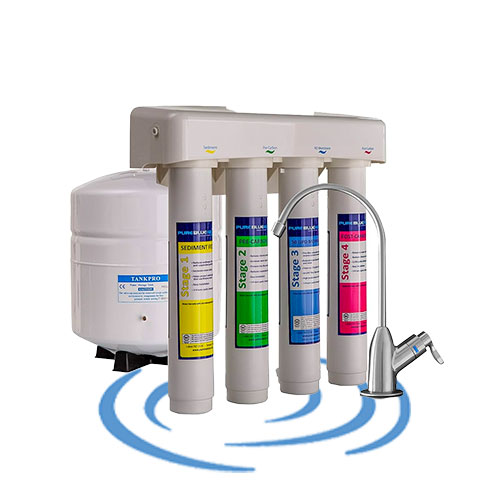
A properly installed reverse osmosis system removes 95–99% of dissolved contaminants at the point where you actually drink your kitchen tap. That means no more sulfur taste, no more wondering what’s in your water, and no more buying cases of bottled water every week because you don’t trust what’s coming out of the faucet.
For families who’ve recently moved into the growth corridor near Marion Oaks or retirees settled into Spruce Creek Preserve, this is often the first real solution they’ve found after months of dealing with water that just doesn’t seem right. The 2026 drought declared by the Southwest Florida Water Management District has made this more urgent. When aquifer levels drop, mineral concentrations go up. The water that was borderline last year may be noticeably worse right now and if you’re on a well, there’s no utility company managing that for you.
You are the last line of defense for your family’s drinking water, and a reverse osmosis system is the most effective tool available for that job.
We don’t install water heaters. We don’t fix plumbing. We don’t offer HVAC services with a water filter tacked on at the end of the invoice. Water treatment is our entire business every technician, every piece of training, every recommendation we make is focused on one thing. That kind of focus is rare, and in a market where generalist contractors sell water systems they barely understand, it’s a real advantage for you.
We hold an A-rating with the Better Business Bureau, a 5-star rating, and zero complaints on record which we’ll tell you is uncommon in this industry, and we’re right. We’re also members of the National Water Quality Association, which means our training is specific to Florida’s water chemistry challenges, including the mineral-heavy well water that defines communities like Ross Prairie, the SR 200 corridor, and the surrounding southwestern Marion County area.
If you’re active military, a veteran, or a first responder, there’s a $500 discount waiting for you. No fine print.
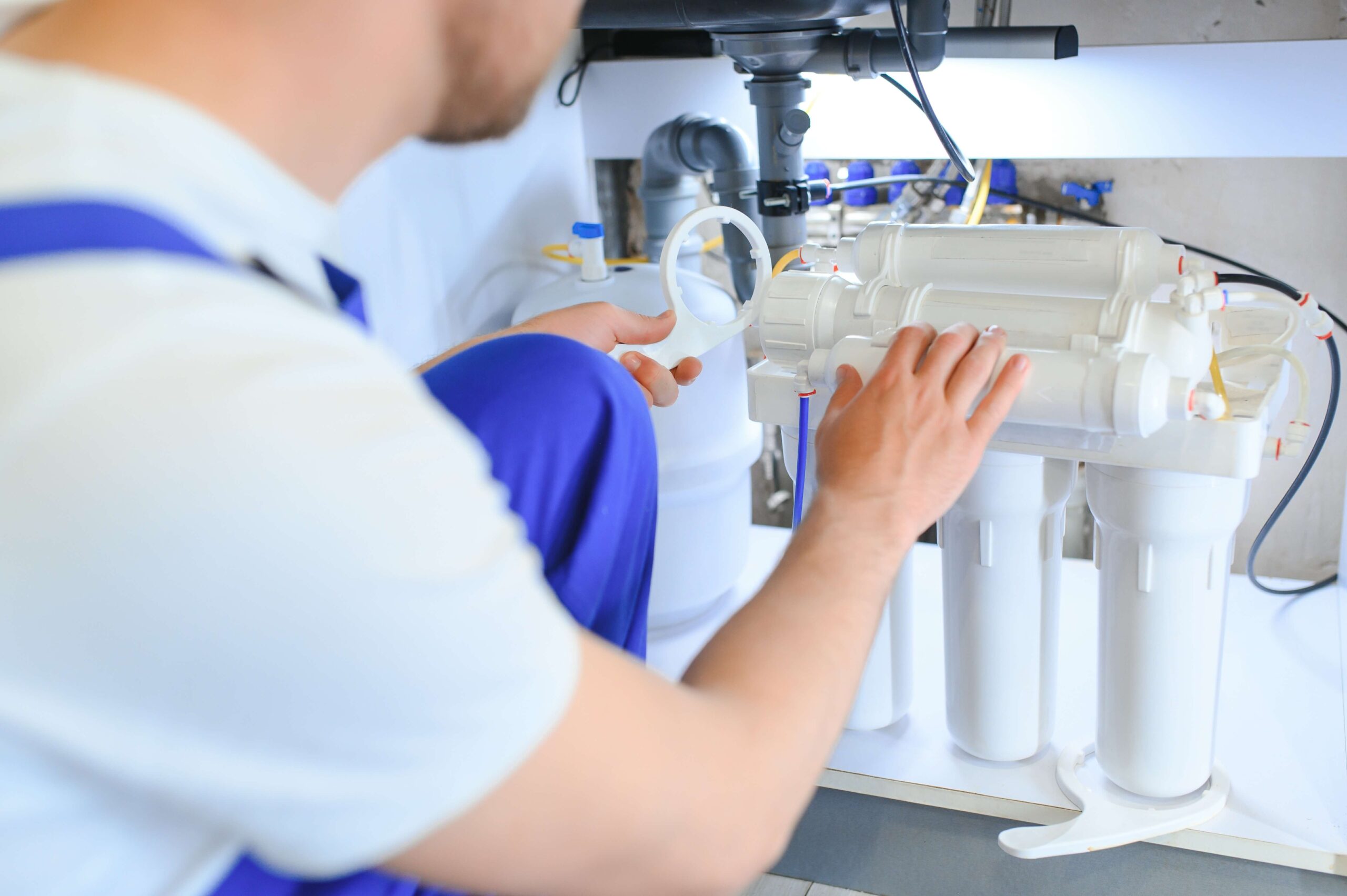
It starts with a real water test not a quick field check designed to justify whatever system is on the truck. We perform lab-grade analysis of your specific water supply before recommending anything. That matters in Ross Prairie because your well’s chemistry depends on your depth, your local geology, and your land use context.
A property near one of the equestrian operations off SR 200 may have different nitrate levels than a home deeper into a residential subdivision. The test tells the story. Once the analysis is complete, you get a recommendation based on what’s actually in your water.
For most Ross Prairie homeowners, that means an under-sink reverse osmosis system for drinking water paired with a whole-house treatment solution that handles the hardness and iron load before it reaches your appliances and fixtures. The installation itself is clean and straightforward no permits required for under-sink RO in Florida, and the whole-house components are sized and installed by certified technicians who know what they’re doing.
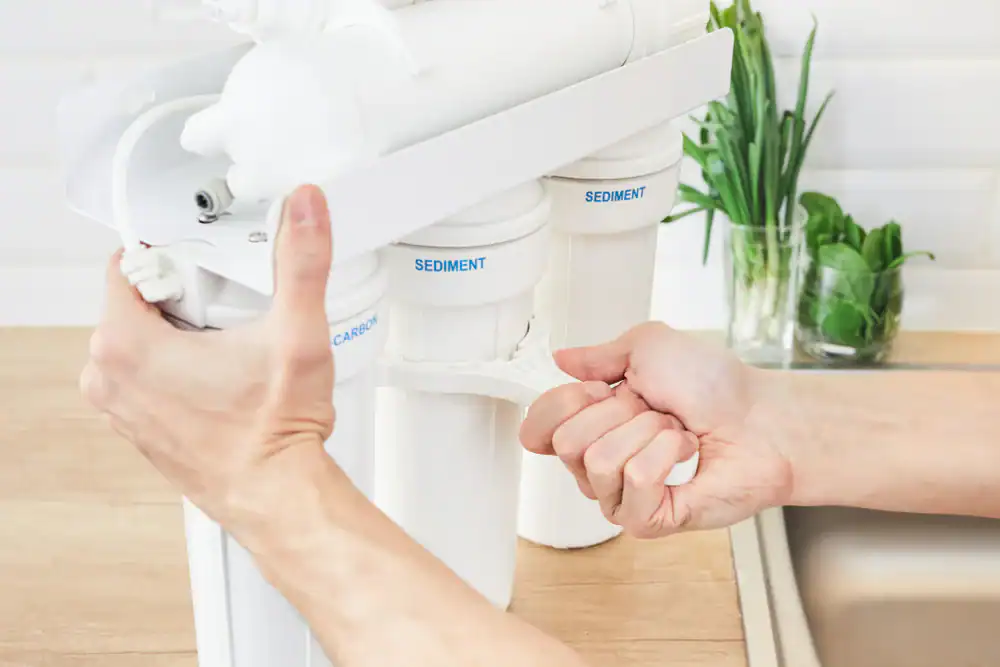
After installation, the system runs quietly in the background. Annual filter changes keep it performing at full capacity, and because we service what we sell, you’re not left figuring out maintenance on your own. When something needs attention, you call the same company that installed it and we show up.
Ready to get started?
The reverse osmosis systems we install are not off-the-shelf units shipped from a warehouse and handed to whoever answers the door. We size them for your specific water chemistry, build them with components manufactured in the USA, and install them with technicians whose entire professional focus is water treatment not plumbing, not HVAC, not home services in general.
For Ross Prairie homeowners, that typically means a multi-stage RO system at the drinking water point of use, capable of filtering down to 0.0001 microns. That removes the dissolved minerals from the Floridan Aquifer, the nitrates that can accumulate near agricultural land, any bacterial byproducts, and the chemical compounds that no pitcher filter or refrigerator filter comes close to addressing.
If your water analysis shows high iron or sulfur loads which is common in this part of Marion County we may recommend whole-house pre-treatment to protect your appliances and plumbing before water ever reaches the RO membrane. The system lifespan with proper maintenance runs 15 to 20 years.
Annual maintenance typically costs $100–$200 in filter changes and periodic membrane checks. Compare that to $600–$1,200 a year in bottled water which many well water households in this area are already spending and the math is straightforward. This is a long-term investment in your home and your family’s health, and it’s one that we back with a service commitment that doesn’t end at installation.
Technically, well water in Ross Prairie isn’t automatically unsafe but “not immediately dangerous” and “something you’d want to drink without treatment” are two very different things. The Floridan Aquifer, which supplies virtually every private well in southwestern Marion County, naturally carries dissolved calcium, magnesium, iron, sulfur compounds, and in some areas, elevated nitrates from agricultural runoff.
None of those are things you want in your drinking water long-term, and none of them are removed by simply running water through a standard whole-house filter. The Marion County Health Department offers no-cost well water sampling for residents and specifically tests for bacteria, nitrates, lead, iron, copper, hardness, sulfur, chlorine, and pH because all of those are known issues in local well water.
If you haven’t had your well tested recently, that’s the honest starting point. What we do after that test is recommend a system based on what’s actually in your water, not a canned pitch for the most expensive option on the list.
A properly functioning reverse osmosis system filters water down to 0.0001 microns, which means it removes the vast majority of what makes well water in this area problematic. That includes dissolved minerals like calcium and magnesium (the source of hard water scale), iron (the cause of orange staining on fixtures and driveways), sulfur compounds (the source of that rotten-egg smell), nitrates, heavy metals, PFAS compounds, and bacterial byproducts.
Most under-sink RO systems remove 95–99% of total dissolved solids. For Ross Prairie homeowners specifically, the most common complaints sulfur odor, iron staining, scale buildup, and water that just doesn’t taste right are all directly addressed by a reverse osmosis system at the drinking water point of use.
It won’t replace a whole-house softener for protecting your appliances and plumbing from hardness, but for the water your family actually drinks and cooks with, it’s the most thorough solution available at any price point.
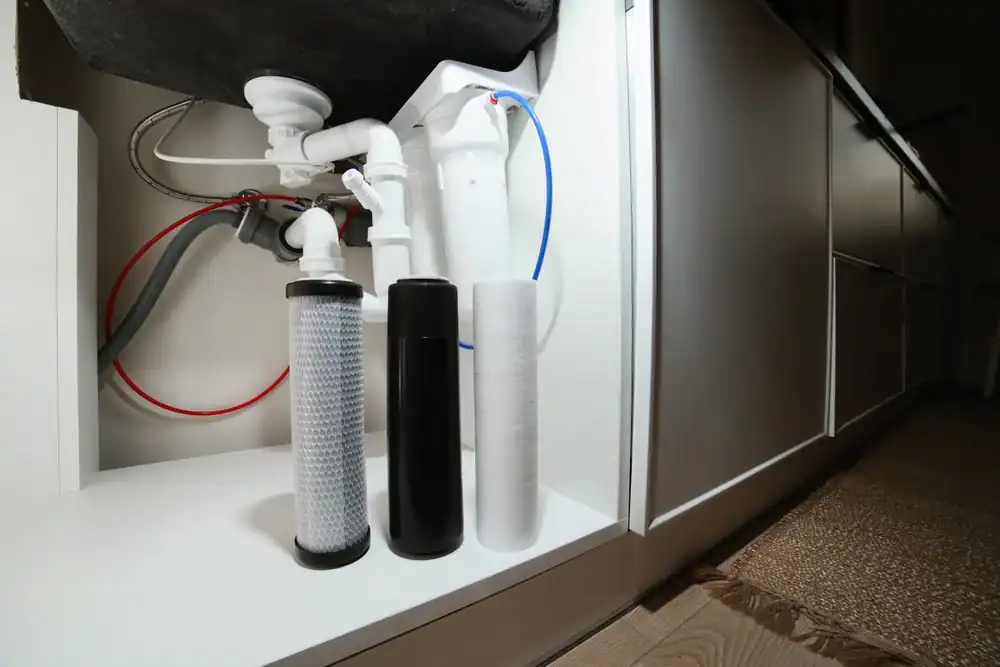
Most whole-house filters installed at the well pump are sediment filters or carbon filters. They’re designed to catch larger particles, reduce chlorine taste, and handle basic filtration which is useful, but it’s not the same thing as reverse osmosis.
A sediment filter doesn’t remove dissolved minerals, nitrates, sulfur compounds, or heavy metals. It removes what you can see or smell at a basic level. An RO membrane filters at the molecular level, which is a fundamentally different category of treatment. Think of it this way: your whole-house filter is doing rough work at the entry point, and an under-sink RO system is doing precision work at the point where you actually drink.
In southwestern Marion County, where the Floridan Aquifer delivers water with a significant dissolved mineral load, you often need both pre-treatment to protect your appliances and plumbing, and a point-of-use RO system to handle what ends up in your glass. Our water analysis will tell you exactly what combination makes sense for your specific well.
Yes, and it’s worth taking seriously. When the Southwest Florida Water Management District declares a water shortage which they did for Marion County in 2026 due to severe-to-extreme drought conditions it means aquifer levels are dropping. When water levels in the Floridan Aquifer fall, the same dissolved minerals that are always present become more concentrated in a smaller volume of water.
The result is that wells producing moderately hard or mildly sulfurous water under normal conditions can produce noticeably worse water during extended drought periods. There’s also a secondary concern: as water tables fluctuate, the risk of surface water intrusion into private wells increases. That can introduce bacteria and organic contaminants that aren’t normally present.
If your water has changed in taste, smell, or appearance over the past several months, the drought is a likely contributing factor and it’s a good reason to get a current water test rather than relying on results from a year or two ago. A reverse osmosis system provides consistent water quality regardless of what the aquifer is doing seasonally.
Installation costs vary based on the quality of the components, the complexity of your existing plumbing setup, and whether any pre-treatment is needed based on your water test results. What’s worth factoring in is the ongoing cost comparison.
If your household is currently buying bottled water because you don’t trust your well water which is common in Ross Prairie and the surrounding area you’re likely spending $600–$1,200 per year just on drinking water. Most families recover their RO installation cost within two to four years on that basis alone, and the system runs for 15–20 years with basic annual maintenance costing $100–$200.
If you’re active military, a veteran, or a first responder, the $500 discount we offer brings the upfront cost down significantly. The best way to get an accurate quote is to schedule a free water analysis that’s where we test your water and discuss what system makes sense for your home and budget.
Please provide your email address so that we can stay in touch and answer any questions you have! We will be reaching back out shortly.
"*" indicates required fields
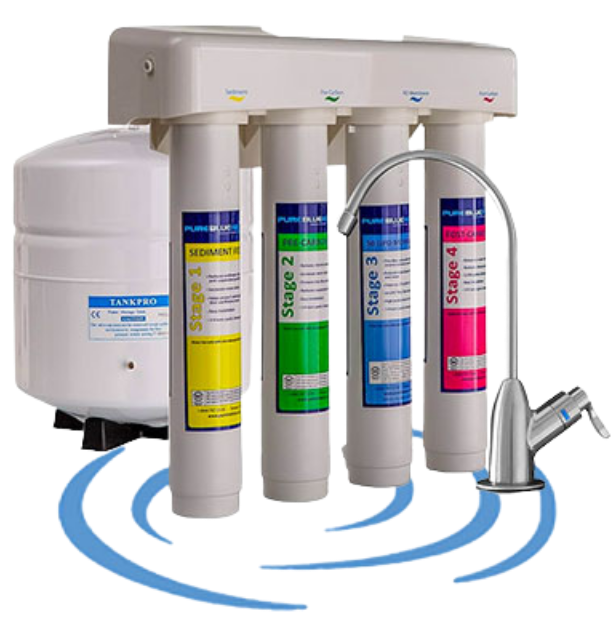
Get a free reverse osmosis drinking water system with the purchase of any whole-home water purification system.
*Cannot be combined with other offers. Mention this special when you call.