Reach Out Today
Please provide your email address so that we can stay in touch and answer any questions you have! We will be reaching back out shortly.

Hear from Our Customers

When your water is right, you notice it everywhere. The sulfur smell that hits you at the kitchen sink gone. The white crust building up around your faucets and inside your water heater stops forming. The rust-colored stains on your toilet bowl and shower floor no longer a weekly scrubbing project.
For Reddick homeowners on private wells, the Floridan Aquifer is the only thing standing between your tap and the ground beneath northwest Marion County limestone-filtered water loaded with calcium, magnesium, and whatever nitrogen has leached through the sandy soil from the horse farms and pastureland surrounding your property. There’s no municipal treatment plant catching any of it before it reaches you.
A properly installed reverse osmosis system removes up to 95% of those dissolved contaminants, including nitrates, which a standard pitcher filter won’t touch. The long-term picture matters too. Hard water quietly destroys water heaters, clogs pipes, and shortens the life of every appliance connected to your plumbing. Fixing your water now protects that infrastructure for the next 15 to 20 years and eliminates the $50 to $100 a month most families spend on bottled water in the process.
We don’t install water heaters, fix drains, or service HVAC systems. Water treatment is the only thing on our menu and that focus shows up in the results. When a technician’s entire career is built around water filtration, they arrive at your Reddick property already knowing what Floridan Aquifer well water looks like, what agricultural communities like northwest Marion County tend to produce in a water test, and what system actually solves the problem versus what just looks good on a spec sheet.
We hold a BBB A-rating with a 5-star score and zero complaints on record verifiable right now at bbb.org. That kind of track record is rare in this industry, and it matters when you’re trusting someone to install a system you’ll rely on for the next two decades. We’re also a member of the National Water Quality Association, which means the technical standards behind every recommendation are grounded in real industry science, not a sales script.
It starts with a real water test not a quick hardness check designed to justify a sale, but a lab-grade analysis that tells you exactly what’s in your well water. For Reddick properties, that typically means looking at hardness levels, nitrate concentration, iron content, hydrogen sulfide, and any emerging contaminants like PFAS that may have entered the aquifer through agricultural activity or neighboring septic systems.
Marion County’s own septic-to-sewer conversion program exists specifically because septic leaching into the Floridan Aquifer is a documented problem your water test accounts for that reality. Once the analysis is complete, the recommendation is built around what your water actually contains, not a one-size-fits-all package. System sizing, filter configuration, and placement whether that’s an under-sink RO drinking water system for the kitchen or a whole-house reverse osmosis setup serving every tap on the property all depend on your specific results and your home’s usage.
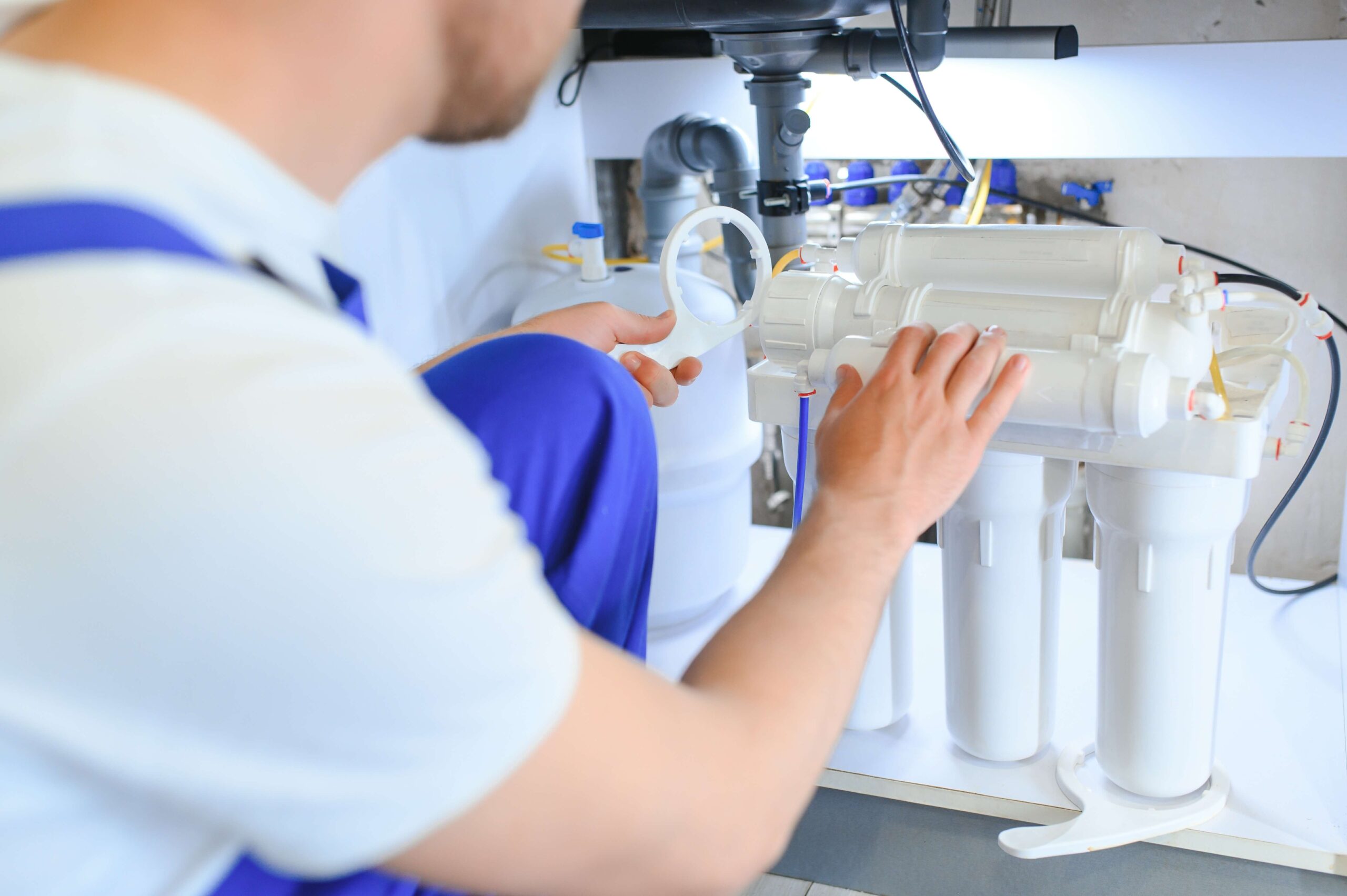
For larger equestrian properties in the Reddick corridor, that conversation sometimes extends to barn water and livestock systems as well. Installation is clean, professional, and explained as it happens. After the system is in, you’ll know how it works, when filters need replacing, and exactly who to call when it needs service because we service what we sell.
Ready to get started?
Every system we install in the Reddick area is configured after a real water analysis not before it. That distinction matters more here than in most places. The combination of the Floridan Aquifer’s natural mineral load, the nitrate risk from surrounding horse farms and agricultural operations, and the iron and sulfur chemistry common to north Marion County wells means your water profile is specific to your property.
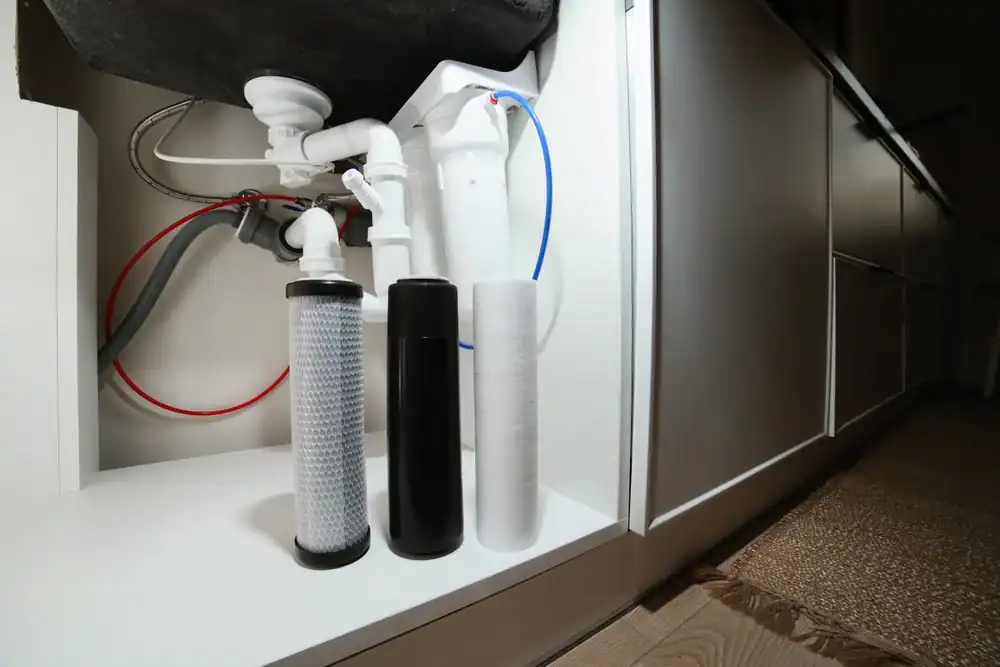
A system dialed in for a home in a Gainesville suburb isn’t the same system that belongs under the sink of a rural Reddick well home. For most Reddick households, the conversation starts with an under-sink reverse osmosis water filtration system a multi-stage unit that removes dissolved solids, nitrates, heavy metals, and PFAS at the point of use, delivering clean drinking water directly to your kitchen tap.
For whole-house needs, particularly on larger rural properties and equestrian operations common to the US-441 corridor between Reddick and Ocala, a whole-house reverse osmosis system treats every water source on the property. Both options are available, and the right one depends entirely on your water test results and how your property is set up. We also offer a $500 discount for military veterans and first responders a straightforward reduction off the total, no fine print. Marion County has a meaningful veteran community, and this discount reflects a direct commitment to the people in it.
If your home is on a private well in Reddick, the short answer is that you won’t know for certain until you test but the conditions strongly suggest it’s worth finding out. The Floridan Aquifer, which feeds virtually every private well in northwest Marion County, naturally carries high levels of calcium, magnesium, and dissolved minerals. Add in the agricultural activity surrounding Reddick horse farms, pastureland, training facilities and nitrate contamination becomes a real and documented risk, not a theoretical one.
The University of Florida’s own research on the Floridan Aquifer confirms that nitrates from agricultural operations and septic systems move easily into the aquifer in areas with sandy soils, which describes this part of Marion County accurately. A reverse osmosis system removes 85 to 95 percent of nitrates, along with heavy metals, PFAS, and the dissolved solids that create hard water scale and sulfur odor. A standard carbon filter or pitcher filter doesn’t come close to that level of removal. The only way to know exactly what your water contains and what it needs is a proper water analysis. That’s where the process starts.
A properly configured multi-stage reverse osmosis system removes a broad range of contaminants that show up regularly in Floridan Aquifer well water. That includes dissolved minerals like calcium and magnesium responsible for hard water scale, nitrates from agricultural runoff, iron that causes the reddish-brown staining on your fixtures and toilets, hydrogen sulfide that produces the sulfur odor common in north Marion County wells, lead, arsenic, and per- and polyfluoroalkyl substances commonly called PFAS or forever chemicals which have been detected in Florida groundwater sources and are not regulated or monitored for private well owners.
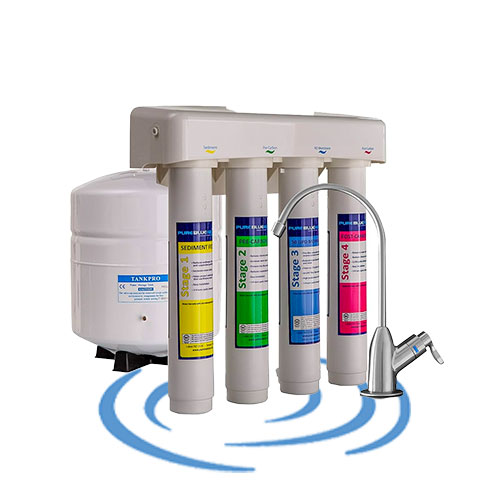
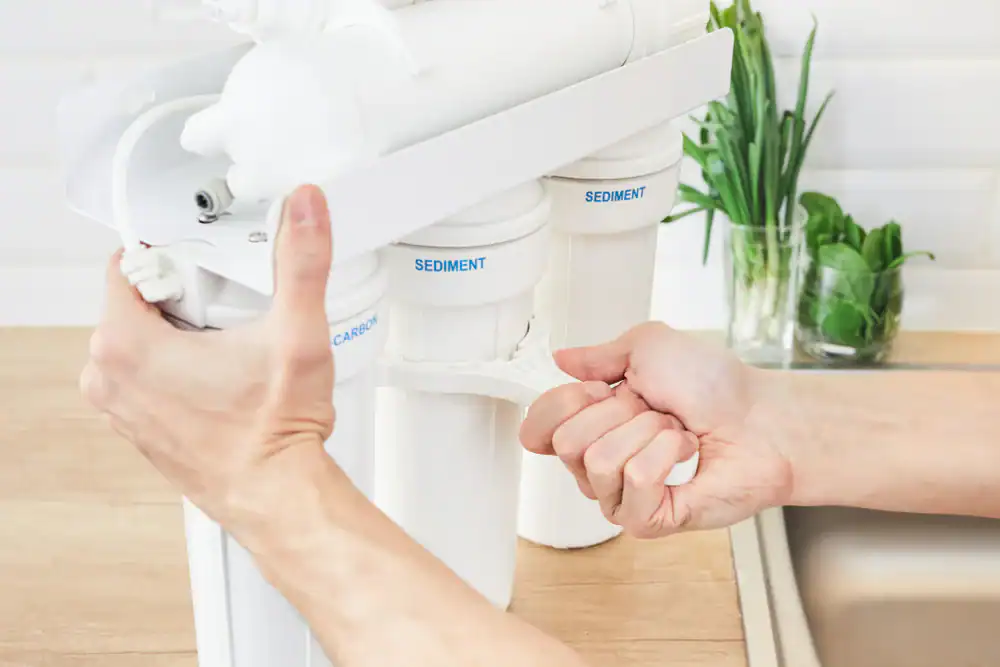
The filtration happens in stages. Water passes through sediment pre-filters, then a carbon stage that handles chlorine and organic compounds, then the RO membrane itself which is where the heavy lifting happens and finally a post-filter before it reaches your tap. The result is water that tests dramatically cleaner than what came out of your well. For families with young children, this level of filtration isn’t a luxury. Nitrate exposure at elevated levels is a documented health risk, particularly for infants, and it’s not something you can taste or smell your way to detecting.
A well-installed reverse osmosis system typically lasts 15 to 20 years when it’s properly maintained. The system itself is durable the maintenance is really about the filters, not the unit. Pre-filters and post-filters generally need replacement every 6 to 12 months depending on your water quality and household usage. The RO membrane itself, which does the core filtration work, typically lasts 2 to 5 years before it needs replacing.
For Reddick homeowners on private wells, the replacement schedule can vary more than it would for someone on municipal water. If your well produces water with high iron content or heavy mineral load both common in northwest Marion County your pre-filters may need more frequent attention because they’re working harder. That’s another reason the initial water test matters: it helps set realistic expectations for how the system will perform and how often it’ll need service. We service what we install, so when it’s time for filter changes or a membrane replacement, you’re not left searching for a random technician who’s never seen your system.
Yes, and the difference is significant depending on what you’re trying to accomplish. An under-sink reverse osmosis system is installed at a single point of use typically the kitchen sink and delivers filtered drinking water through a dedicated tap. It’s the right choice when your primary concern is the quality of the water your family drinks and cooks with. Most under-sink RO systems are compact, fit inside a standard cabinet, and don’t require any changes to the rest of your plumbing.
A whole-house reverse osmosis system treats all the water entering your home before it reaches any tap, shower, appliance, or water line. For larger rural properties in the Reddick area particularly equestrian operations or homes with multiple structures this approach makes more sense. It protects your water heater, your pipes, your washing machine, and every fixture on the property from the scale buildup and corrosion that hard, mineral-heavy well water causes over time. The right choice depends on your water test results, your property size, and your goals. Both are available, and the recommendation comes after the analysis not before it.
In most cases, yes but the specifics depend on what’s actually causing the odor and at what concentration. The sulfur smell in Floridan Aquifer well water comes from hydrogen sulfide gas, which is produced naturally by sulfur-reducing bacteria present throughout the aquifer system. It’s extremely common in north Marion County and throughout north-central Florida, and it’s one of the most frequent complaints from homeowners who’ve recently moved to a rural property on well water.
A multi-stage reverse osmosis system, particularly one that includes an activated carbon pre-filter stage, is effective at reducing hydrogen sulfide and the odor it produces. For very high concentrations, additional treatment such as an oxidizing filter or aeration system upstream of the RO unit may be recommended as part of the overall setup. This is exactly why the water test comes first. If your water analysis shows elevated sulfide levels, the system configuration accounts for that. You don’t want a system built for average well water when your well is running above-average sulfur. The goal is to fix the actual problem, not approximate it.
Please provide your email address so that we can stay in touch and answer any questions you have! We will be reaching back out shortly.
"*" indicates required fields